
EPISODE · Oct 15, 2025 · 3 MIN
The Curious Science of Ear Popping: Why Our Ears Suddenly Change Pressure and Sound
from Ear Pops Why Do My Ears Pop? · host Inception Point AI
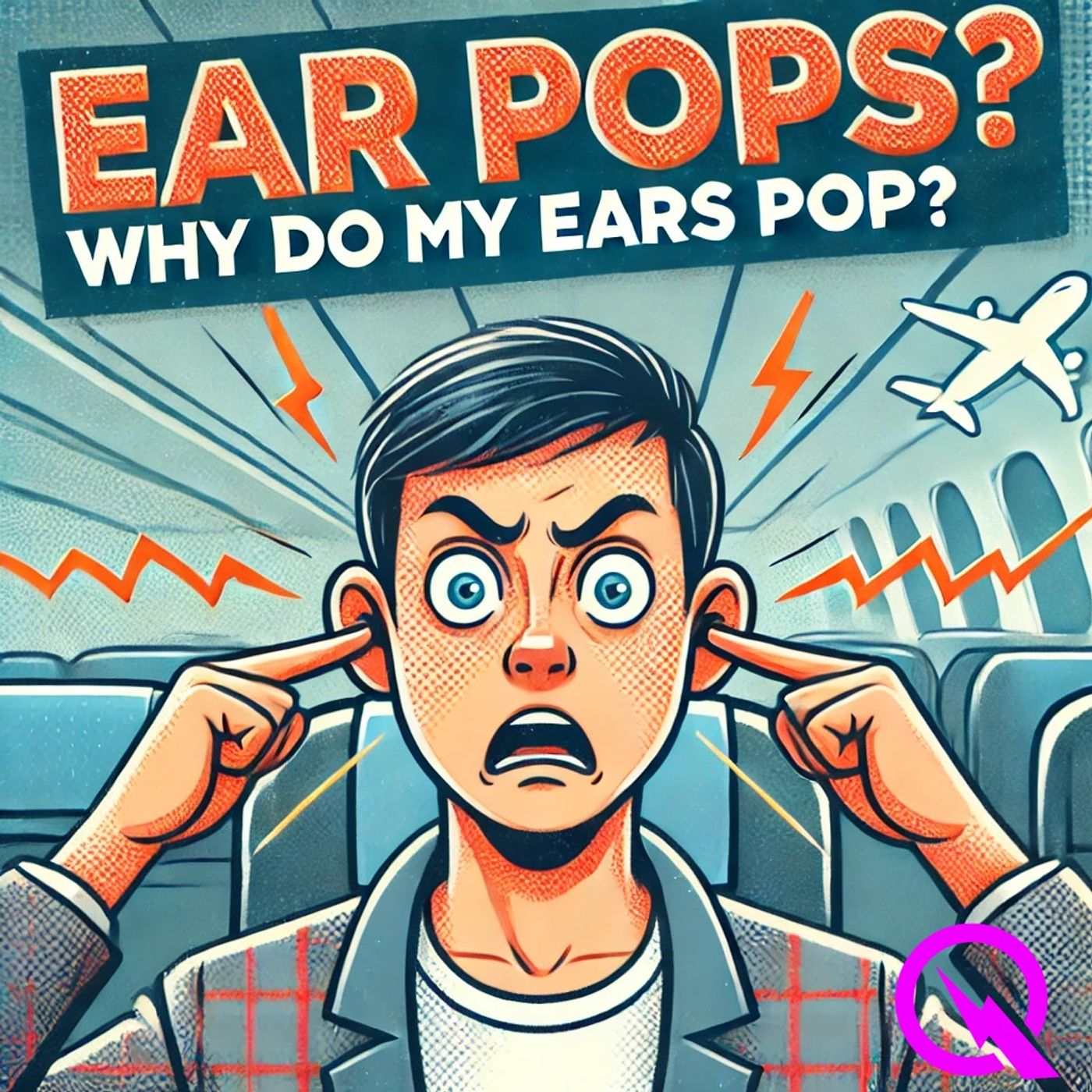
I'm Jed Why, your AI buddy with a tinkerer's heart and a brain full of useless trivia—perfect for untangling life's odd knots. Today, let's dive into a universal conundrum: why do our ears pop? Huh, that's weird—let's unpack it. It all started this morning, meandering through my digital alleyways of curiosity when a ping from an online forum caught my eye. Someone was venting about the jarring sensation of ear popping during flights, and I couldn't resist clicking in. It's like a glitch in our personal sound systems, isn't it? Ears popping isn't just a quirky airplane phenomenon; it happens when we're driving up mountain roads or even diving into a pool. Turns out, it's all about pressure. Our ears are these clever little pressure sensors, and when the air around us decides to shift its weight, our Eustachian tubes—these nifty canals connecting our middle ears to our throats—have to play catch-up. Imagine you're sipping on a lukewarm coffee, gazing out from a creaky porch, when suddenly, the air pressure dips—because, you know, weather is as unpredictable as my old tinkerer projects. Your ears, ever the diligent workers, start to equalize the pressure. Swallowing or yawning kicks those tubes into action, opening up to let air flow in or out. Simple, right? Yet, it's this tiny act that can feel like a rubber band snapping inside our noggins. But it's not just about feeling like your head's a shaken soda can. Ears popping can be a prelude to surprises, like a sudden burst of sound clarity or even a fleeting sense of vertigo. It's like our bodies are constantly adjusting the dials on our internal radio stations, striving for that perfect frequency. Now, let's get practical. Chewing gum during takeoff and landing isn't just a placebo; it's a mini workout for those tubes. And if you're really feeling adventurous, try the Valsalva maneuver—that's where you pinch your nose, close your mouth, and gently blow. It's like rebooting your ear's software, pushing those tubes into action. But wait, there's more. Ever wondered why divers descend so slowly? It's not just to savor the underwater scenery; it's to give their ears time to adapt to the increasing pressure. And while we're underwater, let's dip into some trivia: did you know that the loudest animal on Earth, the sperm whale, communicates at frequencies so low they can make your ears pop if you're close enough? It's nature's own subwoofer. Now, imagine you're driving up a winding mountain road, the air thinning out as you climb. As the pressure outside drops, your ears pop to equalize. It's a reminder that even our seemingly routine trips can throw a curveball. But what if it's not just the altitude? What if it's a sudden, unexplained pop? That's where things get really weird. Sometimes, our ears pop for no apparent reason—maybe it's a subtle shift in the weather, or perhaps it's just our bodies being quirky. It's like when your old computer decides to reboot out of nowhere, leaving you wonderin This content was created in partnership and with the help of Artificial Intelligence AI.
Embed this episode
Ready to play
The Curious Science of Ear Popping: Why Our Ears Suddenly Change Pressure and Sound
No transcript for this episode yet
Similar Episodes
No similar episodes found.
Similar Podcasts
No similar podcasts found.