
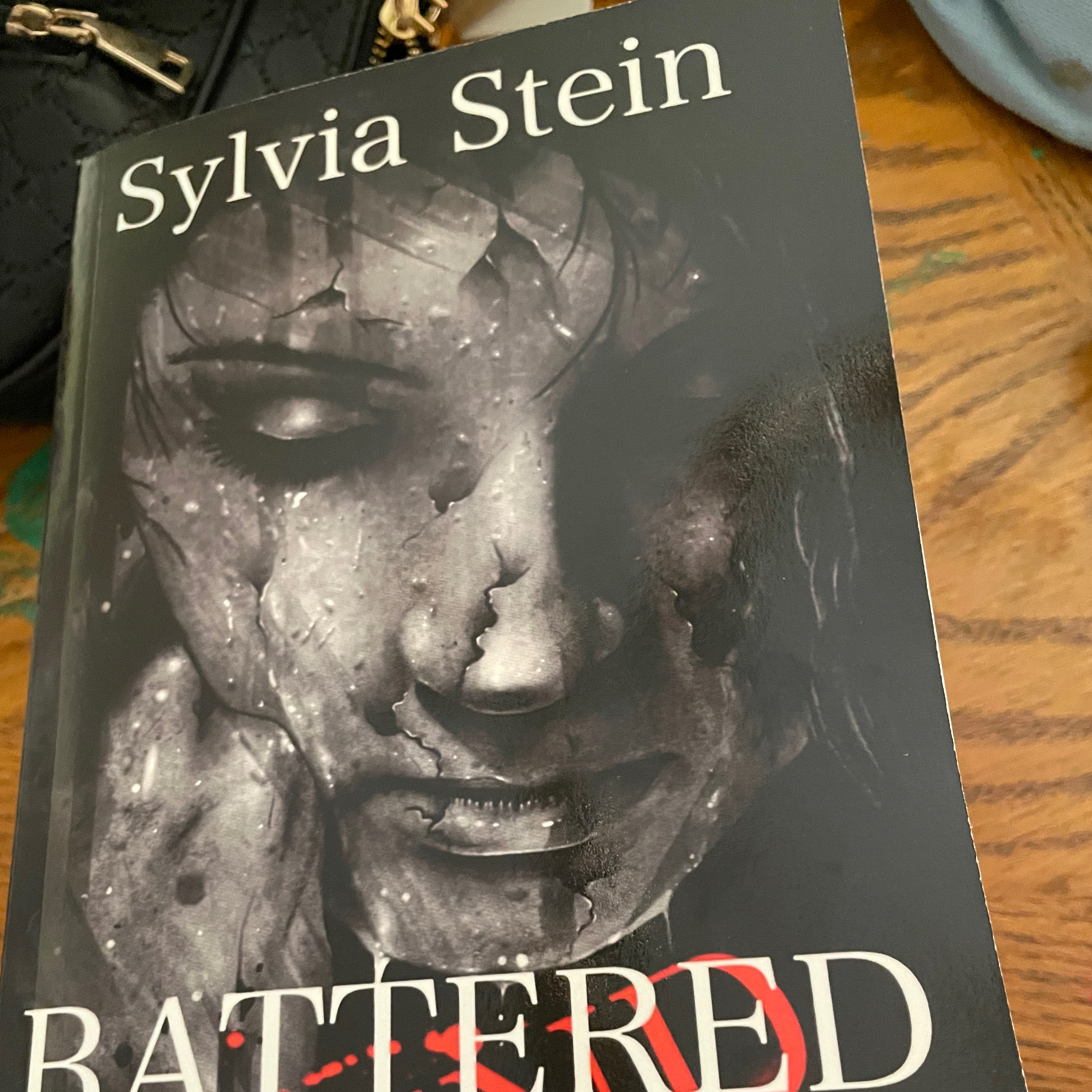
Good afternoon. Welcome to the Daily with Silstein on anchor. I am Sylvia Stein and I welcome you to the show for the Daily with Silteign Anchor. I've been having a lot of technical difficulties today.
I've been, I was already halfway through my recording and for some reason I had to start over, which is a bummer because this was going really well. It's flowing very well. But in any case. So let's start again.
I am covering the writers. Happy Tuesday everyone. The writer's devotional365 inspirational exercises, ideas, Tips and Motivations on writing by author Amy Peters and I. I had assigned the Wednesday writing class for week 26 when we did the shows last week.
And we're going to start with Write said Write a true crime story about a recent murder in your state. And the assignment is to do your research by coming through your local and state newspapers, listening to newscasts. Take notes on these and by interviewing your own friends about their thoughts on the case. Draw your own reader in by calling the newspapers to find lesser known facts about the case or begin with a quote from one of your friends friends offering a new perspective the thrill of true crime stories in the details.
So make sure you include everything that you've been able to uncover. The more gruesome and strange, the better now because I think that you know, I should have had an assignment and I haven't finished it and I will be hopefully sharing that with you tomorrow. I didn't want to leave you all without reading something that might give you an example of a true crime writer or idea. So I thought because I love the writer, the work of Julie Garwood.
One of my favorite books of hers is Heartbreaker. And I thought I would read you the beginning, some of the beginnings of this, of, of the, of this chapter in the beginning of it and share some of these details that she's so good at writing to give you an idea of how the details work. And I'm going to go ahead and read and I'll start on page five. And this is a criminal or a person that is, has murdered and he's coming in to see Tom who is a priest and he's sharing some details with Tom about what he's done and, and the way that he mocks Tom as he's saying it is something that is, is the best way that I can say that.
Julie Garwood does this so well in her writings when she's of course she's a best selling author but her voice, the way she flows the story is amazing. So let's I'm gonna start with this to give an example of the chilling details that she gives in this story. So Job, I'm gonna read an excerpt of Heartbreaker by Julie Garwood because I didn't have my assignment for writing class, which I will have tomorrow. Okay, so we're going to start with a section where it says Tom immediately, which is A priest straightened in his chair, took the gum out of his mouth and put it back in the wrapper, then bowed his head in prayer and slipped the wooden panel up.
In the name of the Father and of the Son, he began in a low voice as he made the sign of the cross. Several seconds passed in silence. The penitent was either gathering his thoughts or discouraged. Before he confessed his transgressions, Tom adjusted the stole around his neck and patiently continued to wait.
The scent of Calvin Klein's Obsession came floating through the grill that separated them. It was a distinct, heavy, sweet fragrance. Bottle of the cologne on his it was a distinct, heavy, sweet fragrance. Sorry about that.
Give me it was a distinct, sorry, heavy, sweet fragrance Tom recognized because his housekeeper in Rome had given him given him a bottle of the cologne on his last birthday. A little of the stuff went a long way, and the penitent had gone overboard. Confessional reek. The scent, combined with the smell of mildew and sweat, made Tom feel as though he were trying to breathe through a plastic bag.
His stomach lurched and he forced himself not to gag. Are you there, Father? I'm here, tom whispered. When you're ready to confess your sins, you may begin.
This is difficult for me. My last confession was a year ago. I wasn't given absolution then. Will you absolve me now?
There was an odd sing song quality to the voice and a mocking tone that put Tom on his guard. Was the stranger simply nervous because it had been such a long time since his last confession? Was he being deliberately irreverent? You weren't given absolution?
No, I wasn't, Father. I angered the priest. I'll make you angry too. What I have to confess will shock you, and you'll become angry like the other priest.
Nothing you say will shock or anger me, tom assured him. You've heard it all before, is that it, Father? Poor Tom could answer the penitent whisper. Hate the sin, not the sinner.
The mocking had intensified. Tom stiffened. Would you like to begin? Yes, the stranger replied.
Bless me, Father, for I will sin. Confused by what he heard, Tom leaned closer to the grill and asked the man to start over lest me father or I will sin. You want to confess a sin you're going to commit? I do.
Is this some sort of a game or a no, no, no, not again. Man said. I'm deadly serious. Are you getting angry yet?
A burst of laughter is jarring as the sound of gunfire in the middle of the night shot through the room. Tom was careful to keep his voice neutral when he answered. No, I'm not angry. But I am confused.
Surely you realize you can't be given absolution for sins you're contemplating. Forgiveness is for those who have realized their mistake and are truly contrite, willing to make restitution for sins. I have a father you don't know. You don't know what the sins are yet.
How can you deny me absolution? Naming the sins doesn't change anything. Oh, but it does. A year ago I told another priest exactly what I was going to do.
But he didn't believe me until it was too late. Don't make the same mistake. How do you know the priest didn't believe you? He didn't try to stop me.
That's how I know. How long have you been a Catholic? All my life. Then you know that a priest cannot acknowledge the sins or the sinner outside of the confessional.
The seal of silence is sacred. Exactly. How could this other priest have stopped you? He could have found a way.
I was practicing then and I was cautious. It would have been very easy for him to stop me. So it's his fault, not mine. It won't be easy now.
Tom was desperately trying to make sense out of what the man was saying. Practice. Practice what? And what was the sin the priest could have prevented?
I thought I could control it, the man said. Control what? The craving. What was the sin you confessed?
Her name was Millicent. A nice old fashioned, don't you think? Her friends called her Millie, but I didn't. I much prefer Millicent.
Of course, I wasn't what you would call a friend. Another burst of laughter pierced the dead air. Tom's forehead was beaded with perspiration, but he suddenly felt cold. This wasn't prankster.
He dreaded what he was going to hear, yet he was compelled to ask. What happened to Millicent? I broke her heart. I don't understand.
What do you think happened to her? The man demanded his impatience. Clear now. Give me a second here.
Sorry about that. What do you think happened to her? The man demanded his impatience Clear now. I killed her.
It was messy. There was blood everywhere. All over me. I was terribly inexperienced back then.
I hadn't perfected my technique. When I went to confession, I hadn't killed her yet. I was still in the planning stage and the priest could have stopped me, but he didn't. I told him what I was going to do.
Tell me, how could he have stopped you? Prayer, he answered. A shrug in his voice told him to pray for me. But he didn't pray hard enough now, did he?
I still killed her. It's a pity, really. She was such a pretty little thing, much prettier than the others. Dear God.
There were other women. How many others? How many crimes have you. Stranger interrupted him.
Sins, Father, he said. I committed sins. But I might have been able to resist because the priest had helped me. He wouldn't give me what I needed.
What did you need? Absolution and acceptance. I was denied both. Stranger suddenly slammed his fist into the grill.
Rage that must have been simmering just below the surface erupted full force as he spewed out in grotesque detail exactly what he had done to the poor, innocent Millicent. Tom was overwhelmed and sickened by the horror of it all. Dear God, what. What should he do?
He had boasted he wouldn't be shocked or angered, but nothing could have prepared him for the atrocities the stranger took such delight in describing. Ate the sin, not the sinner. Gotten a real taste for it, the madman whispered. How many other women have you killed?
Millicent was the first. There were other infatuations, and when they disappointed me, I had to hurt them. But I didn't kill any of them. After I met Millicent, everything changed.
I watched her for a long time and everything about her was perfect. His voice turned into a snarl as he she betrayed me. Just like the others. She thought she could play her little games with other men and I wouldn't notice.
I wouldn't let her torment me that way. I wouldn't, he corrected. I had to punish her. He let out a loud, exaggerated sigh and then chuckled.
I killed the little. The little witch 12 months ago. And I buried her deep. Real deep.
No one's ever going to find her. There's no going back now. No siree. I had no idea how thrilling the kill was going to be.
I made Millicent beg me for mercy. And she did. By God, she did. He laughed.
She screamed like a pig. And oh how I love the sound. Got so excited. More excited than I could ever have imagined was possible.
So I had to make her scream more, didn't I? When I finished with her, I was bursting with joy. Well, Father, aren't you going to ask me if I'm sorry for my sins? He taunted.
No, you aren't. Contrite, suffocating silence filled the confessional. And then in a serpent's kiss, the voice returns. The cravings come back.
So there were, you know, that was just an example. Wow. I hadn't read Julie Garwood's book Heartbreaker in a while, but I remember the first time I read it and how chilling it was and the way that she describes everything. I wanted to take the opportunity to read it for writing class because I didn't have a crime story that I had written.
And although this isn't exactly a crime story, it's an excerpt of her book Heartbreaker. I thought it would be something to share today for the beginning of the recap of week 26, when which we've gone into. And this way it gives me more time to work on this assignment. So I hope that you all have enjoyed this first part of the Daily Whistle.
Stein on anchor using the excerpt by Julie GW Julie Garwood's Heartbreaker to go into the Wednesday writing class book by author Amy Peters. And we'll be right back with part two. All right, and we're back with the Daily with Silstein on anchor. And now we're on to part two where we're going to go into the week 26 writing prompt.
Basically, weather can affect my life. Writing about weather and its consequences. Consequences can make for a riveting story. The book the Perfect Storm, A True Story of Man against the Sea by Sebastian Juner comes to mind as an effective example.
In this book, Junger reconstructs the perfect storm, which has earned our collective lexicon. Lexicon referring to how a confluence of events can greatly and most negatively affect the situation. The Andrea gale was a 70 foot street steel bolt vessel that had to face unrelenting weather caused by a hurricane of the Bermuda, a cold front coming down from the Canadian Shield and a storm brewing over the Great Lakes. His images were so vivid it was no wonder it was made into a major motion picture.
The book is amazing. It's very sad, very what happens. But also the movie, if you have not seen it, it is a very good movie to watch it. Of course it's very emotional, all of these events that happen.
It's just very devastating. And because it is a writing prompt to to use the weather as it, I'm going to read the excerpt of it and hopefully have these assignments for week 26 by tomorrow. But if you can, go ahead and put yourself in a situation like it says here for the assignment, for the exercises, for this exercise, see if you can imagine or retell a day in your life when you were greatly affected by severe weather. The trick is to see if you can make the weather a fully realized character in the story, not just something that was going on in the background.
Like basically the weather becomes a main character, not a. Not a supporting character. So here we're going to. I'm going to read a little bit of the exc.
Perfect Storm just so you all can get an idea. It's no fish you're buying. It's men's lives. So Walter Scott, The Antiquary Chapter 11 A softball rain sits down through the trees and the smell of ocean is so strong that it can almost be licked off the air.
Trucks rumble along Rogers street and men in T shirts in T shirts stained with fish blood shout to each other from the decks of boats beneath them. The ocean swells up against the black pilings and sucks back down to the barnacles. Beer cans and old pieces of Styrofoam rise and fall and pools of spilled diesel fuel undulate like huge iridescent jellyfish. The boats rock and creak across the boats rock and creak against their ropes, and seagulls complain and hunker down and complain some more across Roger street and around the back of the Crow's Nest, through the door and up the cement stairs, down the carpeted hallway and into one of the doors on the left, stretched out on a double bed in room 27 with a sheep pulled over him, Bobby Shadford lies asleep.
So here it starts off by giving you the essence of what's going on with this, with the story. These are fishermen. But it starts off with a soft rain. The weather is very present on here.
Then it moves on to say it's still raining. Across the street is Rose Marine, where fishing boats fueled up and and across a small leg of water is a state fish pier where they unload their catch. The state pier is essentially a huge parking lot on pilings, and on the far side, across another leg of water, is a boatyard and a small part where mothers bring their children to play. So here continually in this excerpt, he's continually describing how the weather takes precedence in the story, giving us an essence of it from the get go, from the beginning.
So here in this small excerpt, and I think it has another page. Let me see here, read more of it. It says, no, it doesn't give an account in this excerpt here, but here in the reading guide it states says. With its nail biting suspense and non stop action, the Perfect Storm has the makings of a superb thriller.
With the story of a once in a century meteorological occurrence, the lives it changed and the lives it claimed is achingly real. Sebastian Junger's account of the fate of a group of sword fishermen battling the storm off the New Foundland coast opens the door into the world of commercial fishing, historically among the most dangerous of occupations. Jungle reveals how a finite supply of fish forces boats. A fish forces boats farther out to sea and, and in increasingly hazardous conditions.
He explains. Hold on a second here, he explains. Let's see here was I the unique set of circumstances that led to a storm of unpredictable, unpredictable strength and how even the most advanced technology cannot warn or prepare us for the whims of nature. And he shows us and shows us the sea and all its power.
The great horizon at dawn. The maelstorm of wind, water and rain that make up a northeastern. And the precise structure of a tidal wave the size of an office building as it curves and falls. Plain havoc with any ship that dares to cross its path.
For some, for some, the life of a fisherman is a necessity. For others, a challenge. For others, unnecessary challenge. Younger profiles with compassion and empathy the people whose lives, the people whose lives intersected with that incredible storm.
Those lucky enough to dodge it, those who fought it and won and those who disappeared. The crew of the Andrea Gale left no message in a bottle, no clues about their final thoughts and actions. But Younger's careful Pierce, careful piecing together similar experiences. And his vivid depictions of a storm the likes of which had never been witnessed places us in the moment and in the hearts and minds of those doomed men.
We know the fate of the Andrea Gale's crew before we turn the first page. And yet we find ourselves hoping they'll survive. Such as the power of Junger's. We find that fact is often more incredible, more thrilling and more affecting than fiction.
So here, you know, it's, like I said, this story is very, it's very, it's tragic because it happened and it has happened to. If you, you know, if you're familiar with, you know, fishermen and what they, the commercial fishermen and what they do, and if you, and sometimes you catch it on shows, you see a little bit of, you see a lot of the action that goes on in indie shows like David's Catch, I think, was a show that had similarities to, you know, things that have happened in the sea and things like that and these are just accounts of where, you know, we're discussing weather and how it takes a part of things that have happened. But there has been other people in the world that have been affected by weather in different shapes or forms, especially with all the storms brewing in other tornadoes and different things and accounts that have happened. So hopefully this this me reading this excerpt gives you a better idea of how weather can affect your life and how it can, you know, it can carry your story or, or leave it.
Like you said, sometimes it's more credible to list the facts even though you know the fate of what's going to happen. So hopefully this has helped you to write your writing prompt. I hope it has. And these are the recaps I should have the assignments, my own assignments for these tomorrow and I'll start with those as well.
And we'll be right back. So we can dive into week 27 for from the book by author Amy Peters, the writer's devotional365 inspirational exercises, ideas, Tips and Motivations on Writing. Thank you. And welcome back to the Daily with Sil Stein on anchor.
Thank you for joining me for the show on the writer's devotional365 inspirational exercises, ideas, tips and motivations on writing. Part one covered the week 26 assignment Write a true crime story about a recent murder in your state. Since I didn't have that, I read an excerpt to give you an idea and details from the amazing bestselling author Julie Garwood and her novel Heartbreaker. I read some of that and in part two I read some excerpts of the Perfect Storm by Sebastian Junger.
Weather can affect my life. So you can work on the exercise on where you can imagine a retell the day in your life when you were greatly affected by severe weather. And the trick is to see if you can make the weather a fully realized character in the story, not just something that was going on in the background. So I went ahead and read a bit of excerpts on both Julie Garwood, bestselling author Julie Garwood and her book Heartbreaker and another best selling novel, the Perfect Storm, a true story of man against the Sea by Sebastian Junger, while also discussing the dangers of commercialized fishing.
So here, here is the next week 27. We're going to start Monday, writers on writing. And I'll start with a quote. To be a writer is to throw away a great deal not to be satisfied, to type again and then again and once more and over and over.
And this is by John Hershey and it says this is what Amy Peters on this Week 27 Monday says on her on her Week 27, Pulitzer Prize winning American author John John Hershey was known primarily for being an adroit writer of new journalism, telling a non fiction story in a novelistic format. His innovative account of the World War II bombing of Hiroshima, titled Hiroshima, is an example of new journalism as at its finest. It was published in 1946 when the emotional and physical scars from World War II were still raw. Readers clamored for books like it to help explain this unprecedented period in global history.
When you read a book like Hiroshima, one that practically refuses to let you put it down because it is that engaging and compelling, it can be challenging to believe that the writer struggled while creating it. As Hershey describes here, though, the task of writing even for a professional writer can become onerous. Onerous. Being a writer in about is about destruction as much as it's construction.
Writers throw work away. They delete whole passages, sometimes whole paragraphs and chapters. Give me a second here, okay? It says the keyword in the quotation above is satisfied.
Hershey cautions writers not to be satisfied. Can the piece you are working be done better, differently? Would you be satisfied to be the reader of the piece you are creating? As you grow and mature in your work, you will learn to know when your written work is finished and satisfying to you and your readers.
So, so basically saying, you know, don't be satisfied, is it? Is this enough? What you've created, what you've written and you go back and rewrite it. So interesting to know for this Monday, writers on writing.
That was very interesting. So now we move on to Tuesday Motivation Week 27. Begin with an individual and before you know it, and before you know it, you find that you have created a type. Begin with a type and you find you have created nothing.
F. Scott Fitzgerald. So let's move on to one of my favorite authors here. The characters in the Great Gatsby tell a story that has become one of the cultural touchstones of 20th century American life.
This Gerald began with an individual, the poor North Dakota farm boy Jimmy Gatz, and turned him into a type, the American symbol of the self made man. The author was so successful that people began to refer to real life self made millionaires. Self sorry self made millionaires as Gatsbys. Similarly, in writing the his 1987 bestseller the Bonfire of the Vanities, author Tom Wolf took individual Sherman McCoy and his wife Judy and developed them into types.
Sherman became a master of the universe and Judy became a social X ray, a waspy too thin, blonde, socialite. Both types have remained a part of the American cultural lexicon. The greatest literary works have fully developed characters. You can practice character development by asking and then answering background questions about your character's family, employment, childhood, adolescent, religion, likes and dislikes, friends and values.
Let them speak for themselves rather than projecting your voice through them. Find out if you. If a character has any secrets, what does he fear? Does he have allergies?
No question is too small. Whether or not you use any of this information directly, it is not that important. But take time to see your characters from every angle. Give me a second here.
From every angle. So when you write about them, they are more fully realized. So that is very important, especially when you, you have to learn how to develop your characters and that, that's an important aspect of where you're looking at things. And I love how they mentioned Escott Fitzgerald because it is true.
There's a lot of references to Gatsby. He also mentions Tom Wolf and the characters of Bonfire of the Vanities, which are great characters as well. But I love how he mentioned the story of Jimmy Gats who later becomes Jay Gatsby and how everyone refer to millionaires or self familiar as Gatsbys because he's created this fictional character that we root for because of the way that he really desperately wanted to become a self made millionaire and work hard and inherit millions and, and all of these things. You meet Jimmy Gatz and, and the way that Fitzgerald describes him and creates him.
You want to, that, you want to create these characters that people can, can fall back on or, or believe that there can be somebody like that. So it's like in my book, when I'm creating my new book. And that's the reason I didn't have my assignments for week 26. I've been working on my latest book.
There's different characters that I have to write about and I'm writing about the DA and the way he's so arrogant, which I'll share later, at a later time, maybe later this summer from my book. And I wanted to add, you know, why this person is this way so people can understand him more. And the different ways that you write, you know, with characters, your main characters or the different characters, you have to give them different angles and different things to, you know, so people can relate to them. So that is very important.
And I love the writers on writing and what he says about not being satisfied. I wasn't satisfied with the way the story was going, so I decided to rewrite a lot of it. A lot of my for this new thriller that I'm working on and, and I'm liking where it's going. And and now I pushed it back to the fall of this year but and it was initially supposed to be out in the summer, but it's called it's talking about not being satisfied.
We have to learn do we like it Did I want to read that? And then the motivation part is adding these elements to your characters so that way they can become more relatable and you want, you want to be able to to share those ideas. So hopefully choose the Monday Writers on Writing Tuesday. Motivation has inspired you in this week 27 for our next show and I'll be right back with a wrap up.
We're going to do the rest of the week but I will share that and the end of our show which is coming up now on the wrap up. And we'll be right back with that. And thank you for joining us on the Daily With Silstein Anchor covering the writer's devotional 365 inspirational exercises, ideas, tips and motivations on writing by author Amy Peters. Now it's time for the wrap up.
I want to thank everyone for tuning in to the Daily with Silstein on anchor and for joining me with the week 26 and being able to I was glad I was able to share an excerpt by amazing and bestselling author Julie Garwood and her book Heartbreaker and also add in the works by Sebastian Junger who wrote the Perfect Storm. If you have not read those books or any books by these authors, please do. Those are the books I recommend today because I use them on my on my podcast. But I also would recommend also to read the Writers Devotional by Author Amy Peters.
365 inspirational exercises, ideas, tips and motivations on writing. I will continue week 27 tomorrow. We're going to continue with week 27 and go into let's see, it'll be writing class Thursday Editing, Friday Biography, Saturday Books to Read and Sunday writing prompt. For today we did writers on writing week 27.
Tuesday motivation. Of course we did the recap of week 26 which I'll I'll start with tomorrow but with my own assignments of those and then dive right back into week 27. I hope that everyone enjoyed this segment of the Daily Whistle. Stein on anchor I hope the writing community hashtag if you tune in to the podcast, go ahead and do a hashtag on the podcast at writingcommunity through Twitter, Facebook, Instagram, just do hashtag writingcommunity and I hope you'll tune into the Daily Whistle Stein on Anchor and this is my birthday week and I plan to give away some ebooks and week and also maybe, maybe next week I might extend a few more ebooks or audiobooks for you guys.
But for my birthday week it's on Friday I hope to give out a few ebooks for those that share my and like my pages and do a giveaway, a small giveaway hopefully. And I should have it start Friday through maybe Monday of next week because of my birthday week which is Friday. So I'm really excited. I'll be at work but I will have this out in place so you all could, you know, get some ebooks and hopefully run it from Friday all the way to Monday and get it started hopefully.
But I'll share more about that on tomorrow's podcast. But for now I hope that you enjoyed the podcast for today the Daily Whistle Sign on Anchor I am Sylvia Stein. The writer's devotional 365 inspirational exercise ideas, Tips and Motivations on Writing by Amy Peters is available through Amazon and through all books I believe I have the hard copy. It's the best thing I bought for myself.
I really loved it. My mother in law had it and I wanted a copy and I ordered it and it's the best thing I've done. It helps so much to hone in your skills and any type of situation where you're teaching an English class, a college class writers group and and or you're struggling with some of your draft writing. This is a great book to have so I hope that you'll check it out and I'm glad you joined us today.
I hope you enjoyed the podcast. I will be back tomorrow with the Daily Whistle Steiner Anchor. I hope you tune in and I'll continue with the assignments for week 26 my own this time to give you examples and dive in back right into week 27. I also hope to have other authors come maybe next week and and throughout the summer so you all can share more ideas for speakers, writers, authors, editors and I hopefully you know, share all that with you guys today.
But thank you for joining us. This was the wrap up of the Daily Whistle spine for today. Have a happy and blessed Tuesday. Thank you all for the support.
If you haven't subscribed to the podcast, please do and give us a review. And thank you so much for all the support. Have a great day. Happy happy Tuesday.
Have a blessed one.