So as we approach the final 10 days or the final 10 days of the final 10 days of the final 10 nights of Ramadan, which are the best of the nights of the entire year, it's a time for us to try to make the most of increasing our iman and benefiting in a manner that is going to be lasting after Ramadan. And the theme of this conference is centered or this seminar today is centered around the heart, the heart which is the foundation of all of the body, all of the limbs are subservient to the body, the heart is the king, as we shall see Shaulin Sala Dala. And so the heart, the heart which is the foundation of a person's iman of the actions of the heart such as love and fear and hope, they are what provide the spring for the rest of a person's actions. And for that reason, a person who does not attend to his heart does not take care as to what he fills his heart with does not take care as to what statements his heart believes, meaning matters of belief and creed, and does not take care with respect to the actions or the states or the feelings that pass through his heart, then this person will have a sick heart or an ill heart.
So in this short brief reminder in Shaulin Sala we are going to try to take some benefit from some speech of Ibn Al-Bayim, Rahim Al-Lah. And as you know, those from the scholars who have written extensively and expertly on this topic, other likes of Shaulin Sala D'Intimia and likewise Ibn Al-Bayim Rahim Al-Lah. And that's why everybody who speaks, who wants to speak about the heart and the soul, they will return back to the speech of these two great imams. And because they have written extensively our brother Asalim, likewise myself and perhaps even Abu Al-Lahqweem, may draw upon the words, the same words are the same general resources.
So what we want to do in Shaula Dala is just to try and take some benefit from some of the calam of Ibn Al-Bayim, Rahim Al-Lah. And it all centers around the heart and will start, this is taken from his book, the book itself is called, People of Al-Wolb, it's a compilation of various statements of Ibn Al-Bayim from numerous parts in his works. So the first point we want to begin with, which Ibn Al-Bayim makes, is that Allah's original, he did not create the creation without purpose. And he did not create them and neglect them.
Rather, he made them as people who are responsible, so they are responsible, they have the burden of acting and abiding, and he made them subject to commands and prohibitions. And then he made them to understand, or he imposed upon them to understand that which they need to do and not which they need to keep away from, both in a general sense and a detailed sense. How is this? He did this by sending them revelation.
He sent them revelation. So he didn't create them without purpose, rather he tasked them with obedience and keeping away from disobedience. And then he made them understand these commands, by how, by sending them, messengers, and they explained affairs in a general sense and in a detailed sense. Then he divided them into those who are Saeed, who will be happy and successful, and those who are sha'pi, those who will be miserable, and those who will be wretched.
And for each of these two groups, he made an abode, a place or a destination. And he then gave them the various components or the means by which they can acquire knowledge and by which they can act upon knowledge. Right? What does this mean?
It means he gave them a heart, so he gave you a heart, and he gave you hearing, and he gave you seeing, and he gave you limbs. So all of these affairs enable you to know, first of all, to have knowledge, and secondly for you to act. To have knowledge, and to act ill, and amal, ill, and amal. So these affairs that Allah's Ojal has bestowed his with, we are tasked by Allah's Ojal to abide by his commands and to keep away from his prohibitions.
Then he goes on to explain that those people who used all of these affairs, the heart, the hearing, the seeing, the limbs, in Allah's obedience, and they did not turn away from that. Then they have established the shukah, the gratefulness to Allah's Ojal for the things which he gave them. Right? So the person who used these affairs to remain in Allah's obedience, then he has fulfilled his obligation of being grateful to Allah, for these bounties and favours which he bestowed upon him.
And the path he has chosen is the path which Allah is pleased with. And as for that person who, on the other hand, he used these faculties, the heart, the hearing, the seeing, the limbs. He used them to follow his desires, and he did not observe the right that Allah has upon him in relation to these affairs. Then this person, when Allah's Ojal asks him on Yom Yol Piyama, then he will feel pain.
He will feel grief when he's questioned. And he will suffer from a prolonged period of sadness. And this is because the heh Sahib, the accounting, it is something that will inevitably take place. And it will take place in relation to these limbs.
So when you are raised and brought in front of Allah's Ojal, you will be held accountable for these specific limbs, the heart, the hearing, the seeing, and likewise the various limbs. And that's why we see in the Quran, he quotes an ayah in Surah, in the Samar'a, well, Basar, well, for Adah, Kullu Ulah, Iqakana, Anghumas Ulah. Indeed, the hearing, and the seeing. And the for Ad which is the heart, and the faculties of the heart and understanding, all of that will be inquired into.
So this is the first affair that we should be aware of. The second thing that we should be aware of is the status and the position of the heart itself in relation to everything else. And the heart is the king which administers and which commands, just like we have the king who administers the soldiers, and the soldiers, whatever they do, is from the commands of the king, then likewise the heart is the same. The heart has a central location in the body, all of the limbs are centered around it and point towards it, and all of these limbs are under the servitude of the heart.
They become upright or they become deviated based upon the state and the condition of the heart itself. And this is why the messenger of Allah, Salaamu Alayhi Wasallam, he said, Al-Awa Inafil Jazadim Uddhwa, Ida Salaam Al-Jazadu Kullu. Indeed, there is in the body a morsel of flesh, which if it is rectified or upright or correct or righteous, then all of the body will be rectified or correct or upright and so forth. So the king is the heart, the heart is the king of all of the limbs, and the various actions of a person will not be upright or until the heart itself is upright, in terms of its bussad and its niyya, the heart it intends, it desires things, and when it intends and desires that which Allah likes and is pleased with, then the rest of the limbs can never ever be upright and rectified.
So that's why the heart is the central location and the central focus of everything. And a person will be asked about these limbs because every shepherd has a flock and every shepherd will be asked about his flock. And for that reason, Ibn Al-Qayim says that those people who proceed to Allah, the Saliqeen, the ones who are travelling to Allah, their utmost concern is with the heart, is with the heart. And then he explains another point which adds to this and which emphasises this.
And this is the fact that Iblis, Allah curse him, he knew because he saw Adam when he was created, he came and he circulated around him and he looked at him, Iblis he knows that the central focus in the human is the heart. The heart is the centre of everything, the heart is what makes a human function, what makes a human tick in both ways. Both in terms of the physical sense, we know that the heart pumps blood around the body and it keeps you alive, this oxygen reaches every cell in the body that keeps you alive, so the heart is the pump, so it keeps you alive from the physical sense. However, our knowledge of the heart goes above and beyond the knowledge in a worldly sense, this is just the worldly knowledge to do with the heart.
There is something additional which is what Allah has informed us of, which is that the heart is life in another sense, life in terms of iman, life in terms of belief in Allah, life in terms of righteousness. So the heart also has that element and so Iblis he knew this or he knows this, he knows that the heart is the central axis of everything. And for that reason, when Iblis he attacks, then he comes straight to the heart. His focus is around the heart and that's why when he comes, he brings the waswas, the whispering, he brings it to a person, to the person's ears, it comes and enters into his heart.
Likewise, he brings the shahawat, the desires and the lusts, he brings them to the heart, he beautifies them. And likewise, certain actions, he beautifies them and certain feelings, he beautifies them. All of these things he brings right to the heart so that they prevent him from the path, the path of obedience to Allah. And the path of keeping away from the subinist, Allah in which there is benefit for the servant in this life, and likewise in the hereafter.
So Iblis he then brings all of the means of deviation, misguidance and swerving from the truth and all of these cut him off from being successful in his path towards Allah as is our jal. So Iblis attacks in such a way that even if a person does not fall into his traps, he will not leave him until he actually makes a slip or an error. There's one thing being misguided and going astray in terms of falling into sin or falling into innovation. That's one thing.
But even that his plot is so thick and so persistent that he wants to up until he even makes you just even make a slip or a mistake, he will try to get you like that as well. So what does this all tell us? This leads us to the next point which is that the only way a servant can escape from all of this is by constantly seeking Isthiana from Allah as our jal. This is the first thing, that you seek aid from Allah as our jal as we say in Surat of Thaat, yah, yah, and we wish that you will be able to stay in.
We worship you alone and from you alone do we seek aid in worshipping you. So that's the first thing, seeking constant Isthiana from Allah as our jal and always going towards those affairs which please Allah as our jal. And likewise the heart seeking refuge in Allah and likewise striving to have a bull to Allah, meaning that the heart now is enslaved only to Allah as our jal. And when a person makes his heart to be enslaved to Allah as our jal, then he comes under an ayah in the Qur'an.
This ayah in the Qur'an establishes for us how we escape this plot of Iblis, the an'Allah. In this ayah, Allah as our jal he says, in Aibadi, this is now speaking to Iblis. In Aibadi, laizalaka, Ali, him, Sultan. Over my servants, you will have no authority.
Think about this now. In this ayah, first of all Allah as our jal has ascribed to himself some from his servants, those who are in Abu thea to him. Those whose hearts are subservient and enslaved to Allah as our jal. Those people who have that quality, who have that characteristic, Iblis can never have any authority of those people.
He cannot harm those people. He cannot misguide those people. His whispers cannot affect those people. So here is one of two things in the Qur'an that Allah as our jal has mentioned which are a protection from Iblis.
So this first one is Al-O-Budiyyah, servitude to Allah as our jal. And so Iblis Al-Qayim says that he when Allah as our jal, when he made this Iblafa, when he ascribed the servants to himself, this Iblafa is something that cuts off the shayatine from the servant, this ummuudiyyah. And likewise, when a person achieves this ummuudiyyah, he will then feel echlas to Allah as our jal. Sincereity to Allah as our jal.
This leads us now to the second verse of the Qur'an, the second quality and the second characteristic. And this quality is in the statement of Allah as our jal. Again, addressing Iblis, the an'a'Allah when he expelled him. And he said, Ibla'a dak'a min humuul mukhla sin.
In other words, it is Iblis saying that I will misguide all of them. I will misguide every last one of them except that he made an exception. Ibla'a dak'a min humuul mukhla sin. Except those from amongst your servants and in the Mafasiri they have different interpretations.
Some say those whom Allah as our jal he chooses and some say those who have echlas who are sincere to Allah in their Ibla'a. And who seek only the pleasure of Allah as our jal. So from these two ayat what do we understand? We understand that there are two things which save and protect a servant from Iblis whose attack is upon the heart of an individual.
And these two things are first of all, Abu'a'a to Allah as our jal, in their a person, worships Allah. And his heart is enslaved to Allah alone. And it is not attached to other things from the worldly affairs, to other deities, for example, committing shirk. Or to, you know, a relation such as a wife or a husband or children.
Or to material things like wealth, for example, his heart is preoccupied with wealth. Or the pursuit of authority and power and status and position. These are the various things which a person can become attached to and they divert him away from the path of Allah as our jal. So these two affairs echlas and Abu'a'a when they settle and are established in the heart then they are a protection from Iblis who wants to have an open avenue towards your heart.
Once this is clear we then move to the second section and I'll just very quickly summarize all of this because perhaps you've already heard this in the previous lesson. As you know the scholars divide the heart into three types. There is the sound heart, the healthy heart. This heart is the one.
This heart is the one which is Salim, Iblis, Albin, Salim, the one who comes to Allah with a sound heart. The word Salim, the is Salim and the is Salim. When you have the word Salim it is referring to an established quality, a sifa which is far better in a person. Right, so this is the specific meaning of this particular form of the word of this noun.
So it is far ill, Salim which means that the sifa has become established in a person. So when your heart is Salim and this means that this heart is free of Shahawat, it is free of Shubu'a'at, it is the heart which puts the command and the prohibition of Allah in front of everything else. It is the heart in which there is no share to any other thing or any other being besides Allah as our jal. It is the heart whose action is sincerely for Allah.
If he loves, he loves for Allah. If he hates, he hates for Allah. If he gives, he gives for the sake of Allah. If he withholds, he withholds for the sake of Allah.
Likewise, all the various other qualities of worship, the wakul, love, fear, hope, reliance and so on and so forth. This is the heart which is living by virtue of all of these affairs. This is the first type of heart. The second type of heart is completely opposite to this one.
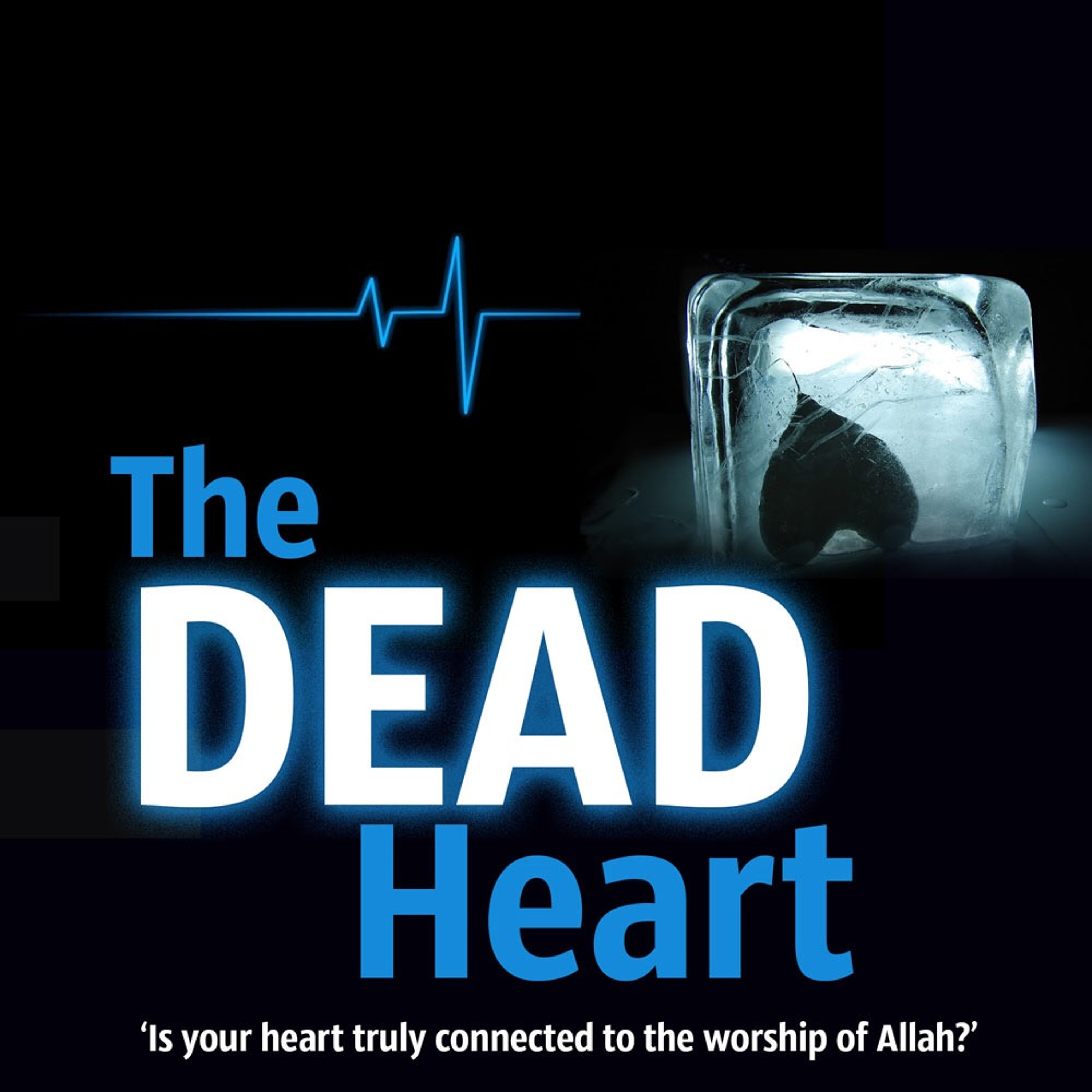
It is the heart which is completely dead. It is dead, even though it is pumping blood, that's just a physical aspect of it. But it is dead from the other more important aspect. And so this heart is dry, it is dead, it does not know it's lord, it does not worship it's lord.
Rather it follows and pursues its desires. Whatever the desires take it, it follows in that direction. Even if it means entailing the anger and the dislike of Allah as our jal. This type of heart is not bothered about this affair.
Rather, wherever its desires take it, then it will follow in that direction. So this type of heart is the one which worships other than Allah, loves other than Allah, fears other than Allah, is pleased with other than Allah, becomes angry, venerates other than Allah. All of these affairs, this heart, provides for other than Allah as our jal. So this is the dead heart, completely dead heart.
And then we have the third type of heart which is in between those two. And this is the heart which has life from one angle, but it is sick and ill from another angle. From one angle, it has iman in Allah, it loves Allah, it has something of echalas to Allah, it relies upon Allah. All of this is the element which gives its life.
But then on the other side, it has shahua. It loves certain desires. And it pursues them and wants to fulfill them. Likewise, there are other certain poisons in the heart.
That is the poison. That is the poison of a quick announcement, please, then the following car be moved as soon as possible. It is mk18, mk18, kfo. That's registration, mk18, kfo, could you move this car straight away please?
It is causing obstruction. So the heart, so from one angle, it has life which is iman in Allah and there are various other actions, echalas and so on to force to a certain degree. But it also has pursuit of shahua. And there are specific poisons that prevent it.
For example, the poison of Allah has said of envy, the prohibited type of envy. This is a poison in the heart. Likewise, al-qibir, arrogance, the heart might have something of arrogance. It might have amazement with oneself.
When the heart becomes, or when a person becomes amazed with himself and with his achievements or with his power or his wealth or his whatever. Or this heart might love seeking authority and leadership upon the earth. All of these things are things which cause the heart to become ill and sick, even in the presence, despite the presence of iman itself. So summarizing all of this, basically we have three types of hearts.
The first heart that we mentioned is a heart which is a haiyon, mokbitt, leyin, wah'in. It is a heart which is living, it is submitting to Allah, it is soft and gentle. And it is wah'in, meaning it is open and receives and understands and comprehends what is put into it. And secondly, we have the heart which is dead and dry.
Like you have twigs when they fall off the tree over time. There's no water coming to them, there's no from the roots, there's no attachment. Eventually it dries, it becomes hard, it becomes stiff, it withers, it is dry and it is dead. And thirdly, the heart which has something of this, it has something of this.
It has life from one angle, but it also has illness, it is sick. And so this type of heart will fluctuate, sometimes it will be closer to health and sometimes it will be closer to illness. Sometimes it will be closer to dying even. This is the nature of this type of heart which is the sick heart.
This now leads us to, I want to really round off now because to leave time for the remaining final lecture in Shilith, Allah. And I just want to finish off by mentioning some of the traits and qualities of a sound heart. Of a heart which is sound and which is healthy and which is living. And these traits which we should try to develop and strengthen inshallat-alah so that our hearts remain healthy inshallat-alah.
So the first of them is that the sound heart, the healthy heart is something that always chooses the beneficial over the harmful. A person should always be thinking, this deed, this action, this statement, this food, this drink. Is it going to benefit me or is it going to harm me? So the person always has this outlook that the heart will always choose that which is beneficial over that which is harmful.
And there are two things that the heart receives. First of all nutrition, which is the nutrition of iman and secondly the medicine, which is the medicine of the Qur'an. And you already heard this in the previous lecture. Iman is the heart's nutrition and the Qur'an is the heart's medicine.
Also from the qualities and traits is that the heart is always looking towards the hereafter. The heart's concern is the hereafter. We see in the statement of the messenger of Al-Asa-Salam, Konfidunya, Ta-An-Nakari, A-A-Bir-Sabil. Be in the world as if you are a stranger or someone who is upon a journey.
We have seen in the name Al-Bir-Sabil, Al-Bir-Sabil, Al-A-Bir-Sabil, Al-A-Bir-Sabil, Al-A-Bir-Sabil, Al-A-Bir-Sabil. We say it indeed, the world has departed and it's turning that way. And the hereafter is coming, meaning it's approaching this way. And both of these abodes, they have their children.
Both of these abodes have their children. So be from the children of the hereafter and do not be from the children of the world. For indeed today, for In-Nal-Yom, Amalun, Walahisab. For indeed today, there is action and there is no accounting.
And tomorrow, Walahisabun, Walahimal, and tomorrow there will be accounting, and there will be no action. Action will finish and it will end. So the second quality of a sound heart is that the heart is always focused upon the hereafter. It is always looking towards the hereafter and it considers itself in the life of this world as if on a temporary journey, a very short journey and nothing more.
Third quality of the sound heart is that the heart is always disturbing and bothering the person, meaning it is pricking you all the time and bothering you all the time and making you turn to Allah to repent to Allah to be submissive to Allah. So the heart is causing you disturbance. There is some disturbance in your heart and it's telling you, repent, turn to Allah. Seek forgiveness.
And this type of connection is a connection where you have the one that loves and the one whom it loves. The connection of love is very, very strong and tight. And so the heart is like this. It is attached to Allah and it makes a person compelled to seek forgiveness and to turn to Allah.
This is where there is life to the heart and success to the heart and happiness to the heart in all of these affairs. So the heart is something that leads a person to want to repent to Allah. Likewise from the affairs, and we see this from a number of the south from them, it's the same to Abu Khosayim, Al-War-Rakh, Hayatul-Hul-Hul-Vidikril-Hai, Al-Ladil-Yamud. The life of the heart, what is it lying?
It lies in the remembrance of Al-Hai, the ever living who never dies. In this lies the life of the heart. Also from the qualities and traits of a sound heart is that the heart never tires from the remembrance of Allah as Zawajal. Vikr is something that a servant is always engaged in.
Whether that be or the opportunities in which he ought to make Vikr, whether that is after the Salah, whether that is in the morning, whether that is in the evening, the morning in the evening at Ghar, whether he is sitting, whether he is standing, whether he is lying, he remembers Allah as a Wajal. Whether by way of his thoughts he thinks about the bounties of Allah, the creation of Allah, the favours of Allah, and all of the phenomena around him, and he thinks to himself that none of this is in vain, or whether he remembers with his tongue, with the various Adkhar that we find in the Sunnah, after the Salah, or in specific instances with the rain, for example entering the house, leaving the house and so on and so forth, or the morning and evening at the car. All of these things are serventier by these, and he sticks by these affairs because they are signs of a sound heart. Likewise from the signs of a sound heart is if a person misses a remembrance.
If he misses his daily routine of remembering Allah, then he feels such pain, which is greater than the pain a person feels, than the loss of wealth. Think about this, if you have ever lost wealth, if you have ever lost wealth, or a significant amount of wealth, think about the pain and the stress that you may have felt. A believer who has a sound heart when he misses something from the deeds of righteousness, for example the vicar, that he routinely performs on a daily basis, and for one, and on one day for some reason he misses that. Then he feels pain, such pain, more so than if a person was to lose some wealth.
So this, if you experience this feeling, this feeling is a sign of a sound heart, of a healthy living heart. Likewise from the signs of a sound heart is when it enters into the Salah, as soon as you say, the Alah, you enter into the press standing in front of Allah, then you depart from the Dunya, you leave the Dunya, all of your concerns, your worries, your stresses, your anxieties that you have in the worldly affairs, they disappear from you. They are forgotten, right, when you're standing in front of Allah, there's no anxiety or stress or worry or concern, or any thought about the worldly affairs, they are gone, as soon as you enter the prayer. And the most severe thing upon you is to leave the prayer, you don't want to leave the prayer.
That's the most severe thing to leave the state in which you are in, in which you are standing, burrowing, prostrating, remembering all of those statements that far differ, unlike what's in the rahuhu and the sujuhu and the shaqut and so on and so forth, all of these things are a tremendous pleasure to you. And so if you find this, this pleasure and this repose and this bliss, then this is a sign that your heart is sound and it is living. Also from its signs is that the heart's concern is only one, it is Allah, as is a wajal, also from the signs of its healthiness is that the heart is severely concerned with its time. It does not want its time to be wasted in anything, in anything trivial, in anything non-beneficial, more so than a person that you find from the people of the world, who do not want to lose any of their wealth, you find a person, he is so concerned with his wealth even if he loses a pound or 50 pence or whatever else, you find him grieving and at loss.
He is concerned in such a manner that he doesn't want to lose anything, even the slightest sound to profit. But I believe whose heart is sound, he will not allow any moment of his time to go to waste, in anything trivial or non-beneficial. When the heart is like this, this is a sign that the heart is sound and healthy and living. And also from the signs of the heart is that the heart's concern is with correcting the action rather than the action itself.
That's how you'll amal, that the heart wants the action to be correct rather than just acting. What does this mean? This means that the action has to be with a class, with sincerity, it has to be with Mothar-Baa, it has to be out of obedience to the messenger of La Salaam, it has to maintain a leh-h-h-san. That you observe that when you perform the righteous deed, it is as if you are seeing Allah even though you do not see him, though he sees you.
So this is what the heart is concerned with, not action itself in and of itself, but action that is correct and acceptable to Allah and in which there is the element of a leh-h-h-san, which is excellence and doing the action in the best possible way. So all of these are the signs of a sound and healthy heart and the traits and qualities of a healthy heart which we should observe. And finally we'll finish with one beautiful fighter from Ibn Ralim, because the heart is affected by things around it, by the people you interact with, by the people you mix with, and sometimes you might not realize why your heart is in the state and condition it is. Why is it hard?
Why is it not remembering Allah as our jal? And why are you not able to find Khushu in the Salah, for example? Why are you not able to feel pleased and rushing towards to do good deeds, for example? Sometimes these states and conditions pass upon a certain person's heart and maybe he can't figure out and fathom.
Why is this happening to me? Of course, the reasons are numerous, there are scenes, many, many things. But one of those factors that people neglect is the factor of company and Ibn Ralim mentions this issue in relation to the heart and we'll finish with this in Shallat-Aala. So basically Ibn Ralim explains that the company is of four types, there are four types of company that you can take and it gives a parable for each one.
The first type of company is the one whose company is like nutrition, it is food for you. And what is this company? This is the company of the alim, the scholar. This is the alim who gives you alim, when you are in need of this knowledge or understanding or something in the affairs of the dean, then you turn to the alim.
This is nutrition. This is something that you can never ever do without, just like with food, you need food and drink on a daily basis. Likewise with the company of an alim, you cannot do without the alim. So every time you have a need, you have a question, you are ignorant about something, you are confused about something, you have a misconception about something, you need guidance, then you go to the alim and you ask.
So this now is your nutrition, you take it whenever you need it. The second type is that person whose company is like medicine, it is like medicine. And when you are ill, you seek that medicine. But as long as you are healthy, you do not need that medicine.
So there are some people who don't need their company all the time. You only need their company when you are ill or when you are in need. So this type of person, in my time says, is affairs, for example, in the worldly affairs, you need certain people to rectify your worldly affairs or very, more am alert, more shara kart, at least shara, things to do with dealings, partnerships, things like that. Those affairs by which your worldly affairs are put to right.
So you go to these people, as in when you need them, but you don't go to them all the time. Otherwise, they will become like a disease upon you, a harm upon you if you mix with them all the time. Only go to them when you need to fix that particular thing that you need fixing in the affairs of the world. That's the second type of company.
The third type of company is the one whose mixing is a disease of various levels, it can be strong, it can be weak, and some people are those, they can give you a fatal illness. And others are those, they can give you a light illness, right? So it varies in between all of these things. So the point being, in my time says that the people vary in all of this, some of them, they are fatal.
Others, they can cause you intense pain. Others, they can give you different types of illnesses. So these kind of people, you have to avoid them at all costs. They are those who do not benefit you in the world, nor do they benefit you in the dunya.
They are people of evil who waste time, and so on and so forth. In a nutshell, that is. And finally, the fourth are those people who will cause you death. And this death does not mean the worldly death, we mean the death of the heart itself.
And who are these people, these are the people of innovation, the people of misdidence, the people of deviation, the people who will hold you from the book of Allah, and the son of his messenger to the sallam. And they call to what opposes all of that. In all of this is death to your heart. So you have to avoid this company in the most severe and the most intense of ways.
So with that, we will conclude here because the time is passing, and we will conclude with that in shalat ala, and we will leave the place now for our brother, Umar, to come and benefit us from what he has with him in shalat ala.