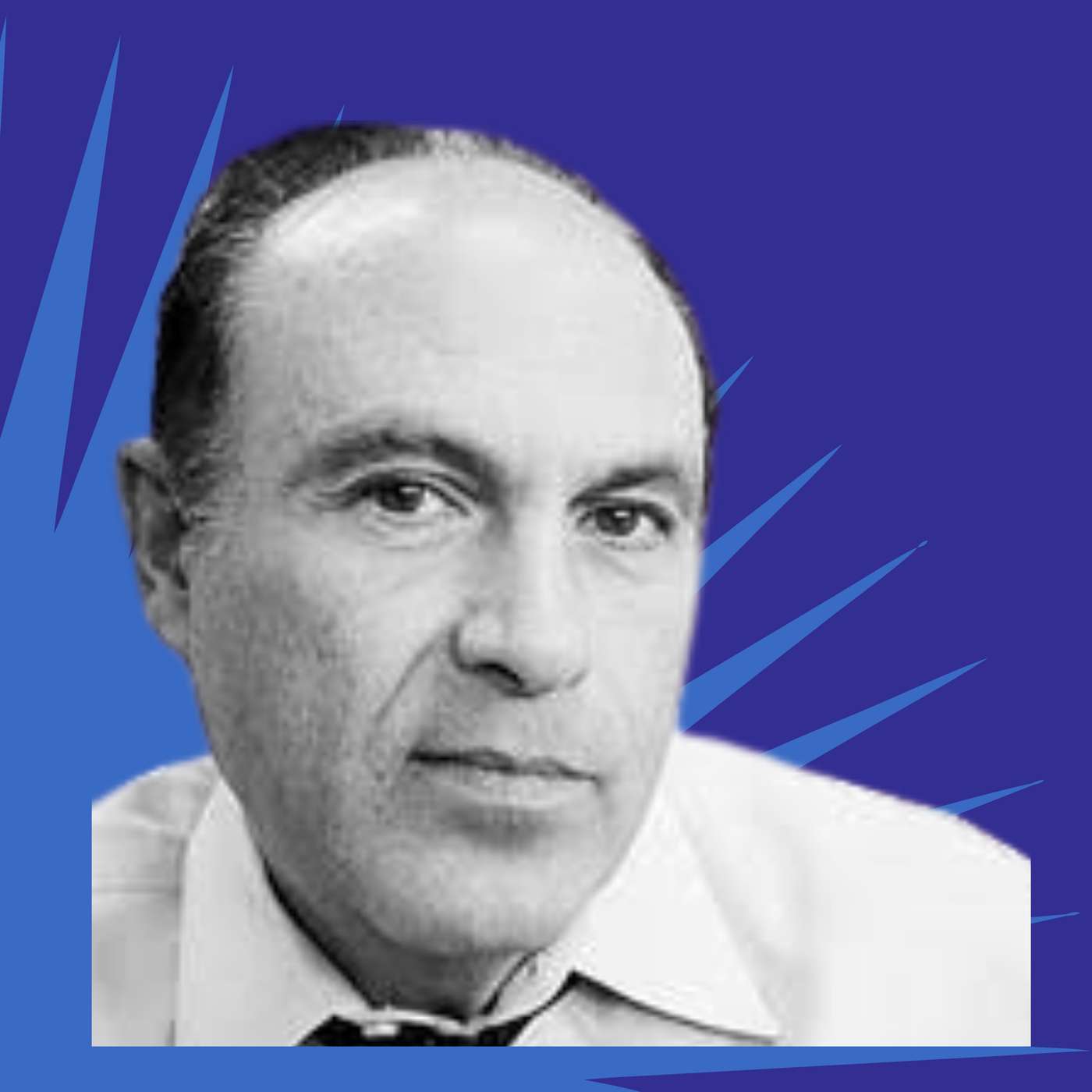
The Deadliest of Plagues? Gary Slutkin on Violence as Our Most Contagious Disease episode artwork

EPISODE · Apr 29, 2026 · 53 MIN

The Deadliest of Plagues? Gary Slutkin on Violence as Our Most Contagious Disease

from Keen On America · host Andrew Keen

“Violence has been misdiagnosed. And there’s a misdiagnosis that has caused us to not be able to control it as we could.” — Dr. Gary Slutkin Human violence appears ubiquitous. In Iran. In Gaza. In Ukraine. In Sudan. In American cities and homes. So widespread, indeed, that it seems naturally hardwired into us. Our species-being, so to speak. But, for Dr. Gary Slutkin, there is nothing inevitable about human violence. Slutkin — an epidemiologist who spent years fighting cholera, tuberculosis, and AIDS in Africa before focusing his medical mind on violence — argues that violence is neither a character flaw nor a moral failing. Rather than being baked into our natures, Slutkin sees violence as a contagious disease. It meets the clinical definition of a plague, he says. The more violent our homes, communities, media, politics, the more virally it spreads. Slutkin’s new book, The End of Violence: Eliminating the World’s Most Dangerous Epidemic, makes the case that violence has been misdiagnosed for centuries. We analyse it as a crime problem, a character problem, an inter-state problem. So we punish, incarcerate and bomb. But none of these approaches confront the contagion. This can only be done, Slutkin argues, with what he calls “violence interrupters” — people from within the infected community who find the most at-risk individuals and cool things down before they escalate. Communities that have applied this approach have seen reductions in violence of 40 to 70 percent, Slutkin boasts, with Cherry Hill, one of Chicago’s most dangerous neighbourhoods, experiencing 450 days without a shooting. There will be a time, he promises, when the plague of human violence will be mostly overcome. I hope Dr. Slutkin is correct. But suspect that his brave new violence-free world, like Huxley’s, might be simultaneously utopian and dystopian. Five Takeaways •       Violence Meets the Clinical Definition of a Contagious Disease: Slutkin is not speaking metaphorically. Violence meets the definition of a disease: characteristic signs and symptoms causing morbidity and mortality. It meets the definition of contagious: it causes more of itself. One violent event leads to another — in a home, in a community, in a region, in a war. The more you are exposed to it, the more likely you are to do it. This is the same mechanism as measles, as cholera, as COVID. Susceptibility varies — for violence, it has to do with how much you feel humiliated, how much social pain you carry, how much grievance a leader has taught you to feel. But the operating system is the same. •       Violence Has Been Misdiagnosed: For centuries, we have treated violence as a moral failing: a matter of bad people making bad choices. The response has been punishment, incarceration, war. None of these interrupt the contagion. In fact, incarceration concentrates the infection. The misdiagnosis has cost millions of lives. The correct diagnosis — epidemic disease spreading through exposure — changes everything. You don’t blame a cholera patient for drinking contaminated water. You don’t punish a COVID patient for breathing. You interrupt the spread. You treat the susceptibility. You cool it down. •       Violence Interrupters: The Epidemic Control Playbook: Cure Violence Global trains and deploys violence interrupters: people from the same community, who speak the same language, who have often been involved in violence themselves. Their job is to find the most at-risk individuals — the ones most likely to shoot or be shot next — and intervene before the next event. The approach works. Communities that have applied it have seen reductions of 40 to 70 percent. Over a dozen American cities are at fifty- or sixty-year historic lows. Cherry Hill in Chicago went 450 days without a shooting. Baltimore, New York, and other cities have had similar results. •       Authoritarian Violence Disorder: Chapter eight of The End of Violence is called “Infections of the State.” Slutkin’s argument: authoritarian leadership is itself a form of epidemic violence. It spreads violence outward into its own population — through ICE raids, through threats, through the approval and scripting of violence by others. It also spreads it abroad, through war. Violence doesn’t know borders. The mechanism is the same: exposure increases transmission; grievance and humiliation increase susceptibility. Trump’s Iran war is not just a war. It is authoritarianism causing war. And the spread doesn’t stop at the border. •       Uganda Dropped HIV 85 Percent with Behavior Change Alone: In 1987, Slutkin arrived in Uganda, then the most infected country in the world, where a third of the population had what was then a 100 percent lethal disease. Using the epidemic control playbook — no medicines, just behaviour change interventions — they dropped the rate 85 percent. The same approach drove down Ebola, drove down TB long before medication existed. Slutkin’s point: we do not need pharmacological intervention to eliminate violence. We need the right people doing the right interventions with the right understanding of how contagion works. We have done it. We can do it again. About the Guest Dr. Gary Slutkin is an epidemiologist and the founder and CEO of Cure Violence Global. He is the author of The End of Violence: Eliminating the World’s Most Dangerous Epidemic (Health Communications, Inc., 2026). He is a Professor of Epidemiology and Global Health at the University of Illinois Chicago and a former WHO epidemiologist. References: •       The End of Violence: Eliminating the World’s Most Dangerous Epidemic by Gary Slutkin (2026). •       Cure Violence Global — Slutkin’s organisation. cvg.org. •       Episode 2887: Steven J. Ross on The Secret War Against Hate — the historical companion on American violence and authoritarian disorder. About Keen On America Nobody asks more awkward questions than the Anglo-American writer and filmmaker Andrew Keen. In Keen On America, Andrew brings his pointed Transatlantic wit to making sense of the United States — hosting daily interviews about the history and future of this now venerable Republic. With nearly 2,900 episodes since the show launched on TechCrunch in 2010, Keen On America is the most prolific intellectual interview show in the history of podcasting. WebsiteSubstackYouTubeApple PodcastsSpotify 

“Violence has been misdiagnosed. And there’s a misdiagnosis that has caused us to not be able to control it as we could.” — Dr. Gary Slutkin Human violence appears ubiquitous. In Iran. In Gaza. In Ukraine. In Sudan. In American cities and homes. So widespread, indeed, that it seems naturally hardwired into us. Our species-being, so to speak. But, for Dr. Gary Slutkin, there is nothing inevitable about human violence. Slutkin — an epidemiologist who spent years fighting cholera, tuberculosis, and AIDS in Africa before focusing his medical mind on violence — argues that violence is neither a character flaw nor a moral failing. Rather than being baked into our natures, Slutkin sees violence as a contagious disease. It meets the clinical definition of a plague, he says. The more violent our homes, communities, media, politics, the more virally it spreads. Slutkin’s new book, The End of Violence: Eliminating the World’s Most Dangerous Epidemic, makes the case that violence has been misdiagnosed for centuries. We analyse it as a crime problem, a character problem, an inter-state problem. So we punish, incarcerate and bomb. But none of these approaches confront the contagion. This can only be done, Slutkin argues, with what he calls “violence interrupters” — people from within the infected community who find the most at-risk individuals and cool things down before they escalate. Communities that have applied this approach have seen reductions in violence of 40 to 70 percent, Slutkin boasts, with Cherry Hill, one of Chicago’s most dangerous neighbourhoods, experiencing 450 days without a shooting. There will be a time, he promises, when the plague of human violence will be mostly overcome. I hope Dr. Slutkin is correct. But suspect that his brave new violence-free world, like Huxley’s, might be simultaneously utopian and dystopian. Five Takeaways •       Violence Meets the Clinical Definition of a Contagious Disease: Slutkin is not speaking metaphorically. Violence meets the definition of a disease: characteristic signs and symptoms causing morbidity and mortality. It meets the definition of contagious: it causes more of itself. One violent event leads to another — in a home, in a community, in a region, in a war. The more you are exposed to it, the more likely you are to do it. This is the same mechanism as measles, as cholera, as COVID. Susceptibility varies — for violence, it has to do with how much you feel humiliated, how much social pain you carry, how much grievance a leader has taught you to feel. But the operating system is the same. •       Violence Has Been Misdiagnosed: For centuries, we have treated violence as a moral failing: a matter of bad people making bad choices. The response has been punishment, incarceration, war. None of these interrupt the contagion. In fact, incarceration concentrates the infection. The misdiagnosis has cost millions of lives. The correct diagnosis — epidemic disease spreading through exposure — changes everything. You don’t blame a cholera patient for drinking contaminated water. You don’t punish a COVID patient for breathing. You interrupt the spread. You treat the susceptibility. You cool it down. •       Violence Interrupters: The Epidemic Control Playbook: Cure Violence Global trains and deploys violence interrupters: people from the same community, who speak the same language, who have often been involved in violence themselves. Their job is to find the most at-risk individuals — the ones most likely to shoot or be shot next — and intervene before the next event. The approach works. Communities that have applied it have seen reductions of 40 to 70 percent. Over a dozen American cities are at fifty- or sixty-year historic lows. Cherry Hill in Chicago went 450 days without a shooting. Baltimore, New York, and other cities have had similar results. •       Authoritarian Violence Disorder: Chapter eight of The End of Violence is called “Infections of the State.” Slutkin’s argument: authoritarian leadership is itself a form of epidemic violence. It spreads violence outward into its own population — through ICE raids, through threats, through the approval and scripting of violence by others. It also spreads it abroad, through war. Violence doesn’t know borders. The mechanism is the same: exposure increases transmission; grievance and humiliation increase susceptibility. Trump’s Iran war is not just a war. It is authoritarianism causing war. And the spread doesn’t stop at the border. •       Uganda Dropped HIV 85 Percent with Behavior Change Alone: In 1987, Slutkin arrived in Uganda, then the most infected country in the world, where a third of the population had what was then a 100 percent lethal disease. Using the epidemic control playbook — no medicines, just behaviour change interventions — they dropped the rate 85 percent. The same approach drove down Ebola, drove down TB long before medication existed. Slutkin’s point: we do not need pharmacological intervention to eliminate violence. We need the right people doing the right interventions with the right understanding of how contagion works. We have done it. We can do it again. About the Guest Dr. Gary Slutkin is an epidemiologist and the founder and CEO of Cure Violence Global. He is the author of The End of Violence: Eliminating the World’s Most Dangerous Epidemic (Health Communications, Inc., 2026). He is a Professor of Epidemiology and Global Health at the University of Illinois Chicago and a former WHO epidemiologist. References: •       The End of Violence: Eliminating the World’s Most Dangerous Epidemic by Gary Slutkin (2026). •       Cure Violence Global — Slutkin’s organisation. cvg.org. •       Episode 2887: Steven J. Ross on The Secret War Against Hate — the historical companion on American violence and authoritarian disorder. About Keen On America Nobody asks more awkward questions than the Anglo-American writer and filmmaker Andrew Keen. In Keen On America, Andrew brings his pointed Transatlantic wit to making sense of the United States — hosting daily interviews about the history and future of this now venerable Republic. With nearly 2,900 episodes since the show launched on TechCrunch in 2010, Keen On America is the most prolific intellectual interview show in the history of podcasting. WebsiteSubstackYouTubeApple PodcastsSpotify

NOW PLAYING

The Deadliest of Plagues? Gary Slutkin on Violence as Our Most Contagious Disease

0:00 53:06

No transcript for this episode yet

We transcribe on demand. Request one and we'll notify you when it's ready — usually under 10 minutes.

The Small Business Startup School – Business Notes | Financial Literacy | Retail Psychology – For Professionals & Entrepreneurs The Small Business Startup School Inc. Starting or buying a small business? While personal circumstances may vary, business patterns remain timeless. On The Small Business Startup School, we explore strategies, insights, and practical solutions to help entrepreneurs confidently navigate their journey.Hosted by Ola Williams—a retail entrepreneur, fintech founder, and financial coach with over two decades of experience—this podcast marries financial awareness and retail psychology with optimism to deliver actionable takeaways.Join us to learn, grow, and connect as we uncover the keys to business success.Let’s continue to learn together and be encouraged to keep on connecting! PodQuesting Dwight J Randolph- WolfShield Media PodQuesting: -By WolfShield Media and Dwight J RandolphJoin us on an exciting journey to master the world of fiction podcasting! At PodQuesting, we document our quest to improve and innovate, sharing valuable insights, strategies, and behind-the-scenes tips along the way. Whether you're an experienced podcaster or just starting your first show, our podcast is your go-to resource for everything podcasting.Discover practical advice, creative techniques, and lessons from our own experiences as we explore the ever-evolving podcasting landscape. Ready to level up your skills and embark on this adventure with us? Tune in and join the quest!Have questions or feedback? Reach out to us at [email protected] and visit our website:WolfShield.Media LIGHTS, CAMERA, SMILE! Creatives Club Media Lights, Camera, Smile, is a podcast for anyone with a dream to share something with the world, out of the overflow of themselves - be it their mind, their heart, their personalities, and much more. Each of us are alive in this moment in time, with an innate ability to have ideas and create various things to benefit both ourselves and the people around us for a reason, and here, you will find the encouragement, the inspiration, and the motivation to do just that. Hosted by Cicily, founder of Creatives Club, she dives into various topics surrounding creativity and business. Exploring entrepreneurship for creatives in a corporate reality, sharing tips and tricks in a media centered company, answering questions regarding what a creative actually is are just a few of the things discussed on this podcast. Be encouraged to create for yourself as Cicily gets vulnerable by pivoting the camera to herself for the first time.To submit questions for Cicily to answer, or have her address certain t Kaizen Blueprint Aldo Chandra "Kaizen" is a Japanese term for continuous improvement. This podcast provides a blueprint to learn about health, wealth, relationships and everything else in between. Through our podcast, we strive to inspire, educate, and motivate our audience to cultivate a mindset of lifelong learning, productivity, and personal development. By sharing insights, strategies, and practical tips, we aim to guide listeners on their journey towards realizing their fullest potential, fostering success, and creating lasting positive change.

Frequently Asked Questions

How long is this episode of Keen On America?

This episode is 53 minutes long.

When was this Keen On America episode published?

This episode was published on April 29, 2026.

What is this episode about?

“Violence has been misdiagnosed. And there’s a misdiagnosis that has caused us to not be able to control it as we could.” — Dr. Gary Slutkin Human violence appears ubiquitous. In Iran. In Gaza. In Ukraine. In Sudan. In American cities and homes. So...

Is there a transcript available for this episode?

Yes, a full transcript is available for this episode. You can read the complete transcript on the episode page.

Can I download this Keen On America episode?

Yes, you can download this episode by clicking the download button on the episode player, or subscribe to the podcast in your preferred podcast app for automatic downloads.
URL copied to clipboard!