
EPISODE · Apr 29, 2026 · 17 MIN
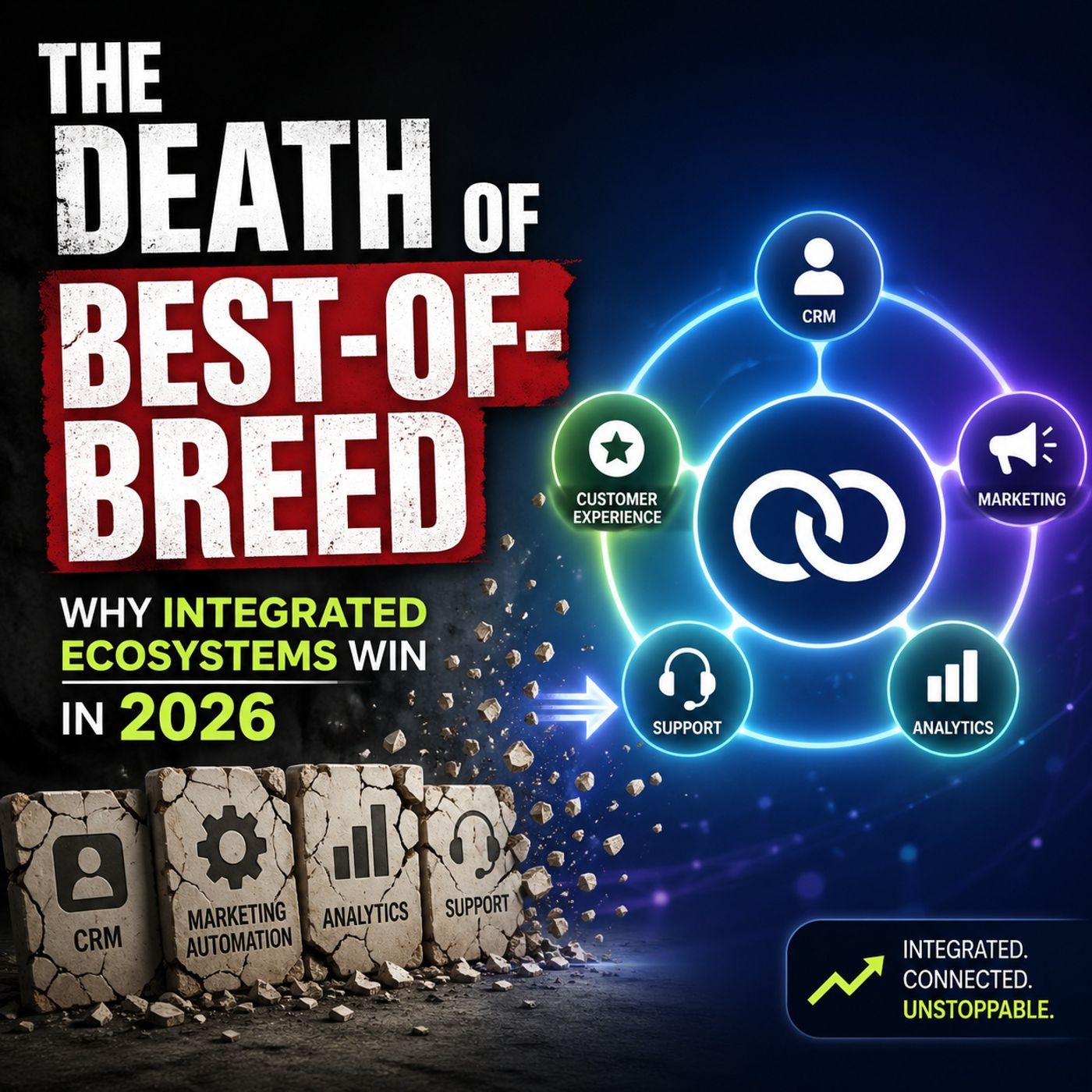
The Death of Best-of-Breed: Why Integrated Ecosystems Win in 2026
from M365.FM - Modern work, security, and productivity with Microsoft 365 · host Mirko Peters - Founder of m365.fm, m365.show and m365con.net
The best-of-breed model didn’t fail because the tools were bad. It failed because integration became your most expensive system.Modern enterprises now run between fifty and two hundred applications. Every connection introduces latency, security exposure, and fragmented identity. What you call architecture isn’t best-of-breed anymore.It’s best-of-friction.In 2026, success isn’t defined by niche excellence. It’s defined by operational fluidity. We are shifting from fragmented capability to integrated intelligence—where systems don’t just coexist, they think together.THE STRUCTURAL COLLAPSE OF BEST-OF-BREEDFor years, organizations optimized for the best individual tools—CRM, analytics, project management. And they succeeded… at the component level.But in doing so, they broke the system.The cost of connecting tools now exceeds the value they provide. Integration projects fail more often than they succeed, and businesses are burning millions just trying to stitch together systems that were never designed to cooperate.Data is scattered. Context is missing. Identity is fragmented.The result? Teams spend more time searching for information than creating value.Integration costs now outweigh tool value in most enterprisesData silos create massive operational blind spotsManual syncing scales into a full-time organizational burdenFragmented identity models introduce security and governance risksThe reality is simple: a perfectly integrated “good” tool beats a brilliant isolated one—every time.WHY AI FAILS IN FRAGMENTED ENVIRONMENTSAI isn’t broken. Your architecture is.Modern AI depends on three pillars: identity, content, and permissions. Fragmentation destroys all three.When your data lives across disconnected systems, AI only sees a fraction of your organization. It doesn’t become intelligent—it becomes unreliable.That’s why so many AI initiatives stall. Not because of the model, but because the system feeding it is incomplete.Without unified context, AI cannot deliver trust.AI systems fail when data is trapped in disconnected silosPartial visibility leads to hallucinations and user distrustInconsistent permissions create security exposureUnified data layers are required for meaningful AI outcomesIf your AI needs manual exports to function, you’re not using AI—you’re compensating for bad architecture.THE SECURITY TAX OF TOOL SPRAWLSecurity teams are drowning—not from threats, but from tools.Multiple dashboards, disconnected alerts, and inconsistent signals create delays that attackers exploit. Fragmentation doesn’t just increase cost—it increases risk.The more tools you have, the slower your response becomes.Integrated ecosystems eliminate that delay by correlating signals instantly across identity, devices, and data.Fragmented tools increase breach frequency and impactAnalysts lose significant time stitching together signalsLack of unified visibility is now the top security challengeIntegrated systems reduce response time and eliminate blind spotsIn 2026, security isn’t about having the best tool. It’s about having the fastest, most connected system.DECISION LATENCY: THE ONLY METRIC THAT MATTERSDecision latency is the time between signal and action.And today, it’s the only metric that matters.In fragmented environments, decisions are delayed by manual data gathering and reconciliation. By the time insights are formed, they’re already outdated.Integrated ecosystems remove that delay by embedding context directly into the flow of work.Fragmentation introduces days of delay in decision-makingMost enterprise data remains unused due to access complexityIntegrated systems provide real-time context and insightFaster decisions create direct competitive advantageYou’re no longer choosing tools. You’re choosing how fast your organization can think.FROM MANUAL SYNCING TO SELF-HEALING ARCHITECTURETraditional IT governance is reactive and human-dependent. And it doesn’t scale.Modern ecosystems shift governance into automated, self-healing loops. Instead of detecting issues and reacting, the system continuously enforces the desired state.Compliance becomes built-in—not requested.Self-healing systems automatically correct configuration driftOrganizations achieve near-total compliance through automationIT teams reclaim time previously lost to manual maintenanceIntegrated platforms enable scalable enterprise automationThis isn’t just automation. It’s operational evolution.THE TCO PIVOT AND THE 2026 ROADMAPThe conversation has shifted from license cost to total cost of ownership.Disconnected tools don’t just cost money—they create friction, inefficiency, and lost opportunity. Most organizations are paying for capabilities they cannot fully use.The ecosystem model eliminates redundancy and turns IT spend into measurable ROI.Consolidation reduces redundant SaaS costs significantlyIntegrated platforms deliver faster ROI and operational gainsDisconnected apps represent wasted investmentFuture-ready stacks prioritize data gravity and integrationThe roadmap is clear: simplify, unify, and then scale.CONCLUSION: THE SHIFT TO INTEGRATED INTELLIGENCEThe era of best-of-breed is over.We’ve entered the era of integrated intelligence—where systems operate as one, and context flows without friction.If your technology doesn’t think together, your business can’t either.This shift isn’t optional. It’s structural.And it’s the difference between keeping up and leading.Stay focused.Stay integrated.Become a supporter of this podcast: https://www.spreaker.com/podcast/m365-fm-modern-work-security-and-productivity-with-microsoft-365--6704921/support.
Embed this episode
What this episode covers
The best-of-breed model didn’t fail because the tools were bad. It failed because integration became your most expensive system.Modern enterprises now run between fifty and two hundred applications. Every connection introduces latency, security exposure, and fragmented identity. What you call architecture isn’t best-of-breed anymore.It’s best-of-friction.In 2026, success isn’t defined by niche excellence. It’s defined by operational fluidity. We are shifting from fragmented capability to integrated intelligence—where systems don’t just coexist, they think together. THE STRUCTURAL COLLAPSE OF BEST-OF-BREED For years, organizations optimized for the best individual tools—CRM, analytics, project management. And they succeeded… at the component level.But in doing so, they broke the system.The cost of connecting tools now exceeds the value they provide. Integration projects fail more often than they succeed, and businesses are burning millions just trying to stitch together systems that were never designed to cooperate.Data is scattered. Context is missing. Identity is fragmented.The result? Teams spend more time searching for information than creating value. Integration costs now outweigh tool value in most enterprises Data silos create massive operational blind spots Manual syncing scales into a full-time organizational burden Fragmented identity models introduce security and governance risks The reality is simple: a perfectly integrated “good” tool beats a brilliant isolated one—every time. WHY AI FAILS IN FRAGMENTED ENVIRONMENTS AI isn’t broken. Your architecture is.Modern AI depends on three pillars: identity, content, and permissions. Fragmentation destroys all three.When your data lives across disconnected systems, AI only sees a fraction of your organization. It doesn’t become intelligent—it becomes unreliable.That’s why so many AI initiatives stall. Not because of the model, but because the system feeding it is incomplete.Without unified context, AI cannot deliver trust. AI systems fail when data is trapped in disconnected silos Partial visibility leads to hallucinations and user distrust Inconsistent permissions create security exposure Unified data layers are required for meaningful AI outcomes If your AI needs manual exports to function, you’re not using AI—you’re compensating for bad architecture. THE SECURITY TAX OF TOOL SPRAWL Security teams are drowning—not from threats, but from tools.Multiple dashboards, disconnected alerts, and inconsistent signals create delays that attackers exploit. Fragmentation doesn’t just increase cost—it increases risk.The more tools you have, the slower your response becomes.Integrated ecosystems eliminate that delay by correlating signals instantly across identity, devices, and data. Fragmented tools increase breach frequency and impact Analysts lose significant time stitching together signals Lack of unified visibility is now the top security challenge Integrated systems reduce response time and eliminate blind spots In 2026, security isn’t about having the best tool. It’s about having the fastest, most connected system. DECISION LATENCY: THE ONLY METRIC THAT MATTERS Decision latency is the time between signal and action.And today, it’s the only metric that matters.In fragmented environments, decisions are delayed by manual data gathering and reconciliation. By the time insights are formed, they’re already outdated.Integrated ecosystems remove that delay by embedding context directly into the flow of work. Fragmentation introduces days of delay in decision-making Most enterprise data remains unused due to access complexity Integrated systems provide real-time context and insight Faster decisions create direct competitive...
NOW PLAYING
The Death of Best-of-Breed: Why Integrated Ecosystems Win in 2026
No transcript for this episode yet
Similar Episodes
No similar episodes found.
Similar Podcasts
No similar podcasts found.