
EPISODE · Jun 26, 2026 · 49 MIN
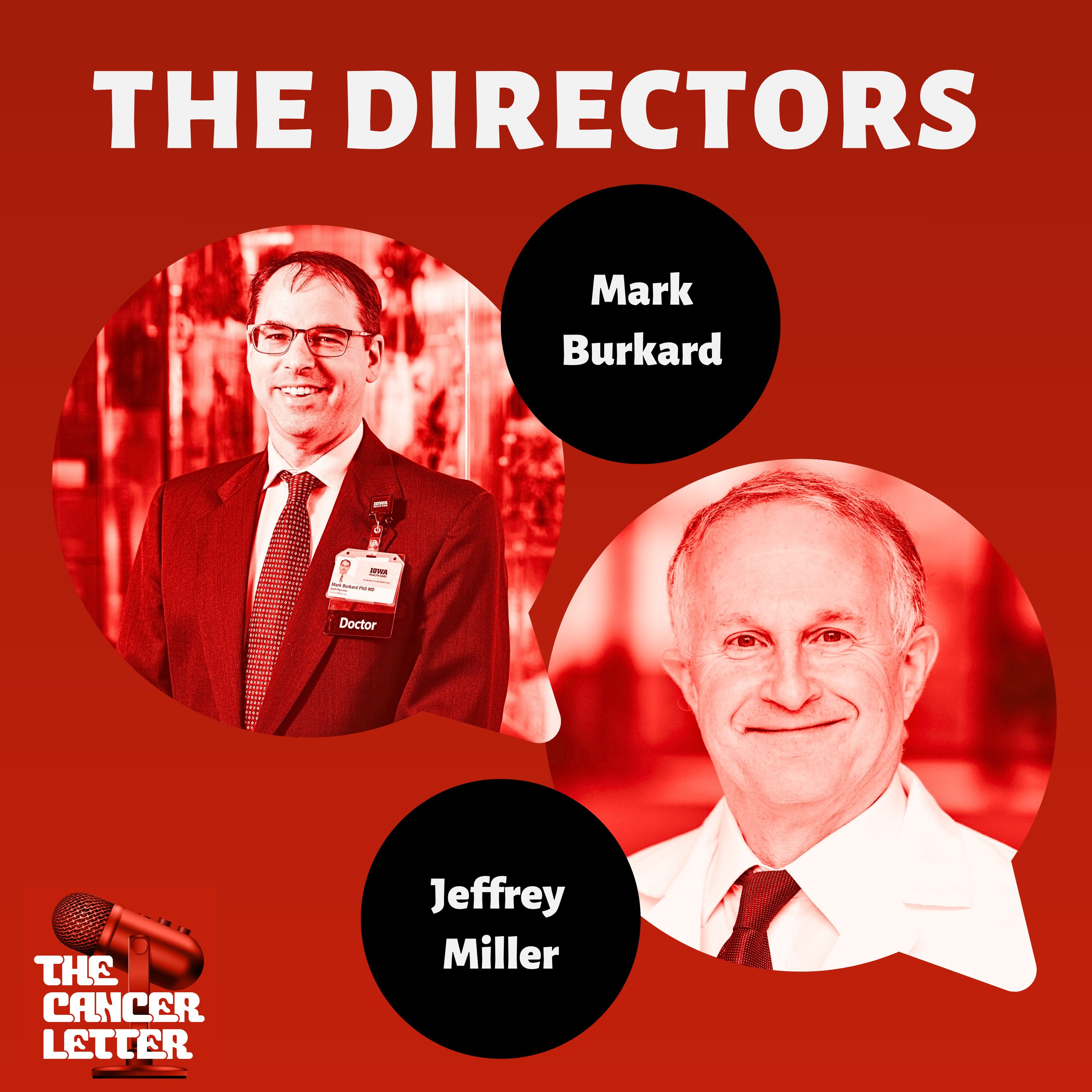
The Directors: Two Midwest directors tell us about the challenging healthcare economics in rural areas
from The Cancer Letter · host The Cancer Letter
“Institutions are feeling crunched at so many different directions”How’s this for a paradox:The better cancer centers become at keeping patients alive, the more expensive cancer care becomes.This brutal tradeoff hits harder in rural areas, where the cancer burden is higher and the investigator and clinical trial representation is lower. The federal budget introduced last summer dealt Medicaid a mighty blow, which is expected to cause a spike in the number of uninsured Americans over the next decade (The Cancer Letter, July 3, 2025). In the June episode of The Directors, two Midwestern cancer center directors, University of Iowa Holden Comprehensive Cancer Center Director Mark Burkard, and University of Minnesota Masonic Cancer Center Director Jeffrey Miller, discussed the financial and logistical challenges confronting cancer care outside major metropolitan hubs. “We had a Medicaid expansion in Iowa, and that supported what's called the directed payment program (Medicaid State Directed Payments) and that's being phased out over 10 years,” Burkard said. “I think it's going to affect rural hospitals and hospitals in underserved areas even more. And some money was put back into the rural transformation funds of which our state got $209 million. But we're looking at, basically, over the next 10 years, it's a billion-dollar cut from our health system. So, we're trying to figure out how to tighten our belts to make up for that difference as a health system.”Driven by the One Big Beautiful Bill Act and subsequent CMS regulations, these changes cap supplemental payments and are expected to significantly reduce federal Medicaid spending over the next decade.The effect of the financial tightening is systemic. Even the paths taken by junior faculty members are affected.“It used to be that you could creatively dabble as a junior faculty, and then figure out how to develop your career,” Miller said. “But now, they want you to do it in pretty much three years. You get three years of unrestricted time, and then you’ve got to go out into the world and say, ‘How am I going to support my salary?’"
Embed this episode
Ready to play
The Directors: Two Midwest directors tell us about the challenging healthcare economics in rural areas
No transcript for this episode yet
Similar Episodes
No similar episodes found.
Similar Podcasts
No similar podcasts found.