
EPISODE · Feb 11, 2026 · 37 MIN
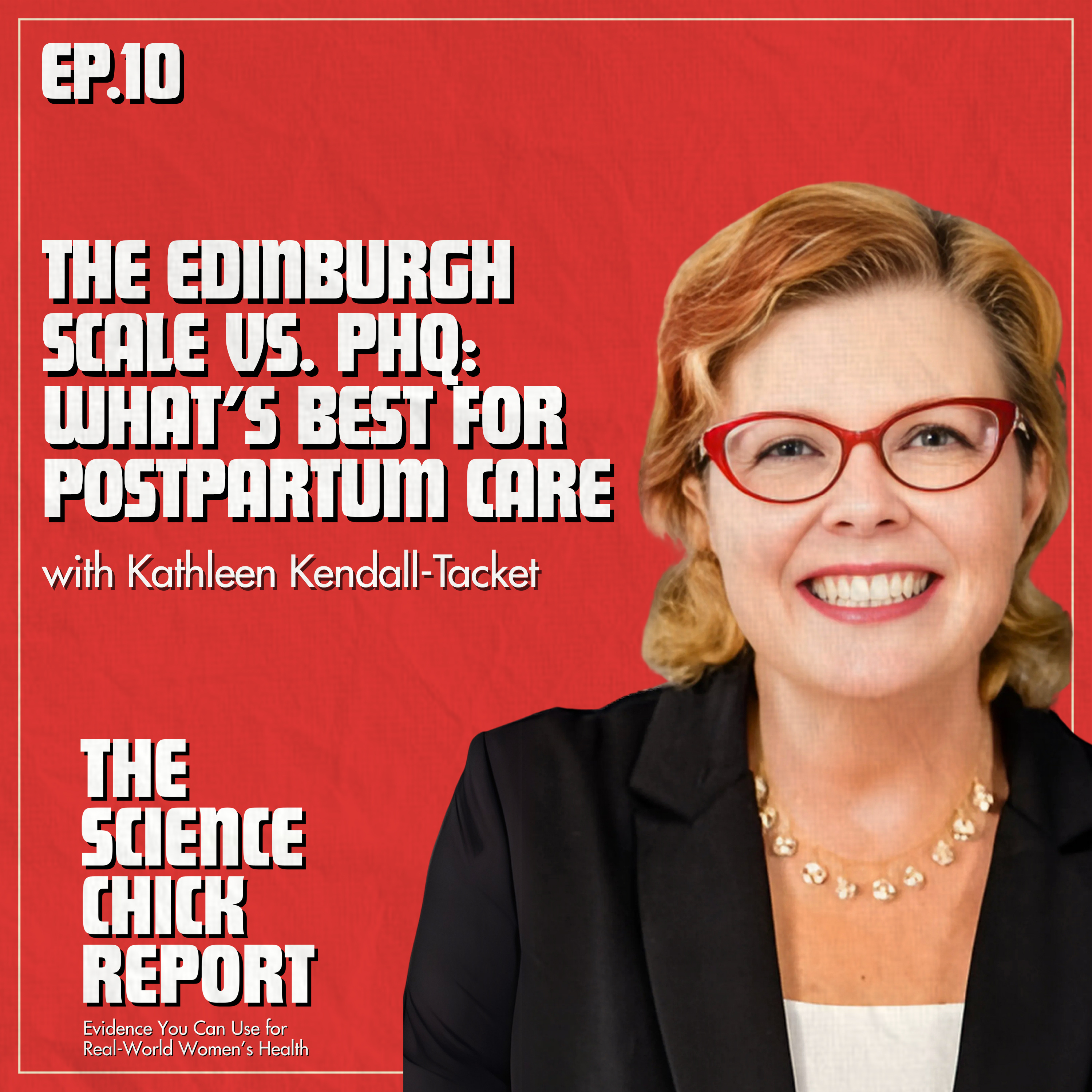
The Edinburgh Scale vs. PHQ: What’s Best for Postpartum Care
from The Science Chick Report: Evidence You Can Use for Real-World Women's Health · host Kathleen Kendall-Tackett
Choosing the right screening tool for postpartum depression is more than just a clinical decision — it’s a key step that impacts what happens next for new mothers. In this episode of The Science Chick Report, Dr. Kathleen Kendall-Tackett walks through two of the most commonly used tools for identifying postpartum depression: the Edinburgh Postnatal Depression Scale (EPDS) and the Patient Health Questionnaire (PHQ).Dr. Kendall-Tackett explains why these tools are more than just academic: their proper use directly affects the care that mothers receive. While screening scales help identify symptoms, what happens after a positive screen can determine whether a mother receives the support she needs or falls through the cracks. She also emphasizes the importance of understanding the limitations and benefits of these tools before use, especially in community-based settings.This episode is a call for healthcare providers to not only screen but also ensure that proper follow-up systems are in place. It’s about making sure mothers don’t face the frustration of an unmet expectation when they are vulnerable and in need of help.In This Episode:[00:00:00] Introduction: The importance of choosing the right screening tools[00:01:12] Why screening is a critical first step in postpartum care[00:03:11] The Edinburgh Postnatal Depression Scale: Pros and cons[00:05:37] Language and cultural barriers in using the Edinburgh scale[00:07:00] The problem with reverse scoring and language confusion[00:08:06] Using the Edinburgh three-item version for quick assessments[00:10:05] PHQ-9: A more straightforward, reliable alternative[00:12:07] How to use screening results: what happens next?[00:13:15] Understanding anxiety and depression in postpartum women[00:15:00] The challenge of limited resources in healthcare[00:17:01] Community-based support and non-medical interventions[00:19:32] The importance of planning follow-up after screeningNotable Quotes[01:34] “It’s not enough to just screen — you have to have a plan for what happens next.” — Dr. Kathleen Kendall-Tackett[03:37] “The Edinburgh scale has been around for decades, but it still has issues, especially with language and scoring.” — Dr. Kathleen Kendall-Tackett[05:21] “A screening scale is not the same as a diagnostic tool. It’s the first step, not the final answer.” — Dr. Kathleen Kendall-Tackett[10:05] “The Edinburgh three-item version might be the best option for quick, on-the-go screening.” — Dr. Kathleen Kendall-Tackett[13:15] “Even with limited resources, you can connect mothers to help — it’s all about knowing what services are available.” — Dr. Kathleen Kendall-TackettResource and LinksThe Science Chick ReportThe Science Chick Report Dr. Kathleen Kendall-TackettWebsiteLinkedInXFacebookResearchGate (upcoming paper)MentionedEdinburgh Postnatal Depression Scale – Full vs. Three-Item VersionsPatient Health Questionnaire (PHQ-9)US Preventive Services Task Force RecommendationsMoyer et al. (2023) – Edinburgh Postnatal Depression Scale (US Version)Cheryl Beck – Postpartum Depression Screening ScaleCity Birth Trauma ScalePittsburgh Sleep Quality Index
Embed this episode
NOW PLAYING
The Edinburgh Scale vs. PHQ: What’s Best for Postpartum Care
No transcript for this episode yet
Similar Episodes
No similar episodes found.
Similar Podcasts
No similar podcasts found.