
PODCAST · health
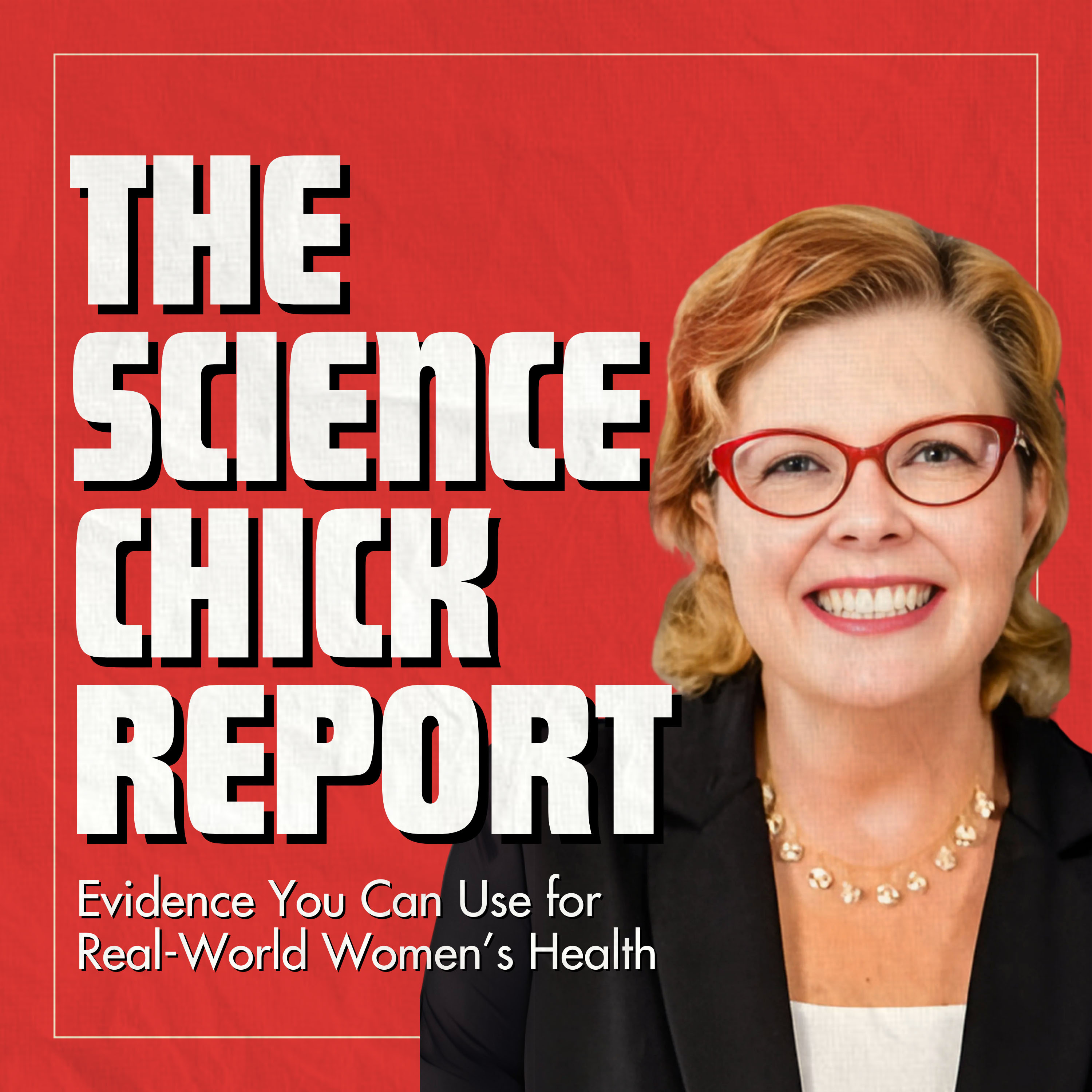
The Science Chick Report: Evidence You Can Use for Real-World Women's Health
by Kathleen Kendall-Tackett
Hosted by Dr. Kathleen Kendall-Tackett, The Science Chick Report brings women’s health research you can trust to the people holding it all together: birth workers, lactation consultants, doulas, midwives, mental health providers, and nurses. Every episode turns the latest science into practical tools, helping you advocate, recover, and stay grounded in the work you love, even when it feels like you’re doing it alone.
-
18
Breastfeeding Isn’t Always the Real Problem
Did you know that some of the hardest parts of early motherhood may have nothing to do with breastfeeding itself?In this episode of The Science Chick Report, Dr. Kathleen Kendall-Tackett explores what she calls the “Five I’s of New Motherhood”: idleness, isolation, incompetence, identity, and intensity. These are the hidden emotional and psychological barriers that can quietly derail new mothers, even when breastfeeding is technically going well.Drawing from her book Breastfeeding Doesn’t Need to Suck, Dr. Kendall-Tackett explains why the early postpartum period can feel so disorienting. A mother may be recovering physically, establishing milk supply, caring for a newborn around the clock, and still feeling like she is “not doing anything.” Add isolation, shifting identity, sleep disruption, and the pressure to “enjoy every minute,” and it is easy to see why this stage can feel overwhelming.Dr. Kendall-Tackett also discusses how formula marketing often speaks directly to these vulnerable feelings by promising mothers a return to freedom, identity, and control. Instead of shaming mothers for struggling, she encourages providers, partners, and support groups to talk openly about these experiences and help mothers reframe them with compassion and realism.This episode is a grounded reminder that new mothers are not lazy, incompetent, or losing themselves. They are recovering, learning, bonding, and helping their babies transition from womb to world. And with structure, support, short breaks, outside time, and realistic expectations, this intense season can become more manageable.In This Episode:[00:00] Introduction[00:49] A new format focused on support for mothers[01:21] Introducing the Five I’s of New Motherhood[02:36] How formula companies target new mothers’ fears[04:19] Amy Brown’s insight on motherhood and disempowerment[06:02] Why breastfeeding struggles are not always about breastfeeding[07:06] The first “I”: idleness[09:42] Postpartum brain shifts and losing track of time[12:21] Reframing idleness as recovery and bonding[14:16] Why structure helps new mothers cope[15:01] The second “I”: isolation[18:27] Feeling disconnected from friends after birth[20:12] Why mothers should not tough out isolation[21:35] Finding a tribe and building support[22:55] The third “I”: incompetence[24:41] Reframing incompetence as learning[27:21] Using time markers to stay grounded[29:28] The fourth “I”: identity[31:08] Why the old self has not disappeared[32:15] The fifth “I”: intensity[34:00] Helping babies transition from womb to world[35:30] Taking short breaks without undermining breastfeeding[36:19] Practical coping tools for the newborn stage[39:38] Limiting phone time and staying present[41:25] Final thoughts and next topicNotable Quotes:[04:22] “Mothering is the most powerful of all biological capacities and among the most disempowering of social experiences.” – Amy Brown, quoted by Dr. Kathleen Kendall-Tackett[06:30] “This is something that can absolutely derail mothers, and to remember that we have a multi-billion dollar industry preying on these very fears.” – Dr. Kathleen Kendall-Tackett[13:35] “You’re not being lazy. You’re resting. You’re recovering. It’s smart.” – Dr. Kathleen Kendall-Tackett[15:17] “When we isolate a prisoner, that’s considered cruel and unusual punishment.” – Dr. Kathleen Kendall-Tackett[24:43] “They’re not incompetent. That’s the truth. They’re learning.” – Dr. Kathleen Kendall-Tackett[31:35] “The old me has not gone away. Buying a product is not going to bring that back.” – Dr. Kathleen Kendall-TackettResources and Links:PodcastThe Science Chick ReportDr. Kathleen Kendall-TackettWebsiteLinkedInXFacebookResearchGateMentioned ResourcesBreastfeeding Doesn’t Need to SuckBreastfeeding Made SimpleAmy BrownBrooke Shields’ postpartum depression memoirSuzanne CoulsonEd Tronick’s Still Face Mother studies
-
17
Why Women Use Cannabis During Pregnancy and Breastfeeding
Why do pregnant and breastfeeding women use cannabis? The answer isn't what most clinicians think. In this episode, Dr. Kathleen Kendall Tackett shares data from over 3,400 perinatal cannabis users. The number one reason isn't "getting high" or even enjoyment. It is perceived safety. Nearly 98% of mothers believe cannabis is safer and more natural than prescription medications for managing symptoms.Using advanced statistical analysis, Promax rotation, Dr. Kendall Tackett identified four key drivers. They are perceived safety, availability (partner or family use), enjoyment, and symptom relief for anxiety, sleep, PTSD, and nausea. While acknowledging real risks like preterm birth, she argues that shame based counseling doesn't work, and women are asking for help.The episode introduces a free, easy to use clinical tool. It is the Perinatal Cannabis Questionnaire, designed to open meaningful conversation. Scan the QR code in the episode to access it. Dr. Kendall Tackett invites clinicians to try the tool and share feedback. She wants to move beyond "just say no" toward actual harm reduction. For providers on the front lines of women's health, this is practical, data driven guidance you can use today.In This Episode:[00:00] Introduction[00:37] Why pregnant and breastfeeding women continue using cannabis[01:14] Women are asking for help, not judgment[01:31] A study of 3,443 perinatal cannabis users[02:13] Why existing cannabis scales fail pregnant women[02:50] Building a new questionnaire from scratch[03:10] What factor analysis revealed about cannabis use[04:02] Why traditional statistical models missed the bigger picture[04:48] The myth that women mainly use cannabis “for fun”[05:08] The real top factor: perceived safety[05:29] Trauma, symptom management, and self-treatment[06:05] Why 98% viewed cannabis as safer than medications[06:27] The real risks providers should understand[06:45] Why long-term cannabis research is complicated[07:04] Availability as a major driver of use[07:42] Sleep, anxiety, appetite, nausea, and PTSD[08:19] How providers can start better conversations[08:46] Introducing a new perinatal cannabis screening tool[09:21] “Don’t just tell me no. Give me other ideas.”[09:39] A QR code tool for clinicians and providers[10:00] Why maternal healthcare needs practical tools now[10:27] Closing thoughts and encouragement for providersNotable Quotes:[00:47] "The way we've all been trained is to say, 'Well, stop doing that. Don't do that. This is not safe.' But we're kind of finding, of course, that that doesn't really help." — Dr. Kathleen Kendall-Tackett[01:02] "Women are using cannabis for a reason. And so even though they're getting advice from people to not use it, they're still continuing to use — and oftentimes they're asking for help." — Dr. Kathleen Kendall-Tackett[05:23] "The number one factor was not fun, but actually perceived safety." — Dr. Kathleen Kendall-Tackett[05:47] "Trauma causes health symptoms, which drives cannabis use — so that's kind of the way that relationship shakes out." — Dr. Kathleen Kendall-Tackett[06:08] "Ninety-eight percent of mothers consider it to be a safer and more natural way to treat symptoms than using medications." — Dr. Kathleen Kendall-Tackett[09:19] "Don't just tell me no. Give me some other ideas." — perinatal study participants[09:58] "The fact that we have not had any tools at all to have conversations like this with perinatal women seems ridiculous considering the number of studies we're getting." — Dr. Kathleen Kendall-TackettResources and LinksPodcastThe Science Chick Report Dr. Kathleen Kendall-TackettWebsiteLinkedInXFacebookResearchGate (upcoming paper)
-
16
The Dangerous Blind Spot in Pregnancy and Birth Care
What does it mean to feel safe while giving birth? For many Jewish women and families in the United States, the United Kingdom, and beyond, that question has taken on an urgency that would have been unthinkable just a few years ago.In this episode of The Science Chick Report, Dr. Kathleen Kendall-Tackett sits down with Dr. B.J. Woodstein, author of the groundbreaking new book Be Fruitful: The Jewish Pregnancy and Birth Guide. What starts as a discussion about cultural competence quickly reveals a far more urgent crisis: a dramatic rise in anti-Semitism that is making pregnancy, birth, and postpartum care dangerous for Jewish patients and providers alike.Dr. Woodstein, a doula and lactation consultant, shares firsthand accounts of Jewish women being turned away, verbally abused, and even reported to social services for following religious traditions. She describes a Jewish midwife who was called “baby killer” by a patient’s family while trying to support a birth. She herself was forced to leave professional doula groups after speaking up against anti-Semitic posts. She also reveals the chilling reality that many Jewish families are now planning exit strategies and wondering if this feels like “Germany in the 1930s.”But the episode is not just a catalogue of horrors. It is a call to action. Dr. Woodstein explains the spectrum of Jewish identity, from atheist to Orthodox, from Ethiopian to Ashkenazi, and offers concrete, practical steps that doctors, midwives, doulas, and lactation consultants can take to make their practices safe and welcoming. These include keeping politics out of clinical spaces, establishing clear anti-abuse policies, and simply asking Jewish families, “What do you need?”Dr. Kendall-Tackett brings her signature blend of compassion and no-nonsense science, connecting the conversation to her own work on trauma, inflammation, and the body’s response to discrimination. She ends with a direct challenge to non-Jewish listeners: “Stand up for your colleagues and patients. This is not okay. We wouldn’t do this with any other group.”Tune in to learn how to recognize anti-Semitism in maternity care, why Jewish families are frightened, and what you can do to be part of the solution.In This Episode:[00:00] Introduction[00:34] Introduction to Dr. B.J. Woodstein[01:30] Why Be Fruitful was written, and the rise in antisemitism[04:30] Antisemitism in universities and healthcare.[05:30] An HR manager blames a Jewish employee.[09:13] “We don’t want Jews in our department.”[10:18] A tube driver says no Jews are safe.[11:49] Jewish families plan exit strategies.[13:10] “Is this Germany in the 1930s?”[14:17] Pregnancy is a uniquely vulnerable time.[17:16] The myth of white privilege for Jews.[18:59] What is a Jew? Breaking it down.[22:54] Ashkenazi, Sephardi, and Mizrahi Jews.[26:40] “How can you be white colonizers?”[28:00] The spectrum from Reform to Hasidic.[30:14] A midwife calls social services over a brit milah.[32:50] What if she wore a hijab instead?[33:52] A Jewish midwife called “baby killer.”[35:36] Hospitals need clear anti-abuse policies.[38:03] “Are you a Zionist?” A doula is rejected.[40:10] Stand up, or you get Vienna.[44:24] Synagogue security vs. churches and mosques.[48:39] Ignorance versus active prejudice.[50:15] Doula UK refused Jewish cultural training.[51:24] Keep politics out of the delivery room.[53:23] A Muslim woman and a Jewish lactation consultant.[59:47] What providers can do right now.[01:00:40] Shabbat buttons, kosher food, naming on day eight.[01:07:49] See the individual, not the whole culture.[01:09:57] A call to non-Jewish providers: stand up.[01:11:13] Closing thoughts.Resources and LinksPodcastThe Science Chick Report Dr. B.J. WoodsteinWebsiteLinkedInBook: Be Fruitful: The Jewish Pregnancy and Birth GuideDr. Kathleen Kendall-TackettWebsiteLinkedInXFacebookResearchGate (upcoming paper)
-
15
Rethinking Racial Trauma: What the Science Says
Is racial trauma “real” trauma, or are we asking the wrong question?Black women in the U.S. experience nearly double the rate of preterm birth compared to white women, and emerging research suggests this disparity may not be genetic but driven by chronic exposure to racial discrimination, activating the same inflammatory pathways seen in traditional trauma.In this episode of The Science Chick Report, Dr. Kathleen Kendall Tackett takes on one of the most debated issues in the trauma field. Drawing from her role as editor of the APA journal Psychological Trauma, she challenges the limits of the DSM 5’s Criterion A and explores what happens when the definition of trauma does not match what the body is actually experiencing.Blending neuroscience with real world data, she explains how the brain does not just respond to physical threats. It also reacts to social rejection, exclusion, and discrimination. At the center of this response is the anterior cingulate cortex, a region that processes both physical and social pain. When activated repeatedly, it can trigger the same stress cascades seen in classic PTSD.The consequences are far from abstract. Elevated inflammation markers like C reactive protein, higher rates of substance use, increased risk of chronic disease, and even preterm birth begin to tell a consistent story. The body is responding as if it is under threat because in many ways, it is.This episode does not dismiss the need for clinical precision, but it does push the conversation forward. Trauma, as Dr. Kendall Tackett argues, is not purely objective. It is shaped by perception, lived experience, and how the brain interprets danger.If we are willing to follow biology, we may need to rethink not just the definition of trauma, but how we recognize, study, and respond to it. Tune in and decide for yourself whether racial trauma fits the definition, or whether it is time to redefine what trauma really means. In This Episode:[00:00] Introduction[00:41] The controversy: Is racial trauma “real” trauma?[01:01] Defining trauma and DSM-5 Criterion A[02:20] Why trauma definitions have always evolved[03:03] What qualifies as a traumatic event[03:53] Can microaggressions rise to the level of trauma?[05:00] Why the body’s response may matter more than definitions[05:37] How the brain senses danger (amygdala vs. other systems)[08:33] The anterior cingulate cortex and threat processing[09:18] Social rejection as a survival threat[10:39] Social pain vs. physical pain in the brain[11:42] Rethinking trauma as a subjective experience[13:23] The body’s stress systems and inflammation response[16:31] Research on discrimination and inflammation markers[18:54] Microaggressions and substance use outcomes[19:14] Social class, stress, and inflammatory response[20:18] Chronic inflammation and long-term health risks[21:12] Racial disparities in preterm birth explained[23:05] Connecting the dots: discrimination and health outcomes[24:00] Why trauma definitions need revisiting[25:08] “Look at the numbers”: following the health data[25:29] Case study: two birth experiences, two trauma responses[28:27] The subjective nature of trauma[28:47] Why this conversation matters now[29:04] Closing thoughtsResources and LinksPodcastThe Science Chick Report Dr. Kathleen Kendall-TackettWebsiteLinkedInXFacebookResearchGate (upcoming paper)Referenced Research & Topics Lewis (2010) – Perceived discrimination and inflammationStudies on racial microaggressions and substance useResearch on social rejection and brain activationInflammation and chronic disease literaturePreterm birth and inflammatory cytokinesCochrane Review (2018) – DHA and gestational length
-
14
Non-Medical Ways to Treat Depression
What if something as simple as a group walk could be just as effective as antidepressant medication for some mothers?In this episode of The Science Chick Report, Dr. Kathleen Kendall-Tackett continues her series on practical, non-medical ways to support mothers experiencing depression, this time focusing on something simple but powerful: exercise.For many providers, it can feel frustrating when options like medication or therapy are off the table. But as she explains, there is still a lot you can do within your scope, and it does not have to be expensive or complicated.Dr. Kendall-Tackett breaks down the research behind moderate exercise and its impact on depression, including studies showing it can be nearly as effective as antidepressants. More importantly, she reframes exercise in a way that feels realistic for new mothers. This is not about intense workouts. It is about small, consistent movement like walking, often with the baby included.She also highlights how combining simple strategies like exercise, omega-3s, sunlight, and social connection can create meaningful change. Group walks, community support, and even light exposure can help reduce isolation and improve mental health in powerful ways.If you are a doula, nurse, or community health worker, this episode gives you practical, evidence-based tools you can actually use.Tune in to learn how small, consistent actions can make a real difference in maternal mental health.In This Episode:(00:00) Introduction(01:14) Alternative treatments for depression beyond medication(04:06) Community success stories walking and omega 3s(05:43) Research evidence exercise vs medication(09:53) Inflammation and exercise intensity(10:54) Types of exercise aerobic yoga strength training(13:27) Recommended exercise guidelines(15:53) Exploring local exercise options(18:17) Implementing light in group settings(20:04) Importance of follow up and evaluation(20:55) Scope of practice and safety considerationsNotable Quotes:(01:00) “There is actually a lot you can do, and you can talk to mothers about things they could do themselves, or you can even start a program together where you get together and really make a big difference.” — Dr. Kathleen Kendall-Tackett(01:25) “I have certainly run into this group of mothers over the years, mothers who just don't want to do the classic psychiatric thing—going on medications, doing therapy — Dr. Kathleen Kendall-Tackett(02:13) “Mothers or anybody who's depressed actually has options besides just pills and psychotherapy. And that is exercise.” — Dr. Kathleen Kendall-Tackett(03:25) “A moderate amount of exercise has a huge effect, not only in terms of physical health, but also mental health as well..” — Dr. Kathleen Kendall-Tackett(06:55) “This idea that you give people a pill and they get better automatically—it's not true all the time..” — Dr. Kathleen Kendall-Tackett(15:31) “The nice thing about exercise is that the effects are almost immediate.” — Dr. Kathleen Kendall-Tackett(08:52) Preventing prenatal depression is a great idea because if you can prevent prenatal depression, you actually lower the risk of preterm birth.” — Dr. Kathleen Kendall-Tackett(09:19) “With moderate exercise, which is what we're talking about here, it actually can lead to less lactic acid, and it doesn't seem to be a problem with the babies.”— Dr. Kathleen Kendall-TackettThe Science Chick ReportThe Science Chick Report Dr. Kathleen Kendall-TackettWebsiteLinkedInXFacebookResearchGate (upcoming paper)Mentioned Babyak et al. (2000) – Duke University exercise and depression studyBlumenthal et al. (2007) – Follow-up study: exercise vs. medicationNissen et al. (2021) – Systematic review of exercise and depressionDavenport et al. – Review of 52 studies on exercise and prenatal depression (131,000 patients)University of New Hampshire (1999) – Lactic acid in breastmilk and exercise
-
13
Practical Strategies Providers Can Use to Support Mothers (Part 2)
Emerging research suggests that nutrient deficiencies may contribute to postpartum depression and addressing them may support recovery.In this episode of The Science Chick Report, Dr. Kathleen Kendall-Tackett continues her series on practical, non-medical approaches that can support mothers experiencing postpartum depression. Many providers want to help but may not have access to specialized mental health services or extensive resources. Dr. Kendall-Tackett explains that even within those limits, there are practical steps that practitioners and mothers can consider that may support mental health and recovery.This episode focuses on the role of nutrition and anti-inflammatory strategies in depression. Dr. Kendall-Tackett begins with vitamin D, one of the most common deficiencies worldwide. Because modern lifestyles limit sun exposure, many people do not produce enough vitamin D naturally. Research suggests that deficiency may contribute to increased inflammation and higher rates of depressive symptoms among mothers.She then explores the role of vitamin B12, which helps regulate homocysteine, an inflammatory compound linked to depression. Low levels of B12 have been associated with significantly higher rates of postpartum depression, making it another nutrient worth evaluating.The episode also discusses curcumin, the active compound in turmeric, which has been studied for its anti-inflammatory properties and potential benefits in treating depression and anxiety.Finally, Dr. Kendall-Tackett addresses St. John’s wort, an herbal treatment widely used for depression in many parts of the world. While research suggests it can be effective for mild to moderate depression, she emphasizes the importance of caution due to potential interactions with medications.For doulas, childbirth educators, nurses, and community health practitioners, this episode provides practical, science-based insights into nutritional approaches that may help support maternal mental health alongside traditional care.In This Episode:(00:00) Introduction (26) Community and individual interventions overview(01:07) Vitamin D deficiency and maternal health(04:03) Research on vitamin D and depression(06:10) Vitamin B12 and postpartum depression(08:14) Accessibility and impact of vitamin D and B12(09:11) Curcumin (turmeric) as an anti-inflammatory supplement(11:31) Research on curcumin and mental health(12:30) St. John’s wort: appeal and cautions(13:21) St. John’s wort: history and mechanism(14:23) St. John’s wort: drug interactions and safety(15:24) St. John’s wort: effectiveness compared to antidepressants(17:17) St. John’s wort: use in major depression and global practices(19:16) St. John’s wort: dosage, standardization, and breastfeeding(21:14) St. John’s wort: quality control and recommendations(22:57) Conclusion and preview of next episode(23:30) Closing remarksNotable Quotes:(03:57) “If you're deficient in vitamin D, one of the things that it does is it increases inflammation. When you've got inflammation, you've got depression.” — Dr. Kathleen Kendall-Tackett (05:18) "The higher your vitamin D, the lower your Edinburgh score which means lower depressive symptoms.”— Dr. Kathleen Kendall-Tackett (14:05) “I'd like to point out that lots and lots of things are natural that aren't safe. Lead is natural. Arsenic is natural. Asbestos is natural.” — Dr. Kathleen Kendall-Tackett (22:31) “It is natural doesn't mean you can take as much as you want and it will be safe.” — Dr. Kathleen Kendall-TackettResources and LinksThe Science Chick ReportThe Science Chick Report Dr. Kathleen Kendall-TackettWebsiteLinkedInXFacebookResearchGate (upcoming paper)
-
12
Practical Strategies Providers Can Use to Support Mothers (Part 1)
Did you know that some of the most effective ways to support mothers experiencing postpartum depression may not involve medication at all?In this episode of The Science Chick Report, Dr. Kathleen Kendall-Tackett explores practical, non-medical strategies that healthcare providers and community practitioners can use to support mothers experiencing postpartum depression. Many professionals want to help but feel limited by lack of funding, training, or access to specialized mental health services. Dr. Kendall-Tackett explains that even within those constraints, there are meaningful steps providers can take to make a difference.She begins by encouraging practitioners to focus on what is possible within their scope of practice. Screening for postpartum depression is an important first step, but it should always be paired with a plan for referral and support. Mapping local resources such as mental health providers, domestic violence services, and community support programs can help practitioners connect mothers to the help they need.The episode then introduces the first of several non-medical interventions mothers can try themselves. Dr. Kendall-Tackett explains the growing research on omega-3 fatty acids, particularly DHA and EPA, and how these nutrients may help reduce inflammation, support brain health, and lower the risk of depression and preterm birth.For doulas, childbirth educators, nurses, and community health workers, this episode offers practical tools and science-based insights for supporting maternal mental health when traditional treatment options are limited.In This Episode:(00:00) Introduction and encouragement for practitioners(01:16) Scope of practice and taking action(03:06) Assessing community resources(04:11) Building trust and addressing barriers(05:10) Alternative self-help interventions for mothers(06:18) Introduction to omega-3 fatty acids(07:16) Omega-6 vs. omega-3 fatty acids(08:16) Inflammation and mental health(09:26) Types and sources of omega-3s(10:26) DHA dosage and population studies(11:26) DHA’s role in pregnancy and preterm birth(12:38) Cochrane review and DHA recommendations(13:45) EPA for treating depression(15:45) Supplement safety and brand recommendations(17:37) Omega-3s as adjuncts to antidepressants(20:36) Bleeding concerns and Faroe Islands study(22:30) How to dose and choose omega-3 supplements(24:14) Summary and further resources(24:48) Closing remarksNotable Quotes:(01:09) “If you are creative, there are things that you can do that will make the situation better for new moms.” — Dr. Kathleen Kendall-Tackett (01:44) "Don't give up just because there's not a bunch of funding available. The funding fairy will not suddenly land. It's going to be frustrating.”— Dr. Kathleen Kendall-Tackett (02:10) “The question isn’t always what can’t be done. Sometimes it’s asking, what can I do?” — Dr. Kathleen Kendall-Tackett (08:43) “ High inflammation means more depression, anxiety, post-traumatic stress disorder, even bipolar disorder. So that seems to be the underlying physiological mechanism.” — Dr. Kathleen Kendall-Tackett (13:34) “DHA Omega-3 fatty acids may increase gestational age and help prevent preterm birth.” — Dr. Kathleen Kendall-Tackett (17:37) “Antidepressants don’t always resolve depression because they don’t directly address inflammation.” — Dr. Kathleen Kendall-TackettResource and LinksThe Science Chick ReportThe Science Chick Report Dr. Kathleen Kendall-TackettWebsiteLinkedInXFacebookResearchGate (upcoming paper)Mentioned Middleton et al. (2018) – Cochrane Review on omega-3 fatty acids and pregnancy outcomesHibbeln – Population studies on omega-3 intake and mental healthMichael maes – Inflammation and depression research“Can Fats Make You Happy?” – Dr. Kendall-Tackett research paper
-
11
The Edinburgh Scale vs. PHQ: What’s Best for Postpartum Care
Choosing the right screening tool for postpartum depression is more than just a clinical decision — it’s a key step that impacts what happens next for new mothers. In this episode of The Science Chick Report, Dr. Kathleen Kendall-Tackett walks through two of the most commonly used tools for identifying postpartum depression: the Edinburgh Postnatal Depression Scale (EPDS) and the Patient Health Questionnaire (PHQ).Dr. Kendall-Tackett explains why these tools are more than just academic: their proper use directly affects the care that mothers receive. While screening scales help identify symptoms, what happens after a positive screen can determine whether a mother receives the support she needs or falls through the cracks. She also emphasizes the importance of understanding the limitations and benefits of these tools before use, especially in community-based settings.This episode is a call for healthcare providers to not only screen but also ensure that proper follow-up systems are in place. It’s about making sure mothers don’t face the frustration of an unmet expectation when they are vulnerable and in need of help.In This Episode:[00:00:00] Introduction: The importance of choosing the right screening tools[00:01:12] Why screening is a critical first step in postpartum care[00:03:11] The Edinburgh Postnatal Depression Scale: Pros and cons[00:05:37] Language and cultural barriers in using the Edinburgh scale[00:07:00] The problem with reverse scoring and language confusion[00:08:06] Using the Edinburgh three-item version for quick assessments[00:10:05] PHQ-9: A more straightforward, reliable alternative[00:12:07] How to use screening results: what happens next?[00:13:15] Understanding anxiety and depression in postpartum women[00:15:00] The challenge of limited resources in healthcare[00:17:01] Community-based support and non-medical interventions[00:19:32] The importance of planning follow-up after screeningNotable Quotes[01:34] “It’s not enough to just screen — you have to have a plan for what happens next.” — Dr. Kathleen Kendall-Tackett[03:37] “The Edinburgh scale has been around for decades, but it still has issues, especially with language and scoring.” — Dr. Kathleen Kendall-Tackett[05:21] “A screening scale is not the same as a diagnostic tool. It’s the first step, not the final answer.” — Dr. Kathleen Kendall-Tackett[10:05] “The Edinburgh three-item version might be the best option for quick, on-the-go screening.” — Dr. Kathleen Kendall-Tackett[13:15] “Even with limited resources, you can connect mothers to help — it’s all about knowing what services are available.” — Dr. Kathleen Kendall-TackettResource and LinksThe Science Chick ReportThe Science Chick Report Dr. Kathleen Kendall-TackettWebsiteLinkedInXFacebookResearchGate (upcoming paper)MentionedEdinburgh Postnatal Depression Scale – Full vs. Three-Item VersionsPatient Health Questionnaire (PHQ-9)US Preventive Services Task Force RecommendationsMoyer et al. (2023) – Edinburgh Postnatal Depression Scale (US Version)Cheryl Beck – Postpartum Depression Screening ScaleCity Birth Trauma ScalePittsburgh Sleep Quality Index
-
10
The Screening Gap: Why Most Mothers Fall Through the Cracks
What if improving perinatal mental health outcomes started not with treatment, but with asking the right questions — consistently and with a plan? And what if the real problem isn’t lack of evidence, but hesitation, fear, and vague guidelines?In this episode of The Science Chick Report, Dr. Kathleen Kendall-Tackett focuses on one of the most essential yet neglected aspects of perinatal care: screening and assessment. This session explains why screening matters, why providers often avoid it, and what must be in place before screening can be effective.Dr. Kendall-Tackett breaks down common barriers — limited time, fear of “opening Pandora’s box,” lack of training, and uncertainty about next steps — and shows why relying on clinical judgment alone consistently fails to identify depression, anxiety, and PTSD. She contrasts vague U.S. screening recommendations with more specific international guidelines and highlights how poor implementation leads to missed opportunities for care.This episode reframes screening not as diagnosis, but as a gateway to support. For healthcare providers, community organizations, and anyone working with pregnant or postpartum women, it offers a practical, evidence-based case for why assessment must be intentional, planned, and followed by clear action.In This Episode:[00:00:00] Introduction and why perinatal screening matters[00:01:12] Screening vs. diagnosis: a critical distinction[00:02:29] Why most new mothers are never screened[00:03:11] Time constraints and real-world provider barriers[00:04:41] Why screening without a follow-up plan fails[00:08:06] Why providers miss depression without standardized tools[00:10:05] U.S. vs. UK screening guidelines[00:12:07] The “Pandora’s box” myth and institutional resistance[00:13:15] Screening as an equity issue[00:15:00] Pediatric settings as a missed screening opportunity[00:21:00] Obstetric screening guidelines and persistent gaps[00:26:41] What actually increases screening complianceNotable Quotes:[01:34] “Screening is the first step. You can’t treat what you don’t identify.” — Dr. Kathleen Kendall-Tackett[02:52] “Most healthcare providers never screen the millions of women who give birth each year.” — Dr. Kathleen Kendall-Tackett[04:41] “It’s useless to screen if there isn’t a plan for what happens next.” — Dr. Kathleen Kendall-Tackett[08:06] “Providers are spectacularly bad at identifying depression without a measure.” — Dr. Kathleen Kendall-Tackett[14:06] “Women who were screened were six times more likely to receive counseling.” — Dr. Kathleen Kendall-TackettResource and LinksThe Science Chick ReportThe Science Chick Report Dr. Kathleen Kendall-TackettWebsiteLinkedInXFacebookResearchGate (upcoming paper)MentionedAgency for Healthcare Research and Quality (2013) – Screening strategiesAmerican College of Obstetricians and Gynecologists – Perinatal screening guidanceNational Institute for Health and Care Excellence (UK) – Screening recommendationsLain et al. (2022) – Provider resistance to screeningDeclercq et al. (2021) – Listening to Mothers in CaliforniaRafferty et al. (2019) – AAP maternal mental health policyStatistics Canada (2019) – Postpartum depression prevalenceKim et al. (2009) – Obstetric screening practices
-
9
Military Sexual Trauma and the Silent Crisis in Perinatal Mental Health
Do you know that simply serving in the military places women at significantly higher risk for depression, anxiety, PTSD, and adverse birth outcomes, even before combat exposure is considered? And do you know that one of the most powerful drivers of this risk is still rarely discussed in perinatal care?In this episode of The Science Chick Report, Dr. Kathleen Kendall-Tackett shines a light on an overlooked public health crisis: the impact of military service, and specifically military sexual trauma, on perinatal mental health and birth outcomes. Drawing from large-scale studies, systematic reviews, and longitudinal data, she reveals just how profound these risks are for pregnant and postpartum veterans.Dr. Kendall-Tackett walks listeners through research showing extraordinarily high rates of prenatal and postpartum depression, PTSD, anxiety, preterm birth, and low birth weight among military women. She explains how trauma-related stress physiology affects pregnancy, why these outcomes persist even when controlling for other risk factors, and how military culture itself may contribute to vulnerability, even for women who were not directly assaulted.For healthcare providers, policymakers, and anyone working in women’s mental health, this episode is a call to move beyond treatment alone and begin addressing prevention, screening, and systemic change. For military mothers, it is validation and proof that these outcomes are not personal failures, but predictable responses to chronic stress and trauma.In This Episode:(00:00) Introduction and episode overview(01:06) Growth of women in the US military and vulnerability(02:11) Defining military sexual trauma (MST)(04:04) MST vs. combat exposure: mental health impact(05:18) Physical health consequences of MST(06:26) Review of studies on pregnancy outcomes(07:41) Study: harassment, assault, and mental health(10:04) Mental health outcomes by assault status(11:07) Study: MST, PTSD, and birth experience(12:17) Study: MST, combat, childhood trauma, and birth outcomes(13:31) Quantifying MST’s impact on birth weight and depression(14:38) Study: MST and mother-infant bonding(15:45) Call to action: addressing MST in guidelines(16:43) Betrayal trauma and military culture(17:42) Conclusion and further resourcesNotable Quotes:(02:37) “These papers, I actually have to admit, kind of blew my mind. I knew there was some increased vulnerability within this population, but I had no idea it was this high.” — Dr. Kathleen Kendall-Tackett(01:07) “We talk about treatment, but we’re not really talking about prevention and this is a population that is particularly vulnerable.” — Dr. Kathleen Kendall-Tackett(04:19) “Military sexual trauma can actually have an effect above and beyond the effect of combat exposure.” — Dr. Kathleen Kendall-Tackett(07:58) “71% of the women who were harassed, actually had depression, compared to 41% of the non-harassed women.” — Dr. Kathleen Kendall-Tackett(11:02) “Chronic activation of the stress system sends inflammatory messengers that directly affect pregnancy.” — Dr. Kathleen Kendall-TackettResource and LinksThe Science Chick ReportThe Science Chick Report Dr. Kathleen Kendall-TackettWebsiteLinkedInXFacebookResearchGate (upcoming paper)Mentioned Manzo (2024) – Military trauma and pregnancy outcomesGross et al. – Military sexual trauma and perinatal mental healthSchaefer et al. (2024) – PTSD, trauma, and birth experiencesNilny et al. (2022) – Military trauma, preterm birth, and depressionCreech et al. (2022) – Military sexual trauma and mother-infant bondingChikowsky (2017) – Long-term health outcomes in veterans
-
8
Helping Mothers Heal
Birth can be life changing in beautiful ways, but it can also leave women carrying fear, confusion, or unresolved emotional pain, especially when the experience felt rushed, dismissive, or frightening. In this episode of The Science Chick Report, Dr. Kathleen Kendall Tackett sits down with trauma specialist Dr. George Rhoades to explore how Trauma First Aid, a method used around the world in disaster settings, can be applied to perinatal women who have endured traumatic births, medical mistreatment, or overwhelming postpartum experiences.Dr. Rhoades explains how Trauma First Aid works by creating a safe space for mothers to share their story, helping them identify the problems left behind by the experience, and guiding them toward realistic solutions that restore a sense of control and grounding. Together, he and Dr. Kathleen examine the subtle ways birth trauma shows up, from unmedicated C sections to cold or dismissive medical care, and why early, compassionate support can prevent long term psychological harm.This conversation offers a clear and practical framework for doulas, nurses, lactation consultants, and anyone supporting new mothers. It also provides powerful validation to women who may smile on the outside but feel shaken on the inside, reminding them that their experience deserves to be heard and healed.In This Episode:(00:26) Meet Dr. George Rhoades, disaster psychology expert(01:09) Understanding trauma first aid(01:44) The impact of birth trauma(02:37) Psychological first aid in crisis situations(02:55) Comparing trauma responses in Vietnam and WWII veterans(03:55) Addressing trauma in unmarried pregnancies(04:30) Practical solutions for trauma recovery(05:16) The importance of hope in trauma counseling(06:21) Challenges in postpartum care(10:33) Debriefing and long-term trauma counseling(13:00) Supporting postpartum mothers(16:53) The role of supportive friends and family(17:51) Handling grief and loss(18:42) The importance of listening and follow-up(19:37) Understanding trauma responses(22:04) Practical skills for coping with trauma(24:25) When to seek professional help(26:36) Training laypeople for trauma support worldwide(27:50) Moral injury among caregivers and birth workers(31:53) How birth trauma inspires some mothers to enter birth work(32:04) Final thoughts and gratitudeNotable Quotes:(01:30) “Anything that's devastating has trauma.”— Dr. George"(05:20) “Having hope that they will get better will help many people just be able to keep pushing through.”— Dr. George(07:07) “It’s amazing when you look at the literature how abusive some of this stuff is. Even in supposedly prestigious medical centers.” — Dr. Kathleen (09:58) “In South Korea, they don't believe in having a co. Epidural. They think you should suffer some pain.” — Dr. George(29:57) “If you go through a trauma and there's some injustice done, there has to be some form of justice.” — Dr. George(31:48) “I can't tell you how many people I know that have gotten into birth work because of what happened to them” — Dr. Kathleen Resources and LinksThe Science Chick ReportThe Science Chick Report Dr. George RhoadesWebsiteLinkedInDr. Kathleen Kendall-TackettWebsiteLinkedInXFacebookResearchGate (upcoming paper)Mentioned When Hello Means GoodbyeEnd of Beginnings
-
7
Cry It Out or Burnout: The Hidden Cost of Sleep Training (Part 2)
Forget everything you think you know about infant sleep. What if the secret to better rest for the whole family isn't about training your baby, but about tuning into their needs? And what if science shows that breastfeeding, often blamed for maternal exhaustion, is actually a key to more sleep and lower depression risk?In this groundbreaking follow-up episode of The Science Chick Report, Dr. Kathleen Kendall-Tackett moves beyond the critique of "cry it out" to present the powerful, evidence-based alternative. She dismantles the simplistic sleep-training model by exploring the complex web of factors that truly influence infant sleep from prenatal stress and parental mental health to attachment security and feeding methods.Dr. Kendall-Tackett reveals stunning research that turns conventional wisdom on its head: exclusively breastfeeding mothers report more total sleep and better mental health than those who mix-feed or formula feed. She explains how responsive, attachment-based care creates a positive feedback loop of security and regulation, leading to better sleep outcomes for everyone.If you are a new parent lost in the fog of exhaustion, or a healthcare provider looking for compassionate, science-backed guidance, this episode offers a revolutionary and empowering guide. It’s time to stop fighting biology and start working with it.In This Episode:(00:00) Introduction and limitations of sleep training models(01:15) Domains influencing infant and child sleep(02:25) Prenatal maternal depression and infant sleep(04:37) Longitudinal evidence of prenatal depression effects(05:46) Attachment theory and relational interventions(06:48) Pilot study: parental education on infant crying(09:48) Maternal sensitivity at bedtime(10:58) Maternal responsivity and bedtime routines(12:01) Feeding method and infant sleep(13:04) Exclusive breastfeeding and maternal sleep(14:09) Large-scale study: sleep predictors and feeding(15:05) Contradictory findings on formula feeding(20:37) Exclusive breastfeeding and bed sharing(21:44) Does breastfeeding cause fragmented sleep(22:45) Ecological perspective on infant sleep(23:52) Attachment and ecological models vs sleep training(24:53) Methodological issues in sleep training research(25:50) Conclusion and resourcesNotable Quotes:(01:52) “Insecure attachment were linked to shorter sleep duration and more nighttime awakenings. And they said this was actually the most robust factor.” — Dr. Kathleen Kendall-Tackett(03:24) “Higher prenatal depression scores were associated with shorter nighttime infant sleep duration, but interestingly only for babies born vaginally.” — Dr. Kathleen Kendall-Tackett(07:51) “The maternal psychological stress can perpetuate infant regulatory difficulties in a negative feedback loop.” — Dr. Kathleen Kendall-Tackett(09:55) “Secure attachment mitigates the effects of parental emotional dysregulation. And a secure attachment regulates infant sleep.” — Dr. Kathleen Kendall-Tackett(13:39) “Exclusively breastfeeding mothers slept 40 minutes longer than the mixed or formula feeding mothers.” — Dr. Kathleen Kendall-TackettResource and LinksThe Science Chick ReportThe Science Chick Report Dr. Kathleen Kendall-TackettWebsiteLinkedInXFacebookResearchGate (upcoming paper)Mentioned Dao & Liu (China) – Five domains influencing infant sleepCHiLD Study (Canada) – Prenatal depression and infant sleepTiffany Field (2007) – Stress hormones and infant sleep patternsALSPAC Study (U.K.) – Longitudinal maternal depression findingsMontessori (2018) – Treating maternal anxiety to reduce infant cryingEmotional availability and attachment studies (2019)Chinese and Canadian breastfeeding/sleep trajectory studiesJames McKenna & Helen Ball – Anthropological perspectives on infant sleep
-
6
Cry It Out or Burnout: The Hidden Cost of Sleep Training (Part 1)
What if everything you’ve been told about infant sleep is rooted in a century-old theory that dismissed love as unscientific? Are “cry-it-out” techniques really helping families, or just fueling a billion-dollar parenting industry built on exhaustion and guilt?In this eye-opening episode of The Science Chick Report, the first of a special two-part series, Dr. Kathleen Kendall-Tackett takes a clear, evidence-based look at the world of sleep training, challenging both the parenting industry and the pediatric establishment. She traces its origins to the behaviorist movement of the 1920s, which urged parents not to comfort or emotionally engage with their babies in the name of “science.”Dr. Kendall-Tackett contrasts this outdated view with attachment theory and evolutionary biology, showing that responsive caregiving is not spoiling—it is essential for survival and healthy development. Through a critical review of multiple studies, she asks whether sleep training truly helps babies sleep better or simply teaches them to stop signaling distress.If you are a new parent, healthcare provider, or anyone who has ever been told to let a baby “cry it out,” this episode will empower you to question conventional wisdom and make informed, compassionate choices for your family.In This Episode:(00:00) Introduction: why sleep training needs a second look(01:06) The business of baby sleep and the modern parenting dilemma(02:13) Pediatricians and the promotion of cry it out(03:23) Historical and theoretical foundations: Behaviorism(05:30) Parenting without emotion: lessons from John B. Watson(06:32) The rise of attachment theory after World War II(08:31) Why infant crying is evolutionary, not manipulative(10:37) What the latest research really says about cry it out(12:55) Do babies really sleep better or just cry less?(15:34) When cry it out backfires: findings from Canada and beyond(18:20) Why ignoring babies raises cortisol and risks brain development(21:10) The hidden costs of “successful” sleep training(23:02) What studies from China and Australia reveal about sleep and maternal mood(26:17) The two-way relationship between maternal depression and infant sleep(28:22) Final reflections: toward a more responsive approachNotable Quotes:(01:17) “Infants crying at night is probably one of the hardest things to deal with when you're dealing with a newborn.” – Dr. Kathleen Kendall-Tackett(11:38) “Excessive crying is associated with maternal depression, anxiety, and parental exhaustion, but it also can possibly disrupt attachment and increase the risk of abuse.” – Dr. Kathleen Kendall-Tackett(22:31) “These poor little mute babies, still distressed, but they've learned not to signal.” – Dr. Kathleen Kendall-TackettResource and LinksThe Science Chick ReportThe Science Chick Report Dr. Kathleen Kendall-TackettWebsiteLinkedInXFacebookResearchGate (upcoming paper)Mentioned Breaking the Silence" by Mariette HartleyBathory & Thomas Paulus (2017) – Pediatric Sleep RecommendationsWolke (2017) – Infant Crying and Parental SensitivityBuild & Invoke (2020) – Cry It Out in First-Time MothersDavis & Kramer (2021) – Ecological Critique of Cry It OutMiddlemiss et al. (New Zealand Study) – Cortisol Synchrony in Sleep TrainingSapolsky (1996, Science) – Cortisol and Brain HealthChinese Meta-Analysis (2020) – Infant Sleep InterventionsAustralian Cohort Study – Maternal Depression and Infant Sleep
-
5
Did Healthcare Providers Suffer Moral Injuries During Covid? (Part 2)
What happens when the healers become the wounded? When doctors and nurses are forced to make choices that violate their deepest ethical vows? In this compelling episode of The Science Chick Report, Dr. Kathleen Kendall-Tackett explores the concept of moral injury, a term once reserved for military contexts but now emerging as a crucial framework for understanding the psychological and ethical toll of the COVID-19 pandemic on healthcare providers.Drawing from 46 empirical studies, Dr. Kendall-Tackett breaks down how physicians, nurses, and frontline workers faced impossible ethical choices, from resource shortages to patient isolation policies. She explains how these experiences overlapped with post-traumatic stress disorder (PTSD) yet carried a distinct moral and spiritual dimension.Through striking quotes from clinicians and international studies, she unpacks seven defining themes of moral injury: ethics, high-stakes decisions, moral transgressions, betrayal, psychological wounds, spiritual wounds, and reconciliation, revealing the deep emotional cost of caregiving in crisis. The episode also highlights promising therapeutic pathways for recovery, including Acceptance and Commitment Therapy and Trauma-Informed Guilt Reduction Therapy.If you care about the mental and moral well-being of those who care for others, this episode is essential listening.In This Episode:(00:00) Introduction and research update(00:59) Definition and context of moral injury(02:17) COVID-19’s impact on healthcare providers(03:12) Differentiating moral injury from PTSD(04:16) PTSD criterion A and trauma exposure(06:16) Healthcare providers’ fears and experiences(07:30) Key elements of moral injury(09:35) Ethics and moral transgressions(11:49) High-stress environments(12:50) Orientation: immoral acts and guilt(13:51) Betrayal by authorities(15:51) Psycho-behavioral wounds(17:01) Spiritual and existential wounds(18:05) Burnout and functional impairment(20:06) Suicide risk and hopelessness(21:05) Reconciliation and resilience(23:27) Summary and research implications(24:28) Closing remarksNotable Quotes:(02:06) "The COVID-19 pandemic was a different kind of crisis because it put an enormous, unprecedented strain on all healthcare systems worldwide." – Dr. Kathleen Kendall-Tackett(07:08) "As with soldiers in war, we know that as soon as we stop doing, we will start feeling the deterred processing of grief and trauma and betrayal for the patients we've lost." – Dr. Kathleen Kendall-Tackett(13:37) "I almost wanted to tell people if they knew what had gone on and if they knew how bad things were, you wouldn't be clapping, you'd be writing petitions and storming Parliament." – Dr. Kathleen Kendall-Tackett(14:59) "If I die, they don't care. They'll just get someone else in my shoes tomorrow." – Dr. Kathleen Kendall-Tackett(17:01) "I didn't feel like I was a doctor. I felt like I was just letting people die." – Dr. Kathleen Kendall-Tackett(19:56) "The last 20 months have been the most stressful, exhausting, and depressing time in my 30-year medical career." – Dr. Kathleen Kendall-TackettResource & LinksPodcastThe Science Chick Report Dr. Kathleen Kendall-TackettWebsiteLinkedInXFacebookResearchGate (upcoming paper)Mentioned Journal Traumatology – Upcoming article on Moral Injury in HealthcareNational Center for PTSD – Moral Injury Treatment GuidelinesAcceptance and Commitment Therapy (ACT) for Moral InjuryTrauma-Informed Guilt Reduction TherapyWestern Sydney University Moral Injury Studies
-
4
How Clinicians Can Support VBAC (Part 2)
What are the real barriers to VBAC, and are they evidence-based or built on fear and bias? In Part 2 of this powerful two-part series, Dr. Kathleen Kendall-Tackett continues her conversation with Australian midwife, researcher, and author Dr. Hazel Keedle. They dive deeper into the systemic, emotional, and clinical roadblocks that women face when planning a vaginal birth after cesarean (VBAC).From BMI bias to short interpregnancy intervals, big babies to special scars, Dr. Keedle unpacks the often-coercive medical narratives and exposes the power imbalances that still plague maternity care. She shares groundbreaking insights from her research and emphasizes how control, trust, and informed choice are key to transforming birth trauma into empowered birth experiences, whether or not a VBAC is achieved.If you care about evidence-based, respectful, trauma-informed maternity care, this episode isa must listen.In This Episode:(00:00) Introduction to The Science Chick Report(00:29) Concerns about inductions and VBAC barriers(01:01) Body mass index and VBAC calculators(01:28) Fat shaming in maternity care(06:07) Impact of birth experience on mothers(06:52) Challenges with big babies and VBAC(09:16) Interpregnancy interval and VBAC(12:07) Multiple cesareans and VBAC support(16:30) Breech birth and ECV options(18:07) Hospital policy changes and breech births(19:28) Understanding special scars(22:45) Birthplace choices: hospital, birth center, or home(27:15) The importance of control during birth(29:39) Positive birth experiences: beyond the outcome(35:58) Final thoughts and resourcesNotable Quotes:(01:45) "A higher score was more chance of a VBAC the thinner you were. And it really went to quite a ridiculous weight." – Dr. Hazel Keedle(04:24) "What annoys me is that this is about the baby and not the woman. We want to get the baby out of this woman who's larger and, you know, if she has complications afterwards, whatever, that's her fault." – Dr. Hazel Keedle(05:31) "A live mother may well have a pulse. However, she can be traumatized." – Dr. Hazel Keedle(12:15) "The data is very supportive for two. One or two cesareans…potentially the more caesareans you've had, the higher chance you've got of a uterine rupture." – Dr. Hazel Keedle(22:58) "Sometimes being in a hospital doesn't feel safe for women, especially when they've had previous birth trauma." – Dr. Hazel Keedle(25:58) "We're treating them like terrorists and they just wanted to have a natural birth.” – Dr. Hazel Keedle(31:56) "You can have a cesarean and feel amazing. You can have a cesarean and feel bad, you can have a VBAC and feel amazing. You can have a VBAC and feel bad." – Dr. Hazel Keedle(35:37) “There were women who had cesareans that felt okay about them, women who had vaginal births that described them as rapes.”– Dr. Hazel KeedleOur GuestDr. Hazel Keedle is a Senior Lecturer of Midwifery at the School of Nursing and Midwifery, Western Sydney University. With over 25 years of midwifery experience, she completed her PhD in 2021, focusing on vaginal birth after cesarean (VBAC). Hazel is the author of Birth After Caesarean and The VBAC Clinician’s Guide. Her work blends research and lived experience to promote trauma-informed, evidence-based maternity care.Resource and LinksPodcastThe Science Chick Report Dr. Hazel Keedlehttps://www.westernsydney.edu.au/thri/team/members/hazel_keedlehttps://hazelkeedle.com/https://au.linkedin.com/in/hazel-keedle-595255122https://www.instagram.com/hazelkeedle/?hl=enDr. Kathleen Kendall-TackettWebsiteLinkedInXFacebookResearchGate (upcoming paper)Mentioned Birth After Caesarean: Your Journey to a Better BirthThe Clinician's Guide to a Better Birth After CaesareanINOSS Study – Largest European data on uterine rupture (0.22% rate)Sarah Wickham – Plus Size PregnancyInterpregnancy Interval Study (Australia)Special Scar Research Project (Qualitative study on uterine rupture)
-
3
How Clinicians Can Support VBAC (Part 1)
Ever wondered what drives women to choose vaginal birth after cesarean (VBAC)? In this powerful first part of a two-part series of The Science Chick Report, Dr. Kathleen Kendall-Tackett sits down with Australian midwife, researcher, and author Dr. Hazel Keedle for an honest, eye-opening conversation about the challenges surrounding birth after cesarean, also known as VBAC. Drawing from her own experience, groundbreaking research, and two widely acclaimed books, Dr. Keedle explains why VBAC isn’t just a medical choice; it is a deeply personal and often political journey toward reclaiming power and autonomy.Together, they dive into the complex mix of triumph and trauma that many people face in maternity care. They talk candidly about birth trauma, debunk some of the most stubborn myths about VBAC, and call out coercive practices that still get in the way of informed choice. This episode is a must-listen for anyone passionate about respectful, trauma-informed maternity care and making sure women’s voices are truly heard, especially in a system that too often tries to quiet them.Be sure to tune in to Part 2, where Dr. Kendall-Tackett and Dr. Keedle continue this vital conversation and explore practical ways to support women on their VBAC journeys.In This Episode:(00:02) Introduction and guest background(02:08) Dr. Keedle’s personal VBAC story and research motivation(05:06) Book cover imagery and symbolism(06:57) Stories of triumph and community(08:28) Defining VBAC and its importance(11:21) Women’s motivations for VBAC(12:31) Birth trauma: prevalence and impact(13:18) Factors contributing to birth trauma(16:32) Obstetric violence and blame(19:22) Comparing models of care(20:13) Fear tactics and coercion in VBAC counseling(22:00) Actual risks of uterine rupture(23:59) Conclusion and closing remarksNotable Quotes:(03:37) "When I pushed my baby out, I felt amazing. I felt like I had just, I don't know, I'd won Olympic gold." – Dr. Hazel Keedle(06:16) "I felt like it was a bit of a secret language that was going on in the VBAC world." – Dr. Hazel Keedle(11:56) "The biggest reason was to experience birth, to go through that experience and have that experience." – Dr. Hazel Keedle(16:58) "What's the high expectation is that you get treated with respect. The high expectation is that you make an informed decision." – Dr. Hazel Keedle(22:31) "If your wife plans a VBAC, you will end up with a dead baby, a dead wife, and a toddler to raise on your own." – Dr. Hazel KeedleOur GuestDr. Hazel Keedle is a Senior Lecturer of Midwifery at the School of Nursing and Midwifery, Western Sydney University. With over 25 years of midwifery experience, she completed her PhD in 2021, focusing on vaginal birth after cesarean (VBAC). Hazel is the author of Birth After Caesarean and The VBAC Clinician’s Guide. Her work blends research and lived experience to promote trauma-informed, evidence-based maternity care.Resource and LinksPodcastThe Science Chick Report Dr. Hazel Keedlehttps://www.westernsydney.edu.au/thri/team/members/hazel_keedlehttps://au.linkedin.com/in/hazel-keedle-595255122https://hazelkeedle.com/https://www.instagram.com/hazelkeedle/?hl=enDr. Kathleen Kendall-TackettWebsiteLinkedInXFacebookResearchGate (upcoming paper)Mentioned Birth After Caesarean: Your Journey to a Better BirthThe Clinician's Guide to a Better Birth After CaesareanINOSS Study – Largest European data on uterine rupture (0.22% rate)Birth Trauma Inquiry – New South Wales, Australia
-
2
Did Healthcare Providers Suffer Moral Injuries During Covid? (Part 1)
Did you know that during the peak of COVID-19 in New York City, 67% of frontline healthcare workers reported moderate to high levels of moral injury-related guilt?In this debut episode of The Science Chick Report, Dr. Kathleen Kendall-Tackett takes a closer look at something we haven’t talked enough about: how the COVID-19 pandemic impacted the emotional well-being of healthcare providers. Specifically, she focuses on moral injury—a term originally used in military settings—that helps explain what many frontline workers experienced during the crisis.Through a review of 36 studies from around the world, Dr. Kathleen Kendall-Tacket shares how nurses, physicians, and other care providers felt deep distress when they couldn’t give the care they knew their patients needed. Many described feeling helpless, unsupported, and in some cases, betrayed by their institutions. These aren’t just signs of stress or burnout—they point to something more complex and lasting.But it’s not all bad news. Dr. Kendall-Tackett also highlights what helped: strong team support, open communication from leadership, and practical resources that made people feel valued. She wraps up the episode by encouraging organizations to reflect on what went wrong, take meaningful action, and commit to supporting their teams—not just in a crisis, but every single day.This episode is a powerful reminder that behind every hospital badge is a human being—and that caring for healthcare providers is just as essential as caring for the patients they serve.In This Episode:[00:00] Introduction [01:16] Defining moral injury and its origins[02:21] Applying moral injury to healthcare providers[03:22] COVID-19 policies and institutional collapse[04:30] Moral injury in healthcare vs. military[05:29] Frontline experiences during COVID-19[06:47] Emotional impact and patient isolation[07:56] Moral injury in maternity care[09:07] Prevalence and effects of moral injury[10:23] Institutional betrayal and burnout[11:37] International perspectives on betrayal[12:44] Burnout as a unique outcome in healthcare[15:10] Resilience and protective factors[16:17] Organizational lessons and recommendations[17:32] Individual and organizational healing[18:33] Conclusion and resourcesNotable Quotes:[01:45] "Moral injury is not a diagnosis yet, but it recognizes that people in combat experience symptoms beyond PTSD, dealing with issues of right and wrong." – Dr. Kathleen Kendall-Tackett[02:51] "They felt that patient care was severely compromised, and they were witness to it but couldn't do anything to stop it.." – Dr. Kathleen Kendall-Tackett[08:12] "In extreme cases, staff can feel that they have become instruments of inhumane treatment of women and babies, active perpetrators of psychological and physical harm." – Dr. Kathleen Kendall-Tackett[11:25] "We got a lot of lip service and no actual action. It was demoralizing and disheartening.s." – Dr. Kathleen Kendall-Tackett[12:39] “If I die, they don't care. They'll just get somebody else in my shoes tomorrow.”– Dr. Kathleen Kendall-Tackett[18:44] "Apologize for what happened. That really goes a long way toward repairing relationships and re-establishing trust with your staff and your team." – Dr. Kathleen Kendall-TackettResource and LinksPodcastThe Science Chick Report Dr. Kathleen Kendall-TackettWebsiteLinkedInXFacebookResearchGate (upcoming paper)Referenced StudiesFisher et al. (2022) – NYC frontline moral injury and guiltHors et al. – Swiss maternity providers and ethical traumaNieuwsma et al. (2022) – Comparison of veterans and healthcare workersU.S. & Netherlands ICU provider studiesNHS (UK) nurse experiences with systemic betrayal
-
1
Trailer
Hosted by Dr. Kathleen Kendall-Tackett, The Science Chick Report brings women’s health research you can trust to the people holding it all together: birth workers, lactation consultants, doulas, midwives, mental health providers, and nurses. Every episode turns the latest science into practical tools, helping you advocate, recover, and stay grounded in the work you love, even when it feels like you’re doing it alone.
We're indexing this podcast's transcripts for the first time — this can take a minute or two. We'll show results as soon as they're ready.
No matches for "" in this podcast's transcripts.
No topics indexed yet for this podcast.
Loading reviews...
ABOUT THIS SHOW
Hosted by Dr. Kathleen Kendall-Tackett, The Science Chick Report brings women’s health research you can trust to the people holding it all together: birth workers, lactation consultants, doulas, midwives, mental health providers, and nurses. Every episode turns the latest science into practical tools, helping you advocate, recover, and stay grounded in the work you love, even when it feels like you’re doing it alone.
HOSTED BY
Kathleen Kendall-Tackett
Loading similar podcasts...
Frequently Asked Questions
How many episodes does The Science Chick Report: Evidence You Can Use for Real-World Women's Health have?
The Science Chick Report: Evidence You Can Use for Real-World Women's Health currently has 18 episodes available on PodParley. New episodes are automatically indexed when they're published to the podcast feed.
What is The Science Chick Report: Evidence You Can Use for Real-World Women's Health about?
Hosted by Dr. Kathleen Kendall-Tackett, The Science Chick Report brings women’s health research you can trust to the people holding it all together: birth workers, lactation consultants, doulas, midwives, mental health providers, and nurses. Every episode turns the latest science into practical...
How often does The Science Chick Report: Evidence You Can Use for Real-World Women's Health release new episodes?
The Science Chick Report: Evidence You Can Use for Real-World Women's Health has 18 episodes. Check the episode list to see recent publication dates and frequency.
Where can I listen to The Science Chick Report: Evidence You Can Use for Real-World Women's Health?
You can listen to The Science Chick Report: Evidence You Can Use for Real-World Women's Health on PodParley by clicking any episode. We provide an embedded audio player for direct listening, and you can also subscribe via your preferred podcast app using the RSS feed.
Who hosts The Science Chick Report: Evidence You Can Use for Real-World Women's Health?
The Science Chick Report: Evidence You Can Use for Real-World Women's Health is created and hosted by Kathleen Kendall-Tackett.
URL copied to clipboard!