
Bookies New and Use Books is a supporter of WXAV88.3 FM and WXAV.com. Located at 10324 S.F.W. in Chicago, Bookies offers a selection of new and use books with orders available for books not currently in stock. For more information, visit their website at BookiesBookStores.com.
Support for WXAV88.3 is being provided by Northwest Community Credit Union located on campus inside the Graham School of Management. The Credit Union provides us members with a variety of financial products and services to help them achieve their financial goals. Members can access services and bank on NWCCU's mobile app. For more information, visit their website at NWCCU.com or call them at 1-800-TUBELONG.
This is a WXAV 773 S.F.W. podcast introducing you to the best local bands in the Chicago land area. Hi, this is Peter Creighton from 773 S.F.W.XAV88.3 FM Chicago. And to say I'm excited for this next band is really an understatement.
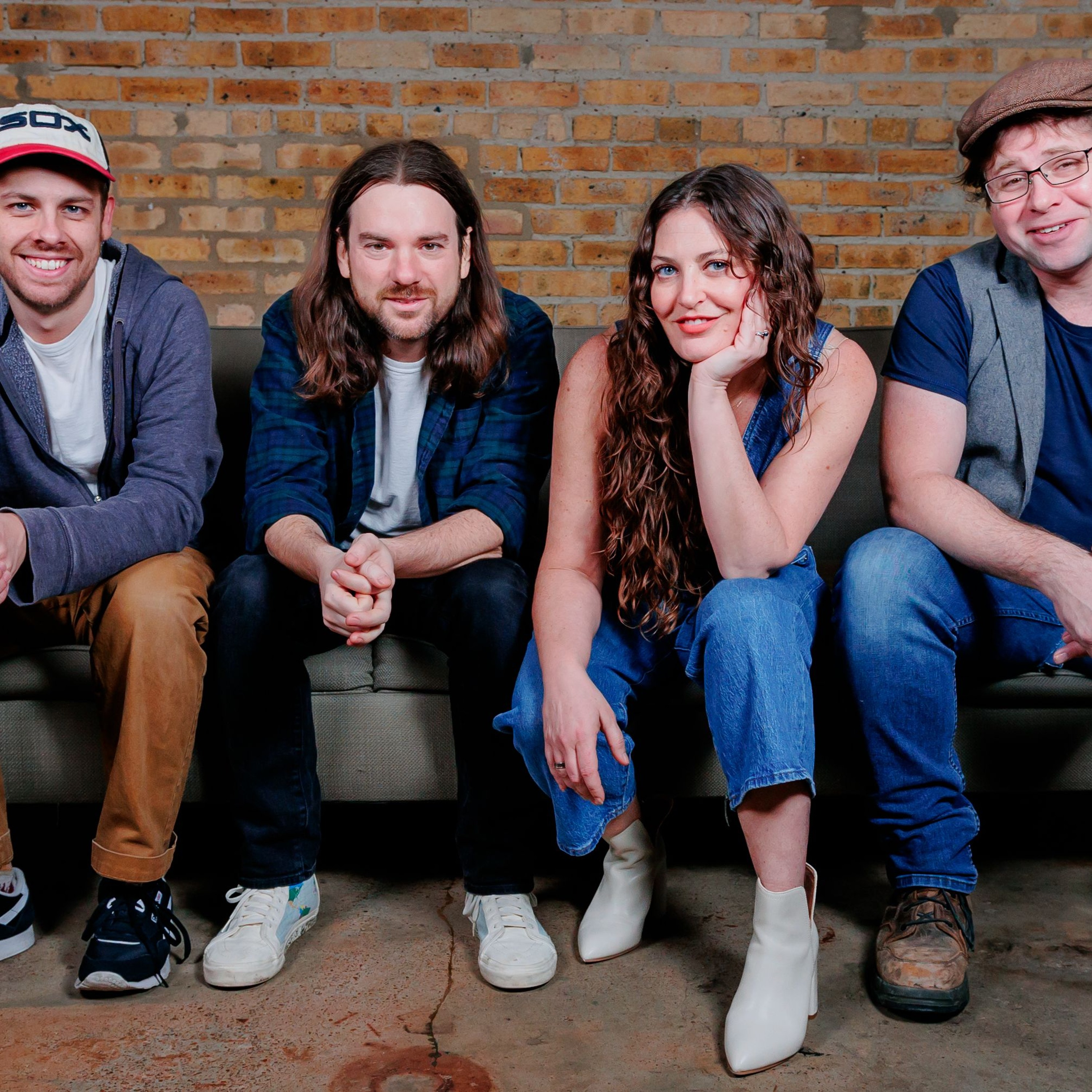
Their bluesy indie rock sounds have graced the airwaves and the land of Chicago for a very long time. We're not going to talk age or anything like that. But they have been a soundtrack to not only programs on Nickelodeon but all over the Chicago land area. I am so happy to have the empty pockets here with me today on 773 Sounds.
How's everyone doing? Hey, what's up, Dave? Awesome. Great.
And we actually, we have the whole band. So if we can kind of just go around real quick and have everyone say their name? Hey, I'm Nate. I play bass.
I'm Josh. I play the guitar. I'm Erica. And I play the keyboards.
Hi, I'm Adam. I play drums. Nice to meet you all. Gosh, 2025 was a year for you guys.
I mean, just with all the tours, you gave away numerous albums for free. And then you released a brand new live record live from Buffalo. I mean, how's 2025 been for you guys? I mean, have you like recouped from everything yet?
Boy, it was an awesome year, but it was busy. And we also did this epic European tour. We got to play the London Palladium. I am, honestly, I don't be a complainer, but I do still feel a little worn out from how much you did in front of you.
Fellas? I mean, Tired but grateful. Like we had such a crazy year. Like you said, when you mentioned how many things we released, I was like, we really did do that.
And you did most of it from the road. So like, yeah, it was a crazy year. And he ended the year recording at Abbey Road Studios in London. So yeah, it was a lot of highlights.
I'm like exhausted thinking about it, but also joyful thinking about it. You're truly just recuperating. So thank you. Yeah.
That's a great question. It's a very scene. I'm very seen. I'm glad you feel seen and everything because honestly reading everything you did, you made me exhausted and I work in education.
Yeah, that's tough. But I got to mention it because one, I'm a diehard Beatles fan. You've recorded studio two. I mean, that's that's the Beatles studio and you played the palladium, which Ringo Starr is very famous of saying, you see your name and lights.
That's how you know you made it. You played the palladium. I mean, as musicians, like what is that like that's not to be the most surrealistic vibe like ever. It was so we recorded in Abbey Road Studio three a couple of years ago, which was truly amazing.
And I love the album. It's called Got a Fund of the Moon that came out of those sessions. We used their instruments. We used their microphones like it was it was moving.
It was shocking. The upgrade between Studio three and Studio two. Like, I don't know how much of a spoiled brat I could sound like, but I'm like, you don't know the up. Well, here's we prefer working out of studio.
I'm not going to turn down. But dude, they haven't. So what's so cool about Abbey Road to particular and I just rewatch get back, which does that much of your own. And the anthology is of the Beatles, of course.
And what's so cool about Studio two is it's a I would call it like a living functioning museum. And it's unchanged. Like it's completely like preserved and, you know, it's it's the floors are the same. The walls are the same, but they don't compromise.
So it's like the equipment works. They work. But it's top, top, top, not. Yeah.
And you want any option you want? I mean, they always get to kick out of a cafe, like a full service working cafe. And it's just like, I'm hungry. You don't go over there to get lunch.
It was so inspiring. Sometimes I think people talk about inspiration and certain things they do is like a little nonsense. I feel like a working class band where you just like, right, song, you have a horse song, you know, yeah, down with all of your inspiration. But it was freaking and inspiring and to parry about a week and a half before that we did play the one and play him.
And what was it like? Almost to the day it was a couple days off of the Beatles play the one and played him in 63. And the next day, that's the newspaper article that coins the term BeetleMania. Yeah.
We were there like very close to the day. That was in October. Like 63 years to the day. Wow.
We were definitely during the Kool-Aid and reveling in the Beatles. Like, I don't even know what to say. Like, I'm literally speechless, like over this. Like, I feel like if I went in there, I would just go to be like, well, I live here now.
Yeah. I'm going to leave. I never know. One of the coolest things about actually looking back.
It was such a blur is we have this VIP group. We have a fan club. We have the empty pockets, insiders club. And students was huge.
I mean, it's literally like you could do an 80% choir. So we said to our VIP group, hey, figuring it's not going to be 80 people. Right. If you can get to London, come be our guest in a bunch, did.
And to work in there and then to watch these grown adults, mines get blown. Yeah. So cool. Because it's their church even more than it's ours.
And so, you know, and so. Maybe like the ego wise, the best part, like the coolest, like what is that moment in Pretty Woman? Where she she comes back to the store. Big mistake.
So like that feeling is when you're walking down Abbey Road and there's a bunch of people. And everybody's like taking their own photos and the gate is closed. And it's like, don't come in this gate. And you're like, you have a guitar case.
And you're like, excuse me, I got to go and everyone around is like, who are these people? And all of our VIP guests got to do that same thing. Yeah. And you know, everyone around that thing, who's this guy?
Yeah. Who is that? Oh my God. That is so like amazing and everything.
And that's like not all that you did. I mean, you released this really great live record, live in in Buffalo with this really great jazz musician. And I'm scared. I feel like I'm going to butcher his name, but Elliott Scorsio.
Scorsaro. Scorsaro. We're in England, but true with this dude, Al Stewart, who has it from 1978 called the Year of the Cat. We he just retired, but we're his backing band.
So we open the show and we back him up and that his big hits have saxophone on them. So we often tour when we're talking about Stewart with a saxophone player. And one of those dudes, they're all great players, but one of them, we'd even just be sound checking and you've got kind of cynical as a musician. But over time, you're like, eh, you know, we're all good musicians.
He'd rip some thing and you'd be like, we'd all be like, what? And he started jamming in our set in this tour, not in England, but before starting jamming in our set and became clear that's like, you get this guy at tune. Yeah. He's going to go to blow all over.
Yeah. Yeah. And that live album that you're referencing, like we didn't rehearse really with him. We just really gave him the songs in advance and he looked him up and learned them.
And then we played him live at that show and we liked it enough to release it. We approached that album. I feel like the old like the old jazzer guys did from like albums they released from clubs where it's like a show and picked eight songs. That's awesome.
Ten minutes. Now, now for you guys as as abandoned in your house is, you know, kind of bluesy rock in the alternative things like that. What then is it like collaborating with the jazz musician where jazz musicians, they're like on another planet like just how they can improv and where they're going to go like, like, how did you guys approach that then playing with him? It is the best part about Elliot is he's there's a thing.
He's just talking about when you have ears, listen to the other musicians and what they're doing. And Elliot's got real big ears. I like to think that we all do as well. And one of the things that we have core as a live operating unit is we're always listening to what the others are playing and reacting.
And that's essentially like the core of jazz as well is that it, especially live is it's a bunch of musicians playing through the same tube, but they're listening to each other and reacting around it. And that's where the real magic comes because like he's listening, he's reacting. He's got this huge jazz vocabulary. So he's able to reference a lot of that stuff and he's pulling by referencing that stuff.
He's pulling extra stuff out of Erica. He's pulling extra stuff out of. It's firing us in the moment. We're moving in different directions altogether, like as a unit because he's able to kind of listen on top of our already well-baked cake here.
Yeah. That's awesome. Like one of our weaknesses as a band, like from a commercial perspective is we don't fit very well in a lot of genres. You know, we haven't been super accepted by blues because we're not traditional blues or folk or Americana, Jamban.
We're not really in any of those scenes in a way we've been like embraced by them. And so sometimes it's kind of like the horseshoe theory of politics where like at some point you go so far and it's like, wait, do we agree with each other here? So we can ignore genre so long that now we're listening back in life and Buffalo. And I'm like, oh, yeah, that's our genre.
That's our new Jamban. What was that? I mean, honestly, like the first time I remember listening to you guys, you know, a number of years ago, I mean, you just felt like an old school rock and roll band. And, you know, doing research, learning how much like Buddy Holly inspired the band and everything like it very much has like a crickets vibe to it and everything.
And that's amazing. That's so it's like rock music at its pure. It's like you're plugging in. You're not doing all the overdubs.
You're not doing all the effects and you're just letting the strings and the chords and the beats do the magic. Yeah. That's our beautiful last. I need that.
I'll need that. I'll need that. You know, we play that. Please please come join our team.
Please. Arm music. Anything I can do just count me in on that one. Go ahead.
So so I got to ask because again, you mentioned Abbey Road and recording the new album. Will this be released sometime this upcoming year? Yes, I think so. Yeah.
Awesome. That's the plan. But we're working on it. Wonderful, wonderful.
So I kind of want to get a little like deep and philosophical with you guys. When you're writing a song, how do you approach writing? Like, like you you talk to so many musicians and it's like Paul McCartney, where it's like he dreamt yesterday and it was the melody. Do you guys approach like going with melody first or do someone come in with lyrics and be like, Oh man, like I got these lyrics that's built off of that.
So I'm just kind of curious. How do you approach your songwriting? So like mostly it is improvisational to begin. So I would call it like lyric melody at the same time for the most part.
Because like to me, what makes a pop song when I say pop, I mean, like all of the pop genres makes a what makes it work when it's really magical is when like, not even what the lyrics mean, but like what what what sounds the words make and how that combines with like the melody and the rhythm. Like that's the that's what makes a hook in my opinion. And like there are two schools of thought for the most part when it comes to writing. One is more like organized and intentional, which I really respect.
I just can't do it. The other one is more like what you're just going to do with McCartney, which is a little bit more like inspirational. Like I feel like I do a lot of our what I call like ideation, the first half, you know, I'll bring the germination from the band to expand. And a lot of times, inconveniently, like it's it's like urgent.
Like like you I have to stop in Oracle's way. You know, I mean, I have to stop what we're doing to capture this idea. And like I feel like I do have to stay in that like flow state, you know. So like I even found people for shows I'm better in a flow state.
So like if I like I do a lot of bands finances, but if I do like some band finances, like an hour and a half before the show, it's going to be real tough for me to get into that flow state. I mean, it's like opposite from like a math brain. Yeah. It's the beginning.
Sometimes Josh is just like screwing around at home on his guitar. That's how he's like, that's how he's just relaxing in the night. And he's my hobby. Sometimes to Erica's, we're married and sometimes to because she's like, how are we playing?
He's like, for like seven hours today and he's home noodle in more. I can't even I'm watching TV. But sometimes those those noodles and those like ideas are really like something cool. And so like over the years, like when he wasn't noticing, like I would record him we could listen back to it.
And a lot of those have become songs over time. Oh, that's awesome. That's really cool. It's almost like the brain is always like spinning with music and and chords and riffs and things like that.
Then. Yeah, I'm trying to like write a little bit more without the instrument at first too. Because I think there are like some like hard, worn pathways, like I put my fingers on a piano and I find, you know what I mean? You just do the thing.
And so I've been trying to like get into what's it like when I bring the next half of the song for us is like what I bring it in. Yeah. And I'm like, here you guys, it's an uncomfortable situation because like I know it really well. And I'm like really eager to see it on its feet.
But kind of by definition, I've heard it a lot more times than they have. Yeah. Yeah. That makes sense.
I'm here with the empty pockets here on at seven seven three sounds we have Adam. We have Josh. We have Nate and we have Erica. Now, if people want to find you guys on social media or your website or your bank, where can they go and where can they find you?
The empty pockets dot com. Awesome. Everywhere at the empty pockets is not there. Yes.
Be sure to go and check them all out and everything. The empty pockets dot com. Now, you guys have, like I said, you've been on the scene for a long time. And one of the things you're really known for is your live performances.
And I love it because a lot of your merch is talking about keeping it live and really showing that that, you know, the get in a room, get with people. And that's the best way to experience the music and everything. So I kind of have a two part question first, like, how has the music scene kind of responded from COVID? Have you seen any changes or difficulties with that?
But then also, how do you guys feed off of the audience when you're performing? We'll start with COVID. That was a slow climb back. And at some point it did feel like shows were kind of normal again, but it's hard to say if just the industry on a whole or going out took a hit forever with the same side before COVID.
We were already like, when I started playing in the early 2000s, people still maybe not majority people, but a significant amount of people still just went out to see music. Let's just see a movie. Let's go to see music. Let's go to see some comedy.
Now it feels anecdotally like everything's a point of base. You don't go to see music. You go to see this specific act on this specific day. So that's like really changed how the industry operates.
I think we're on the cusp of a return to a live authentic, you know, not just not AI or whatever, but like it's real live happening in the moment, you know, like verifiable. You don't you can trust it because you're there in the room or whatever. Yeah, I'm hoping we're headed towards that because I think your question is thoughtful in that COVID. Wasn't the worst for us?
COVID was worse for a lot of reasons. But as a true, we definitely took the step back and took a while to recover. And I think it's more the idea of live, especially live music, let's say, is more than just a vibe. Like there's science, for instance, like the great articles all around about music with headphones is fine, but your skin has receptors.
Like sound is a physical wave. You can feel it on your bottom of a different and the base waves move in a different way. And when you go, anybody who goes to watch those understands that like it's not just a vibe. It's not just that it's social, which it is.
It's not just that it supports the artists and the venues. It's like a actually physical, different experience. And it is a wonderful experience. I think people forget even like no offense to the arena artists, but I question even if that's even in the same realm of experience.
I'm talking about, you know, a five hundred and six hundred and seven. You can see even the London Bladium at 2200 seats is not like seeing a short ring field. Yeah, I'm talking about that experience where you're actually no screens needed. You know, you're actually convening with the artist and there and it's being of COVID.
We did a lot of live streaming as a lot of artists did. And you notice the difference in terms of like how much more emotionally, psychologically it takes from a performer and you're like, wow, I was really getting a lot from the audience. Yeah. Yes.
Yes. Yeah, I can believe it. With someone who's never seen you live, how would you describe your performance? What can they expect?
They're going to go. They're going to see the empty pockets. What's going to happen to them? Well, they're going to get their faces rocked off.
What's going to happen? That's what I wanted to hear. You know, it has that energy of like a bit of a freight train. Like we just keep charging ahead and making music and interacting with the audience from an energy perspective and it feels like a wonderful give and take that's happening.
Live. What are you there? Yeah, I think we have a very dynamic show. I think we we we like to have high energy moments and also like bring it down and get intimate and and we work on some feelings.
We work on a tight van. So we stuff that's really, really rehearsed and then also we have sort of super improvisational. You know, we're and we're always changing things up. We also like tell stories and we also and speak to each other.
Yes. On stage and to the crowd as well. Yeah. That's awesome.
Really fun. Nothing like the London Palladium, but a really fun like city wineries. Around holiday tour. Yeah.
Stories and saying about the snow and brought our Chicago vibe throughout the East Coast. I mean, you also put out a wonderful free Christmas album as well too. That was really delightful. Yeah.
Thank you. We love giving away CDs for free because we love the physical format and we want your email. Yes. That's where it is.
So I got to ask because I too, you know, I love CDs. I love vinyl and everything. I'd love to go around because physical media is kind of having a little bit of a resurgence over the last few years, which we love. You're going to give one album that everyone needs to listen to on vinyl.
And made I want to start with you. Geez. OK. It's probably live in Paris.
It's a Clifford Brown album from like the late 50s. And there is something about the way that that album sounds on vinyl that's different. Like I have got the CD and the vinyl and like the vinyl has some some J other V that is missing from the CD. So like find that live live in Paris.
Clifford Brown. Sick jazz. Very nice. Well, got me back.
What got me in love with vinyl years ago. Like, you know, you get somebody's old records and some don't sound good. This one happened to some really good was David Bowie's spiders from Mars. It's just a great that he's so dramatic that when you flip it, it's a really good moment.
And just I really I really listen to so many times and I really enjoyed listening to that. I'm going with Almond Brothers live at the film. Why? Oh, nice.
Got it in that box. You can get all the sauce in the room. And there's a lot of sauce in that room too. I mean, when they're jamming, they're phenomenal.
So and then Adam. All right, my pickle be Asia by Steely Dan, which is just a good vinyl pick. They say, you know, audio files will use that record to set their table up, which whatever we this man mostly loves Steely Dan. It's a great record specifically.
The call. Yeah, that's a rather I love the variety. And I love the fact that so many of them are like live albums here too. Because there's so many really underrated live records that they just capture the mojo, the performance and everything that you again, you feel it.
You may not be there, but you get a good set of speakers and the minds I can take over if you will. So that's right. That's right. That's right.
That's right. So final question I have for you guys, how has the Chicago local scene evolved over the last, you know, decade or so? Because right now, I mean, the scene is it's really fantastic. There's so many great artists out there, really great variety.
You know, what's your take on the Chicago local scene right now? Well, you know, we play we don't play Chicago that often ourselves anymore. It's kind of just any other towards that. And so I kind of miss some of my connection to the local.
Yeah. You said, how was it evolved? It evolved a lot from when we all played local gigs. They're neither there anymore.
It's my first professional gig for R.I.P. Why do we didn't exist when we started, you know, space didn't exist. Yeah. There's been like this huge burgeoning honky-tonk, like Americana scene that I'm loving.
Yeah. So the three stuff like we were just talking about a friend to go go and go and see the play at the Whistler. Yeah. Like some stuff that wasn't there when we started some of that for like the Coles bar is doing cool free music.
It's the cool to see Fitzgerald kind of bro. We got Mary there. Oh, that's awesome. So like that's been interesting to see them.
Obviously Chicago's always this amazing advantage that few cities have of like these true little places like, you know, whatever, Coles or or the elbow room. But and then also we get all the plus plus tours like nothing skips Chicago. Yeah. I lament as a touring band like we have lamented and hope to rectify some of that this year we're determined to tour less.
It's like we like Adam said like Chicago's become like a tour stop to us. Like I feel like I'm more plugged into the Buffalo scene in some ways, you know, like. So yeah, we want to return and like reclaim some of our Chicago. We love rat boys.
Who else do we love? Yeah, there's a tonic of Chicago farmery day. Elizabeth Moen like so many beautiful artists right now. Adam is into the end.
So we've gone to a few expert parts. Yeah, they're great. Exactly. Yeah, except for my fun shot to accept her.
Yeah. The great thing that continues about the Chicago scene from when we revolved in it to now what we're just consumers of it is that it's always been like super powerful, really broad. Whatever you want to see in Chicago, you can find it. Like you want to hockey talk country place.
There's a bunch now. You want to go see some tight jazz? Of course, there's some places. Don't you invest a cool place.
A lot of people shout out to like Jennifer Hall, Todd Kessler, you know, really good musicians out there. Jettling Jordan, you know, it's it's, you know, Joanna Connor, it's our player lives in Jamaica, but plays in Chicago. She's on one of our tracks. So we haven't tried to like get more involved in the Chicago scene.
But if you're out there and you want to hang. Yeah. Yeah. Yeah.
All right. And the empty pockets.com reach out to them. Yeah. At the empty pockets.
I'm instead of some message. And it's us. If you reach out to us, you're getting one of those. We believe in collaboration.
Like that's something that's been foundational to our band. We've always backed people up. We've always helped them with our projects and their new music. And I would say that we we endeavor to, yeah, be a bigger part of the music community in Chicago and would love to party with any other musicians in our studio or at yours.
Awesome. Adam, Erica, Josh and Nate, thank you so much for your time here on 773 Sounds. Thank you. Thank you so much.
Thank you for listening to this WXAV 773 Sounds podcast. For more information on 773 Sounds, please visit our website, WXAV.com.