
EPISODE · Sep 4, 2025 · 46 MIN
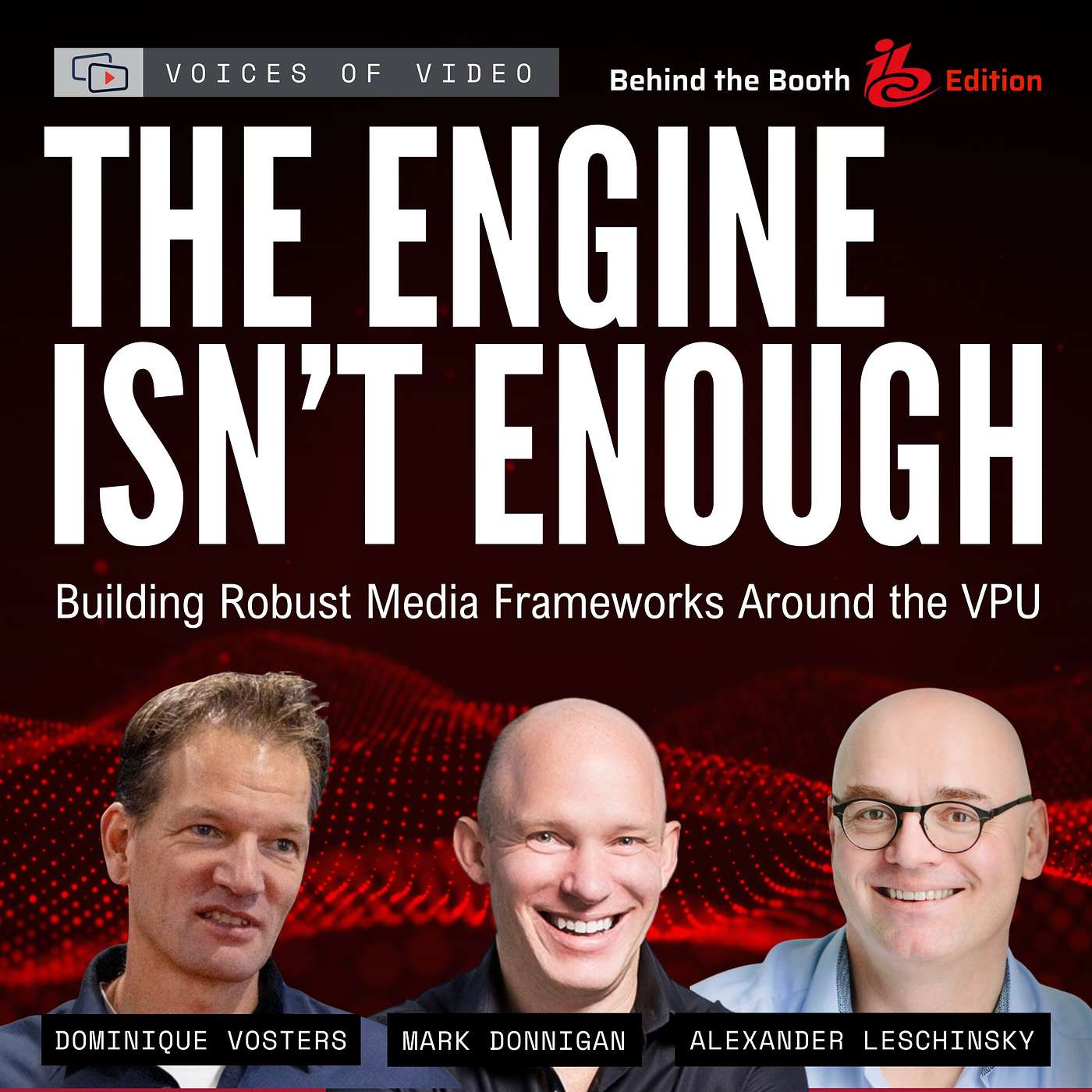
The Engine Isn’t Enough: Building Robust Media Frameworks Around the VPU
from Voices of Video · host NETINT Technologies
The beating heart of every video streaming service is its encoding technology, but raw power alone isn't enough to deliver exceptional viewer experiences. In this eye-opening conversation, Mark Donnigan explores what happens when you combine the incredible performance of Video Processing Units (VPUs) with thoughtfully designed software frameworks.Mark Donnigan compares the VPU to a high-performance engine – essential and powerful, but ultimately useless without the surrounding vehicle.Dominique Vosters explains: “Initially performance was the key differentiator, but going beyond that, you can make the system even better with the whole software layer around it.” He details how Scalstrm has been building resilience, redundancy, and flexibility into complete media processing systems that transform raw encoding capability into production-ready solutions.Alexander Leschinsky draws an analogy to networking hardware: VPUs are like ASICs inside routers - immensely powerful but only useful when paired with robust frameworks and tested workflows. He stresses that integrators must combine VPUs with CPUs or GPUs when unusual formats (like deinterlacing or MPEG-2) are required, and that customers ultimately want battle-tested reliability rather than raw interfaces.Together, the guests reveal:VPUs can provide 10x efficiency improvements, but need software frameworks to create complete solutions.Format diversity remains challenging — from deinterlacing to supporting 32 audio channels per stream, as in the European Parliament project mentioned by Alexander Leschinsky from G&L.Some formats must be handled outside the VPU, either on CPUs or other workflow stages.Dominique Vosters notes that open-source tools like FFmpeg can be useful for proofs of concept but fall short for live production due to resilience gaps.Alexander Leschinsky highlights the distinction: FFmpeg is great for controlled VOD environments, while commercial solutions deliver better results in demanding live workflows.Total cost of ownership is a top driver for adoption: both guests stress that VPU acceleration reduces hardware requirements, lowers power use, and brings sustainability benefits.Alexander Leschinsky even showcases a Raspberry Pi with an M.2 VPU card powered over Ethernet, demonstrating extreme edge efficiency in action.As Dominique Vosters emphasizes, understanding business requirements must come before technical decisions when migrating to new encoding solutions. The software frameworks around VPUs are just as important as the VPUs themselves.Stay tuned for more in-depth insights on video technology, trends, and practical applications. Subscribe to Voices of Video: Inside the Tech for exclusive, hands-on knowledge from the experts. For more resources, visit Voices of Video.
What this episode covers
The beating heart of every video streaming service is its encoding technology, but raw power alone isn't enough to deliver exceptional viewer experiences. In this eye-opening conversation, Mark Donnigan explores what happens when you combine the incredible performance of Video Processing Units (VPUs) with thoughtfully designed software frameworks. Mark Donnigan compares the VPU to a high-performance engine – essential and powerful, but ultimately useless without the surrounding vehicle. Domin...
NOW PLAYING
The Engine Isn’t Enough: Building Robust Media Frameworks Around the VPU
No transcript for this episode yet
Similar Episodes
Mar 26, 2026 ·1m
Mar 19, 2026 ·34m
Feb 18, 2026 ·11m
Feb 11, 2026 ·45m