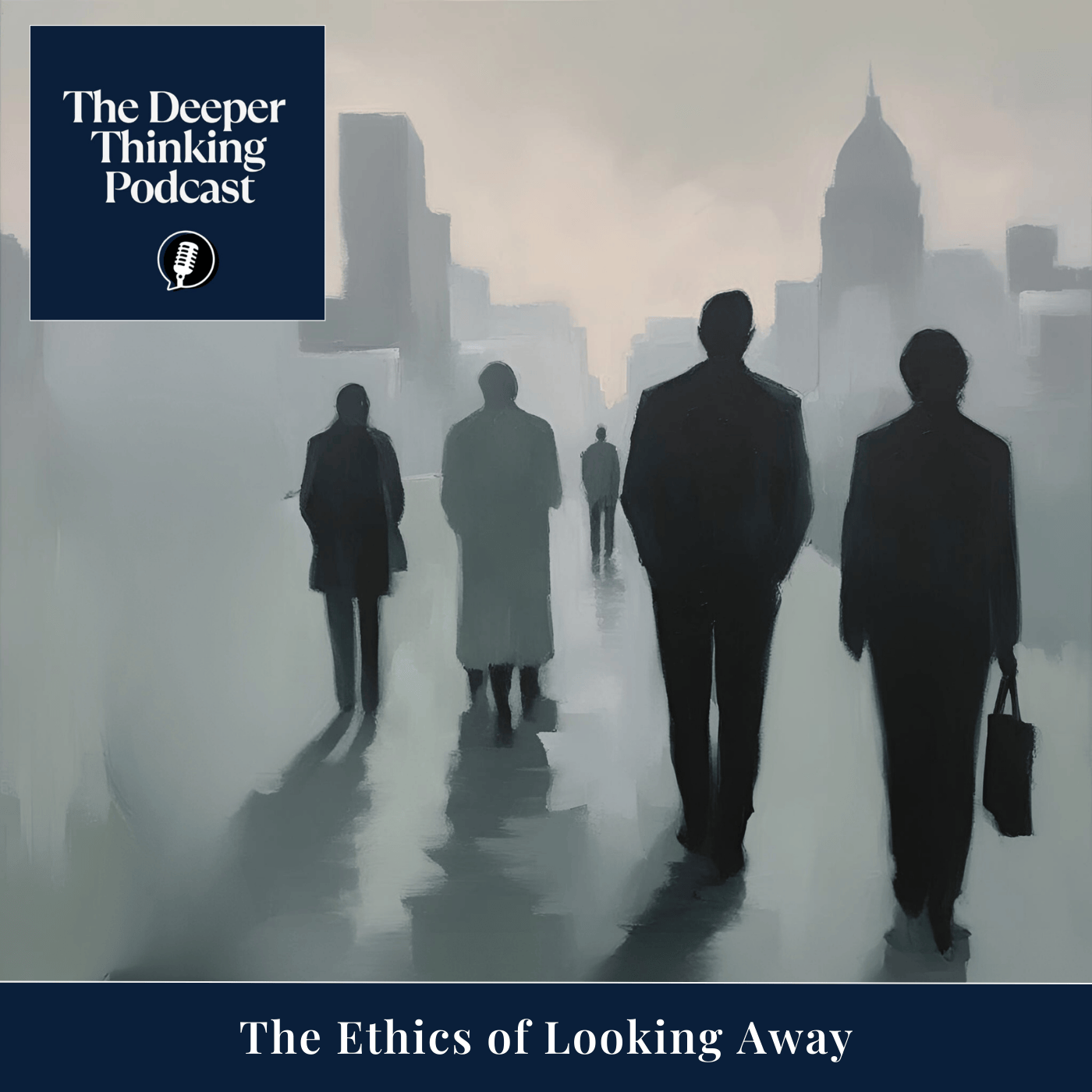
The Ethics of Looking Away - The Deeper Thinking Podcast episode artwork

EPISODE · Apr 3, 2025 · 13 MIN

The Ethics of Looking Away - The Deeper Thinking Podcast

from The Deeper Thinking Podcast · host The Deeper Thinking Podcast

The Ethics of Looking Away The Deeper Thinking Podcast In the spaces between relentless images of suffering and the quiet moments of retreat, there exists a hidden moral tension. What if the act of turning away is not mere indifference, but a necessary, human response to overwhelming despair? This episode delves into the paradox where the refusal to continuously witness becomes both a survival strategy and a silent commentary on our limited capacity to care. It explores how, amid the constant barrage of trauma, the very decision to look away can articulate a profound ethical dilemma—a quiet protest against the unyielding demands of exposure. The act of disengagement is not a moral failing but a testament to human vulnerability. It challenges the notion that unbroken vigilance is the measure of virtue, inviting reflection on the ethical weight of pausing—of choosing to shield oneself from relentless pain. Why Listen? Understand how turning away can reveal deeper moral complexities. Explore the interplay between overwhelming exposure and ethical self-preservation. Reflect on the limits of empathy in an age of perpetual crisis. Question the true cost of unending vigilance versus deliberate pause. Further Reading The Origins of Totalitarianism by Hannah Arendt – A deep dive into the rise of totalitarian regimes and the role of bureaucracy in facilitating evil. The Human Condition by Hannah Arendt – Examines the nature of political life and the importance of public action. Eichmann in Jerusalem by Hannah Arendt – The landmark work that introduced the concept of the "banality of evil." Listen On: YouTube Spotify Apple Podcasts   Abstract This episode interrogates the ethical and psychological dynamics of turning away from the relentless barrage of suffering. It examines the tension between moral obligation and self-preservation, exploring whether the act of looking away constitutes a moral failing or a necessary form of survival. Drawing on the philosophical insights of thinkers such as Hannah Arendt, Susan Sontag, and John Berger, the discussion reveals how the burden of constant witnessing can erode empathy and overwhelm human capacity. By challenging the assumption that perpetual vigilance is inherently virtuous, the episode invites listeners to reconsider the ethics of attention, offering a reflective space where the quiet power of deliberate disengagement emerges as a potent, if painful, form of resistance.   Bibliography Arendt, Hannah. The Origins of Totalitarianism. New York: Harcourt, Brace & World, 1951. Arendt, Hannah. The Human Condition. Chicago: University of Chicago Press, 1958. Arendt, Hannah. Eichmann in Jerusalem: A Report on the Banality of Evil. New York: Viking, 1963. Butler, Judith. Frames of War: When Is Life Grievable? London: Verso, 2009. Berger, John. Ways of Seeing. London: Penguin Books, 1972. Sontag, Susan. Regarding the Pain of Others. New York: Farrar, Straus and Giroux, 2003.

The Ethics of Looking Away The Deeper Thinking Podcast In the spaces between relentless images of suffering and the quiet moments of retreat, there exists a hidden moral tension. What if the act of turning away is not mere indifference, but a necessary, human response to overwhelming despair? This episode delves into the paradox where the refusal to continuously witness becomes both a survival strategy and a silent commentary on our limited capacity to care. It explores how, amid the constant barrage of trauma, the very decision to look away can articulate a profound ethical dilemma—a quiet protest against the unyielding demands of exposure. The act of disengagement is not a moral failing but a testament to human vulnerability. It challenges the notion that unbroken vigilance is the measure of virtue, inviting reflection on the ethical weight of pausing—of choosing to shield oneself from relentless pain. Why Listen? Understand how turning away can reveal deeper moral complexities. Explore the interplay between overwhelming exposure and ethical self-preservation. Reflect on the limits of empathy in an age of perpetual crisis. Question the true cost of unending vigilance versus deliberate pause. Further Reading The Origins of Totalitarianism by Hannah Arendt – A deep dive into the rise of totalitarian regimes and the role of bureaucracy in facilitating evil. The Human Condition by Hannah Arendt – Examines the nature of political life and the importance of public action. Eichmann in Jerusalem by Hannah Arendt – The landmark work that introduced the concept of the "banality of evil." Listen On: YouTube Spotify Apple Podcasts   Abstract This episode interrogates the ethical and psychological dynamics of turning away from the relentless barrage of suffering. It examines the tension between moral obligation and self-preservation, exploring whether the act of looking away constitutes a moral failing or a necessary form of survival. Drawing on the philosophical insights of thinkers such as Hannah Arendt, Susan Sontag, and John Berger, the discussion reveals how the burden of constant witnessing can erode empathy and overwhelm human capacity. By challenging the assumption that perpetual vigilance is inherently virtuous, the episode invites listeners to reconsider the ethics of attention, offering a reflective space where the quiet power of deliberate disengagement emerges as a potent, if painful, form of resistance.   Bibliography Arendt, Hannah. The Origins of Totalitarianism. New York: Harcourt, Brace & World, 1951. Arendt, Hannah. The Human Condition. Chicago: University of Chicago Press, 1958. Arendt, Hannah. Eichmann in Jerusalem: A Report on the Banality of Evil. New York: Viking, 1963. Butler, Judith. Frames of War: When Is Life Grievable? London: Verso, 2009. Berger, John. Ways of Seeing. London: Penguin Books, 1972. Sontag, Susan. Regarding the Pain of Others. New York: Farrar, Straus and Giroux, 2003.

NOW PLAYING

The Ethics of Looking Away - The Deeper Thinking Podcast

0:00 13:57

No transcript for this episode yet

We transcribe on demand. Request one and we'll notify you when it's ready — usually under 10 minutes.

No similar episodes found.

No similar podcasts found.

Frequently Asked Questions

How long is this episode of The Deeper Thinking Podcast?

This episode is 13 minutes long.

When was this The Deeper Thinking Podcast episode published?

This episode was published on April 3, 2025.

What is this episode about?

The Ethics of Looking Away The Deeper Thinking Podcast In the spaces between relentless images of suffering and the quiet moments of retreat, there exists a hidden moral tension. What if the act of turning away is not mere indifference, but a...

Can I download this The Deeper Thinking Podcast episode?

Yes, you can download this episode by clicking the download button on the episode player, or subscribe to the podcast in your preferred podcast app for automatic downloads.
URL copied to clipboard!