
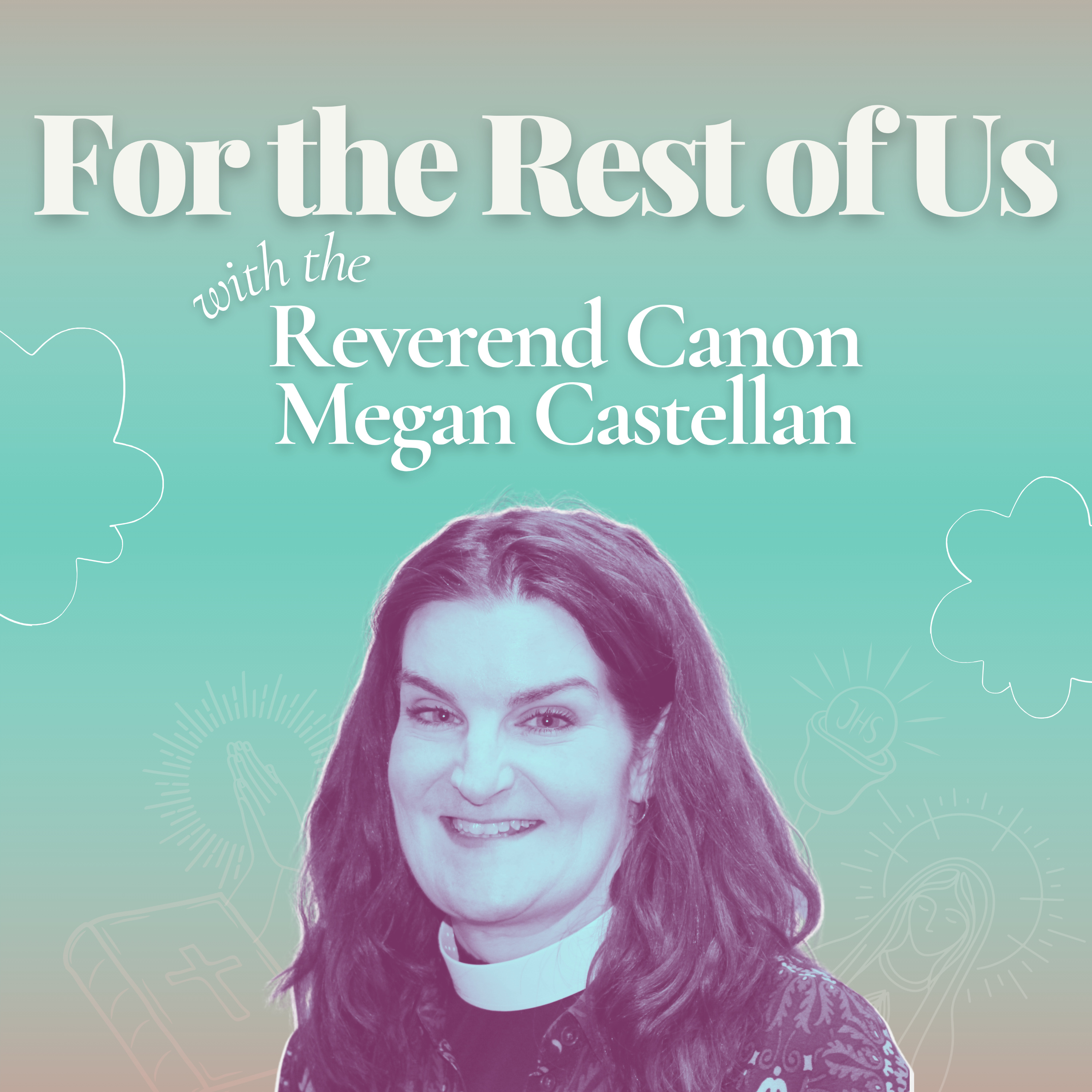
EPISODE · Feb 26, 2025 · 48 MIN
The Eucharist… for the rest of us!
from For The Rest Of Us with the Reverend Canon Megan Castellan · host The Episcopal Diocese of Central New York
SummaryIn this episode, Canon Megan and Adam delve into the significance of the Eucharist within the Episcopal Church and its broader Christian context. They explore the definition of sacraments, the historical evolution of the Eucharist, and various theological perspectives, including those from the Reformation. The discussion emphasizes the importance of the Eucharist as a foundational ritual in Christianity, its role in worship, and the diverse interpretations that have emerged over time. In this conversation, Adam Eichelberger and Megan Castellan explore the significance of the Eucharist within the Episcopal Church, discussing the presence of Jesus in the sacrament, the importance of personal piety, and the structure of the Eucharistic prayer. They delve into the concepts of substance and form, the historical context of the Donatist heresy, and the role of the community in worship, emphasizing that the Eucharist is a shared experience meant for all believers.Takeaways-The Eucharist is a central sacrament in Christianity.-Sacraments are outward signs of inward grace.-God's presence is experienced in the Eucharist.-The Eucharist has historical roots in early Christian gatherings.-Theological explanations of the Eucharist have evolved over time.-Reformers challenged traditional views on the Eucharist.-The act of communion involves the participation of the community and that embodies the presence of Christ in the world..-Different denominations have varying interpretations of the Eucharist.-The Episcopal Church embraces a blend of theological perspectives. -Personal piety allows for a spectrum of belief within the church community.Intent and understanding are crucial in liturgical practices.-The Donatist heresy highlights the importance of God's grace over human worthiness.-The church encourages believers to focus on Jesus and his transformative power. Chapters00:00 Introduction to the Eucharist03:10 Understanding Sacraments in the Episcopal Church06:06 The Role of the Eucharist in Christian Worship09:04 Historical Context of the Eucharist11:57 Theological Perspectives on the Eucharist14:58 Reformation Views on the Eucharist18:00 Contemporary Understanding of the Eucharist27:26 The Eucharist: A Connection Across Time and Space28:18 Understanding the Presence of Jesus in the Eucharist29:50 The Beauty of Reverence and Relationship in Worship31:58 Personal Piety and Freedom in Worship34:53 The Importance of Intent in Liturgical Practices35:49 Substance and Form: The Essentials of the Eucharist43:31 The Structure of the Eucharistic Prayer48:49 The Donatist Heresy: Validity and Worthiness in SacramentsAI Disclosure: To support our staff in their limited time, many of our episode summaries are first generated by AI and then edited by the Communications Director to accurately reflect and preview our podcast episodes.
Embed this episode
Ready to play
The Eucharist… for the rest of us!
No transcript for this episode yet
Similar Episodes
No similar episodes found.
Similar Podcasts
No similar podcasts found.