
EPISODE · Jun 30, 2026 · 34 MIN
The Everlasting Man - 02 - Part 2
from Discipleship for the Present Podcast · host Kanu Emeruwa
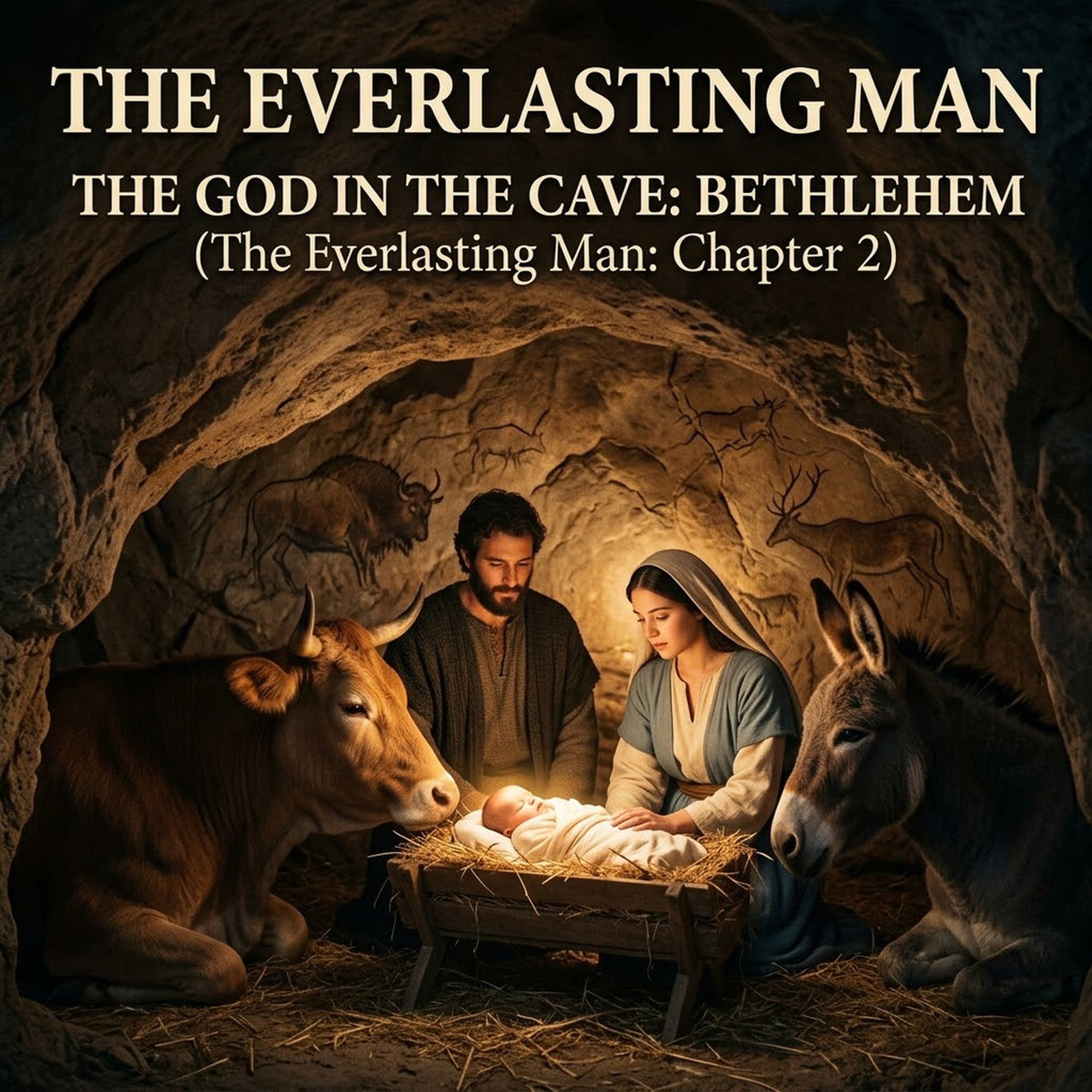
Most of us remember the nativity as a peaceful, snowy holiday scene—a quiet night centered around a manger, surrounded by gentle animals and starlight. But G.K. Chesterton begins his analysis of the Christian story in a much darker, far more dangerous place.The episode opens by stripping away the sentimental gloss and looking carefully at the radical reality of the Incarnation. Before the stained glass windows and the domesticated theology, we are introduced to the maker of the universe acting as a subversive insurgent. He does not arrive on a cosmic throne. He infiltrates enemy territory as an infant in a damp, underground, limestone cave in the Middle East.That opening image sets the tone for the absolute disruption of worldly authority. Power, as the world understands it, is centrifugal: it expands, conquers territory, and demands visibility. But Chesterton reveals the power of God as centripetal, pulling inward to the infinitely small and vulnerable. The cave is not just a humble birthplace; it is a tactical outpost in occupied territory.That reality becomes even clearer when we confront the intellectual climate of Chesterton’s era, a time desperate to flatten Christianity into just another ancient agricultural myth. The modern impulse is the same: we try to melt Jesus down into a safe, generic moral philosopher. We want a life coach who provides five habits for a highly effective spiritual routine. We want a supportive algorithm that curates positive affirmations.But the Gospels do not offer a life coach. They offer a system override. At the center of this episode is the image of the undomesticated Christ—a figure of sudden wrath, impenetrable darkness, and staggering authority who speaks to the demonic with the precision of a business-like lion tamer. The episode draws this into modern life by asking where we have sanitized Jesus' instructions to fit our twenty-first-century comfort zones.From there, the episode turns to the friction between Chesterton’s own cultural baggage and the actual commands of Christ. While Chesterton beautifully grasps the spiritual insurgency of the early church, he frequently conflates it with physical militarism, romanticizing the Crusades and medieval chivalry. In context, this is a sober warning for modern disciples. You cannot fight for the Kingdom of God using political bullying or cultural artillery. When the Church wields the physical sword, it abandons the subversive humility of the Cave.This leads to one of the episode’s central theological themes: dogma as a precise cryptographic key. To the modern observer, rigid theology looks arbitrary and exclusionary. But the episode explores how early Christians fought heresies like Manichaeism and Arianism to protect human flourishing. The specific, complex shape of the Trinity and the Incarnation is the exact key required to validate the dignity of the physical body and ensure that the bedrock reality of the universe is a community of love, not an isolated tyrant.Finally, the episode shifts from ancient heresies to the modern anxiety over the decline of cultural Christianity. The Church is a strangely immortal widow, experiencing a continuous cycle of crucifixion and resurrection. By tracking the five historical deaths of Christianity, the episode offers a profound counter-narrative to modern panic. The wisdom is not to despair over the loss of institutional dominance, but to recover a fearless willingness to practice total devotion, cross-bearing, and secret obedience in the present moment.In This EpisodeWhy framing the nativity as a covert military operation fundamentally changes our understanding of divine powerThe concept of centripetal versus centrifugal power and the subversive nature of humilityThe danger of domesticating Jesus into a safe, comfortable life coach instead of a total system overrideWhy Chesterton's romanticism of the Crusades fails the test of Jesus' core instructions on non-retaliationThe profound difference between spiritual insurgency and cultural militarismHow the early church fought Manichaeism to protect the dignity of the physical body, marriage, and natureThe metaphor of dogma as a precise cryptographic key that unlocks human flourishingArianism, the Trinity, and why an eternally isolated God cannot be the essence of loveEscaping the "cosmic wheel" of fatalism through the active practice of secret obedienceThe five historical deaths of Christianity and why the Church's survival relies on cross-bearing rather than cultural panicPractical ReflectionWhere in your life are you treating Jesus like a manageable "app" to optimize your routine, rather than allowing His instructions to initiate a total system override?Where might you be trying to fight for truth using the aggressive, militaristic weapons of the surrounding culture, rather than the subversive humility of the Cave?And how might letting go of panic over the decline of cultural Christianity free you to practice total devotion and secret obedience in your immediate sphere of influence?Suggested Substack ExcerptBefore it was a familiar holiday scene, the nativity was a subversive strike. In this episode, we explore G.K. Chesterton’s The Everlasting Man and the undomesticated reality of Christ, contrasting the fierce demands of true discipleship with the modern desire for a comfortable, manageable faith.AI DisclosureThis episode was created using Google NotebookLM Audio Overview, based on human-curated source material, structured guidance, and editorial review. AI is used as a tool for clarity and delivery, not as a replacement for thoughtful study or engagement with the original texts.Copyright© 2026 Discipleship for the Present / Kamashcu Production Studios. All rights reserved. This is a public episode. If you would like to discuss this with other subscribers or get access to bonus episodes, visit discipleshipforthepresent.substack.com
Embed this episode
Ready to play
The Everlasting Man - 02 - Part 2
No transcript for this episode yet
Similar Episodes
No similar episodes found.
Similar Podcasts
No similar podcasts found.