
EPISODE · Apr 15, 2026 · 1H 24M
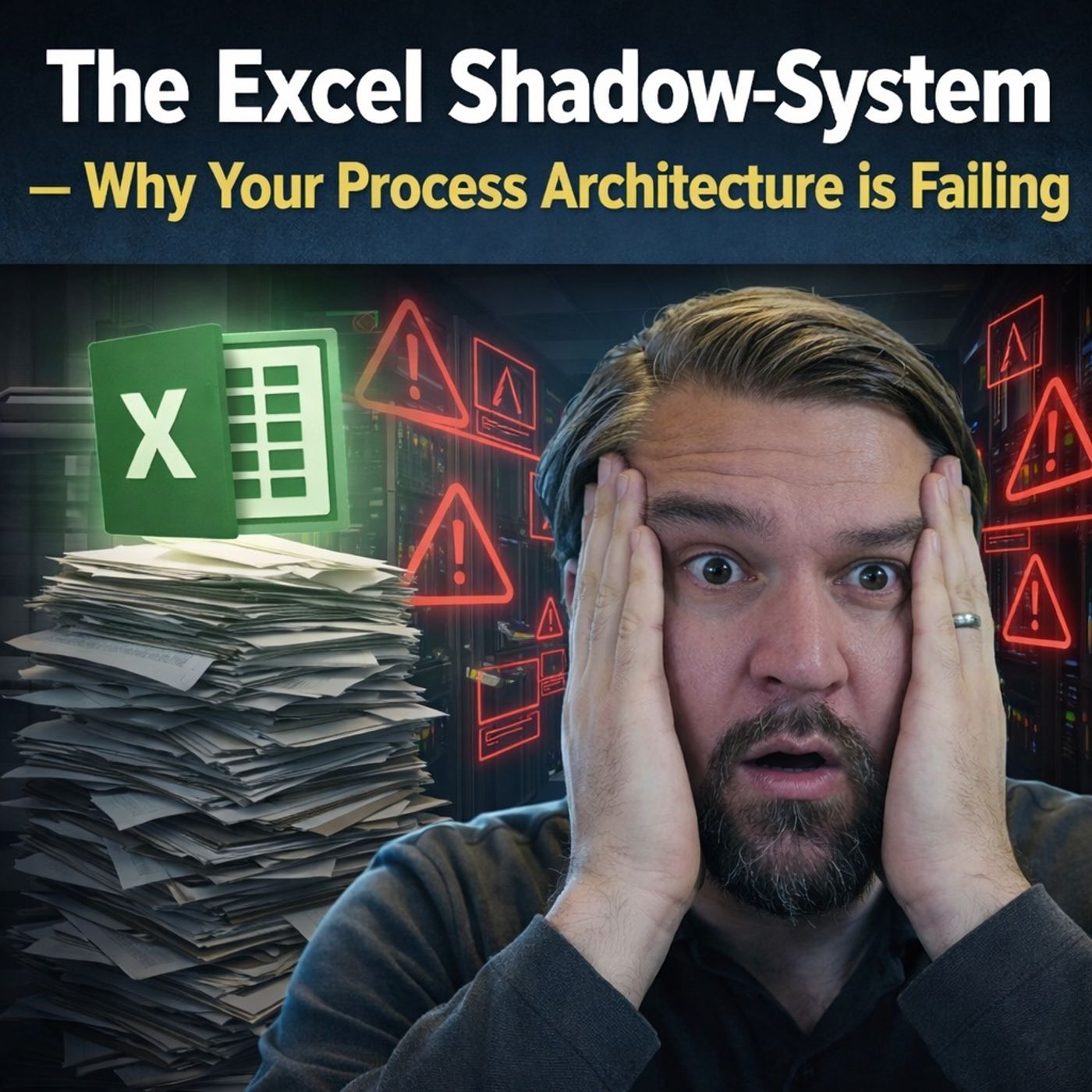
The Excel Shadow-System — Why Your Process Architecture is Failing
from M365.FM - Modern work, security, and productivity with Microsoft 365 · host Mirko Peters - Founder of m365.fm, m365.show and m365con.net
In this episode, you’ll learn why your biggest operational risks are not visible in your tools—but hidden inside your process architecture. You’ll understand how Excel-based shadow systems silently shape your business, why they create instability at scale, and how governance—not tools—is the key to fixing them.🚀 What You’ll Learnwhy Excel shadow-systems are an architectural problem, not a tool problemhow hidden coordination destroys performance, trust, and scalabilitywhy process architecture—not effort—determines business outcomesThis episode is ideal for architects, consultants, IT leaders, and anyone working with Microsoft 365, Power Platform, and modern cloud governance.⚠️ THE EXCEL SHADOW-SYSTEM PROBLEMMost organizations believe their processes are structured and controlled. They are not. Instead, they operate on a hidden layer of:spreadsheets acting as databasesemail acting as workflow enginespeople acting as integration layersThis creates what we call a shadow-system—an unofficial architecture that runs the business without governance, visibility, or control.🏢 THE “NORMAL” COMPANY ILLUSIONFrom the outside, companies like Contoso look stable:Microsoft 365 is deployedTeams and Outlook are heavily usedreports are delivered on timeBut underneath, work flows through:Excel files like Final_v7_Approved_UseThisOne.xlsxemail threads instead of workflowspersonal memory instead of system logicThe business appears functional—but it runs on invisible coordination.⏱️ SIGNAL #1: APPROVAL CYCLE TIME DRIFTA process designed to take 1–2 days often takes 5–12 days in reality. Why? Because time is lost in:inbox waitingunclear ownershipattachment confusionmanual follow-upsThe issue is not slow people.👉 It’s slow architecture.🔁 SIGNAL #2: REWORK AS A SYSTEM OUTCOMERework is not a mistake. It’s a design failure. Typical symptoms:duplicate data entryversion conflictsrepeated approvalsconstant reconciliationUp to 15–30% of work is often pure rework. That’s not inefficiency—it’s structural waste.📉 SIGNAL #3: DATA INCONSISTENCY → TRUST FAILUREDifferent teams produce different answers to the same question. This leads to:meetings becoming reconciliation sessionsdecisions being delayeddashboards losing credibilityWhen trust in data drops, the business stops running on systems… …and starts running on people.👤 THE HIDDEN RISK: KEY-PERSON DEPENDENCY“Only Sarah understands this spreadsheet.” That sentence defines a fragile system. Key-person dependency means:knowledge is concentratedprocesses are undocumentedresilience is low👉 The company is not running on process. It is running on memory.⚡ WHY SHADOW SYSTEMS KEEP COMING BACKExcel is not the problem. It is the fastest available solution to friction. Teams use it because:it’s immediateit requires no approvalit solves problems instantlyThis creates two speeds:formal delivery (slow)survival delivery (fast)Excel lives in the gap between them.🧠 THE REAL ISSUE: ARCHITECTURE, NOT TOOLSThe shadow-system is not chaos. It is a functional architecture:files = databaseemail = workflow enginepeople = middlewareIt works—but it is:ungovernedinvisiblefragile🔄 FROM SHADOW-SYSTEM TO GOVERNED FLOWWhen organizations move to a governed model (e.g., Power Platform), everything changes structurally:BEFORE (Excel System)hidden routingmanual coordinationunclear statefragmented dataAFTER (Governed Architecture)structured intakeautomated routingvisible stateshared data model📊 REAL IMPACT (CONTOSO EXAMPLE)After redesigning just one process:cycle time: 9 days → 2.5 daysrework: 22% → <5%visibility: zero → real-timeThis is not automation.👉 This is architectural transformation. 🤖 WHY AUTOMATION ALONE IS NOT ENOUGHAutomation without governance:speeds up bad processeshides broken logic fasterincreases riskThe real shift is:👉 from manual vs automated👉 to ambiguous vs governed🧭 GOVERNANCE IS THE PERFORMANCE SYSTEMHigh-performance environments require:enforced standardsclear ownershipobservable flowcontinuous controlGovernance is not restriction.👉 It is what makes scale possible.🧱 THE MODERN OPERATING MODELTo fix shadow-systems, organizations must adopt: 1. Governance-led design Defines rules, boundaries, and structure 2. Business-owned processes Domain teams own logic and outcomes 3. Platform-enabled delivery Power Platform enables scalable execution 🤖 AI CHANGES EVERYTHING (AND NOTHING)AI accelerates creation—but not design quality. Without governance:bad processes scale fasterrisks multiply instantlyshadow-systems become smarter👉 AI does not fix architecture.👉 It amplifies it.Become a supporter of this podcast: https://www.spreaker.com/podcast/m365-fm-modern-work-security-and-productivity-with-microsoft-365--6704921/support.
Embed this episode
NOW PLAYING
The Excel Shadow-System — Why Your Process Architecture is Failing
No transcript for this episode yet
Similar Episodes
No similar episodes found.
Similar Podcasts
No similar podcasts found.