
EPISODE · Jul 18, 2026 · 38 MIN
The Filipino Association of Antigonish (FAANS)
from Let's Talk Antigonish Podcast · host Let's Talk Antigonish
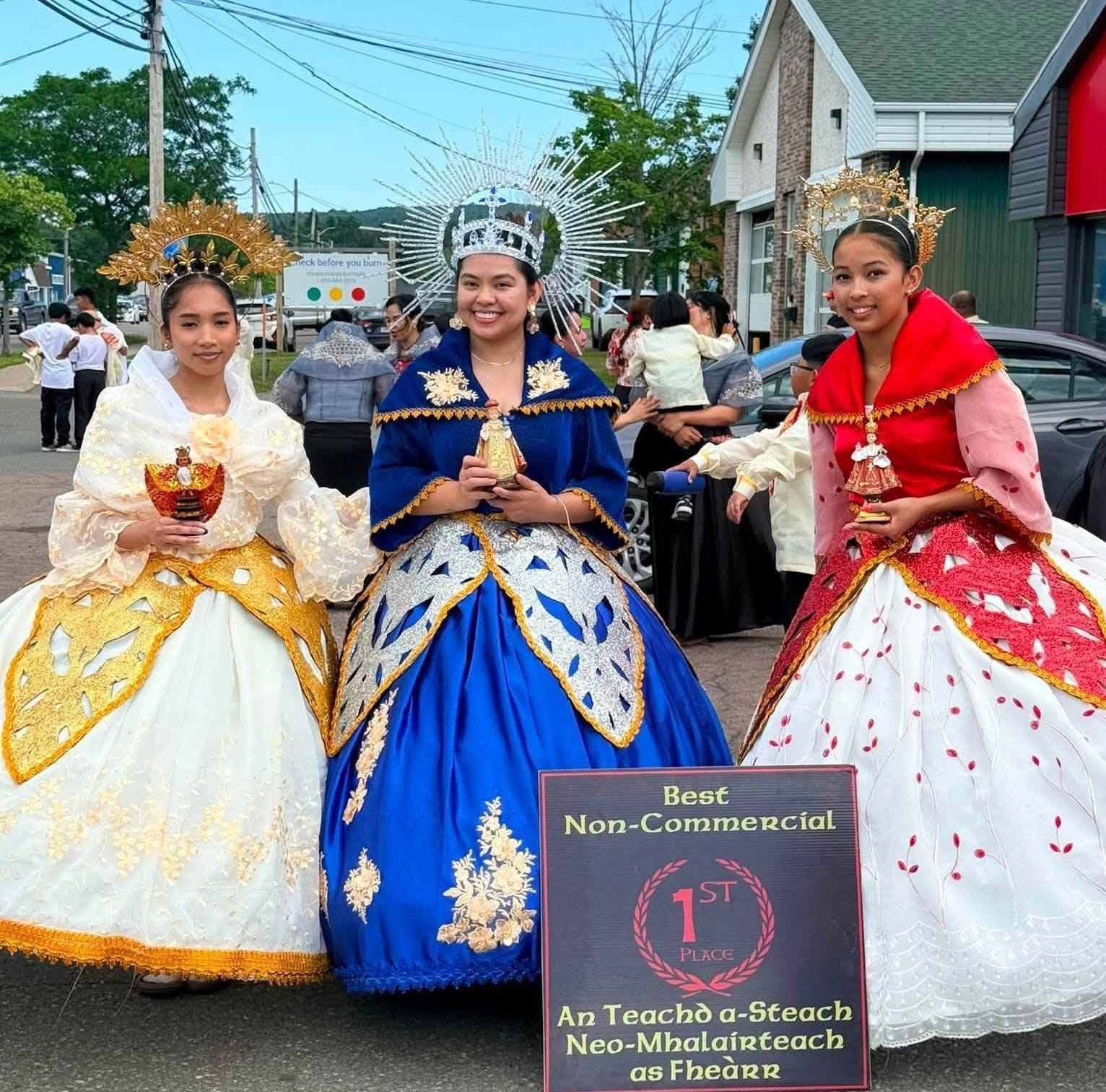
After the Filipino float won first prize in the non-commercial category for the Highland Games parade last weekend, Cheryl Jarina—president of the Filipino Association of Antigonish (FAANS)—started getting phone calls asking if the group would be able to perform at other events. We were lucky enough to get her in the Let’s Talk Antigonish studio before she got too busy fielding media queries!Who Is Cheryl Jarina, and What Is FAANS?Cheryl has been in Antigonish for fifteen years, arriving in 2009 from Alberta when the recession made jobs there scarce. She works as a financial advisor at Scotiabank, having spent the previous seven years as a teller. She has two daughters: a twenty-year-old studying human kinetics at StFX, and an eleven-year-old who was born here and is now in French immersion in grade five.FAANS — the Filipino Association of Antigonish — has been around since 2014, growing from informal community gatherings into something more structured. Cheryl was there from the start. The membership, which fluctuates as families arrive and move on, now sits at over 200, all of them in Antigonish proper. The organization officially registered as a society only last year, despite more than a decade of operation. There are roughly twenty board members and committee volunteers, covering everything from newcomer welcome to event planning.The Parade: The Float Heard Round the TownThe float and its dancers won first prize in the non-commercial category at this year’s Highland Games Parade — the first time FAANS had participated since 2019, when they joined on relatively short notice and danced without a float. After COVID interrupted plans to return, this year felt like the moment. Planning started in January. The costumes were sourced from the Philippines directly.The thirty-six or so dancers performing in the parade wore the Maria Clara dress — a traditional Philippine costume dating from the Spanish colonial era around the 1500s, which has largely been replaced in everyday use by the more widely recognized Filipiniana style with its distinctive butterfly sleeves. The choice of Maria Clara was deliberate: it’s less commonly seen, considered more extravagant, and the effect on parade spectators appears to have been considerable.The dance itself was the Sinulog Festival Dance, one of the grandest celebrations in the Philippines, originating in Cebu. The name refers to water, and the characteristic backward-and-forward steps mimic its flow. The Sinulog celebrates a kind of thanksgiving for the moment in 1521 when the Spanish introduced Christianity to the Philippines, presenting the image of the Santo Niño — the child Jesus — to Queen Juanita of Cebu. It is a massive festival back home, full of music, dance, and communal gathering. In Antigonish, it stopped people in their tracks.The response overwhelmed the organizers. Cheryl says she didn’t expect anything like it. Since the parade, FAANS has received an invitation from StFX to perform at halftime during a football or basketball game, and an invitation from the Filipino Association of Halifax to participate in Natal Day on August 3rd. Their schedule is filling up.The Community You Didn’t Know Was ThereJustin and Anuj make an observation that runs through the episode: the Filipino community in Antigonish is large, well-organized, deeply connected internally, and — until the parade — largely invisible to most people in town. Cheryl doesn’t dispute this. She says she’s often found it hard to identify clear pathways into broader community life beyond the food fair and language fair. You can be present in a place for fifteen years and still feel like the door into everyday local life isn’t quite obvious.The Filipino community itself, by contrast, has an internal social life running at a remarkable pace. In summer, Cheryl says, someone is hosting a barbecue almost every week. She’ll get a message — we’re doing barbecue, come over — and just go. That rhythm is rooted in something cultural and specific: a concept called Kapwa, a Filipino value centred on a deep sense of shared identity and connection with others. It means that when Filipinos encounter each other abroad, even strangers from entirely different parts of the country, the instinct is immediate — hey, countryman — and an invitation to the house follows shortly after.During fiesta back home in the Philippines, Cheryl explains, you don’t need to know someone to walk into their house. Everyone is welcome. Work, Homes, and StayingA significant portion of the community works in healthcare — nurses at St. Martha’s Regional Hospital and the RK MacDonald nursing home — and in hospitality. Many hold more than one job. Cheryl is careful not to frame this as hardship: Filipinos, she says, are culturally inclined toward hard work and toward providing for their families, and the cost of living right now makes that impulse more practical than ever.What stands out, as Anuj points out, is that the Filipino community in Antigonish has a notably high rate of home ownership. Cheryl confirms this: buying rather than renting is the goal, and once you’ve decided you’re staying, a mortgage makes more financial sense than paying rent with nothing to show for it at the end. The practical logic is sound, but the deeper signal is commitment. People who take out mortgages in a town are people who plan to be in that town. The Filipino community in Antigonish is here to stay.The second generation makes this concrete. Cheryl’s eleven-year-old daughter was born here. On a family trip back to the Philippines — beautiful beaches, endless food, extended family everywhere — it was the older daughter who wanted to know when they were going home to Antigonish.Food, Language, and What You Can FindThe Philippines has 131 languages and dialects. When FAANS gathers, Tagalog serves as the common tongue, understood across the community even by those whose home dialect is something else entirely. Cheryl’s younger daughter, born and schooled here, speaks English as her primary language and is learning French through immersion, but can understand her parents’ dialect fully even without speaking it fluently. For Filipino food ingredients, the community drives to New Glasgow, where a Filipino grocery store called Balai Filipino and Asian Food Mart (balai meaning house) carries most of what you need. Closer to home, Antigonish now has Omig’s, a Filipino food truck operating out of the parking area near the (now closed) bowling alley. Justin states flatly that it serves the best fried chicken in town and that he is prepared to defend this position against all comers.Coming Up: FAANS DayNext month, FAANS will hold its annual FAANS Day at Williams Point — a full community celebration that traditionally centers on lechon: a whole roasted pig, prepared from scratch, starting early in the morning when members gather to get the pig ready before it goes on the spit by midday.Philippine Independence Day was marked on June 12th with a flag raising at Chisholm Park. The big Christmas party brings the whole community together every year.Cheryl’s message for Antigonish, offered when asked what she’d say to the whole town if they were listening, is just marvelous:“We are very fortunate to be in this country, especially in this community. This community…embraced us…it’s so overwhelming…the response during the parade. And we are grateful and thankful.” Get full access to Let's Talk Antigonish at letstalkantigonish.substack.com/subscribe
Embed this episode
Ready to play
The Filipino Association of Antigonish (FAANS)
No transcript for this episode yet
Similar Episodes
No similar episodes found.
Similar Podcasts
No similar podcasts found.