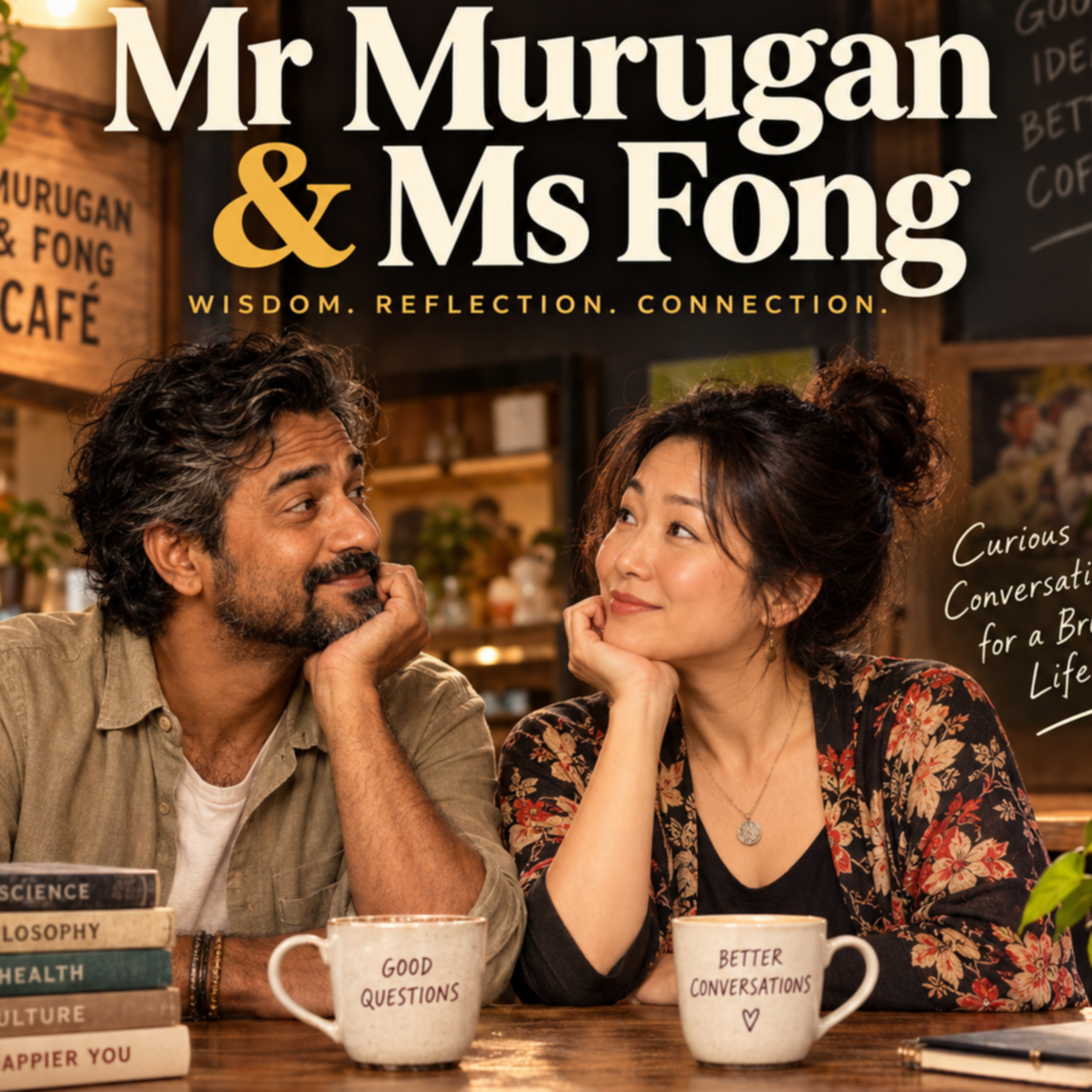
The Final Answer!
from Mr Murugan and Ms Fong Hosted by Mr Murugan and Ms Fong
Happy Deepavali. Happy Diwali. Both. That's rather the point. Some people say Deepavali, some say Diwali, and today a lotof them are standing in the same street lighting the same lamps. So is it two festivals, or one festival with two names? It'sone word. It just took two roads. IN THIS EPISODE - What the name actually means, syllable by syllable - How Sanskrit became Hindi became the English word most ofthe world uses - Why the south says one thing, the north says another, andMalaysia and Singapore say a third - Why some families begin before sunrise and others beginafter dark - Different stories, same lamp THE WORD In Sanskrit, dīpāvali. Dīpa is a lamp. Āvali is arow. A row of lamps – that's the whole name, and Deepavali keeps everysyllable of it. Tamil தீபாவளி keeps them too. In Hindi themiddle softened and shortened into दिवाली, the way ordinary speechwears a word smooth over centuries. English borrowed that form, which is why "Diwali"is what most of the English-speaking world says. Linguists call a pair likethis a doublet – two words, one ancestor, two routes. English has them too.Shirt and skirt are the same old Germanic word; one came down through OldEnglish, the other through Old Norse. Nobody lost an argument. Nobody is sayingit wrong. ABOUT TODAY'S DATE: In 2026, NarakaChaturdashi and Lakshmi Puja both fall on Sunday 8 November – so the pre-dawnobservance and the evening one land on the same day. That isn't always true. In many years they fall a day apart, which is why familiesand calendars sometimes seem to disagree about when Deepavali"really" is. They're not disagreeing. They're marking differentmoments in the same sequence. A FEW THINGS WE COULDN'T FIT IN FOUR MINUTES: This episode describes broad patterns, not rules. Customsvary enormously by family, region, community and country, and almost everysentence here has a household somewhere that does it differently. We also stayed inside the Hindu observance for reasons ofruntime, and that leaves out a lot. Jains mark the day as the nirvana ofMahavira. Sikhs observe Bandi Chhor Divas, remembering the release ofGuru Hargobind. Newar Buddhists in Nepal observe it too. Same week of lamps,different reasons for lighting them, and all of them older than the argumentabout the spelling. SOURCES & FURTHER READING Etymology: Sanskrit dīpa (lamp) + āvali (row); Hindi divālī;English "Diwali" borrowed from the Hindi form Drik Panchang –Deepavali and Naraka Chaturdashi dates for 2026 ABOUT THIS CHANNEL Mr Murugan & Ms Fong. Two voices. One conversation. Wisdom, reflection and connection – in a few minutes a week.Also available as a podcast on Spotify, Apple Podcasts, Amazon Music and mostother podcast platforms. New episode every week. Subscribe so you never miss one. Andshare this with someone who says it the other way – then ask them what theirfamily does before sunrise. In the comments: which do you say, where are you, and what'sthe one thing your family always does? We'll read all of them today. Contact: [email protected] This episode is for educational and reflective purposes only.Traditions and naming vary widely by family, region and community; what'sdescribed here are common patterns, not rules. #Deepavali #Diwali #FestivalOfLights #MrMuruganAndMissFong#WisdomReflectionConnection #Deepavali2026 #Diwali2026 #HappyDeepavali#HappyDiwa
Embed this episode
No transcript yet.