
EPISODE · Sep 25, 2020 · 34 MIN
The final days of Socrates - Plato
from Wiser Than Yesterday: Educational Book Reviews and Summaries
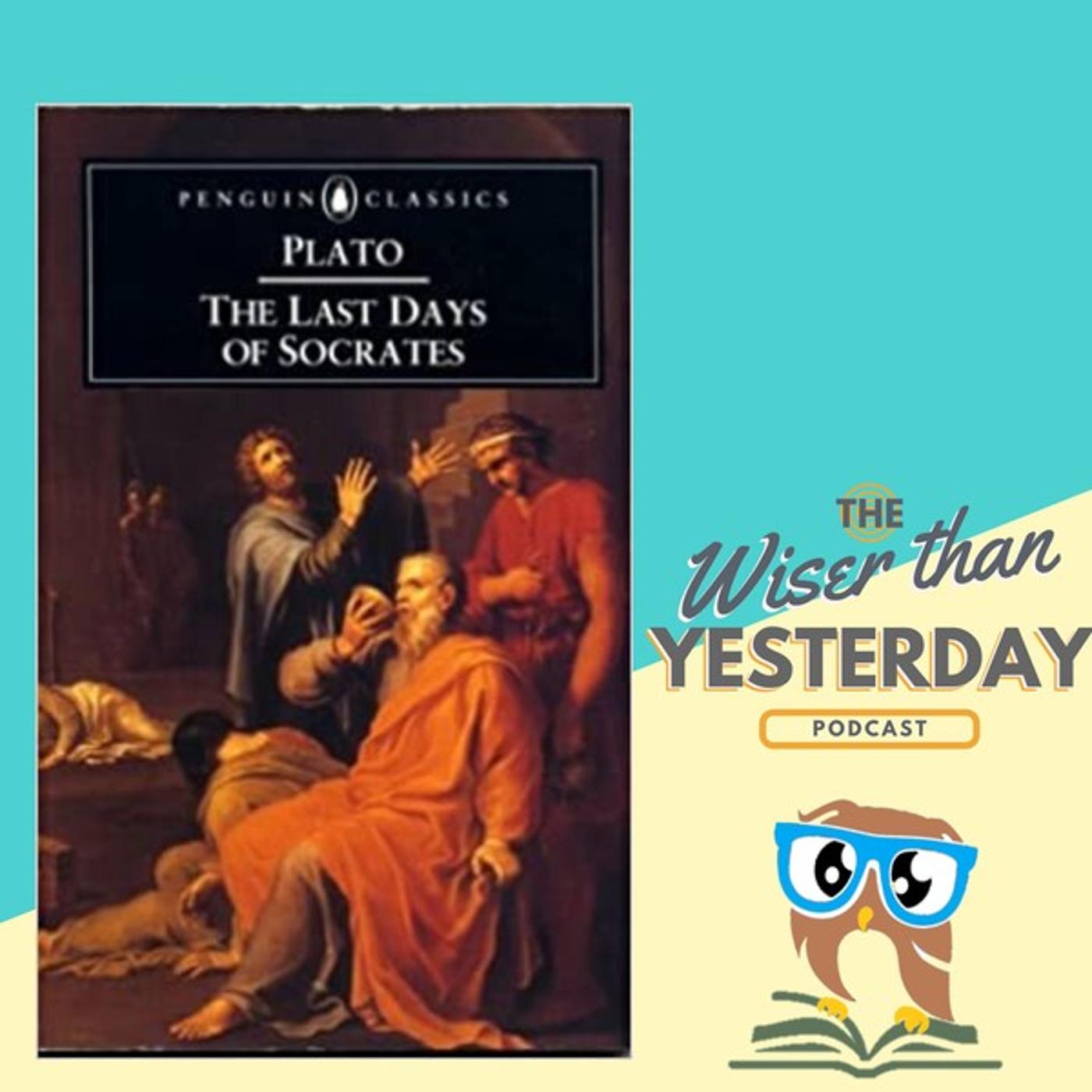
The Last Days of SocratesA Philosophy book by Plato that is divided between 4 partsEuthyphroTakes place just before Socrate's trial is about to beginThe ApologyPlato uses his dialogues to tell the story of the trial of Socrates as he energetically defends himself against the charges of heresy and corruption of youthCrito - Socrates friendCrito, has come to help him escape and Socrates counters crito's arguments choosing to stay in prison and accept his fatePhaedoPlato uses Socrates to espouse his belief of the immortality of the soul. Death should be welcome to the philosopher because it is then that he will attain true wisdom and get rid of the distraction of the body.The version we read consisted of The apology and the Phaedo.The ApologyThe Apology reads as essentially a monologue, Plato casts Socrates’ speech as an implied dialogue with his accusers, the assembly, and the larger community of the city. And because the charges call into question Socrates’ lifelong public career as a philosopher, The Apology is Plato’s most explicit defense of philosophical inquiry as essential to the well-being of society.First, Socrates explains why he does what he does. He was told by the oracle of delphi that he was the wisest of all men. He didn’t believe it, because he knew that he knew almost nothiing. So he made iit his mission to find someone wiser than him. ## The PhaedoNothing is written from the point of view of the author - PlatoIn a Platonic dialogue, no single character represents the author’s opinions. Instead, we encounter a series of conversations and speeches in which the characters affirm and deny one another’s statements while engaging in cross-examination. Every statement is subjected to ongoing inquiry; at its conclusion, a dialogue leaves the impression that more avenues for investigation have been opened than existed at the beginning. The character of Socrates, the most likely spokesman for Plato, is typically the sharpest questioner and often seems to have the upper hand. However, even when he presents fully formed theories, they are put forward only as hypotheses to be examined, not as doctrine. In fact, Socrates repeatedly insists that his only wisdom is in knowing what he does not know and in his willingness to join with others in the pursuit of truth. Don't Forget to leave a comment on this episode See podvine.com/privacy-policy for podcast listener privacy info. Hosted on Acast. See acast.com/privacy for more information.
Embed this episode
Ready to play
The final days of Socrates - Plato
No transcript for this episode yet
Similar Episodes
No similar episodes found.
Similar Podcasts
No similar podcasts found.