
EPISODE · Aug 25, 2026 · 8 MIN
The Fine Print
from The Rest of the World Podcast · host Rudy Martinez and Rest of the World Report
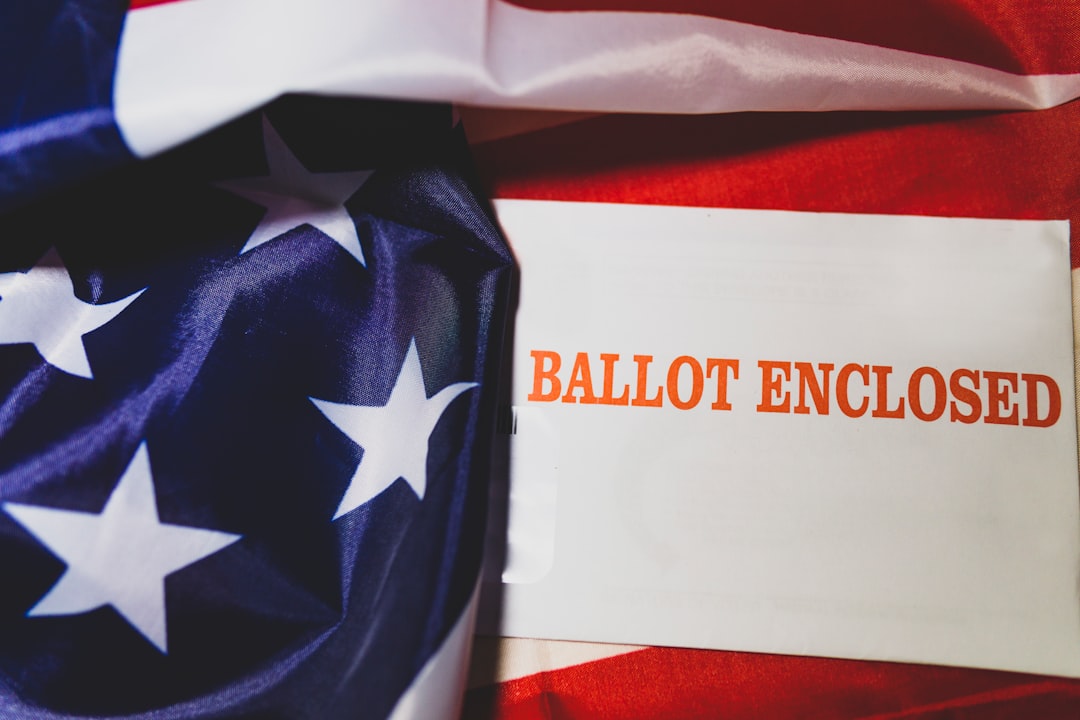
Weekday morning and evening editions. Saturdays once. Good news on Sundays. All sources labeled.A NARROW WIN THAT CHANGES LITTLEThe Supreme Court ruled 6-3 along ideological lines Monday to lift a June injunction that had blocked key parts of Trump’s mail-ballot executive order. That injunction had covered 23 states and Washington, DC. The court granted a similar request covering Alabama and 11 other states in the same order. The three liberal justices dissented.The practical effect is limited. A separate, later injunction still blocks the US Postal Service nationwide from implementing the rule itself. That injunction, issued August 11 by the same federal judge, Indira Talwani, was not part of Monday’s ruling and remains in place. USPS finalized a 95-page rule last Friday specifying new envelope, barcode, and data-reporting requirements for mail ballots. It has said the rule will not take effect for November’s elections unless both injunctions are lifted.The majority’s own order included an unusual caveat, noting that the ruling did not address whether Trump’s actions were lawful. The order added that it should not be read as suggesting the executive branch has any constitutional or statutory authority to implement the president’s directives. New York Attorney General Letitia James, one of the officials who had challenged the order, called the ruling “a painful setback.” She said it would not be the final word. The case now returns to the 1st US Circuit Court of Appeals, where the underlying legal fight continues.Solicitor General John Sauer had told the court USPS would not verify voter eligibility, and would not refuse to transmit ballots from voters not on state-provided lists. He characterized the rule as imposing only “modest envelope design requirements.” Voting rights groups have disputed that framing, arguing in a separate emergency motion that USPS issued the rule in defiance of the standing injunctions.🇺🇸 What American readers need to know: The Supreme Court handed Trump a procedural win Monday, but a separate court order still blocks USPS from actually changing anything about how mail ballots work before November. Roughly 30 percent of votes in the 2024 election were cast by mail. This fight is far from over.Sources: NBC News (US — 6-3 ruling detail, majority’s caveat language, states covered); NPR (US — Sauer’s timing argument, James’s “painful setback” quote); CNBC (US — August 11 injunction detail, 1st Circuit remand, military/overseas ballot timeline); ABC News (US — Sauer’s “modest envelope design requirements” characterization, USPS rule detail); Democracy Docket (US, legal news outlet — voting rights groups’ emergency motion, USPS-groups meeting detail); WBIW via AP (US — Talwani’s ruling language, 30-percent mail-vote figure)THE NUMBER MOST AMERICANS AREN’T WATCHINGThe yield on the 30-year US Treasury bond hit 5.34 percent last Tuesday, its highest level since 2007, before the global financial crisis. The Treasury Department responded with what analysts called an unusual intervention. It announced a plan to at least double its buybacks of longer-dated government securities, an attempt to support demand and bring borrowing costs back down. The relief lasted only days. By Friday, the 30-year yield had climbed back to 5.273 percent, up from 5.21 percent the week before.Rising yields mean the US government pays more to borrow money, and that cost flows outward into mortgage rates, corporate borrowing, and consumer credit generally. Analysts point to several forces driving the surge at once. Persistent inflation is still running above the Federal Reserve’s 2 percent target. The federal government’s debt load is ballooning, after last week’s $40 trillion milestone. Higher energy prices tied to the Iran war have added further pressure to the inflation picture feeding into all of it.A newer factor is pulling investor money away from Treasuries directly. AI companies have issued roughly $200 billion in corporate bonds this year, borrowed money, not stock, to fund data center construction, according to Nomura Securities. That's a sum equivalent to about a quarter of the Treasury's own net bond issuance to private investors, and five times AI companies' share of the corporate bond market in 2025. Pension funds, insurance companies, and other large institutional investors set aside a fixed amount of money each year to buy bonds. That same money can go toward US Treasury bonds or toward the corporate bonds AI companies are now selling in record volume. When AI companies flood the market with new bonds to buy, some of that money goes to them instead of the Treasury, so the Treasury has to offer a higher yield to still attract enough buyers. Bank of America's economists estimated this effect alone has pushed 10-year Treasury yields up by roughly 0.3 percentage points this year.This is not solely an American story. Long-dated government bond yields have surged globally in recent weeks, raising borrowing costs for governments, businesses, and consumers well beyond US borders. Japan intervened directly to manage the pressure, selling euros in a coordinated move. The US separately asked the Federal Reserve to raise the limit on its foreign currency swap facility, a mechanism used to support dollar liquidity for other central banks. Krishna Guha, of the investment bank Evercore ISI, wrote in a note to clients that a material reduction in the US deficit “would be a game-changer” for the bond market. His reasoning: a smaller deficit means the government needs to borrow less, which means issuing fewer new Treasury bonds, which eases the same oversupply pressure that’s been pushing yields higher. No such deficit reduction is currently on offer from Washington.A separate, quieter conflict is playing out inside the government’s own economic institutions. Treasury Secretary Scott Bessent has been increasingly active in territory traditionally reserved for the Federal Reserve. Analysts describe the moment as a test of the central bank’s independence. Fed Chair Kevin Warsh is scheduled to speak at the Jackson Hole Economic Policy Symposium this week. Investors will be watching closely for any signal on how he plans to respond, both to inflation and to Bessent’s expanding footprint on monetary policy.🇺🇸 What American readers need to know: Long-term borrowing costs just hit their highest level in nearly two decades, and the government’s own attempt to fix it only worked for a few days. This affects mortgage rates and the cost of nearly everything financed with debt. It’s happening alongside a separate, less visible fight over whether the Treasury Secretary is stepping on the Federal Reserve’s independence.Sources: CNN Business (US — 30-year yield peak, buyback announcement, Guha quote, global yield surge context); CNBC (US — 19-year high confirmation, July deficit detail, inflation context); CNBC (US — Friday yield figures, Jackson Hole timing, Stanley quote); CNBC (US — Bessent-Warsh tension detail, Fed independence framing); Yahoo Finance via Bloomberg (US — Nomura’s $200 billion and 25-percent figures, BofA’s 0.3-point yield impact estimate, Rodriguez quote); TradingEconomics (financial data aggregator, primary market data — 10-year yield figures, Japan yen intervention, FIMA facility request)THE FOURTH TRIP TO THE POLLSSouth Carolina Republicans vote today for the fourth time since June to settle their party’s nomination for a single US Senate seat. Sen. Lindsey Graham had already won his own June primary for another term when he died July 11 of an aortic tear. His death left the seat vacant and forced a new nomination process from scratch. His sister, Darline Graham, was appointed to serve the remainder of his current term and is now running for a full term with Trump’s endorsement. She led the field in an August 11 special primary with roughly 33 percent of the vote, short of the majority needed to win outright.Today’s runoff is between Graham and Rep. Ralph Norman, a five-term congressman who ran for South Carolina governor earlier this year and placed third in that primary. Roughly 336,000 voters cast ballots in the August 11 primary. Only registered Republicans and voters who sat out the June primary entirely are eligible to vote in today’s runoff. The winner faces Democrat Annie Andrews in November. Graham last won reelection to the seat in 2020 with 54 percent of the vote, in a state Trump carried by 17.9 points in 2024.Two other races are being decided the same day. In Georgia’s 13th Congressional District, voters are choosing between two Democrats, former Gwinnett County School Board Chair Everton Blair and Marcye Scott. It’s a runoff to replace the district’s late representative, David Scott, who died in April. Oklahoma is also holding its gubernatorial primary today.🇺🇸 What American readers need to know: A Senate seat that should have been settled by a single primary in June has instead required four separate trips to the polls, following the death of a four-term incumbent. Whoever wins today is heavily favored to hold the seat, in a state Trump carried by nearly 18 points.Sources: PBS NewsHour (US — voter eligibility rules, August 11 turnout figure, prior Graham reelection margin); Spectrum News (US — Norman’s gubernatorial primary finish, Georgia and Oklahoma race detail); NBC News (US — Andrews as Democratic nominee, other primary candidates); Queen City News (US — Graham’s August 11 vote share, Norman’s congressional tenure); Wikipedia (secondary/tertiary use only, corroborated by county-level results data — Trump’s 17.9-point 2024 margin)NUMBERS AT PUBLICATION🇮🇷 Iran: 3,636 killed 🇱🇧 Lebanon: 4,346 killed, 12,301 wounded 🇮🇱 Israel: 1,200+ killed, ~5,400 wounded (includes 472 killed, 3,004 wounded in Gaza) 🇺🇸 US military: 18 killed, 687 wounded 🇵🇸 Gaza: 73,407 killed, 174,335 wounded 🇵🇸 West Bank: 316 killed (incl. 73 children), 5,641 wounded (incl. 915 children), since January 2025 🛢️ Brent crude: $89.92/barrel ⛽ US gas: $4.10/gallonSources: HRANA (Iran), Lebanon MOPH, INSS (Israel), DCAS (US, disputed — see Aug 4 story), OCHA/MoH Gaza (Gaza and West Bank), OilPrice.com, AAA.“Whenever the people are well informed, they can be trusted with their own government.” — Thomas Jefferson, 1789If you want to help me get RotWR to the rest of the world, please consider sharing across multiple platforms! Thanks! Get full access to The Rest of the World Report at www.restoftheworldreport.com/subscribe
Embed this episode
Ready to play
The Fine Print
No transcript for this episode yet
Similar Episodes
No similar episodes found.
Similar Podcasts
No similar podcasts found.