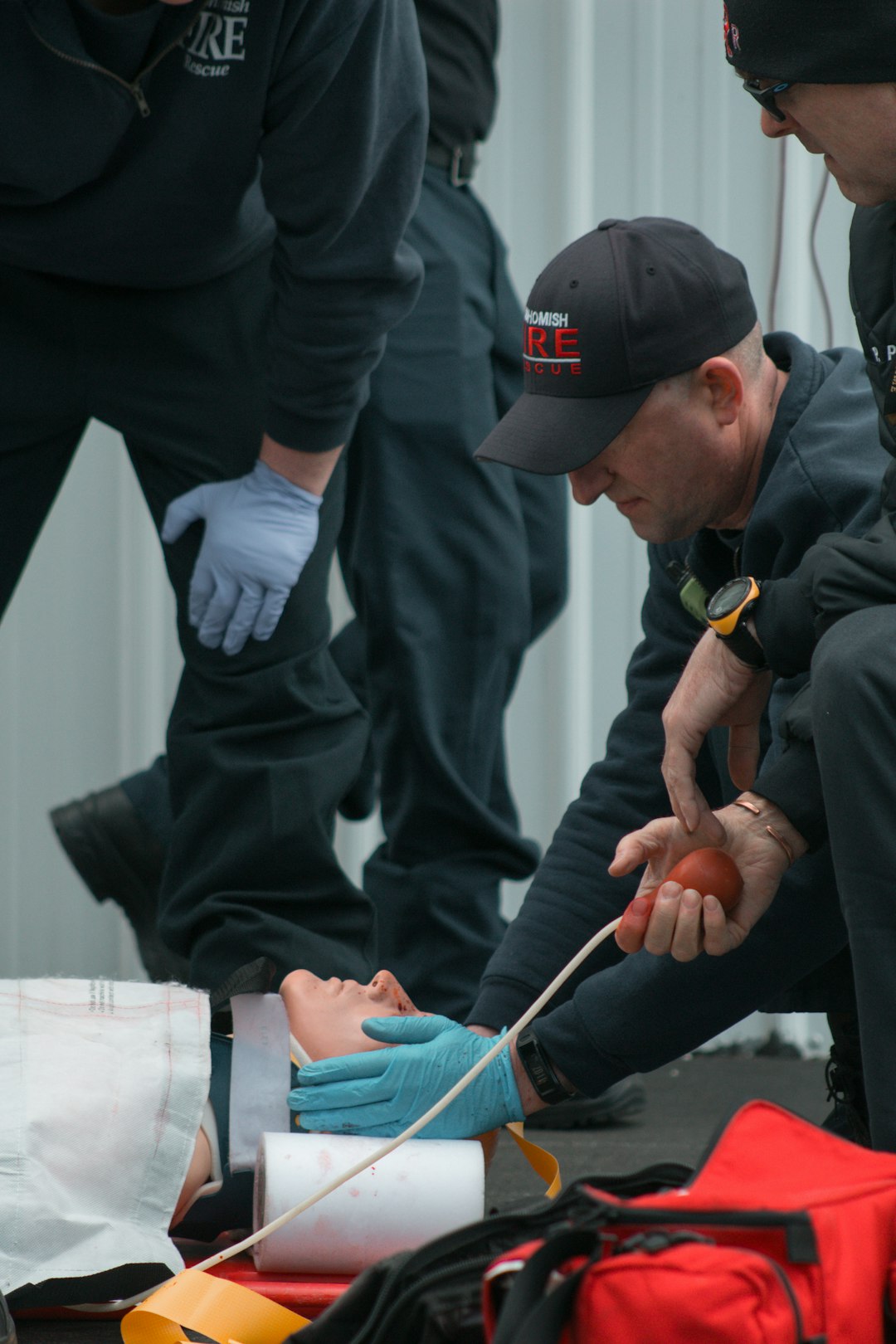
The First Ten Minutes
from Durable Good Hosted by Ray Salvatore Jennings
(Listen now: 14 minutes) What makes someone choose demanding work, and what makes them stay? In this episode of Durable Good, a classroom of students studying to become emergency medical technicians becomes a window into emergency response, generational stereotypes, moral injury, low pay, and the responders we depend on when something goes badly wrong. The First Ten Minutes, the period when lives are often saved or lost, asks what happens when the willingness to do this work meets reality, and what institutions owe the people they hope will keep showing up. Sources and further reading · U.S. Bureau of Labor Statistics, “EMTs and Paramedics.” Pay, work schedules, employment and projected openings for EMTs and paramedics. The median annual wage for EMTs was $44,470 in May 2025. · U.S. Bureau of Labor Statistics, “Postal Service Workers.” Source for the wage comparison used in the episode; median annual pay was $59,880 in May 2025. · National Registry of Emergency Medical Technicians, EMS Workforce Stability Study. Research on clinicians entering, remaining in, and leaving the EMS workforce, including substantial turnover across the states studied. · NAEMT, “Rethinking EMS Staffing.” A workforce paper examining EMS staffing shortages, economic pressures, burnout, recruitment, and retention, including the mismatch between certification numbers and agencies’ ability to attract and keep personnel. · Rimon, Amit, and Leah Shelef, “Moral Injury Among Medical Personnel and First Responders Across Different Healthcare and Emergency Response Settings” (2025). A review of 41 studies examining moral injury among healthcare workers and first responders, including the role of traumatic exposure, organizational constraints, inadequate resources, workload and lack of support. · Bell, Verity, et al., “In Harm’s Way: Moral Injury and the Erosion of Trust for Emergency Responders in the United Kingdom” (2025). The study referenced in the episode that identifies three moral-injury perspectives among emergency responders: loss of trust in others, loss of trust in oneself, and loss of trust in authority. Get full access to Durable Good at durableproductions.substack.com/subscribe
Embed this episode
No transcript yet.