
EPISODE · Jun 30, 2026 · 58 MIN
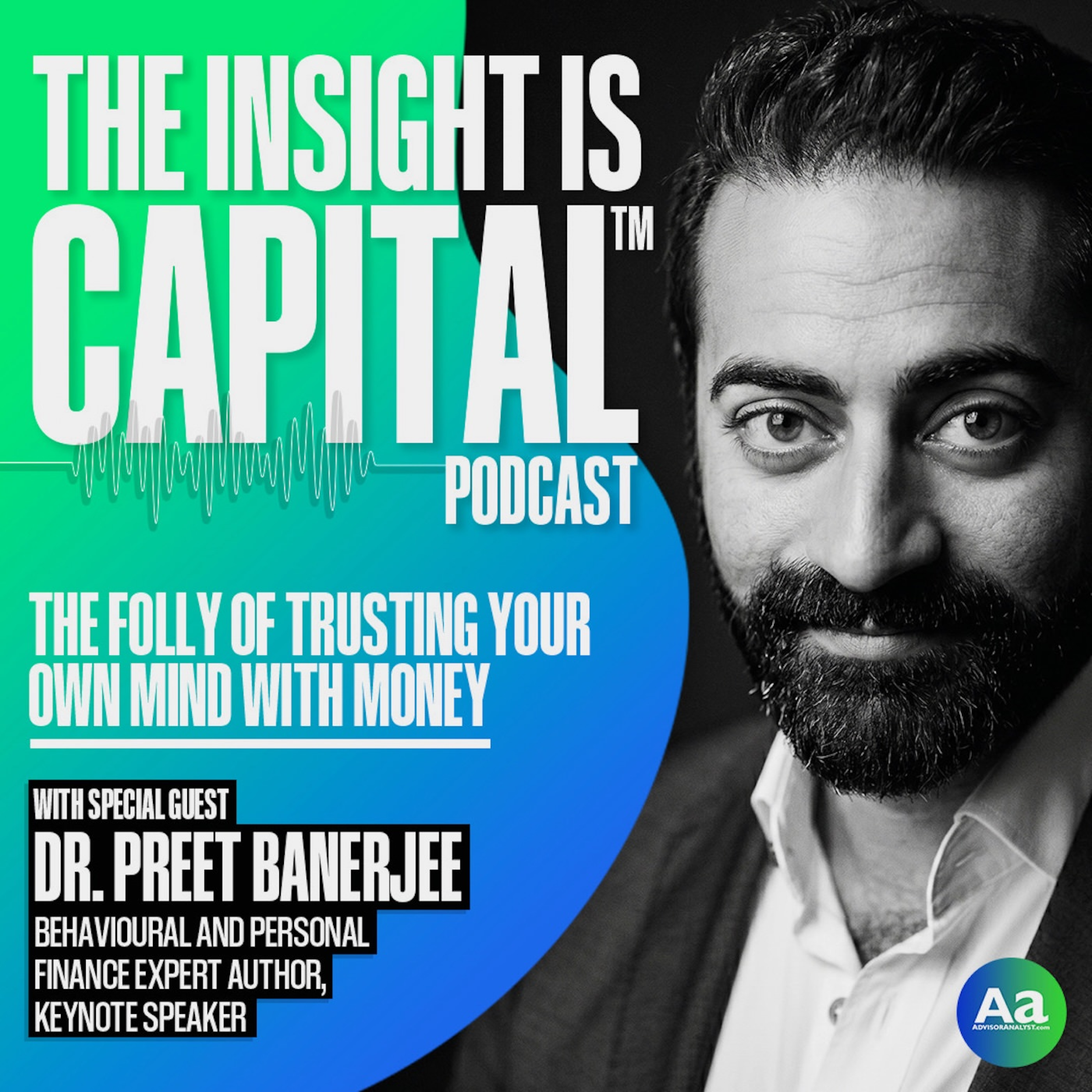
The Folly of Trusting Your Own Mind With Money | Dr. Preet Banerjee
from Insight is Capital™ Podcast
Why does doing more research make investors more confident in the wrong decision, why do warning labels often invite the very risk they're meant to prevent, and why might a friendlier robo-advisor actually produce worse investing behavior?In this episode of Insight is Capital™, Pierre Daillie sits down with Dr. Preet Banerjee — personal finance expert, founder of Money School, and Globe and Mail behavioural finance columnist, to unpack the psychological wiring beneath everyday investing decisions. From the "cue recall simulation loop" that distorts how investors remember their own portfolio returns, to research showing that useless new information makes people more confident (not more correct), to the counterintuitive finding that warning labels can make risky products more desirable, this conversation maps the gap between what investors think they're doing with their money and what's actually steering the wheel. Preet also explains why robo-advisors with more "human" interfaces see worse adherence to their own advice, how disclosure and judgement anxiety shape client behaviour, and why clients using ChatGPT before a meeting may end up valuing their advisor's guidance more, not less.Chapters00:00 Open: The Hidden Psychology of Money 01:26 Meet Dr. Preet Banerjee 01:58 Life in London and the Advisor App Store 07:23 From Neuroscience to Behavioral Finance: Preet's Path 12:48 The Confidence Trap: Why More Research Backfires 18:40 Red Teaming Your Own Investment Decisions 20:26 Why You Misremember Your Portfolio's Past Performance 23:05 DIY Investing vs. Evidence-Based Strategies 26:42 Loss Aversion and the Scars of Your First Market Crash 28:42 Journaling as a Behavioral Antidote 32:11 The Parental Advisory Effect: Why Warnings Backfire 37:59 Could an Investment Literacy Test Protect DIY Investors? 40:15 The Regulatory Tightrope Between Risk and Access 42:16 Sports Betting, Retirement Savings, and Cautionary Data 44:28 The Robo-Advisor Paradox: Warmer Interfaces, Worse Behavior 45:59 Disclosure Anxiety, Judgment Anxiety, and Advisor Trust 49:31 Why Personal Finance Is 90% Psychology 51:30 The Dark Side of Investing Democratization 53:49 The Dalbar Study and the Behavior Gap 54:11 ChatGPT, Advisors, and the Future of Financial Advice 58:25 Closing Thoughts #BehavioralFinance #InvestorPsychology #PersonalFinance #InvestingTips #WealthManagement #FinancialAdvisor #PreetBanerjee #InsightIsCapital #DIYInvesting #RoboAdvisor #FinTech #InvestingMindset #MoneyPsychology #FinancialLiteracy #StockMarket #BehaviorGap
Embed this episode
What this episode covers
Why does doing more research make investors more confident in the wrong decision, why do warning labels often invite the very risk they're meant to prevent, and why might a friendlier robo-advisor actually produce worse investing behavior? In this episode of Insight is Capital™, Pierre Daillie sits down with Dr. Preet Banerjee — personal finance expert, founder of Money School, and Globe and Mail behavioural finance columnist, to unpack the psychological wiring beneath everyday investing decisions. From the "cue recall simulation loop" that distorts how investors remember their own portfolio returns, to research showing that useless new information makes people more confident (not more correct), to the counterintuitive finding that warning labels can make risky products more desirable, this conversation maps the gap between what investors think they're doing with their money and what's actually steering the wheel. Preet also explains why robo-advisors with more "human" interfaces see worse adherence to their own advice, how disclosure and judgement anxiety shape client behaviour, and why clients using ChatGPT before a meeting may end up valuing their advisor's guidance more, not less.
NOW PLAYING
The Folly of Trusting Your Own Mind With Money | Dr. Preet Banerjee
No transcript for this episode yet
Similar Episodes
No similar episodes found.
Similar Podcasts
No similar podcasts found.