The foodsaving grassroots movement (35c3)
from Chaos Computer Club - 35C3: Refreshing Memories (mp3) Hosted by Tilmann Becker, Nick sellen, Janina Abels
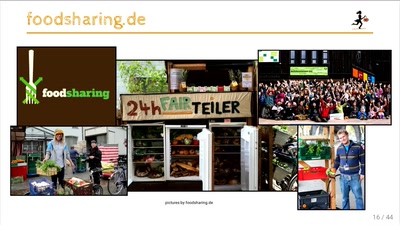
When you're fighting for a cause, you need tools that reflect your values. While venture capital-backed tools are seductive, especially at the beginning of your movement, they can be harmful in the long-term. This session shows how co-operatively owned, non-hierarchically built Free and Open Source Software (FOSS) provides a more sustainable, and equitable, solution. Capitalist and consumerist structures have led to reduced incentives to make the most efficient use of food. Wastage is massive and the reasons are many: misshapen vegetables, damaged packaging, mislabeling, forecasting errors, unsold items, etc. These are all symptoms of the structure of our industrialised food production structures, food waste is inherent in these systems. Many organisations have sprung up to try and access this food, using many approaches. France has tried to outlaw supermarket food waste, apps like Olio and Too Good To Go try and use the startup/funding approach, charities like FareShare in the UK receive massive government funding to redistribute to other charities. Startups and big charities replicate the hierarchical structures and bureaucratic processes of capitalist organisations. Whilst they can achieve much at times, we don't believe this is the sustainable resilient model - profit motives or government objectives dictate the approach to take. In Germany foodsharing.de was created as a grassroots volunteer movement with origins in the dumpster diving scene. It has scaled up to co-ordinate the activities of 30k food savers to collect leftovers from supermarkets. This was achieved with almost no external funding. It faced its own organisational scaling issues and expanding beyond German speaking regions has not been possible. In response to this, and working together, we created Karrot to try and alleviate some of these issues. Unlike in foodsharing.de we develop the software independently from any specific group, this has allowed us to build common software to be used across 6 countries by independent groups. We empower local groups with access to high quality software but otherwise leave them to organise themselves. We believe that for solving a problem you cannot use the very practices that produce it in the first place: Hierarchies lead to passive individuals who wait for their leader's decisions and don't dare to get active on their own accord. For-profit organisations need to make money and will always prioritize this goal. We are not just here to save food, but want to support and encourage self-help, self-responsibility, democracy, equality, equity and solidarity. This brings us inline with the wider co-operative and solidarity economics movement. To reject the capitalist structures that cause the problem in the first place. However, it's not always easy... https://foodsaving.world https://github.com/yunity/karrot-frontend https://foodsharing.de https://community.foodsaving.world https://www.youtube.com/watch?v=MLWccmvhIlU about this event: https://fahrplan.events.ccc.de/congress/2018/Fahrplan/events/9882.html
Embed this episode
No transcript yet.