
EPISODE · Jan 24, 2026 · 8 MIN
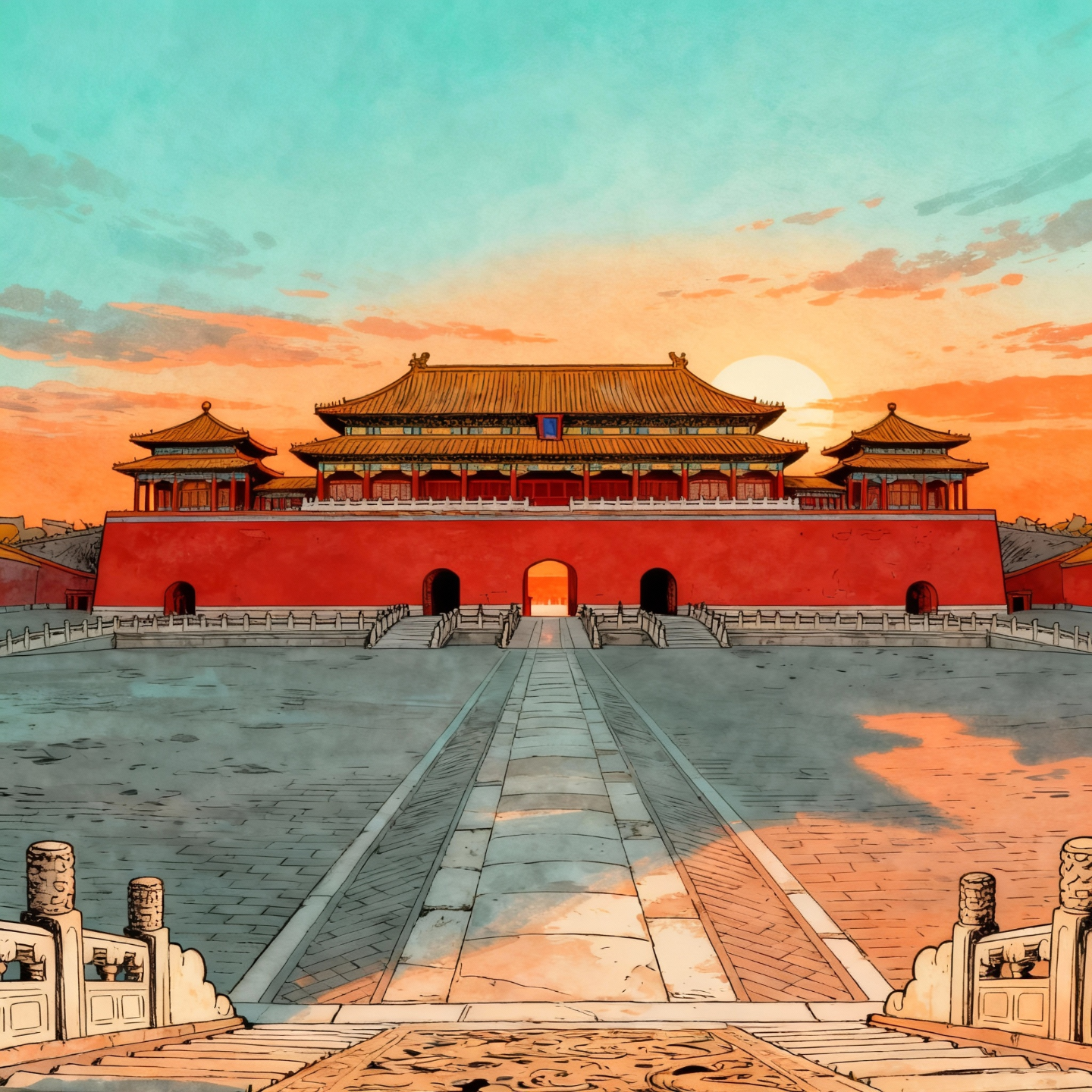
The Forbidden City|故宫
from 经典英文绘本
中国建筑故事 Today, we are going to tell a story about the Forbidden City. When it comes to the Forbidden City, a profound pride stirs in the soul of every Chinese, rooted in the legacy of Zhu Di, the third emperor of the Ming Dynasty. Braving countless obstacles, he moved the imperial capital from Nanjing to Beijing, ushering in the history of Beijing as the imperial capital of the Ming Dynasty. Shortly after ascending the throne, the northern border was still unstable. To fulfill his oath of "The emperor guards the nation’s gateway", and to build a spiritual landmark embodying Chinese dignity, he ordered the construction of the Forbidden City, which is the Forbidden City we know today. The Forbidden City took 14 years to complete, and with its grand scale and exquisite craftsmanship, it finally became the pinnacle of Oriental palace architecture. About 20 years after the completion of the Forbidden City, it was during the reign of Zhu Qizhen, the sixth emperor of the Ming Dynasty, the Battle of Beijing left the most stirring mark in the history of this palace. It was this battle that made every brick and tile of the Forbidden City deeply engraved with the unyielding spirit of the Chinese people. At that time, Zhu Qizhen credulously listened to the slander of eunuchs. He was conceited about the country's strong military strength and acted more and more recklessly. Ignoring the opposition of all civil and military officials in the court, he insisted on leading a personal expedition against the Oirat tribe. The main force of the Ming army suffered a devastating defeat at Tumu Fort, and hundreds of thousands of troops collapsed in an instant. Emperor Zhu Qizhen himself was also captured by the Oirat tribe. At this time, the Oirat army was at its peak. Its elite cavalry was extremely fierce, marching straight to Beijing with the momentum of its great victory. In contrast, only old, weak, sick and disabled soldiers and temporarily conscripted civilians remained in the capital. The number of troops was less than half of the Oirat army, with scarce weapons and low morale, and the military strength of the two sides was vastly different. Taking Zhu Qizhen as a hostage, the Oirat army approached the city gates of Beijing, and the capital was in imminent danger. The Forbidden City, which had just been completed, was even facing the catastrophic threat of being burned down. In the court, all the ministers were in panic, and most of them advocated moving the capital south to avoid disaster, abandoning this palace that symbolized the country. At this critical juncture, Yu Qian, the Minister of War, stepped forward bravely. With his words "The capital is the foundation of the whole country; once it is moved, everything will be lost", he firmly refuted the argument of moving south and stabilized the hearts of the court officials. Yu Qian was entrusted with a heavy responsibility in the face of danger, taking on the task of defending Beijing. He urgently assembled the remaining troops and strengthened the city defense, deploying 220,000 soldiers to guard the nine gates of Beijing. He personally went to the most dangerous Desheng Gate to take command, swearing an oath of life and death with all the military and civilians in the city. When the battle began, Yu Qian remained calm, laying an ambush to lure the enemy deep into the trap. He severely damaged the Oirat army with artillery, and the defenders at the nine gates fought bravely, building a solid defense line with their blood and lives. After five days of bloody fighting, the Oirat army was defeated and forced to retreat. Beijing was saved, and the Forbidden City was also preserved. This is the famous Battle of Beijing recorded in history. This victory defended not only a palace, but also the dignity and integrity of the entire nation. In the 600-year history of the Forbidden City, there are too many such stories. For this ancient palace, Yu Qian and the Battle of Beijing are just a moment in time, yet they have precipitated the courage to step forward in times of crisis, and embodied the unyielding spirit of the Chinese nation. This spirit has long been integrated into the bricks and tiles of the Forbidden City, coexisting with architectural craftsmanship and passed down from generation to generation.前往小宇宙评论区与主播互动
Embed this episode
NOW PLAYING
The Forbidden City|故宫
No transcript for this episode yet
Similar Episodes
No similar episodes found.
Similar Podcasts
No similar podcasts found.