
8Cast powers the world's best podcast. Here's a show that we recommend. Oh my god, I hate these ads so much, but I'm trying to winter you might recognize me from the traders and I have a new podcast. It's called The Blank List, where every week we create a top 5 list for a category ranging from most famous people alive to craziest things that have ever happened.
This is the dumbest podcast that's ever been made, but you're going to listen to it and you're going to love it because you're also kind of dumb. The blank list is available wherever you get your podcasts. 8Cast helps creators launch, grow, and monetize their podcast everywhere. 8Cast.com Hello, it's K.C.
here. Over the past couple of weeks, you might have noticed something a little different here on the case file feed. I recently had the chance to meet some of our listeners at the Case File live shows, and something kept coming up in conversations that really surprised me. A lot of people don't know what Case File presents is, or that we produce other podcasts in addition to Case File.
It occurred to me that if someone is a big enough supporter of the show to come to a live event but hasn't heard of Case File Presents, then clearly we need to do a better job of highlighting the other stories we've put so much work and care into. For those who don't know, Case File Presents is our broader production platform. While Case File is our flagship show, we've also created a number of other podcasts under the Case File Presents banner. Our level of involvement differs from project to project, but we've played a direct role in all of them, whether that's financing, research, editing, music, or production.
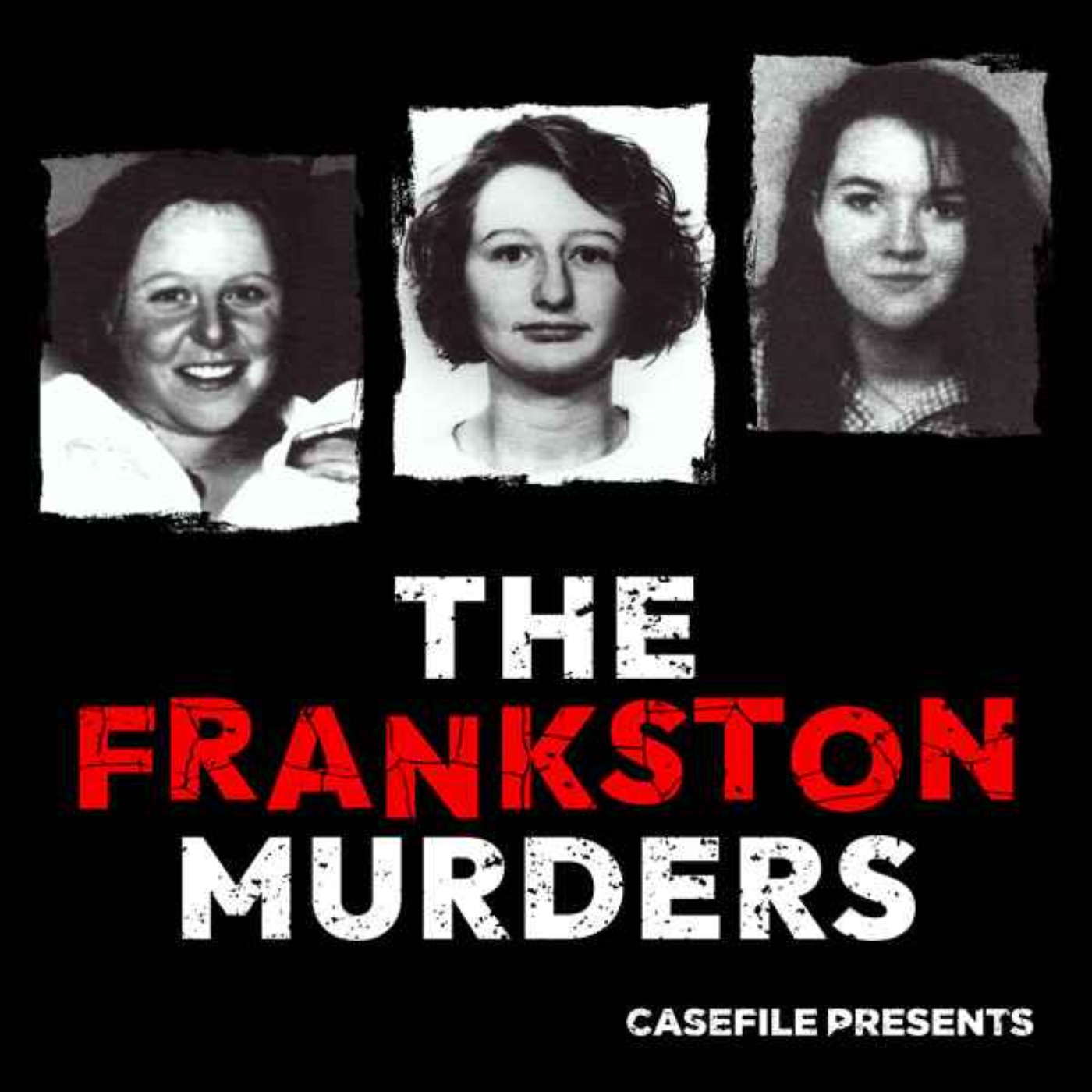
I even narrate a few myself. With Case File currently on a short break, we felt this was the perfect opportunity to bring some of those other stories into the spotlight, series that may have slipped under the radar for many of you, but that we've poured a great deal of time, care, and energy into. We started with missing Nehem, followed by the Bakersfield 3, and now we're turning our attention to the Frankston murders. You might remember this case from episode 23 of Case File, which we released way back in June 2016.
It ran for just over an hour and was split across two parts. Those were very early days for the show, when our episodes were shorter, the production was much more basic, and our format was still evolving. A few years after that original episode aired, I met Vicki Petreides. Vicki is an author who had written a book on the Frankston murders and was living in the area as the crimes were happening.
Over time, she came to know many of the victims loved ones personally. Vicki is one of the hardest working people I know. She somehow manages to juggle multiple in-depth projects while balancing everything else life throws away. She has spent decades giving voices to victims and their families, and she brings both compassion and commitment to honoring victims through detailed, respectful storytelling.
I knew right away that she was exactly the type of person I wanted to collaborate with on Case File Presents projects. We first worked together on other podcast series, but then we found out that Paul Dania, the man convicted for the Frankston serial murders, had applied for parole. While I was mind-boggled to know that a serial killer could apply for parole, this news triggered many unwelcome feelings for the victims' families. In addition to fear, it placed a huge emotional burden on them.
There were submissions, paperwork, legal processes, having to relive the worst days of their lives just to keep a serial killer from being released. Vicki and I both strongly felt that the Frankston case deserved a more in-depth series, something that went beyond the headlines to explore the full impact of Dania's crimes. In March 2023, we released a brand new 11-part series titled, The Frankston Murders. The series details the lead-up to the crimes as well as the aftermath, the families, the survivors, and to the many women who were targeted in the lead-up to the murders, but whose stories hadn't yet been told.
The response was incredible. The series went to number one and has been downloaded more than three million times to date. If you missed it the first time round, now is the perfect time to give it a listen. We're releasing episode one here on the Case File feed.
If you like what you hear, you can find the rest of the series by searching the Frankston Murders wherever you get your podcasts. Now, here is episode one. My podcast, Case File True Crime, covered the Frankston serial murders in a two-part episode on Case 23 back in 2016. When we asked to true crime author Vicki Petreides to make a Case File present series on the disappearance of Sarah McDermott from the Cannondal Groway Station in 1990, it was a natural progression for her to move on to the Frankston Murders of 1993 for her next podcast series.
It was especially timely since serial killer Paul Denier's 30-year non-parole period on his life sentence was up in mid-2023 and there was a likelihood he would apply for parole. Vicki wrote the book on the Frankston Murders and the case has remained close to her heart. On Friday 11 June 1993, 18-year-old Elizabeth Stevens caught a bus from Frankston to the home she shared with her aunt and uncle in Lang Warren. She never made it home.
Her body was discovered the following day in Lloyd Park. On Thursday 8 July, 22-year-old Debbie Frame, the mother of a baby boy just 12 days old, was abducted during a trip to her local milk bar to buy milk. And finally, on Friday 30 July, 17-year-old Natalie Russell didn't make it home from school. She was taken in broad daylight by an increasingly reckless killer.
Her parents were able to take a small comfort from the fact that evidence found at her crime scene ensured the serial killer was taken into custody the following day. An important note. In the past, the Frankston serial killer has identified as female. We have it from several sources that this is no longer the case, so we'll use the male name and pronoun.
We hope that the Frankston murders podcast will do its bit to bring public awareness to the case, especially as the 30-year non-parole part of Daniel's sentence ends in 2023. He has already applied for parole. In telling this story, we want to keep a serial killer in jail for life. He should never be allowed to do to anyone else what he did to people in this podcast.
We are grateful to the Victoria Police for granting us access to two serving members, leading senior Constable Angela Bartz and senior Sergeant Steve Lewis. All other police members interviewed for this podcast are no longer employed by Victoria Police. We will hand it over to Vicki Batreitas to tell the story. My name is Vicki Batreitas and as a true crime author, I found myself right in the heart of Frankston doing wide-alongs with the local police when the murders were happening.
The seven-week period between June and July 1993 was one Frankston locals will never forget. Elizabeth Stevens, Debbie Frame and Natalie Russell all lost their lives at the hand of a serial killer and Rosa Tof came close but luckily escaped. The trail of damage caused by Paul Denier casts a wide net. While his victim telling that we know of is free, the ripple effect of what he did is never ending.
When I wrote the Frankston murders book back in 1995, I wanted it to be about the girls as much as it was about the killer. To understand the extent of his crimes, we need to know what he took from us and make no mistake about it. Paul Denier ruined more lives than what he took. His trail of destruction is wide.
When he set out to act on the desires to kill, that he'd had since he turned 14, there's no evidence he gave any thought to the heartbreak he would cause. It seemed nothing mattered to him more than his bloodlust. I always knew the case would draw me in to revisit it again in podcast form. Perhaps the thing that tipped the scale was a Facebook message I got from a woman called Gloria Vains.
It was her daughter whose cats were killed by Denier. Four months before the murders began, Denier broke into Donavain's house in Claude Street in Seaford and killed her cat and its two kittens. Gloria told me that Donna never got over it. I put out a call on social media wondering how many other victims were out there.
It wasn't long before a disturbing picture of stalking and attacks on property emerged. Some stories I'd heard before and others I hadn't. These stories gave me something else to consider. There are a lot of women out there who live in fear that Paul Denier might one day be released from jail.
They're worried he might come after them again. In adding these stories to the narrative, the picture that emerges of the warning signs should serve to educate us all. We don't reexamine this case just to retell the story. We do it so that we can be reminded of just how dangerous Denier was back then and remain so to this day.
And we tell the story so that around the world people can join in the bid to keep him in prison. So many people were affected by the things Paul Denier did. I wanted to begin with a man called Todd who grew up in Lang Warren. I spoke to Todd at a cafe that he runs a couple of kilometers north of the Melbourne CBD.
Back in 1992, his family lived in Mote Street just around the corner from the Denier family who then lived in Long Street, a couple of houses down from Todd's kindergarten. Our kindergarten had a couple of rabbits in a hutch that was like all the kind of kids looked after I guess. It was in 1992, earlier in 1992, we all came into the kindergarten in the morning. The rabbits were well and truly dead.
They had been cut up and some of their insides were sort of next to them and it was just sort of left there for all the guinea kids. And obviously the teachers that came into the morning had all seen it, the kids that have been there and seen it and it spread quite quickly that something pretty awful had happened. Even though Todd was only a child, he never forgot the killing of the pet rabbits. But it wasn't just the killing of them that was disturbing.
It was the fact that whoever did it left them for all the children to see. If you're doing that sort of thing and leaving it at a kindergarten, you're doing it to cause a reaction, you're not out of the paddies coming around the bush when no one's going to get that is prime where everyone's going to see it. And it's probably going to affect people more so. And I think it was for a shock factor, it was to scare people.
Todd doesn't know for sure whether the police were called to investigate the rabbit killings at the kindergarten. He doesn't remember any police visiting while the children were in attendance. The Kinda teaches from what I remember. They took care of it and whether they came after we'd all gone for the day, I'm not sure.
From my knowledge, no. We were fortunate to get well-known forensic psychologist Tim Watson Munro to offer insights into tenure's behavior. While Tim didn't assess tenure, he has over 40 years experience of assessing tens of thousands of criminals. We were calling Tim's expertise throughout this podcast.
Where's the empathy? Where's the remorse? Much the contrary, they're getting a thrill out of it. Maybe even watching it from a distance to see what the reaction is.
And it's all about power control, creating fear. And there are a few more effective ways to create fear than killing animals at a kindergarten and leaving them out for the kids to see. Two other things stand out in Todd's mind. First, there was an incident one night in his street with a local woman who lived on her own.
There is no evidence what Todd is about to tell us was Paul Denier. But a woman was terrorized in her house at night, getting all of the neighbours out of their homes to come to her aid, creating fear. His involvement can't be discounted. There was a neighbour of ours that had someone banging on their doors and windows at night trying to get in and was making a concerted effort to get in.
So he's banging on doors, windows making a scene getting in somewhere. That was certainly to make an impact so people would know it was to get something out of it. And the other thing that stands out to Todd was that his parents were quite strict about not letting their kids leave Mote Street on their bikes. Pushing at this boundary, Todd used to ride his bike across the road at the end of his street and go to the service station on Long Street.
He and his brothers figured it was safe. The owners were hardworking people. It seemed like a mistake when they employed a young man called Paul to work there. Unlike the industry's owners, Paul seemed to stand around and not do much.
From what I recall, he was a very nondescript person. There was nothing that stood out about him. If you passed him on the street, you wouldn't remember him five minutes later. Look, given he didn't seem to hold down a job very long.
The guys that owned that service station, they worked in a seven days away. Can you hear everyone's names? And back then it was driveway services to fill your car back then. I don't think that someone that didn't really do much and just sort of stood around was really trying to last very long with these people.
The day that Todd has never forgotten, his mum pulled into the service station to get petrol. The owner filled up her tank. She paid him and Paul looked at her car and said she was good to go. The guy that owned it had filled the car and he'd gone into the payment and mum's in car.
Yep, we'd go and Paul was actually the one that was like, yeah, yeah, good to go. The petrol powers were still attached, so she drove out with it, still attached. And I mean, look, whether it was an honest mistake, don't know, but mum was pretty. Pretty upset and everyone was at the service station.
Looking back on it now, you have to wonder if Paul's actions on the day were deliberate. Did he look at her car, see the nozzle still attached and tell her to go? Or is it possible the owner replaced the nozzle back on the bowser when he finished filling her car and then Paul put it back in the car just to cause mischief? Or worse?
Luckily, no petrol was spilled and no stray spark turned an embarrassing inconvenience into chaos. When Paul stopped working at the service station, he got a job at Safeway, Coringal Hub. A story that I heard back when I was writing the book was that Paul Dania had been fired from a supermarket for ramming a woman with some shopping trolleys. I didn't know any more details than that.
A woman called Kate got in touch with me. It was her mother, Dania Rammed, and she was there and saw it happen. While her mother has since passed away, Kate never forgot the incident. I was five at the time and my brother, he would have been sorry.
And my mum at the time was pregnant with my second brother. And we used to always shop at Coringal Hub. And on this particular day, my mum had packed my brother and I in the car. We'd gone shopping and we were getting out of the car and I could see that we got told to stand at the boot and wait for mum.
There was a guy in the distance collecting trolleys. As my mum, my brother and I started to walk towards the entrance to the supermarket, we could see a guy hurrying with the trolleys and he collided with my mum. Kate remembers a slight incline in the car park, but if the man had accidentally lost control of the trolleys, he made no attempt to warn them. He didn't say anything, I don't recall him saying it out the way or excuse me or anything like that, it was just push.
There was no one else around and the collision was deliberate. Kate remembers her pregnant mother being pushed roughly forward with the impact. The trolleys hit her from behind so she didn't actually see anything, but she did actually turn around when the hit happened at hit her in the back. And so we did quickly move.
Kate remembers her mum telling off the man with the trolleys for ramming her. I asked her whether the man said anything back. It was just a death stare, he didn't say anything, but he sort of just looked in disgust really. Just a look of disgust and that icy cold death stare was just a look of hatred.
I haven't really seen that in people ever since then, but yeah, it's a look I've never forgotten. What I'm always interested in is the effect on women of their encounters with Dennya. She was very shaken up, I remember but she just was rattled from the whole experience because I don't think many of us have had that type of experience. If we have, we may have felt a bit of resolve because the person may be a bit remorseful and really apologetic, most people are if they've run into someone by accident.
So this was different, this was sort of a situation that she'd never encountered before. I haven't to this day ever encountered something like that since. And it did rattle her, she changed the way we used to shop. We used to shop kungal, then she used to shop elsewhere because of that whole entire experience.
And in this brief but significant encounter, what does Kate feel about the violence and the hatred emanating from the man in the Safeway Car Park? When you're not happy with someone, you might see someone with a death stare and they don't blink. They just stare straight through you as if you're a pane of glass. And so I do remember the piercing eyes that were glaring at my brother, my mum and I, but it was just this look of hatred at my mum for some reason.
And like we never knew this person, I'd never seen this person in my life. And if Kate's story wasn't bad enough, I found out that then you rammed another woman with the supermarket trolleys. Dadan was the assistant manager at the time. Paul had been at Safeway for around six months and had not even tried to impress his employers.
Paul worked under me. I really didn't think much of him at all. He wasn't a very good worker. He had a very short temper.
He would be constantly having to go and get a mop and bucket because he was putting a drink on it. And he'd be breaking stuff and dropping stuff and you're hearing curses and swearing. And he was really short fused. I really, I think there's only about six months working there part time.
I really didn't think much of him at all, but as an employee. This time when Daniel rammed another woman, there was a baby in her trolley. On the day that he rammed the woman in the trolley with the rubber shopping ch and the pologizing. I don't know whether he'd tend to hit him and say, he did get the woman over the trolley over the baby, the trolley.
So we ended up taking him down to the doctors across the road, medical center. The woman and the baby were taken to the hospital for observation. For the managers at Safeway, it was the last straw as far as Paul Dina was concerned. Manager called me in and he said to anyone, I'd say, you guys, right, we're going to sack him.
You're going to back me. You're going to back me. Yep, no worries at all. So we got him in.
He'd seen me quite calm. We just his famous situation. These women's have to be taken to the doctors and the babies taking the doctors and inside the boat. We're going to end up in hospital for observation.
And yeah, we second what we were happy to get rid of a traffic because he was such a bad employee. Life isn't one size fits all and your home shouldn't be either. Cozy makes furnishing easy with pieces you customize to fit any space or lifestyle. From sofas and shelves to rugs, tables, beds and dining sets, everything is modular and made to suit you.
You don't even have to stick to one look. Their modular pieces can change and grow with you and their removable washable covers make it easy to switch colors and keep things fresh. Plus, every product can be adjusted or reconfigured. Your home reflects who you are and your furniture should too.
Cozy lets you personalize your space to create a home that feels unmistakably yours. Transform your living space today with Cozy. Visit Cozy.ca spelled C-O-Z-E-Y, the home of possibilities made easy. Mother's Day can start to feel a bit predictable.
Flowers, brunch, maybe a gift card. It's all nice, but it doesn't always last much beyond the day. Aura frames is a simple way to switch things up with something more meaningful. It's a digital photo frame you can preload with favorite memories before it even arrives.
So it feels personal from the moment it's opened. You can keep adding photos and videos anytime from anywhere with no limit on storage, so it's something that grows over time. It also comes packaged in a premium gift box ready to go. It's thoughtful, personal and something they can enjoy every day well beyond Mother's Day.
Named to number one by Wirecutter, you can save on the gift's month's love by visiting Aura Frames.ca. For a limited time, listeners can get $25 off their best-selling cover matte frame with code case file. That's A-U-R-A-Frames.ca promo code case file. Support the show by mentioning us at checkout terms and conditions apply.
The Census has begun. Check your mail and complete it online today at census.gc.ca. It's easy to fill out and completely confidential. A message from the Government of Canada.
It was at the Coringale Hub Safeway that Paul met Sharon Johnson and the two began dating. She was 17 at the time and he was 19. Five months later, Paul moved into Sharon's mother's house. A month later, Paul and Sharon moved into a unit on the Frankston Danyong Road.
In the same block of units, there was a woman called Julia. She'd left there for about a year when Paul Danyong and his girlfriend Sharon moved into the unit next door in September 1992. I moved into the second unit. There were four units and they numbered one to four from the road backwards.
I moved in the end of 1990, just before I went to uni. About a year later, Paul and Sharon moved in next door into unit one. Trisha lived in unit three and then we had the people in unit four but I don't recall their names. It wasn't long before Paul began calling into Julia's for coffee.
During these visits, he would pour his heart out. He was grappling with aspects of his religion. When he began dating Sharon, he started going with her to the Christian church on the corner of Men's Street and Frankston Danyong Road. Paul called Julia the church didn't approve of he and Sharon living together and that angered him.
Julia listened to his concerns and offered advice where she could. Certainly, he was a man with issues and certainly he was upset and asking some big questions and just trying to wrestle through a fight with what he wanted, what he felt other people approved of or didn't approve of and feeling unhappy about the interactions that he'd had with the church that they had been going to. I think he was just processing that and trying to move through it. Certainly, I just put that all down to his bucket of issues.
Because Paul's partner Sharon was working two jobs, Julia only really saw her in passing. It's just very neighbourly waving hello, maybe a quick chat on the front door step. I can't recall her ever coming in for coffee but she would have been very welcome to do so. I tended to see her when she was on her way to work or just coming back home from work.
When Paul spoke about attending services at the Christian Centre in Madden Street, which was about a two minute drive away from their block of units, Julia remembers a family connection to the church. So I believe her uncle was the pastor there and they had been going there for a while and they decided to move in together and I think the church had said to them, look, you know, that's probably not the greatest idea. How about you get married or don't live together? Paul had taken that quite poorly and that had resulted in a lot of questioning and some anger that perhaps he felt like they ought to have approved and they ought to have been OK with his decision.
I asked Julia if this caused a division between Paul and Sharon. I wondered if her uncle was the pastor then could the rejection of their living arrangements have been doubly difficult? She didn't seem to come up that that was a dividing point between him and Sharon. I think they were quite cohesive in their decision making and wanting to be together and live next door and I don't think the church was coming in between them but I think that perhaps there was a loss of community for him that he had been part of and he felt a bit ousted which I think would be painful for many people.
Julia was a person of faith herself and she was happy to discuss these things with Paul. He would appear at her door, she would make coffee and then they would talk at length. Sometimes they play the guitar and even though it was the time when Paul was stalking women and making weapons, Julia didn't see that side of him. I never saw that in the time that we had coffee.
He would come over, we would make coffee, we'd sit down on the floor, had a couple of sofas, he would grab the guitar and play the guitar and just kind of mess around with chords and chat. I felt like he thought it was a safe space to just kind of talk about where he was at and what he was feeling. Given that she was doing coffee with a man who was months away from becoming a serial killer, did Julia notice any signs? I think what's weird is that nothing's throughout.
There wasn't a sense, I didn't get any spidey sense or my goodness you're weird. I think it certainly had a lot of issues but I think everybody has their issues and I think when we find what we think is a safe space to talk about those that we do talk about them but there wasn't anything where I thought wow you scare me and certainly I've met many people over the years particularly my role as a nurse. I've met a few scary characters and yet I think probably one of the scariest people I've ever met is someone I didn't notice was scary at the time. I just thought they were issue-filled.
I've spoken to a lot of people who've known predators and didn't pick it before they knew. There's often a sense of why didn't I know? How could I not have picked it? But the thing is, predators are wolves in sheep's clothing.
They are very good at hiding their true nature and fooling the people around them. During this time Julia had a couple of house guests so hers was a place where people were coming and going. When she began noticing things disturbed around her unit she put it down to careless house guests. I would walk into the house and I would find that things had been slightly moved also that I had a series of a jug and a number of mugs on the kitchen window sill and one of them had been knocked into the sink and had broken and there had been leaves and dirt on the floor and given that I never used our back door there would not have been any of the leaves and dirt from the back yard in the unit because we just never used the door.
I found them there and because I had people staying with me I wasn't particularly concerned. I just figured these things had happened by accident, cleaned them up and just put it down to having guests. Although I was a little bit surprised that they didn't say you know we're sorry for breaking that coffee cup or whatever but that's okay, that's just the nature of having guests sometimes. So I put it all down to it being visitors rather than it being an unwelcome visitor.
But if it had never occurred to Julia that someone had been coming into her unit when she wasn't there her thinking changed dramatically when she arrived home after a trip to face a disturbing home invasion. I'd been away into state and had come home quite late over the evening and I had had some people staying at my unit so there were about three people staying at the unit and when I got back I couldn't get inside the unit because they had the chain across the door so I ended up going back to my then fiance's family and staying at night with them and coming back the next day. When we entered I realised that things had been moved and when I asked the people who were there why other things moved or did you move that thing they said oh no it was it was there when we had been coming in and out. It was just different bits and pieces around the unit had just changed position and then I started to look at various photos that I had around the unit and in all of the photos there had been a slash in a cross shape across my neck.
There was a message carved into my piano and there were slash marks across a tall boy and the more I looked the more things I found. I found that my doona had been shredded, that my mattress had been stabbed, that the dress that I had worn to my engagement was slashed through and even later going into different drawers in that tall boy finding passport photos and things stabbed and shredded. So it just seemed to be the boy to discovery and then I would find another thing that had been knocked over or smashed or cut through. The more Julia discovered the more bizarre the break-in seemed.
It was incredibly bizarre and just that I would keep discovering new things and think oh well that's another thing and I was fairly young at the time I would have been 19 or 20 so I was fairly naive and there was a sense of unreality about I guess the viciousness and the anti-woman kind of message that it was sending, that's slicing through the neck and the shredding of the bedding and I mean that's all very personal and it's all very violent but I wasn't used to that kind of you know that was not a characteristic of anything that I'd had experienced with before so it was very new and it was very unsettling, deeply unsettling. Once she had found out how the intruder had gained access the point of entry only served to make the break-in more frightening, whoever had entered her unit had been coming in and out for a while and it wasn't until later when I discovered that the flywire in the kitchen had been sliced at the bottom and along each side so that you could just roll the flywire up and come into the kitchen through the window that it all started to make sense and then I realised that probably he had been coming in and out of the unit for a while because when I realised that the photos had been slashed and all of those things had occurred then we started looking more closely at how much someone had gotten in what was going on and because it was only really a three or two bedrooms and a living area in a kitchen they were tiny units there wasn't much to look at and then all of a sudden it occurred to me, well hang on a minute the flywire has cut that's how someone's been getting in and out and then that forced me to look back and say well okay that's where the mud on the floor came from and the leaves on the floor and how the cup got broken and why things have been moving around my house and I haven't really been paying enough attention with that front part of your mind that actually has a good hard look at things instead of just brushing it aside and attributing it to something else. Julia reported the break in to the police. They sent out someone sometime later to do fingerprints but I'm not sure that that netted any great result for them.
As Julia continued to sort through her unit to assess the extent of the damage the intruder had caused she found a knife in its box up the top of her wardrobe it was one of the engagement gifts she had set aside for when she got married. Julia realised this was what the intruder had used to slash her clothes and her bedding. You know the wheelchair stay sharp kind of knives the really long ones we had got one in an engagement present and I realised later that's what he had used he'd been up in the wardrobe pulled out the knife and then slashed everything so I went back to the police station and said I think here's your weapon of opportunity if you like and the response was well you're okay so they added a little bit to the police report and that was that. Julia told the police she thought it was her neighbour Paul who had broken in.
There were a couple of really good reasons for this. Her friendship with him had cooled when he began avoiding her and because the intruder had come in through the kitchen window which was at the back of the units it meant that access was limited to those living in the block of units. Just a feeling that it was Paul next door and I think part of that was because of the access through the back courtyard in that he would be able to gain access there wasn't a fence between each unit as such and I think because he was probably one of the few people who would have had access to the rear areas of the units to be able to come in through the window. I think at the original report I was a bit concerned that it may have been Paul but then when I took the knife into the police station to get them to add it to the report and I said I really think it's my neighbour and this is why he was just really unusual and I was leaving and it seemed to be suspicious his behaviour and very different to the way that he'd behaved to me before then.
Despite the violence of what had happened in her unit Julia felt that for the police it was just another break in. It just seemed to be another break in report. I guess at the time I thought well yeah there's probably a lot of break ins that happened and this is probably very run of the mill for police to be processing this kind of complaint. But of course it wasn't run of the mill.
When someone's house is broken into it's usually for the purpose of robbery but nothing had been stolen. This was an attack. I think now it might be seen in a different light. We know much more about these kinds of things.
I guess even now you're just bringing that up I never thought of it as anything but a break in isn't that unusual I suppose because actually he didn't take anything as far as I know just damaged a lot of things maliciously and personally never took a thing not really a break in the with the damage that was done in her unit Julia could tell it was a personal attack against her but as a young woman couldn't imagine how or why anyone could hold such a grudge but they would do this to her. It was a very personal thing and then it was like who hates me not that I was not you know not unlovable because I think courses for courses there are people who will love you and there are people who won't love you. It wasn't that I was special but there was a sense of this very personal thing happening and that it was very personally directed at me and I couldn't work out why anyone would put themselves out so much to be so vicious. Julia made immediate plans to leave the unit after the break in that was so personal and so inherently violent it was impossible to stay.
I remember calling the land lady and just saying look this things happened and I need to move out and I'm a bit concerned that it may be Paul. Paul continued to act oddly right up to the day Julia was packing to leave. When I was cleaning out my unit I had had my aunt there to give me some assistance and she'd left and so it was just me taking out the last few boxes and doing a bit of cleaning and he arrived home and normally I'd get a wave and a hello and all of those things but he actually almost raced inside and shut all of the shutters the front blinds and everything so that you couldn't see in or out and that was unusual and that just seemed to be confirming my thoughts that it was him that had done those things. Despite her suspicions Julia was at a loss as to why her neighbour would have broken into her house and taken a knife to her things.
I hadn't done anything I'd been on the other hospitable and welcoming. It is an odd thing for any person to have done to have behaved in that way. I don't think there's a thing that I did that could have caused it or have changed it. While the uniform members that Julia reported to at the Frankston police didn't seem to focus on Denny as a suspect in her break-in he had certainly come onto the radar with the local CIB detectives.
Veteran Detective Cole Clark had an encounter with Denny he never forgot. Maybe 12 months, 2 years prior to him committing these murders I remember I was working afternoon shift in Frankston and I was called to Lang Warren to the shopping centre and where the uniform blokes had been called by one of the shopkeepers that someone had been seen bleeding outside one of the shops and had taken off. I attended and we found a blood trail that led from the shops down a couple of the streets and along the footpaths but it then disappeared. I remember that we then got a phone call while we were investigating this that a male person had been admitted to Frankston hospital I think it was.
The stab wound to his leg up a leg I think from memory. We went to the hospital tried to speak to the person that was involved and it turns out that it was Paul Denny at the time had suffered a leg wound and it was being stitched up in hospital. We tried to speak to him he remained immune to the time and wouldn't tell us how he got the wound or where he got the wound or the circumstances of how it happened. In hindsight years later when he started killing people and admitted that he was running around cutting the throats of animals around Lang Warren at the time.
I said always later on that while he was trying to kill an animal he'd actually stab himself in the leg and of course he wouldn't assist us in any way as to what had happened. So we couldn't take the matter any further he signed a statement he wanted no further action involving the police in recent legislation this matter. So we made inquiries the next day around the area if anybody had lost animals or had anything killed nothing came forward and I remember speaking to one of the brothers that night trying to get the brother to find out what had happened from him and the brother said he wouldn't talk to me about it. So yeah you look back in reality on that and you say well he obviously had problems in those times and this was early in the prison which he admitted to later on that he'd been doing it.
So you sit there and think well maybe if we had pressed it further or whatever and got into his mind we may have stopped these murders but I seriously doubt it but sort of things run through your mind. These encounters with Paul Denier certainly left their mark on police and civilians alike. Once Julia moved out Paul Denier took his coffee visits down to the next unit where Trisha Vains lived and her sister Donna occasionally stayed. Sadly Donna passed away in 2018 but her mother Gloria Vains wanted to tell Donna's story.
She moved into a Francindane on road yes into a big block of units and he was in the front one with his fiance. Very nice guy actually very nice guy very neighborly would do anything for you. Always said hello when he saw me when I went to visit Trisha. He had been in a Trisha's for a coffee I think mainly after Donna moved in there she went to stay with her sister for a while and he did go there for coffee.
I asked Gloria for her impressions of Paul Denier. He always said hi to me in the driveway a big smile. It just seemed that one of the big chubby happy lucky bloke never would have picked otherwise for anyone just a nice neighbor. In late January 1993 Donna and her partner Les rented their own place in Claude Street not far from her sister's unit.
Then she moved into the street behind Trisha it was roughly behind the next street down or something into a unit with her partner Les at the time. Donna Les and their baby daughter had lived in a unit in Claude Street for just three weeks when Paul Denier broke in and changed the course of Donna's life. In what was always regarded from a distance as a lucky break on the night Denier broke in Donna wasn't home. Les worked during the day at his regular job and at night he would supplement the family income by delivering pizzas.
Donna often went out with Les on his pizza delivery but on the night of Friday the 19th of February she said she would just stay home and bath the baby. Donna got bored very very easily always bored and she always went with him she used to go everywhere and he was surprised at that night she said no you get a Yeshua you'll be bored. She said no I can't be bothered she'll just bath the baby. Donna bath the baby and left the water in the tub.
The night dragged on and she was pleased when Les dropped back home in the middle of his shift. Anyway she must have been thinking I wish to go on a wish to go on. He came back he was on the way to deliver a pizza and he called in and he said you bored yet you want to come she said oh yes so she dried the baby put her in the car and obviously went. I think it was a bit thirtier or something and then I think when they got back I think it was 11-30 for some of us around then.
What Donna and Les found when they returned home was something so cruel and violent it was beyond belief. At first she didn't go into the unit because she was getting the baby out the capsule and the car and Les went to open the front door and he had called her I think she said you had him seen oh my god or something like that a bit of a shock response and he said to her Donna don't come in. The reason Les didn't want Donna to come in was because he had seen the place had been broken into. Like Julia's break in months earlier nothing had been taken.
She and Truda had just left carnage in their wake. When Les opened the front door there was an overwhelming smell and he discovered their cat horribly slaughtered on the floor in the kitchen. Someone had written Donna you're dead and the name Robin on the wall in what looked like cat's blood. The names in blood meant it wasn't a random break in.
Donna assumed the reference was to her dad who was robbed but sometimes called Robin. After calling the police Gloria was the next to get a call. Donna rang and I was shocked but I'd been more shocked if I knew the reason. I'd been broken into because then it was just her place had been broken into.
We didn't know who it was and the cats and I thought god who would do that so we were a bit sort of who why who would do that and others something knew them because the names were on the wall so they knew who lived there. Well Donna didn't and her dad was robbed Robin whichever. I said well look do you want to come here grab some clothes and that she said no I'm not a mother please are you. One of the police called to the breaking at Donna's flat was Chris McCann from the newly formed police special response squad.
The squad was a brand new iteration of the major crime squad and had been very busy in their first two months of operation. Chris himself had arrested nearly 50 people in that time. So our squad was the special response squad which had been formed as a result of the disbanding of what was called the major crime squad in those days. Primarily we were established to investigate aggravated burglaries at home obviously at any breaking where there was any suggestion or evidence of a weapon being used we would be called out to that job and I think at the time we'd only been operating for I'm going to say two months.
In the early hours of the morning of Saturday the 20th of February Chris McCann arrived at Donna's place in Claude Street. We were called out early in the morning and I went there with my crew and we met up with the Frankston detectives and it was just a brown brick unit in the middle of Frankston and when we went to the scene I do recall that there was like a bucket that was underneath the rear window when we called crime scene forensics out and photographs. There was blood marks or blood stains from clubs that you could clearly see on the roll down blinds and afterwards when the friends that guys used their men hydrogen and the ultraviolet light they picked up one stone boot impressions all across the kitchen floor in the laundry. Even though 30 years have gone by since the job in Claude Street Chris has never forgotten the site that he was met with when he walked into the flat.
One of the Frankston detectives pre-wanted him before he went inside. Here's what the scene looked like and be aware this is distressing. After you were told that somebody had been in there and had gone on a rampage with a knife he said you need to be prepared because it's a mess in there. He's killed some cats and some kittens and so as you walk through the front door you're immediately hit with this horrible stench and then really the horrible image of seeing a female cat that had been completely gutted and at that time on the walls as you're walking through the door there were death threats not on the wall using the intestines of the cat and then in the bathroom there was kittens that had death threats cut and that they had been thrown into the bath.
And then as you move through the unit I remember seeing half naked picture of a woman catch to the cat with stab marks that had gone through the picture into the cat and then there was a bassinet in the main bedroom and in the bassinet there were more pictures of half dress women with stab marks through the pictures into the bassinet and then behind one of the couple doors there was there would obviously be some pictures there and there had been flash marks in the knife obviously where then you had flashed through the photographs and the pictures on the back of the door. In the lounge room was an orange baby bouncer sitting in the middle of the floor on a pink and blue checkered rug next to it lay a baby's rattle and a disposable nappy. On the white wall of the lounge room next to the television the intruder had written what looked like dead dawn in a red substance that looked like blood. In the kitchen written in blood above the stove were the words donny or dead printed in block letters.
Next to the words was a bloodied outline to suggest that the cat had either been held or flung against the wall. Among the wall writings was the name Robin. In the bathroom were the two kittens floating one at each end of a half filled bath. They had turned to the water rust coloured with their blood.
The attack on the kittens had occurred in the laundry over a plastic laundry basket of baby clothes. Blood had splashed everywhere spraying high up the walls and around a packet of kitty litter. In the cat's blood on the floor was a distinct shoe impression. In the main bedroom the intruder had ransacked the cupboards and drawers and sprayed a can of shaving cream all over Donna's mirror and through the creamy swirls the detectives could make out the words Donna and Robin.
One of the cupboard doors had been covered in pictures of swimsuit models. These had been slashed and only a few jagged corners of the pictures remained. The intruder had also slashed the cupboard door leaving deep gouges in the wood. Oddly the door had swells of dirty dried water marks as if the attacker had wanted to clean the surface for some reason.
Had he written another message on it then changed his mind? Outside the point of entry was clear. The intruder had climbed onto a nappy bucket around the back, forced a window open and climbed through. Less behind on the blind was a gloved hand impression in blood.
The detective Chris McCann, the scene was like nothing he'd ever seen before. The police officers see the worst of the worst but there was something about the break in at Donna's house that stood out for Chris. I'd been to numerous homicides and I'd been to numerous violent crimes but this was particularly different because of the violent nature in which he had just slaughtered the defenseless animals and he wouldn't see that normally unless it was a frenzy to tack by an ex-boyfriend on a girlfriend perhaps but when you saw it just seemed to be completely out of place with a normal breaking at the house. If I breaking the steel something you wouldn't have known when you'd go around and kill the animals in the house and then write deference.
So no I'd never seen anything like that before. Forensic psychologist Tim Watson Munro offers his insights. The way you describe that crime scene, the disemboweling of the cats, naked women, now some would say perhaps this is the indicators of a person with a psychotic mind, somebody that's out of touch with their reality because I think probably the lay person that's crazy behavior and it is but it's not medically defined or legally defined insanity. He clearly knew what he was doing, his focus was really to not only act out on that fantasy but create fear, vicarious power, vicarious control and it's all planned and premeditated, it's not shambolic thinking the way that you normally get with psychotic people.
One of the reasons Chris still remembers the case, aside from the violence, is perhaps because Donna and Liz had a newborn baby. Gloria Vaines remembers Donna and Liz taking the baby and leaving the scene to the police. It went to steal with Liz's mum, she would've been pranked as well. Donna needed Gloria's help.
Once the crime scene was processed, the cats needed to be transported for post-mortem examination and the police apparently didn't do the transportation. When I got there it was just a madhouse of police vehicles and lights. Gloria brought a friend with her. Gloria's friend Sandy was a vet nurse and on the way, the two had stopped off at a local vet to try and procure body bags for the cats which were essentially black plastic garbage bags.
When Gloria began telling me about collecting the cats, her own cat came into the room and started meowing. It was a good wanting to be honest. We got to the house and the police said don't you come in, I said come in and I stayed in the car. There was reporters and God knows what going on.
She went in, she came out with them in the bag, put them in the boot. She said the police are hopeless. She said they had them in a clear plastic bag and she said the net was horrible. She said they put them in something else so she put that into the black bag and we had to go all the way to Sunny Hills.
Apparently that's where the police are taken there, that's the veterinary pathologist and they can tell what the blade size or whatever type of nice it may have been used or whatever. So we trotted off to Sunny Hills that night. Leaving Donna's flat with the murdered cats in her boot, Gloria and her friend ran the gauntlet of the press. When we left with my friend and I to take the cat's bodies to the pathologist so we came out the drive and run the car with the cameras and the reporters.
After Chris McCann and his crew had finished examining the scene, they went around to Les' mum to interview the young couple. It's hard to imagine anyone hating a young woman with a baby so much they would commit such a violent act on her cat and kittens. The detectives were in no doubt that had Donna and her baby been home when the intruder broke in, they too would have been murdered. Because it was so unusual what had happened, we had asked them, generally it was something like this, this is almost like a crime of hate that you either hate sexual human or you hate animals or both.
And so we wanted to get an understanding about who they thought may have had some sort of vendetta against them. But these young kids without any history of criminal involvement, so it wasn't something that Donna and Abilie came up with and they eventually gave us a list of about 10 people in there. I'm not sure if in that list Paul Deny's name had been mentioned. I remember afterwards she said that there was somebody strange at a place that she had visited that was either her sister or her friend lived in Frankston and that turned out to be Paul Deny.
The problem for Chris in investigating the Claude Street break-in was that while they spent a week on it, they were inundated with other jobs. There was no opportunity to focus purely on the crime that targeted Donna Vaines and her cats. We investigated it, I'm going to say for a week, maybe a week and a bit off and on. But at that time we were having jobs every single night.
So even on that day when we attended that particular job, I was meant to be on a rest day the following day, it was called out at one o'clock in the morning for a particularly serious and violent home invasion again. And so we basically gone from that job being there all day, finished at eight o'clock on Saturday night but by one o'clock in the morning I was already called out to another job on Sunday morning. We didn't have enough resources so we were really spreading ourselves in. The police did the best they could with the resources they had but the investigation went nowhere.
During our talk, Gloria told me something that I hadn't heard before. She remembers a neighbour seeing the intruder arrive. I think it was a lady. I don't think it was in the units, I think it was a house opposite or something that spotted a cat.
At the time he turned up the same 19th, a sort of lady. She maybe had a look at what was that, you know. I do it here. A lady, I'm sure this is across the street had seen the car cool in.
But it was a neighbour and even close enough to describe what he was wearing and it was a big bloke. I don't know how much he saw but she definitely said the check of chucky tracky pants and he was quite a lot which he was tall and big, solid. The description very much described Donna's sister Tricia's neighbour, Paul. Gloria remembers Tricia seeing something the following day that made them all suspect that Paul was the intruder.
Gloria remembers that Tricia saw Paul removing bloodstained carpet from his car. Patricia called saying that she'd seen them in the drive, he'd written a thing out of his car and obviously knew about what happened to Donna and her cats. So she was sort of putting two and two together and she was thinking, I wonder if it was him. And she said, what should I do?
That's when we put the two and two together. A bloodstained carpet in the car plus a neighbour reporting someone that fits his description and Tricia said, that report the lady gave the neighbour fits him exactly. Donna's home invasion happened 30 years ago and Gloria is vague on some of the exact details but she remembers the family told the police about their suspicions about Paul Daniel. The police did get told but I think it may have been her dad, I'm not sure.
It was either her or her dad because the message about back after that was the police said, oh you can't just go knocking in people's door and you know, I'm choosing them or I want to search. And I said, what? I said, I don't know what I can expect and police things are. With evidence like, if it was just a bloodstained carpet, well, I'm fair enough.
It could be anything, it could have been hunting on rabbits or whatever, I don't know. But the fact that the bloodstained carpet and the description that is Paul to a tee is enough to look into but they wouldn't. Apparently, we're quite a problem, we can't just go knocking on people's door. I asked Chris McCann if he had any idea of the description of the man that Gloria had told me about, the man in work boots, tracky pants and a flannel head shirt.
No, I mean the people that worked with myself, we were meticulous with our notes and our follow-up. Had we had a witness that said that they had seen somebody being dropped off at those units or something we would have followed up. Having said that, it's quite possible that if you did get that information, you could have given it to somebody from the Frankston Sea I Bea who would have also been heavily involved in investigating that matter. And Chris is right.
Often, detectives coming in to do the detecting and the local uniform or the local detectives are utilised to do the door knock. If one of the neighbours did see a tall man wearing boots and tracky pants and a flannel head shirt, she may have told it to the local police, not the members of Chris's squad. Nonetheless, Gloria is certain that her family knew at the time that Paul Dennia fit the description of the man the neighbour saw. After that particular job, we were just going from one job to the next.
It's quite possible that the main contacts that would have remained with the Frankston police and the Frankston detectives. So for now, that remains a bit of a mystery. Because the special response squad was inundated with jobs and clearly under resourced, they just didn't have time to stick with any one case when the next one was only hours away. And of course, it was the early days of computer usage and programs that LinkedIn connected information was a while away.
Also, I have to remember, in those days, the systems of connecting evidence between systems, despite going to one system at that time, is going to a system called LEAP. Having the information reports or connecting was still very early days. It's a good point. We can't judge the information systems of three decades ago by what we take for granted today.
Not being able to connect information electronically and saying, well, somebody had seen such and such on this night. That's a similar description of the sort of person that we're looking for. We have evidence of Blondstone-Doodson. There's a description of a person wearing a fund like shirt, etc.
That type of stuff, there wouldn't have been the ability at that point just to connect jobs like that. It would have been pieces of information in different locations. How was Donna in the aftermath of the break-in? She just totally went downhill.
Totally went downhill. She tried to be at the start of her nonchalant and normal Donna. But she just kept been on and on and I used to see her. You were lucky at a guardian angel.
She's in jail. But she's there. But when you get south and it just seemed to be all she focused on. When Gloria contacted me, she just wanted people to know what Donna's life was like after the break-in.
The ongoing worry stayed with Donna until she died. She said her hard life. Ever since this all happened, her life was consumed with what if, what if, and she kept seeing me on and she was just a hook for years just worried, worried, worried. When this happened to her unit where the animals getting killed and that, she wouldn't even go to the toilet in the house on her own.
She had to lay to walk through and wait at the toilet to come back into the lounge with her. She was just petrified. I wanted you to hear the words straight from Dina. I'm breaking to the place and killing all of the cats.
What are you going to do? I let them in and kill her. But she must have been. You mean to?
I was like, it's all straight. You got her. Then she was in her. And she was like, she was like, she broke it.
And then, what'd you do? I killed her cat. Me? Sorry?
Don't you call her cat? Stay. On the next episode of The Frankston Murders, it was just this lack of understanding. The only thing I noticed was the trolley boy.
There was a young man standing in the shrubbery in the bushes near the hall. He said, I don't worry, he said I won't let anything happen to you. I don't know if they have a certain type of female in mind. Straight off, it wasn't.
This wasn't right. Thanks for listening. If you'd like to hear the rest of The Frankston Murders, just search for it wherever you get your podcasts. It's a case file presents production created by the same team behind a case file, with the same high standards you expect from us.