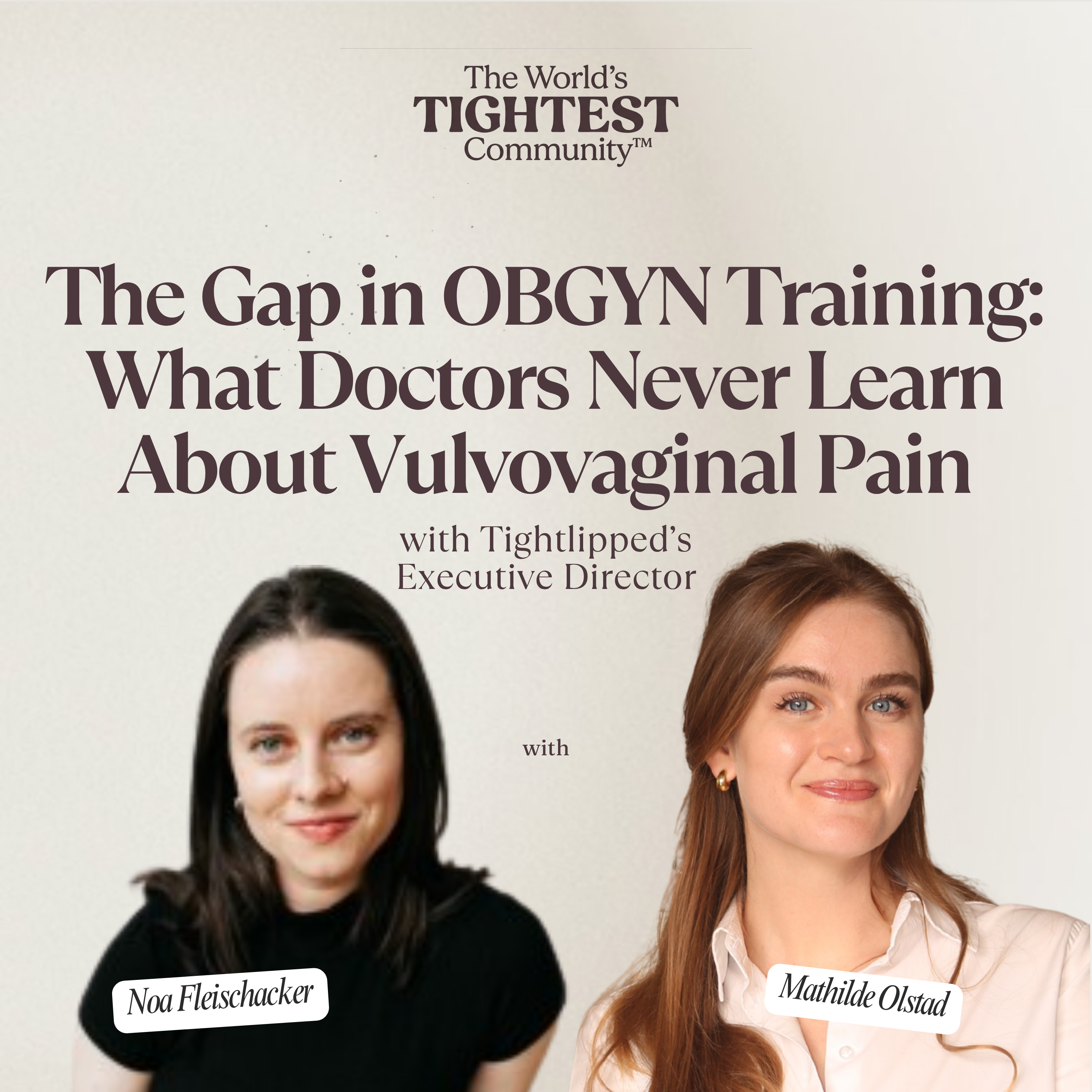
The gap in OBGYN training: what doctors never learn about vulvovaginal pain I Tightlipped  episode artwork

EPISODE · May 25, 2026 · 48 MIN

The gap in OBGYN training: what doctors never learn about vulvovaginal pain I Tightlipped

from The World's Tightest Community Podcast · host Mathilde Olstad

Why do so many people with vulvovaginal pain leave their OBGYN's office feeling dismissed - or worse, like the problem is in their head? The answer might have less to do with individual doctors and more to do with what they were never taught.In this episode, I speak with Noa Fleischacker, co-founder and executive director of TightLipped, a grassroots patient advocacy organization working to change how people with vulvovaginal pain access care. Noa comes to this work from her own experience as a patient - including going under general anesthesia just to get a pelvic exam - and has since built one of the most compelling patient-led advocacy models in this space.We talk about why vulvovaginal pain conditions like vulvodynia, vaginismus, and pudendal neuralgia are almost entirely absent from OBGYN residency training, and what TightLipped is doing to change that - both at individual teaching hospitals and at the national standards level. Noa shares what hundreds of patient stories have in common, why the burden of being a "perfect patient advocate" is an unfair and unrealistic expectation, and what it actually looks like to knock on the doors of hospitals and demand change. We also get into the barriers that keep the most underserved patients from ever finding community or care, and what it would take to reach them.Whether you're someone who has felt dismissed by a doctor, is trying to understand why care is so hard to access, or wants to get involved in changing that - this episode will give you a lot to sit with.In this episode:Why vulvovaginal pain is almost entirely absent from OBGYN residency training in the USWhat TightLipped's campaign to change medical education actually looks like in practiceThe most common patterns across hundreds of patient stories - and what they reveal about systemic failureWhy becoming a highly informed self-advocate is not the solution - and what isThe specific barriers that prevent undiagnosed patients from ever finding care or communityHow TightLipped approaches hospital departments - and what messaging actually landsThe case for separating obstetrics and gynecology as specialtiesWhat international expansion of this model could look likeConnect with Noa and TightLipped:Website: tightlipped.orgInstagram: @tightlippedorgConnect with Mathilde:Instagram: @theworldstightestcommunity Website: theworldstightestcommunity.com Support the podcast

Episode metadata supplied by the publisher feed · Published May 25, 2026

Why do so many people with vulvovaginal pain leave their OBGYN's office feeling dismissed - or worse, like the problem is in their head? The answer might have less to do with individual doctors and more to do with what they were never taught.In this episode, I speak with Noa Fleischacker, co-founder and executive director of TightLipped, a grassroots patient advocacy organization working to change how people with vulvovaginal pain access care. Noa comes to this work from her own experience as a patient - including going under general anesthesia just to get a pelvic exam - and has since built one of the most compelling patient-led advocacy models in this space.We talk about why vulvovaginal pain conditions like vulvodynia, vaginismus, and pudendal neuralgia are almost entirely absent from OBGYN residency training, and what TightLipped is doing to change that - both at individual teaching hospitals and at the national standards level. Noa shares what hundreds of patient stories have in common, why the burden of being a "perfect patient advocate" is an unfair and unrealistic expectation, and what it actually looks like to knock on the doors of hospitals and demand change. We also get into the barriers that keep the most underserved patients from ever finding community or care, and what it would take to reach them.Whether you're someone who has felt dismissed by a doctor, is trying to understand why care is so hard to access, or wants to get involved in changing that - this episode will give you a lot to sit with.In this episode:Why vulvovaginal pain is almost entirely absent from OBGYN residency training in the USWhat TightLipped's campaign to change medical education actually looks like in practiceThe most common patterns across hundreds of patient stories - and what they reveal about systemic failureWhy becoming a highly informed self-advocate is not the solution - and what isThe specific barriers that prevent undiagnosed patients from ever finding care or communityHow TightLipped approaches hospital departments - and what messaging actually landsThe case for separating obstetrics and gynecology as specialtiesWhat international expansion of this model could look likeConnect with Noa and TightLipped:Website: tightlipped.orgInstagram: @tightlippedorgConnect with Mathilde:Instagram: @theworldstightestcommunity Website: theworldstightestcommunity.com Support the podcast

PodParley-generated summary based on available episode metadata and transcript content.

NOW PLAYING

The gap in OBGYN training: what doctors never learn about vulvovaginal pain I Tightlipped

0:00 48:59

No transcript for this episode yet

We transcribe on demand. Request one and we'll notify you when it's ready — usually under 10 minutes.

Frequently Asked Questions

How long is this episode of The World's Tightest Community Podcast?

This episode is 48 minutes long.

When was this The World's Tightest Community Podcast episode published?

This episode was published on May 25, 2026.

What is this episode about?

Why do so many people with vulvovaginal pain leave their OBGYN's office feeling dismissed - or worse, like the problem is in their head? The answer might have less to do with individual doctors and more to do with what they were never taught.In this...

Can I download this The World's Tightest Community Podcast episode?

Yes, you can download this episode by clicking the download button on the episode player, or subscribe to the podcast in your preferred podcast app for automatic downloads.
URL copied to clipboard!