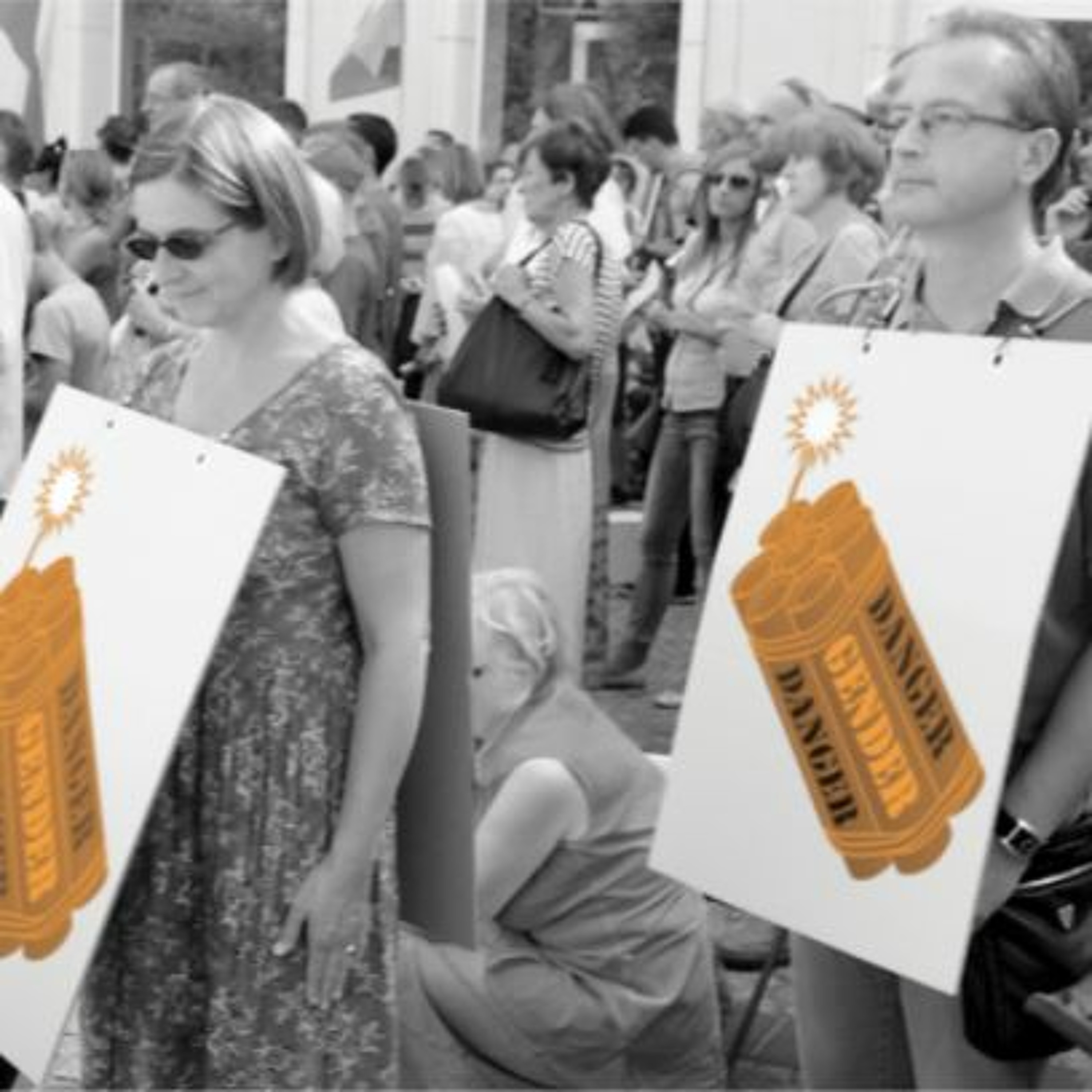
The Gendered Ambiguity of the Postcommunist Transitions - (3.4.2021) episode artwork

EPISODE · Mar 8, 2021 · 1H 16M

The Gendered Ambiguity of the Postcommunist Transitions - (3.4.2021)

from CREECA Lecture Series Podcast · host Center for Russia, East Europe, and Central Asia at the University of Wisconsin, Madison

"The Gendered Ambiguity of the Postcommunist Transitions" with Janet Elise Johnson, Professor of Political Science and Gender/Women’s Studies at Brooklyn College; Katalin Fábián, Professor of Government and Law at Lafayette College; and Mara Lazda, Professor of History at Bronx Community College. LECTURE DESCRIPTION: Kristen Ghodsee’s 2017 New York Times op-ed and subsequent popular book, "Why Women Have Better Sex under Socialism"(2018), now translated into 12 other languages, is the latest foray into a central and longstanding debate as to whether the transition in Central-Eastern Europe and Eurasia was bad for women. Drawing upon four decades of gender scholarship of this region with more than 200 million women, we build on and move beyond this unanswerable question to examine why and how assessments have been and remain contradictory. Extending critical theory’s concept of intersectionality and interweaving the legacies of colonialism and informality, we ground our analysis and assessment in the concept of ambiguity. Ambiguity helps us make sense of the varied perspectives of women in this region–as shaped by class, race, ethnicity, sexuality, age, and ability–and the varied and complicated processes of democratization, economic reforms, and redefining borders and alliances. This presentation comes out of our collaboration on "The Routledge Handbook to Gender in Central-Eastern Europe and Eurasia" (forthcoming July 2021), which reflects on and advances the interdisciplinary, transnational, and multidimensional study of this part of the world. Over the last three decades, gender has become an integral, if derided, component of the study of the region across the social sciences. This study is also an important element of the decentering of the West in women’s, gender, and sexuality studies, especially with its nuanced and innovative theorizing on the intersections of class, ethnicity, and race outside of western frameworks. SPEAKER DESCRIPTIONS: Janet Elise Johnson is a Professor of Political Science at Brooklyn College, City University of New York, USA. Her books include The Gender of Informal Politics (Palgrave 2018), Gender Violence in Russia (Indiana University Press 2009), and Living Gender after Communism (Indiana University Press 2007). In the last few years, she has published articles in Slavic Review, Human Rights Review, Journal of Social Policy Studies, Politics & Gender, Perspectives on Politics, Journal of Social Policy, and Aspasia as well as online in The New Yorker, The Washington Post’s Monkey Cage, and The Boston Review. Katalin Fábián is a Professor of Government and Law at Lafayette College, Easton, PA USA. Her books include Contemporary Women’s Movements in Hungary: Globalization, Democracy, and Gender Equality (Woodrow Wilson Center Press and Johns Hopkins University Press, 2009), Domestic Violence in the Postcommunist States: Local Activism, National Policies, and Global Forces (Indiana University Press, 2010), Democratization through Social Activism: Gender and Environmental Issues in Post-Communist Societies (Tritonic Romania, 2015), and Rebellious Parents: Parents’ Movements in Central-Eastern Europe and Russia (Indiana University Press, 2017). Mara Lazda is Associate Professor of History at Bronx Community College, City University of New York, USA. Her regional focus is on Latvia, with broader research interests on the intersections between gender, nationalism, and transnationalism in historical and contemporary contexts. Her articles have appeared in the Journal of Baltic Studies, the International Journal of Politics, Culture, and Society, and Nationalities Papers. She has served as the President of the Association of Baltic Studies (2014-2016), a coordinator of the Gender and Transformation: Women in Europe workshop at New York University, and an editor for Aspasia: The International Yearbook of Central, Eastern, and Southeastern European Women’s and Gender History.

"The Gendered Ambiguity of the Postcommunist Transitions" with Janet Elise Johnson, Professor of Political Science and Gender/Women’s Studies at Brooklyn College; Katalin Fábián, Professor of Government and Law at Lafayette College; and Mara Lazda, Professor of History at Bronx Community College. LECTURE DESCRIPTION: Kristen Ghodsee’s 2017 New York Times op-ed and subsequent popular book, "Why Women Have Better Sex under Socialism"(2018), now translated into 12 other languages, is the latest foray into a central and longstanding debate as to whether the transition in Central-Eastern Europe and Eurasia was bad for women. Drawing upon four decades of gender scholarship of this region with more than 200 million women, we build on and move beyond this unanswerable question to examine why and how assessments have been and remain contradictory. Extending critical theory’s concept of intersectionality and interweaving the legacies of colonialism and informality, we ground our analysis and assessment in the concept of ambiguity. Ambiguity helps us make sense of the varied perspectives of women in this region–as shaped by class, race, ethnicity, sexuality, age, and ability–and the varied and complicated processes of democratization, economic reforms, and redefining borders and alliances. This presentation comes out of our collaboration on "The Routledge Handbook to Gender in Central-Eastern Europe and Eurasia" (forthcoming July 2021), which reflects on and advances the interdisciplinary, transnational, and multidimensional study of this part of the world. Over the last three decades, gender has become an integral, if derided, component of the study of the region across the social sciences. This study is also an important element of the decentering of the West in women’s, gender, and sexuality studies, especially with its nuanced and innovative theorizing on the intersections of class, ethnicity, and race outside of western frameworks. SPEAKER DESCRIPTIONS: Janet Elise Johnson is a Professor of Political Science at Brooklyn College, City University of New York, USA. Her books include The Gender of Informal Politics (Palgrave 2018), Gender Violence in Russia (Indiana University Press 2009), and Living Gender after Communism (Indiana University Press 2007). In the last few years, she has published articles in Slavic Review, Human Rights Review, Journal of Social Policy Studies, Politics & Gender, Perspectives on Politics, Journal of Social Policy, and Aspasia as well as online in The New Yorker, The Washington Post’s Monkey Cage, and The Boston Review. Katalin Fábián is a Professor of Government and Law at Lafayette College, Easton, PA USA. Her books include Contemporary Women’s Movements in Hungary: Globalization, Democracy, and Gender Equality (Woodrow Wilson Center Press and Johns Hopkins University Press, 2009), Domestic Violence in the Postcommunist States: Local Activism, National Policies, and Global Forces (Indiana University Press, 2010), Democratization through Social Activism: Gender and Environmental Issues in Post-Communist Societies (Tritonic Romania, 2015), and Rebellious Parents: Parents’ Movements in Central-Eastern Europe and Russia (Indiana University Press, 2017). Mara Lazda is Associate Professor of History at Bronx Community College, City University of New York, USA. Her regional focus is on Latvia, with broader research interests on the intersections between gender, nationalism, and transnationalism in historical and contemporary contexts. Her articles have appeared in the Journal of Baltic Studies, the International Journal of Politics, Culture, and Society, and Nationalities Papers. She has served as the President of the Association of Baltic Studies (2014-2016), a coordinator of the Gender and Transformation: Women in Europe workshop at New York University, and an editor for Aspasia: The International Yearbook of Central, Eastern, and Southeastern European Women’s and Gender History.

NOW PLAYING

The Gendered Ambiguity of the Postcommunist Transitions - (3.4.2021)

0:00 1:16:51

No transcript for this episode yet

We transcribe on demand. Request one and we'll notify you when it's ready — usually under 10 minutes.

French Your Way Jessica: Native French teacher founder of French Your Way Boost your French listening skills and test your comprehension with this one of a kind series of podcasts. Get the chance to listen to a real conversation between native speakers talking at normal speed AND customise your learning experience through carefully designed sets of questions (2 levels of difficulty) available for download at www.frenchvoicespodcast.com. All interviews also come with the transcript. French teacher Jessica interviews native speakers of French from around the world who share a bit of their life and passion. Where else would you meet in one same place a French yoga teacher based in Melbourne, a soap manufacturer from Provence, or a couple cycling around the world? That Hoarder: Overcome Compulsive Hoarding That Hoarder Hoarding disorder is stigmatised and people who hoard feel vast amounts of shame. This podcast began life as an audio diary, an anonymous outlet for somebody with this weird condition. That Hoarder speaks about her experiences living with compulsive hoarding, she interviews therapists, academics, researchers, children of hoarders, professional organisers and influencers, and she shares insight and tips for others with the problem. Listened to by people who hoard as well as those who love them and those who work with them, Overcome Compulsive Hoarding with That Hoarder aims to shatter the stigma, share the truth and speak openly and honestly to improve lives. The Small Business Startup School – Business Notes | Financial Literacy | Retail Psychology – For Professionals & Entrepreneurs The Small Business Startup School Inc. Starting or buying a small business? While personal circumstances may vary, business patterns remain timeless. On The Small Business Startup School, we explore strategies, insights, and practical solutions to help entrepreneurs confidently navigate their journey.Hosted by Ola Williams—a retail entrepreneur, fintech founder, and financial coach with over two decades of experience—this podcast marries financial awareness and retail psychology with optimism to deliver actionable takeaways.Join us to learn, grow, and connect as we uncover the keys to business success.Let’s continue to learn together and be encouraged to keep on connecting! DIOSA. Carolina Sanper This podcast is a sacred space created by Carolina Sanper where you connect with your inner wisdom and embody your magnetic feminine power.It is the realization that the mystical realm is where you plant the seeds of your desired reality.It is a portal to your true essence: awareness, presence, and receiving with ease. Welcome home, DIOSA. 🖤

Frequently Asked Questions

How long is this episode of CREECA Lecture Series Podcast?

This episode is 1 hour and 16 minutes long.

When was this CREECA Lecture Series Podcast episode published?

This episode was published on March 8, 2021.

What is this episode about?

"The Gendered Ambiguity of the Postcommunist Transitions" with Janet Elise Johnson, Professor of Political Science and Gender/Women’s Studies at Brooklyn College; Katalin Fábián, Professor of Government and Law at Lafayette College; and Mara Lazda,...

Can I download this CREECA Lecture Series Podcast episode?

Yes, you can download this episode by clicking the download button on the episode player, or subscribe to the podcast in your preferred podcast app for automatic downloads.
URL copied to clipboard!