
Today, I'm keeping another promise by nominating Judge Neil Gorsuch. Mr. President, thank you very much. As we all live through the chaos of another Donald Trump presidency, it can be easy to lose sight of his most troubling legacy.
The U.S. Supreme Court has reshaped the country's legal landscape on abortion, guns, religion, and war. I'm Susan Matthews. In Slate's new season of Slow Burn, we're taking on Trump's first Supreme Court pick.
We'll look at the influence that Neil Gorsuch has in this moment. He is the most unpredictable vote on this court. Including his surprising pushback against the president who nominated him. Nobody showed that Gorsuch would join the majority on this.
He is the justice most likely to be a true wild card. This is judicial activist. Slow Burn, becoming Justice Gorsuch. It's a story that will shape America for years, even lifetimes to come.
Out May 13th, wherever you get your podcasts. Before we begin, this episode contains adult language. Nate Rogers grew up in Los Angeles. And over the years, like a proper Angeleno, he spent a lot of time in cars.
But in the late 2010s, he started to notice something on the road that felt new and unpleasant. It happens in different degrees, but the experience is having somebody's lights in their car, in an emotional sense, kind of run you off the road. Nate would be driving, and would feel like the headlights of the car behind him, or the one coming towards him, or the one perpendicular to him at an intersection, were blasting into his eyes. And the lights would be so bright that they will kind of stagger you and knock you out of your senses.
The first dozen, two dozen times it happened, Nate shook it off. Maybe someone had forgotten their high beams were on. But it happened so much that you start to notice it, and then you start to fixate on it. He started to take note of the headlights he encountered, trying to clock what exactly was going on with them as they sped by in the night.
Everywhere he went, he could feel these lights interfering with his ability to see, and with his emotions. I was feeling this uncomfortable, like, road rage, almost, you know? Like, why am I getting blinded by all these headlights? Nate started talking about it with friends and acquaintances, every chance he got.
If I was in a car with somebody, whether I was driving or a passenger, I would just start complaining, and it felt a little bit like I had to explain to people, where they would be like, shut up, like, it's not that big a deal. Nate was not deterred. He kept obsessing over it, even taking photographs of particularly bright headlights and showing them to people. I would get out my phone and be like, will you look at this?
Like, pleading with people to witness my pain. And then for a long time, people would send me stuff whenever they saw anything about, like, a meme about headlights or something. Like, two things I always get sent are, like, Nick Cage stuff and headlight stuff. You know, my friends just associate me with those things.
You just were in their minds like the headlight complaining guy. Exactly, yeah. It was now 2024, and increasingly, there was a lot of headlight stuff to send around. Can you please ban those bright-ass headlights on, like, the new trucks and cars have, because any time I'm driving and I see those, I can't fucking see.
Everyone's lights are too bright. Do you see these headlights? Ten times brighter than the sun. People were no longer rolling their eyes about how bright headlights were and saying it was no big deal.
They had started to complain, too. It's literally causing more accidents. Am I in the interrogation room right now? Are you sure those aren't your brights?
I don't think I can reach my destination. I think I've gone blind. It seemed like there was kind of a critical mass happening, where suddenly it was becoming something that other people were kind of joining in on and made me feel a little less crazy. Nate happens to be a journalist.
Up to this point, he largely wrote about arts and culture. But now, after years of aggravation and fixation, he realized he wasn't alone, and he needed some answers. What is going on here? There has to be some sort of explanation.
Nate knew there was only one thing to do. He was going to have to figure out what the hell was happening with headlights for himself. This is Dakota Ring. I'm Willa Paskin.
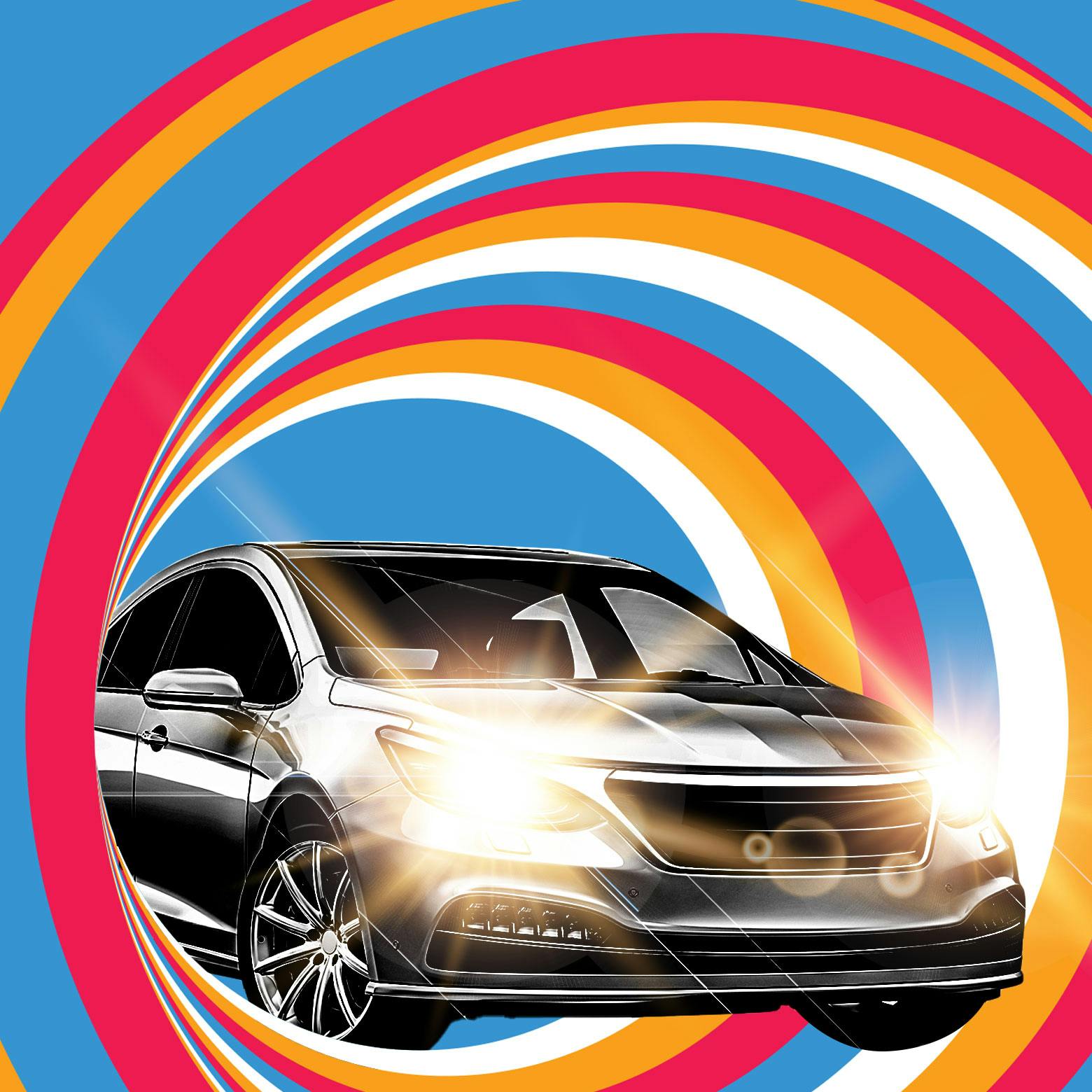
In a perfect world, the average person would think about car headlights almost never. It would just be a reliable tool making us all a little safer while working well in the background. But this is not a perfect world. And whether you personally have noticed them or not, headlights have become the number one complaint of Americans on the road.
The story of how and why that's happened is confounding and illuminating in turn. It's about the interplay of an incredible technological breakthrough with market forces, regulatory failure, and human foibles. All of which have made headlights relevant to far more than just our roads. So today on Dakota Ring, why are we in the dark about headlights?
Hey, I'm Anna Sale, the host of Death, Sex, and Money, an energy show here at Slate. And I want to tell you about a very exciting event coming up in June. I am hosting a live episode taping at the Tribeca Festival featuring Peter Dinklage and his wife, Erica Schmidt. Peter Dinklage of Game of Thrones, my favorite film station agent, and Erica Schmidt, who's a director, screenwriter, playwright.
They are married, and we're going to talk about making art separately and collaboration and how they've built their life around that. Join us. It should be a great event. It's their first joint interview they've done ever together.
And we are so glad at Death, Sex, and Money to be back at the Tribeca Festival. The show is June 10th in New York City at the SVA Theater at 5.30 p.m. Get your tickets at TribecaFilm.com slash audio. See you there.
So Nate Rogers decided to embrace his identity as the headlight-complaining guy and take on the mystery of the glaring headlight. I was like, well, I'm already, like, attached to this, so I might as well just, like, plant my flag. It seems self-evident to him that headlights had changed for the worse. But when he just, like, Googled why, very few articles turned up, and the ones that did had no satisfying explanation.
He wanted to talk to someone who was steeped in the entire history of headlights. And he found them. Daniel Stern is, like, the preeminent authority. Here I am.
I have this weird fixation with car lights, and I've managed to turn it into my specialty. Daniel Stern is the editor of the trade journal Driving Vision News. He has a great, big, bushy beard, and he's been captivated by headlights since he was seven years old. And he discovered that his camp counselor's VW Beetle had two settings in a single headlamp.
And the idea of two filaments in one light bulb had not occurred to me at age seven. So I followed the poor guy around, asking pesky questions, and this was like, yes, yes, Daniel, I have low and high view. Can you go ride horses or something? Daniel never got into horses, and he never got bored with headlights either.
Daniel's the kind of person who always uses the correct automotive term, like headlamp, which is the entire lighting unit at the front of the car, instead of headlight, which is just a part of the headlamp. He also gets a little exasperated when he hears a word that regular people use all the time when talking about headlights. Brightness. Daniel avoids it because brightness isn't something you can measure.
Brightness is not the same as intensity. Intensity is the amount of light. Brightness is a subjective impression. Something can look brighter than something else, irrespective of how much light is being put out.
For Daniel, the more precise way to think about the issue is in terms of glare. His reservations about terminology aside, he confirmed to Nate that there absolutely is a problem with headlights. Glare complaints have been increasing all over the world. And actually, headlight glare is an issue we've been contending with for a long time.
Some drivers and their lights can be a hazard at night. As drivers like this approach, don't blind yourself by staring into their lights. You don't want to be in the dangerous plight of driving blindly, even for a moment. It's interesting, this problem, what we're discussing right now, headlight glare and seeing, this problem is almost as old as headlights.
The first car was invented in 1885, and the first headlight introduced soon after. They were by today's standards laughably bad at helping drivers see. They were literally oil wick lanterns. Those were pretty much only to advise others at night that there's a motor car coming down the road.
The first electric headlight wasn't much better. By today's standards, these things were like a flashlight with an almost dead battery. But compared to oil wicks and lanterns, they were amazing. By 1915, headlights were becoming a requirement in cars and starting to be more useful to drivers.
And it was at this point that they stumbled into the problem that has dogged headlights ever since. Even then, they were saying, you have to be really careful if you encounter another car. You need to throw the towel over the headlamp so that they're not glared because, boy, the glare potential of these new electric headlights is just astounding. The problem then, as now, is a Goldilocks problem.
Too little light and drivers can't see. But too much light and other drivers can't see. And while sheer power is important, as anyone who's ever had a flashlight pointed in their face knows, the issue is not just about the amount of light there is. It also matters where that light is shining.
Because if it goes out too far in the left corner, that's going to be shining into an oncoming car. Or super high up in the headlight, and that's more likely to shine, you know, into the back of a car that's in front of you. We want as much light on the road as possible because that is helpful, but we don't want the light in the wrong places. In the first half of the 20th century, car makers and regulators worked out a solution.
They got very careful about where a headlight was permitted to shine. In 1939, they mandated a standardized headlamp for all cars, the sealed beam headlight. It was a light bulb in a container that popped in and out of the front of your car. It wasn't perfect.
It was a drag when the light bulb stopped working because you had to change the whole unit. But it kept glare and visibility in balance by putting light in the right places and keeping it out of the wrong ones. They all put out the same beam pattern and the same amount of glare, the same amount of seeing. And occasionally there were articles saying, you know, we hate our headlights and we wish they were brighter or whatever.
But everyone had pretty much the same headlights. This is how things were for generations. Even after the sealed beam was de-standardized in the early 1980s to give consumers some more choices, headlights basically just worked. And then starting in the late 2000s, headlights, just like every other artificial light in our lives, were upended by a new technology.
The leading light of the 21st century? The LED, short for light-emitting diode. LEDs are semiconductors, similar to the chips used in computers. They use far less energy than traditional lighting while providing flexibility in color and intensity.
The first commercial LEDs became available in the 1960s, but it was only in the 90s that a Japanese-American electrical engineer figured out how to get them to make white light, an innovation for which he was awarded the Nobel Prize in Physics. It could well signal the biggest advance since, well, since Thomas Edison invented the electric light bulb in 1879. LEDs, when they were introduced, were a completely different technology that experts in lighting basically consider the most dramatic change in lighting as long as we've been alive. LEDs are radically different from traditional incandescent light bulbs.
You know, the type of thing that screws in above your head when you have an idea. That's what I use my light bulbs for, just screwing them in above and having an idea. Exactly. Traditional bulbs emit light and insight by heating up a metal filament, the wire that you can see glowing in the center.
Because they waste so much energy making heat, they're not that efficient at making light. LEDs, in comparison, are very efficient. They emit light not by turning it into heat, but by running electricity through a wafer-like semiconductor that illuminates a whole lot of tiny, controllable diodes. It's like a little computer screen.
If you zoomed in really close, you would see a bunch of little pixels and basically they're programmed. If you go to Times Square or something, all these flashing lights, these are all LED screens, right? In addition to being highly customizable and far more energy efficient, LEDs are also more durable, cost-effective, and powerful than incandescent light bulbs. So starting in the late 2000s, their use was essentially mandated by the government.
Well, the new year will mark the beginning of the end for the incandescent light bulb. The idea is to phase out regular bulbs and replace them with high-tech LEDs by 2014. I know light bulbs may not seem sexy, but this simple action holds enormous promise. Over the course of the 2010s, LEDs have replaced incandescent bulbs almost everywhere.
Homes, public spaces, on Christmas trees, and in car headlights, where they specifically replace incandescent halogen bulbs. They put this on the front of cars, and it just completely changed the way things work. So it's fair to say that, like, the transition to LEDs is the biggest change in headlight history. It is definitely fair to say that.
I mean, maybe outside of the first time that anyone put a headlight on a car. LEDs have a lot to recommend them, but it is exactly when they started showing up in car headlights that glare became a problem like never before. Headlight glare is definitely and indisputably worse than it used to be. So how exactly could LED headlights be causing glare?
There's actually quite a heated debate about the answer to this question, because simply put, there are a lot of potential waves. But over the course of his reporting, Nate Rogers became focused on the most blindingly obvious one, power. LEDs have the ability to be much more powerful than your standard light bulbs used to be. And this has led to unprecedentedly powerful headlights.
Headlights that most of us would describe as way too bright. There are various ways to measure it, but the average brightness of a headlight at least doubled in the last 10 years. LEDs now throw much more light down the road than halogen headlights ever could. It's not like your imagination, you know?
The reason that we're having this conversation right now is because brightness has gotten much higher, and people noticed. The sheer power and intensity, the brightness of current LED headlights is a problem in and of itself. It also exacerbates other problems with headlights. And there are other problems.
Like, take the matter of car size. In America, cars have gotten much bigger in recent years. So much so, the headlights of an SUV or a truck are basically at the height of the eyes and mirrors of a driver of a smaller car. When headlights were weaker, it might not have mattered so much.
But now the drivers of smaller cars are being blasted in the eyes by lights two times as powerful as they used to be. Of course they're experiencing more glare. And then there's headlight aim, which Daniel Stern believes is the most important factor of all. Headlight aim has been shown in a mountain of excellent quality research all over the world over many decades as the primary number one determinant not only of how well the equipped driver can see, but also how much glare those lights are throwing around.
Remember, an old halogen headlight had one bulb that kind of like a flashlight was most powerful right in the center. So as long as that bright center wasn't pointing right at your eye, you were pretty okay. But LED headlights are composed of all those very intense pixel-like diodes that can be extremely powerful across the whole headlight, like a screen. When their aim is off even a little, you're not getting the relatively dim edge of the flashlight in your eyes anymore.
You're getting the full intensity of a wall of light. And there are other even less obvious explanations for why LED headlights are affecting us so much. One incredible one has to do with color. Since LEDs are basically little programmable computer screens, there is a vast range of colors you can dial up for each pixel.
This is a new freedom. We've never had this before. You can have a white LED which has a great deal of blue light in it. You can have a white LED that has almost no blue light in it.
And with this freedom, car manufacturers have mostly settled on making white headlights with a lot of blue in them. And they seem to have done this purely for design and marketing reasons. The bluish white looks cool, futuristic, tactical, expensive. When you drive off at night, your next door neighbors are gonna be envious because they see this cool blue light coming from front of your new car.
And we can assume the motivation is aesthetic because it can't possibly be about safety. That's sort of the nub of it is that for any given intensity, light with a greater content of blue wavelengths feels more glaring to us than light with less blue in it. The overall brightness, the size of cars, aim, the blue tinge, these are just a few of the tricky aspects of LED headlights. There are others, including what regulatory agencies insist is the real problem.
Not the headlights themselves, but individuals tricking out their cars with DIY aftermarket LED kits. LEDs you put on your car yourself. Today we're taking the ultimate headlight upgrade task. We're swapping out those dim, outdated stock halogen bulbs with insane LED lights that are brighter, cooler and...
just better all of this might make it sound like we should just get rid of leds and the problem would be solved but leds really are a more advanced technology they are more efficient longer lasting and versatile and you can make led headlights that are less powerful less bright less blue harder to knock out of place you can make ones that are better so when we come back we're going to get to the truly tricky part of this case which is if we can do all of that why haven't we design is everywhere in our lives perhaps most importantly in the places where we've just not noticing it 99% invisible is a weekly exploration of the process and power of design and architecture host roman mars asked questions like why do we use the bleep sound to cover up inappropriate words on radio and tv why are houseplants having a moment right now and why is the punctuation mark the m dash caught up in a fight about ai 99% invisible will answer all this and more every tuesday if you like decodering i know you will like 99% invisible a show that i love and it feels like kind of us we have a lot of the same sensibility and curiosity so much so that often when we're thinking about a topic here we actually check to see if 99% invisible has already done it because if they have we know they have done such a good job we just have to back off but our loss in that instance is absolutely your game follow and listen to 99% invisible wherever you get your podcasts so car headlights are glaring like never before if you noticed it's not your imagination but relatively few people are trying to do anything about it and almost no one is trying to do as much about it as paul gatto i would like to not be blind at night and i'd like to be not in danger of hitting someone because i'm blinded i really like that paul is a software developer from newfoundland and he did not grow up with any particular interest in headlights but really even cars but that all changed dramatically in the late 2010s the real way that i kind of got into this whole sphere was dating someone who was a pedestrian who was a black car paul's girlfriend liz was crossing the street at a crosswalk when a taxi cab struck her flinging her several feet in the air if it hadn't been a sedan that hit her she would be dead she sustained serious injuries to her hip and shoulder which required the insertion of a metal plate she was able to make a very very good recovery especially how bad the accident was but that being said she's a violinist she was a violinist and she made a lot of money teaching and doing concerts and the metal plate in her arm prevents her from actually holding the violin up in that position comfortably for any length of time paul and liz only got together after the accident but watching what she went through in its aftermath completely changed his perspective on cars seeing her go through the court proceedings and the recovery and everything and almost being blamed the entire time despite being a victim that really radicalized me against the car centricism of our world and it was as he was being radicalized that he started to notice he was constantly getting glared by other cars headlights he's enraged because he's afraid afraid of what a pair of headlights might cause him to do and he's also infuriated because the person with the headlights will have no idea about the harm they've done i think you know what they're going to drive off perfectly fine from this interaction i might hit somebody and they will never know paul soon found himself thinking and talking about headlights all the time i absolutely pissed off a couple friends because every time i have a couple beers i start complaining about it just like looking at the windows like i can't believe those just becoming an old man about it paul wanted to do more though and to find people to do it with i think the only way that you're ever going to solve the problem is if you were somehow creating a mass movement about it and then in 2022 he came across a subreddit about headlights with only a single member paul took one look at its name and thought it could be the platform he was looking for he asked to become a moderator i messaged him saying i'm serious about it let's do it and he said okay i actually would love you to just tell me the name of your subreddit it's fuck your headlights paul started posting on fuck your headlights immediately within a year it had 10 000 members when we first created that subreddit it really wasn't worth it complaining and letting people know they weren't alone in this there wasn't a coherent theory of why is this the way it is as paul and the other members of the forum tried to figure out what was really going on they ran into the same problem that nate rogers had there was just very little reliable seeming information available about headlights originally when i started googling this uh all the articles that were present on the internet blamed things which can all be really summed up as this problem is caused by individual choices and is not systemic according to car manufacturers the problem was people driving around with misaligned headlights they should get fixed or adding those aforementioned illegal leds to the front of their cars but paul was skeptical there's no way everybody is like all these soccer moms are going out and putting custom leds in their cv i just don't see it the people who won't have their own vehicle are suddenly just putting their own headlights i couldn't buy it but the regulating body could theoretically restrain the manufacturers they also said there was nothing wrong with led headlights there just was no problem here i just felt so gaslit this is dangerous this is affecting everybody and the regulations do not protect you paul and the other editors started measuring a headlight output researching debating the forum became a bustling proving ground its members sharing information articles evidence ideas as well as videos memes and calls to action i am begging automobile manufacturers you have got to do something about these led headlights because it's out of control there is no reason for you to be lighting up our motherfucking car like this we need permanent high beams are you driving through the fog of war are you all on your way to light up a high school football game soon enough paul and the other members of the group began to come to a consensus about the overarching cause of glare on the road one that seemed self-evident and yet had been barely mentioned in the existing literature their consensus was that today's headlights are simply too bright the word brightness was almost uh it almost seemed like a faux pas like the people in the regular position were almost awaiting any mention of the brightness but the more paul learned the more convinced he became that this was the problem the leds being installed just had way too much power these lights are blinding everybody the fuck your headlights subreddit now has a membership of 45 000 and counting and it has become the hub of grassroots headlight activism reaching out to politicians and journalists like nate rogers all to get the word out that headlights are dangerously bright and something needs to be done about it we have both pro car people who want the roads to be fixed and anti car people who want a massive overhaul of our transit systems uh working together on the same thing people want this for paul and much of the fuck your headlights community the issue is straightforward all you have to do is believe your eyes it is plain to see that headlights are emitting way too much light reduce that light and the problem is largely solved remember how i described headlights as having a goldilocks problem we don't want too much light or too little you just want it in the right amount in the right places well the players who have made headlights so powerful have a defense against the charge they have put too much light on the road they say that what you should really be worried about what's really dangerous is too little light the most compelling argument that i heard against the citizen activist approach of it's too bright is that yeah it might be annoying to you but brighter light could be saving lives if there's a super bright headlight and it flashes a tree that's fallen in front of you and you see that just early enough to hit the brakes and not hit it that is a brighter headlight doing something incredible and if the offset of that is a headlight that's kind of annoying when you're in traffic then maybe the balance is not being read correctly by people because they're only really focusing on the thing that annoys them and so in order to avoid hitting not only trees but also animals and people we should be willing to tolerate aggravation and even discomfort that's the argument for more powerful headlights they save lives whatever agitation they cause it's worth it so here we have two diametrically opposed arguments one is that too much light is causing accidents and hurting people and the other is that too little light is causing accidents and hurting people which is it well the side that says there is too little light the pro bright headlight side if you will which includes car manufacturers would point to a road safety test a well-respected insurance non-profit studied accidents very similar to the one nate described single car collisions of the kind a driver is likely to encounter on a dark empty road at night and they found that headlights reduce accidents like this by 19 that's a lot so what safety tests can the people who say there is way too much light who say that brighter headlights cause accidents what can they point to well it's here that we've come to a major wrinkle because they can't wait to any safety tests because nobody knows how to measure the consequences of glare it's just so hard for them to figure out a way to empirically prove that headlight brightness is a hazard in the way that people sense that it is it is apparently nearly impossible to recreate a real-world scenario in which dozens of drivers with cars of various sizes and headlight intensity are driving past and around each other and then to isolate from that swirl of interaction the impact of glare alone it's really easy to prove that i hit that pedestrian because i couldn't see them because i didn't have enough light that's very easy daniel stern the headlamp expert who's been fascinated by them since he was a kid it's much harder to prove that anything bad happened because i was glared obviously if you are glared and you can't see that pedestrian or that curve in the road and you hit the pedestrian or you go flying off the road well there's your link between glare and traffic safety but if you think about what a dynamic traffic situation looks like it's gonna be really hard to draw that line because by the time the crash happens the glare source is somewhere off behind you down the road it's even harder to measure the consequences of what's called discomfort glare this is not the kind of glare that disables your sight it just really bothers you but daniel says even that could be dangerous maybe i'm stuck in front of a vehicle with very high glare headlights in my mirrors if i feel like i can't see while i'm driving two and a half tons of steel at 70 miles an hour i'm probably going to be somewhat panicked i am probably fatigued i might be enraged and even if none of those are the case i might very well unconsciously adjust my driving behaviors in unsafe ways so there are all kinds of plausible links between discomfort glare and traffic safety but trying to measure and quantify them is hideously difficult one area where the link between glare and safety is difficult to measure but seems really important is pedestrian deaths as headlights have gotten more powerful pedestrian deaths have not gone down as you might expect they would they have in fact skyrocketed and this has not been the case in other countries which have far more regulations on glare daniel cautions that this whole issue is extremely complicated other countries have a different approach just about everything about traffic safety but still it does raise sort of an uncomfortable question if u.s headlamps and regulations are so superior to what the rest of the world uses as u.s regulators claim then why are so many more american pedestrians getting hit and killed overall it seems very plausible to those well-versed in the issue that in some situations headlight glare is doing harm but because of the underlying data asymmetry the fact that when it comes to led headlights as they currently exist we can measure how they help but not how they hurt car manufacturers have continued to make stronger and stronger headlights that leaves one player that could retail the trend towards brighter headlights the regulatory agency in charge of them it's called the national highway traffic safety administration or nitsa they are absolutely in charge of this and the only governing body with any authority were automotive safety nitsa has heard the concerns multiple sources told nate it now gets more complaints about headlights than anything else nevertheless it has not updated its regulations about headlights to account for leds at all and in fact there is currently no limit whatsoever on the amount of light a headlamp can emit in certain areas headlights can legally be as bright as is physically possible the representative told nate they stand by their regulation and blame the bulk of the problem yet again on led aftermarket headlights which seems absolutely outrageous to paul gatto of fuck your headlights they're not examining it's too bright they're not even examining if it's affecting you negatively on the road they're simply looking at how good it is for the driver and this brings us to the last player in this whole mess even though the lion's share of the blame for all this may belong to car companies and regulators they do have a helpful partner in spreading these headlights the drivers us because it turns out we like bright headlights when they're on our own cars we light up the road surface right close to the car and wow it feels like you've got great headlights it feels like you can see everything but there's a canyon between the light that drivers feel like they like or feel like they want and the light that drivers actually need the headlamp that makes us feel like we've got great lighting is not the headlamp that we need in order to see well but if you walk into a dealership and you sit behind the wheel and test out the lights you're probably not thinking about how headlight brightness makes everything outside its cone of light harder to see or whether your lights are going to blind some imaginary driver at some future date you're about to spend a lot of money on a long-lasting piece of heavy machinery and the question you ask in that moment is simple how well can i see we're in a kind of headlight brightness arms race with ourselves the regulatory bodies allow this to happen and car companies don't seem to be concerned with that and this has created sort of a snowball effect that reaches down to the way that we interact with each other on the road some of us are adding on those led kits but even more keep our high beams on all the time headlights have gotten so bright that they have made people feel like well screw this i'm gonna get mine too if i'm gonna get blinded out there then i might as well have as much light as possible on the road too in the winter of 2024 nate rogers published the result of this reporting research and thinking about headlights on the website the ringer in the article titled asleep at the wheel in the headlight brightness wars he spoke with daniel stern paul gatto and many others about the intricacies of the headlight problem it was the most high profile piece of reporting on headlight glare yet which is increasingly becoming a mainstream issue recently it got to a point where i think just any average person totally understands and has sort of joined the movement if you will the group of people actively dedicated to doing something about headlight glare can be a fractious one they may all want the same thing unless wearing headlights but they can't always agree on how to achieve it because they disagree about which is the most pressing problem they do agree that regulation of some kind is in order for paul gatto the co-founder of fuck your headlights that means curbing overall brightness i would hopefully like to see a regulation on the total brightness of low beam headlight daniel stern has a different priority if you give me a magic wand and say you can use it once to improve things in car lighting then i wave it and make it so that all vehicle headlights get aimed and stay aimed correctly dynamically if you had two more wishes he'd get rid of the blue tinge and stop headlights from getting so small which actually also makes them appear brighter the car companies for their part are promoting their own solution called adaptive driving beam technology high beams will be able to dim automatically in the presence of another car they're not currently available in the u.s but have been for years in europe where for what it's worth glare complaints continue to rise everyone i spoke to agree that the pressure to do something about headlights is clearly increasing though it might be a while yet until anything happens glare is having a moment at the same time the current u.s administration has a very anti-regulatory debt so if they're deleting whole agencies and saying regulations are bad it's hard to imagine how we would get better regulations headlights in the scheme of the day's problems seem relatively trivial but that's exactly why the inability to do anything about them is so disheartening the details may be complicated but then what issue doesn't have complicated details when you really dig into it they're still just headlights with a new kind of light bulb should we be able to get our hands around this one the worst version of super bright headlights is not going to be, like, a disaster. It's not going to be the end of the world. The worst version of other tech not being regulated is a disaster, and it is the end of the world. And if this is how they are handling headlights, it is not very comforting in terms of all sorts of new technology.
When we drive, we are simultaneously more powerful and more at the mercy of others than at almost any other time in our lives. When you're flying down a two-lane highway, any car could swerve into your lane, just as you could theirs. When you're driving through an intersection, anyone could blow a stop sign, just as you could. It's terrifying the amount of damage you can do and have done unto you in a car, which makes it all the more incredible that most of the time we instead engage in a collective and collaborative effort to follow the rules of the road, to do our best to keep each other and ourselves safe.
These efforts have in no way turned the roadway into some kind of paradise. But that doesn't mean it can't be degraded further. But it can't be made worse, if we can't even see. This is Decoder Ring.
I'm Willa Paskin. You can read Nate Rogers' in-depth piece on Headlights at The Ringer, and we'll link to it on our show page. If you're a fan of the show, I'd love for you to sign up for Slate Plus. Slate Plus members get to listen to Decoder Ring and every other Slate podcast without any ads, and they also get unlimited access to our website.
And this week, we have a new bonus episode exclusively for Slate Plus members. In it, we talked to the Slate writer, Dan Coyce, all about his quest to rediscover a famous chocolate cake from the 1960s. The first ton of fudge I made was from a recipe on the Pillsbury website. It was a total disaster.
Like, 10 minutes later, the thing collapsed. Like, there had been an earthquake in my house. It wasn't just that I'm a bad baker. Pillsbury had fudged the recipe.
If you want to hear more and aren't already a Slate Plus member, you can subscribe now on Apple Podcasts by clicking Try Free at the top of the Decoder Ring show page, or visit slate.com slash decoderplus to get access wherever you listen. Member support is crucial to our work, so please sign up. This episode was written by me and Olivia Briley, and we produced it with Max Friedman. Decoder Ring is also produced by Katie Shepard and Evan Chung, our supervising producer.
Mary Jacob is senior technical director. If you have any cultural mysteries you want us to decode, please email us at decoderring at slate.com or give us a shout on the Decoder Ring hotline. Our number is 347-460-7281. We'd love to hear any and all of your ideas for the show.
We'll see you in two weeks. We'll see you in two weeks. 99% Invisible has already done it, because if they have, we know they have done such a good job, we just have to back off. But our loss in that instance is absolutely your gain.
Follow and listen to 99% Invisible wherever you get your podcasts.