
EPISODE · Jul 9, 2026 · 42 MIN
The Glory of Small Things: Ian Bogost on How To Be Enchanted by Diet Coke Cans & Plane Tickets
from Keen On America · host Andrew Keen
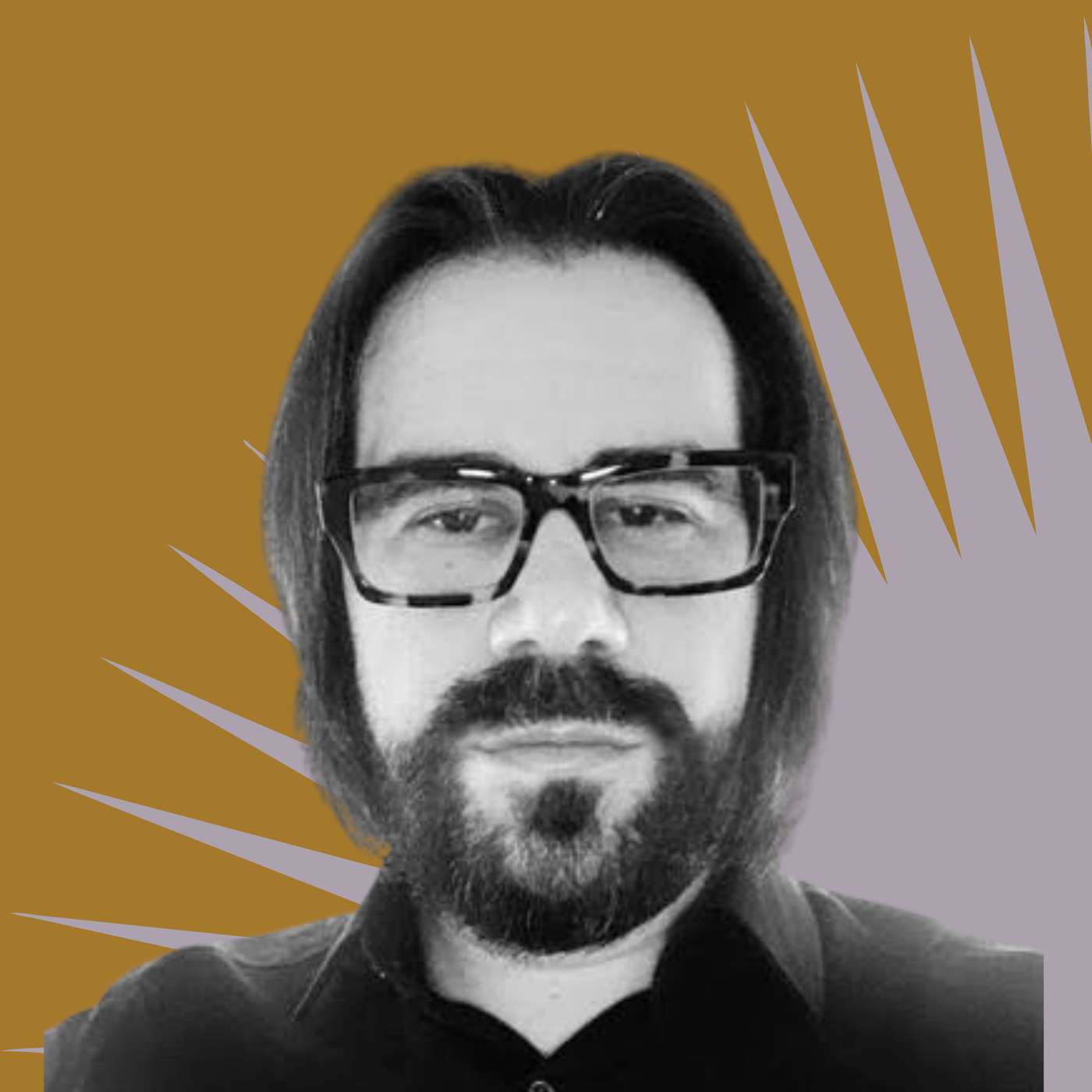
“I crack the tab open, and I feel the cold metal… I hear the tink and give of the aluminum. And maybe when I’m done, I crush it into a small patty.” — Ian Bogost on the everyday enchantment of a Diet Coke can Don’t sweat the small stuff is one of the most persistent (and annoying) mantras of the self-help industry. But the counter-intuitive Atlantic columnist Ian Bogost advises the opposite. In his new book, The Small Stuff, Bogost suggests that gratification lies in our appreciation of small stuff like the crinkle of empty Diet Coke cans and the foldability of plane tickets. Max Weber argued that disenchantment was the defining quality of modernity, but in The Small Stuff, Bogost maps a way back to it. What we need to get away from, he says, is “optimization” — metrics, feedback loops, money as a proxy for a place in heaven. Rather than the cult of delayed gratification, pick up that empty coke can and revel in its architectural glory. Or lick a tree. That’s how to be enchanted in postmodernity. Five Takeaways • Sweat the Small Stuff. Bogost inverts three decades of self-help orthodoxy: the small stuff is precisely what we should be sweating. The crack of a Diet Coke tab, the cold metal warming in your hand, the can crushed into a patty before the recycling bin — these sensory encounters are not where deep purpose lives, and Bogost never claims they are. But they recur every day, sometimes several times a day, and accepting them as meaningful rather than as noise to get through delivers what he calls a surprising payload of engagement and enchantment. For some it’s Diet Coke; for others, woodworking, gardening, or the gear shift of a manual transmission. • Dematerialization: How We Lost the World. The book’s central diagnosis is what Bogost calls dematerialization — the slow disconnection from the physical world driven by convenience technologies. The QR code that replaced the concert ticket you might have pinned to a bulletin board. The automatic faucet you wave at awkwardly in the public restroom — which never works, and doesn’t even save water; it just makes buildings easier to manage. The process is decades old, hardly limited to computers, and it stripped the texture from everyday life so gradually that nobody noticed what was being given up. • It’s Sensory, Not Physical — and Not Anti-Tech. This is not a go-touch-grass book. Bogost insists the small stuff is sensory rather than physical, and that smartphones are compelling precisely because they are delightful — the smooth glass that demands to be touched, the thunderstorm animation in the weather app. Everything is technology, including the clothes on your body and the language in your mouth. He gave his twelve-year-old a smartwatch rather than banning screens, because parenting means living in the same world as your kids — and kids must live a contemporary life to become the adults who invent the next one. • We Already Got Rid of God — So Meaning Had to Move. Pressed on Weber and the Protestant ethic, Bogost argues that secularization emptied out the place where meaning used to live — good works justified by an infinite time in heaven — and replaced it with happiness, purpose, and wealth as proxies. The result is a hyper-optimized, future-oriented culture in which everything worth doing is worth doing for some later payoff. Bogost admits he struggles with this himself: the health wearable he wears while writing a book against quantification. What he loves about his morning walk isn’t the step count. It’s the twigs crunching underfoot. • The Quietism Charge — and the AI Twist. Isn’t this stoicism for the age of Trump, the same charge leveled at Heidegger’s silence before the Nazis? Bogost anticipates the critique: we are and must be both political creatures and creatures who live moment to moment in our bodies — he asks no one to abandon the fight, only to stop missing the life underneath it. And the timing is no accident. As AI takes over the big stuff, Bogost suspects it may push us back into the sensory world — he consults ChatGPT about fixing his range thermostat, then goes and fixes it with his hands. About the Guest Ian Bogost is a contributing writer at The Atlantic and the author of eleven books, including The Small Stuff and Play Anything. He is the Barbara and David Thomas Distinguished Professor at Washington University in St. Louis, where he teaches computer science and engineering, film and media studies, and art and design. He is also an award-winning game designer whose work is held in collections including the Smithsonian American Art Museum. He is the author of The Small Stuff: How to Lead a More Gratifying Life (Simon & Schuster, July 7, 2026). References: • The Small Stuff: How to Lead a More Gratifying Life by Ian Bogost (Simon & Schuster, July 7, 2026). The New Yorker: “Bogost’s joy is infectious.” • Play Anything: The Pleasure of Limits, the Uses of Boredom, and the Secret of Games (2016) — Bogost’s earlier book, the subject of his June 2020 appearance on the show. • Alien Phenomenology, or What It’s Like to Be a Thing (2012) — Bogost’s “straight up philosophy book” where he first explored the idea of wonder. • Max Weber — the German sociologist who identified disenchantment as the defining quality of modernity, and whose The Protestant Ethic and the Spirit of Capitalism frames the discussion of delayed gratification and the afterlife. • Matthew Crawford — mutual friend of host and guest, author of Shop Class as Soulcraft and The World Beyond Your Head, earlier explorers of the same terrain. • Martin Heidegger — the philosopher whose ideas of thrownness and being-in-the-world haunt the book, though his name never appears in it, and whose Nazi-era quietism frames the political critique. About Keen On America Nobody asks more awkward questions than the Anglo-American writer and filmmaker Andrew Keen. In Keen On America, Andrew brings his pointed Transatlantic wit to making sense of the United States — hosting daily interviews about the history and future of this now venerable Republic. With nearly 3,000 episodes since the show launched on TechCrunch in 2010, Keen On America is the most prolific intellectual interview show in the history of podcasting. Website Substack
Embed this episode
NOW PLAYING
The Glory of Small Things: Ian Bogost on How To Be Enchanted by Diet Coke Cans & Plane Tickets
No transcript for this episode yet
Similar Episodes
No similar episodes found.
Similar Podcasts
No similar podcasts found.