
Wait, you're listening to Radio Lab from WNYC. Hey, I'm Chad Abenrod. I'm Robert Rolich. This is Radio Lab.
Today we have the story of just how hard it can be to be who you actually are. When it seems like the entire world is doing its best to make you who you actually aren't. I guess I could, I mean, this could be too many details, but the story starts for us. We have a reporter, David Conrad.
So for me, it was back in late 2014. I was living in Philadelphia as a grad student. And at the time, David was applying for jobs. And one of the jobs he was applying for was at a radio show that was doing a series about international women's issues.
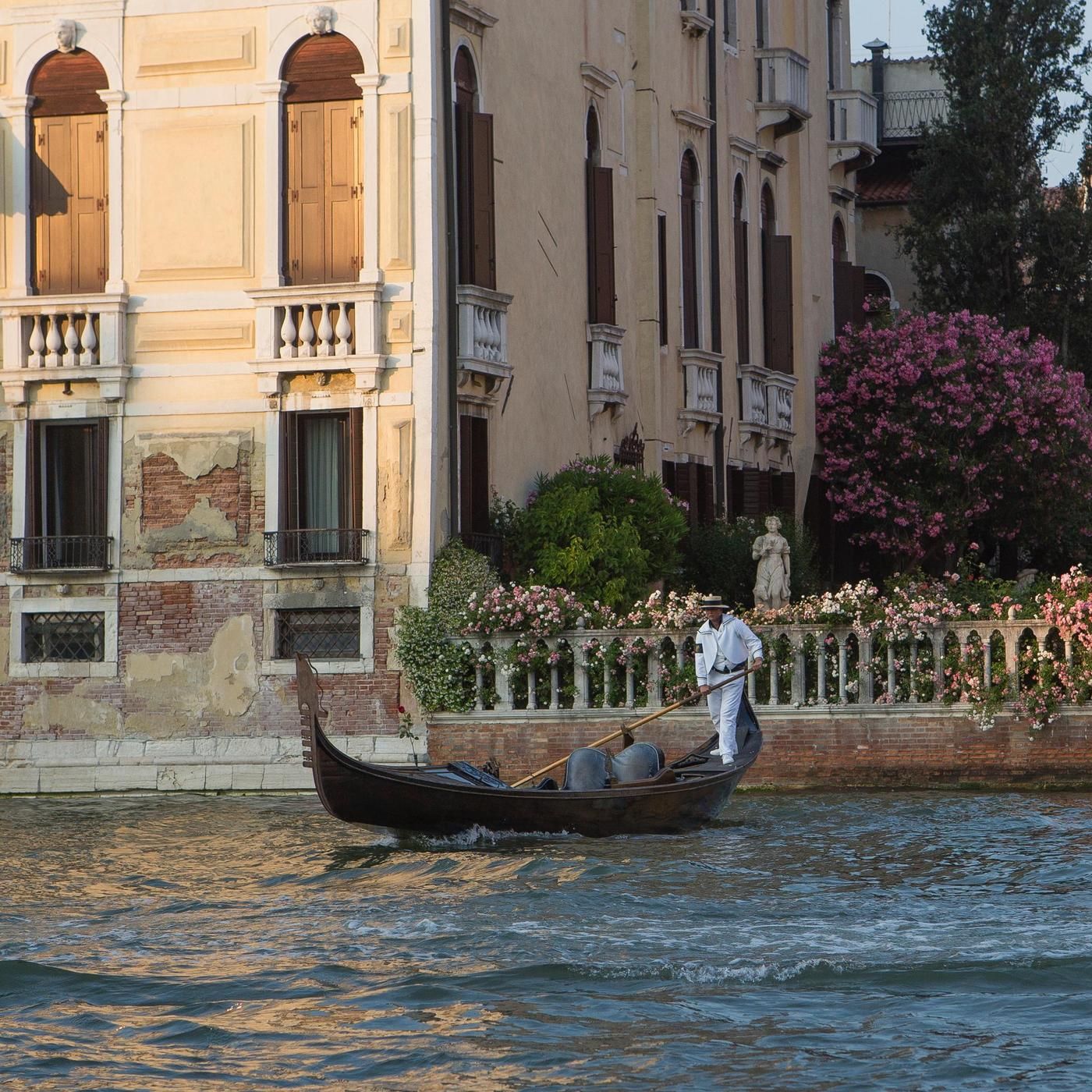
And so I had this on my mind and I was taking a bus to the university and I just overheard somebody talking about their recent trip to Venice. And of course, the classic tourist thing to do when you go to Venice is to take a ride on the canal boats, the gondolas. You know, go down the canal, maybe someone's singing a famous song. It's very romantic.
In a case, the person sitting on the bus next to David was telling their friend that they had taken a gondola ride with this first ever woman gondolaie or Venice. Yeah, and they were like poking around and we realized like how... How does this become a we? Who are you?
I'm Kristin. Kristin Clark, also a journalist and radio producer. And she and David are partners and collaborators. I mean, and this is what was interesting is like, we realize like how big a deal it is to be a family gondolier.
This is like a 900 year old tradition. 900 year old? Yeah, all men. Yeah, all men.
And it's always past father son, father son, father son or uncle nephew down the line. So this has been no ladies now, no ladies then, no ladies ever. No ladies and 900 years. Yeah.
Just think about that for a second. Almost a thousand years of all men, men and men and men and men. And then one day, you get a woman. Right.
A woman breaks through 900 year old glass ceiling. I thought that sounds like a good pitch. Are you kidding? It sounds like God kissed you in the lead.
Exactly. It sounded like the perfect empowerment story, I guess. Yeah. And so we're kind of just like googling it.
And like, it's all over the BS. Like every outlet from the Guardian to the New York Times to the Financial Times to the Cedar Rapids Gazette. It made it all the way to Cedar Rapids to newspapers in Germany and China and Australia. And they all the articles laid out the same basic story.
It was this Algerian woman from Germany named Alex Hay. She showed up in Venice 20 years ago, got around a gondolier association that never wanted to see a woman become a gondolier. And eventually became the first ever female gondolier Venice. The whole thing, of course, sparking this giant gender war.
But that was sort of it. Pretty much the headline in a picture was the story. Many of the articles didn't actually have all that many quotes from Alex. And so for me, it sounded like a great, simple opportunity to go back and tell a deeper story.
Yeah. Just like, who is this person? Why would somebody be so hell-bent on getting into this club that just so clearly does not want them? Yeah.
So we, you know, Alex. We're interested in your story. We're wondering if you might be willing to spend a few days with us this summer. And I was hoping it would just be like, yes, I'm happy to meet with you for a couple hours.
And that would have been great. But we got an email back right away that said, if you come do the story, you have to spend a week with me. A week. Yeah.
And then there are all these questions about like who we were as journalists, what our purpose was, and a bunch of demands. You have to stay in the city. You can't stay in like one of the suburbs in Margarrie, even though it's cheaper. You have to be in the city.
I want to hear these sounds at this time. I have a vision for things. Did you have the sense that there was something a little odd? Yeah.
And I mean, the message was definitely, I want to tell a different story. Did you have any idea what that meant? No idea. You stepped off the bus and you could smell the salt in there from the Grand Canal.
And it was kind of raining a little bit. It was around midnight. We're kind of, you know, getting our bearings, grabbing our bags, and we look up and across the parking lot. There's Alex.
Standing under a lamppost, just leaning against it with a cigarette. Smoke kind of curling up into the light of the street lamp. Short hair. Dark.
It was slicked back. Do you think you were in a Fellini movie? Honestly, I didn't know what to think. This person was legit under a lamp, smoking.
It was so quick. Up close, Alex looked taller than I expected. It was a strong build. Kind of a face that was a little weathered, like someone who works outside all day on the water.
Finishing quite late. So when you call it, it just finished. Oh, perfect. How was your flight?
It was good. It was long. It was, you know, we flew to Moscow first. And since it was late, we made a plan with Alex to meet up at 5.45 p.m.
the next day on the steps of La Finiche Opera House. Okay. Beautiful La Opera House. Yeah.
I was rushing on to find you, so I left all the mess in the gondola. So anyway, the plan was to go out on a gondola ride. Which was one of Alex's demands in that first email. Okay.
So we walk around the corner to where the gondola is parked. And... Oh my God. The boat was just like shining.
So the gondola was made for three people? Long, narrow, jet black. This was where the noble couple was sitting. Anti-cushions, golden trim.
And over there there was the servant sitting. Alex had it about 12 years. It was already quite an old boat when I got it. He had a name.
This is called Pegasus. Pegasus. Can you choose it? Yes, of course.
Alright, so. If you want to come in. So we climb into the boat. We're fixed.
Sit a little bit over there. And Alex stands at the back, holding the oar, and we're down sitting in the lower seats, kind of just pointing the microphone up. Alex, I know you were just telling us how annoying it is in those not pictures. It's okay if I take photographs once in a while.
No. You came here to study it first? No. It's not what I said.
And it was pretty much immediately clear. You came here. I mean. That it was not going to be an easy interview.
You came here. When you studied it. I know. I was wondering.
Right. So I had a notebook full of questions and things that we had pulled from all these articles we'd read. And that pretty quickly became useless. That's what I was asking.
You didn't comment. And whenever I asked about being the first female gone to Lear, the first woman in 900 years to do this. Oh, it's an old star. What's that?
You can read that everywhere on the net. I mean, so, you know, such an over and over and over and over. It's all set already. Why do we need to repeat things already?
Done. This is a very frequent journalism problem. Like, you become boring to the person in your interview and you start flailing. Right.
Exactly. And we were. You don't have anything more. No.
Why would you? What do you do? You know, we just thought maybe we should just be quiet, probably. We are about to make the Titus turn.
We moved away from the tourist centers of the city and into these smaller canals. And... Elgo! Elgo!
As we go around these tight turns, Alex would sing out to let the other boats know that we were coming. Oh, here we have a crossway. This is why I shout out my direction. It's in order to avoid accidents because you cannot hear the gondola riding.
You know, we go into these beautiful archways. Elgo! Past Hidden Gardens. You don't necessarily need eyes.
In order to appreciate a gondola tour. Every channel has a different sound. There are some germs. You have a lot of birds singing.
Sometimes they fly in the faces. So, this is a beautiful entrance here. I wanted to show you. At one point, our gondola cut through this rectangle of light, shining from an open kitchen door.
It was nice. I mean, this side of Venice was unexpected and really beautiful. But the whole time we were sitting on our new pads and we were definitely quietly panicking. Well, you know, the end.
Yeah, I didn't know this at the time. I thought there was some, you know, I was like, maybe a little too young. I think Alex was testing us. Maybe a little bit too.
We don't have enough experience maybe. That was my concern. But I like the enthusiasm and I like the... There was an honesty which I liked.
Did you ever figure out what you were being sussed out for or what was going on there? For sure not on the boat. But we actually made plans to go out to dinner that night. And considering how the boat ride went, we thought at this point we should return to square one and leave the recorder at home and just try and have a conversation.
We sit down outside and very few people in the restaurant were the only table outside. They had to open. And when we got there too, we should say we met Alex's girlfriend, right? Yeah, and we're making, I think we're just kind of making small talk.
And yeah, it turns out Alex's girlfriend is a photographer and she'd done his photo essay at Alex. And the photos are really striking. Like one of them, Alex is just like drowning under the water. There's one that's just like Alex's back is to the camera.
This ripped and muscular back. Yeah, like arms played, like looking out the window over the city of Venice. Venice is lone defender. Just like so badass and like kind of like superhero style.
So we were just chatting about the photos and asking Alex's girlfriend like, you know, tell me a little bit more about what inspired you to take these photos. And you know, like small talk friendly stuff. And she kind of was like, you know, it's just, it's so strange. You know, we thought we thought it was so clear.
Like the photos were so like they emphasized every masculine quality on Alex's body. We, you know, in our artist statement, you know, we used all of the male forms in Italian. You know, like Louis, which means he instead of lay, which means she. But everybody at the photo exhibit was like, oh must have been a typo or you made a mistake.
And she was like, which is funny because I'm Italian, so I should know. And I was like, oh, pronouns, Louis, he, Alex, she used he. He, Alex is a he is Alex trans like, oh my gosh, Alex is a transgender man. Whoa, what did you, what did that mean to you in that moment?
What I thought that meant was Alex was probably born in a body that he didn't identify with. I mean, mine was, I didn't think transgender. I didn't think I thought Alex is a guy, of course. Alex is a guy.
Really? I wasn't surprised. Were you surprised? I'm not saying that the pronoun is accurate.
I mean, I would say that like flipping into he, not a thing. Like it was like, Alex is he, Alex is a he, Alex is he. He is sitting at the table with us, Alex and his girlfriend. Very quickly, it was like him.
I'm looking at him. And then I start thinking about the story that we had come here to tell, that was about all of the women things that she had done. Her, her, her, her, her woman, hero, heroine, first female in 900 years, international symbol of female power. You start thinking about that.
And it's like, those things are really hard to square in your head. This real person is also these stories. And how did that happen? What has it been like for 20 years to be inside of that story when you're actually a man?
After who knows how many articles have been written about Alex, this is the first time that he is publicly telling his story as a man. And so we should probably just stop for a second and talk about pronouns, because this is really important for many transgender people. In moments when Alex was publicly understood as a woman and was getting international press for it, we've decided with Alex's permission to only use his name or his title of first female gondolier. While some of the people interviewed for the story were unaware that Alex is transgender and do use female pronouns or do refer to him as a woman, we, when we're talking about him, we will only use male pronouns.
So after that dinner, we made plans for the next day. That's what we were supposed to wear. On his motorboat, he would just take us to a quiet spot, and we would talk. What's the agreement?
On the water. Shut up! Stop it! Pasta!
Ela! Has anyone ever asked you what gender pronoun you prefer? No. Never.
Never. So after getting some of the basics out of the way, Alex kind of started at the beginning. Well, you know, it's a long story. I was born transgender.
This is in Germany. Alex tells us he was born with a female body, but at a pretty early age, knew himself to be a little boy. I knew already before I went to school. With three years, I was standing on the toilet to pee inside.
Alex says that, you know, for him, he had a sense even when he was three, that there should just be something on his body that wasn't there. You know, I was praying for a penis every night. My parents knew about it. His parents were actually both doctors.
They knew, but they were not supportive. You know, I heard them, you know, they were talking about all the weird stuff I did. How you ripped the arms off of his barbies? Coloring them like, you know, with a black pencil and destroying them.
Or the way Alex dressed himself. When there was a swimming lesson in the school, I was there only with little pencil, you call them a base suit for boys. And, you know, I was, of course, very aggressive as a child. A lot of fights.
You know, I got quite, I was quite violent as a kid. So now I can ask about this, but, you know, it was a drama at all. It was a drama. The constant try of my mother to get this behavior out of me.
Alex says pretty early on, his parents basically gave up on him. They ignored me as much as I could, which was, you know, in a way it was saving me because I could wear whatever I wanted. I could do whatever I wanted. And then when Alex was ten, a little brother was born.
And that was a shock. That was a terrible shock because, um, basically, it confirmed that my mother wanted desperately a boy, but she didn't accept me as her son. That's what it was. Alex said basically, you know, that was the first time he saw what, like, it should look like, basically, when a parent loves a kid.
So, um, when he was fifteen, he ran away from home. I escaped to Hamburg. And in Hamburg, you have a huge, um, district called San Pauli, where they have all the prostitutes and, you know, all the bad things. And that's exactly where I went.
Some people kind of took him under their wing. Um, got a job, kind of figured out how to take care of himself. I got lucky. But I know also very unlucky stories, but I got lucky.
Did he ever think about, like, transitioning to a male body? He says he thought about it at one point, but in the eighties, when I was fifteen, the opportunities he had to become a man were very, very, um, poor. In particular, if you want to go down the road of surgery. What I can remember for my family was constant talks about how operations went wrong, how they went wrong, and what went wrong.
And so, for me to go in a hospital to do an operation, that's not going to happen. And of course, many transgender people don't end up having surgery. But anyway, after Hamburg, at some point, Alex fell into filmmaking and ended up in San Francisco working in the film industry. And so, in 1896, he got involved in a production that sent him abroad to go scope out locations for a film that was going to be shot in Venice.
So, shows up in Venice in 1886? How old is he around at this point? 29, I think? Oh, so he's older?
He's not a kid at this point. Originally, he's just supposed to say a few days. Kind of just enough time to do some research and scope things out. But somewhere along the way, he sees these guys rowing their boats down the canal.
And, uh, for reasons he can't entirely explain, he's just transfixed. I was fascinated by this kind of boat, and I was fascinated by the rowing style that you roll forward, so you actually see where you're going. So, it was just fascinating, and I just wanted to try it out myself. Eventually, Alex and I were actually meeting at Gondolier, and asked, like, do you think I could do this?
And he actually ended up down at the Gondolier station as an apprentice. Did they ask you why you wanted to study? I remember the first day. I was introduced by the head boss of the group.
Okay, so this is Alex. She's going to be our mascot. Because they saw Alex as a woman, and they had never been a woman Gondolier. Most of them thought, for sure, this was, like, kind of a joke.
There was a very old man who later said, now we have a Gondolier with kids. For the first several months, Alex says he basically just picked up after the guys. You were the busboy for everybody, so you needed to clean their boats and push out the water, like, 10, 20 times a day. He says it's really back-breaking grueling work.
For somebody that everybody sees as a woman, you think this would be, like, the worst place on Earth. But, you know, actually... Those first months in the city, just kind of with the boys, dirty jokes. I saw this as great.
Alex knew all the Gondoliers' nicknames, walked and talked and acted like them, and cursed in the same way. And he says he felt like he was part of this tradition of learning from these old guys, who worked mentors to him. It was really, like, maybe the best time of my life. It was like he was home.
And then the trouble began. It started with the journalist. This is reporter Consuela Turin. We met in a noisy cafe.
So we started in 1996 with a translator. When Consuela was a collaborator of the Nova Venez. She was a cub reporter in Venice, working for a very politically progressive newspaper. And she was out looking for her big story.
And she runs into her. How did they encounter each other? I think of his style, Alex. Consuela saw Alex at one of the Gondoliers' stations.
And she was like, whoa. It's obviously this is struck her attention. It looked like there was this woman rowing among men. And, like, seeming to kind of blend right in.
She said I camped out for a whole morning and basically just watched Alex's behavior. But Alex didn't want to talk. I can't talk a lot of it. I'm just a student.
They're teaching me. Don't make this into a thing. I recognize that you don't want to talk to me, that you're apprehensive, and that this might be difficult. And I get that this might even damage your reputation with the other Gondoliers.
But this is an important story. You're a pioneer. I can't ignore you. And so Consuela said, there are two options.
I'm going to write the story no matter what. So you can either talk to me and we can do the story together or I can write what I think. That was the offer. You know, it can't go out now.
And she said it will. It will. And why wasn't Consuela persuaded that she should wait? Well, there were journalists coming from all over the place.
I think the story was going to get out there and somebody was going to write it. And Alex never sort of stopped and was like, listen Consuela or whoever. Let me just tell you the real story. The way out of this is to speak.
And yet he stays quiet. Right. Do you have a sense why? I mean, so just to kind of give like some like data points that might be helpful and understanding kind of where we were.
So we're talking 1997. Just to give you like a corollary thing. Where we were in our discourse around LGBT issues was like Ellen DeGeneres I think that year. This is this is so hard.
But I came out on her show. I think I've realized that I am. I can't even say the word. Why can't I say the word?
And like shortly after it was canceled. Caitlyn Jenner was just a few years ago. Like we didn't even really have a grip on what transgender was. That wasn't a conversation that we were having in public.
Can you imagine what it would be like to be like guys guys guys don't worry though. I'm actually a man. That wouldn't have gone over so well with the dudes at the gondola station. Yeah.
Yeah. So what ended up happening after Consuela and Alex had the show down about the article. A couple of days later Alex was on the way to the gondola station. I found it in the newspaper.
Shop. The headline. When I don't know. Speed and condolier.
When I don't know speed and condolier. A woman is challenging the gondoliers. So I was like oh my god this is going to be hell. So it's in the newspaper stand.
Alex shows up at the gondolier station and of course there's a big hello. A big unfriendly hello. Yeah just like oh hello gondolier. So as far as I got really really angry.
We do everything to teach you well and you know now you're challenging us. Alex has a lot of the gondoliers stop talking to him. They wouldn't even let him wash their boats. And then you know of course there were other ones who said I told you in the beginning.
Told you she was just going to blab to the press. A woman is a lot of good singing and the whole thing. You know it was like a little stone becoming a huge thing. By the way this is coming right before Alex is about to take the very first exam.
There's actually a series of exams and it gets a little complicated. But eventually anybody who wants to be a gondolier has to take this rowing test. And by all accounts Alex was good. Like we talked to the guy who was the head of the gondoliers association at that time.
Alex Aye. This guy Fulfio Scarpo was like. But Alex Aye. For me is more good than the other man gondoliers.
And this is the head of the guild? Yeah. And we also talked to this legendary rower named Franco Craya. And he was also like...
Alex is better than most of the guys. Alex is better than most of the guys. So anyway Alex takes the test. And I failed the exam.
Which wouldn't have been... That by itself wouldn't have been such a big deal because a whole bunch of people failed the first exam. But the thing was there was a feeling that something deeply unfair was happening. According to Consuelo, a lot of people started to think.
Maybe the fix was in. There were other boys there who failed who were better than other boys who did not fail. Alex has suspiciously pretty much all the people that passed where sons of gondoliers are from gondolier families. Because F had the right last name.
So... Then I got angry. I got a lawyer. Alex thought this was going to bring attention to how corrupt the license practices, how corrupt this association is.
I wanted that exam is repeated for everybody. And this lawyer was negotiating and the gondoliers association was like, If we let everyone retake the test, that will basically be admitting that we favor certain families over other families. That was exactly what I wanted. But it's not what they wanted.
They said we don't want the bad press of this. But then, and this is another moment, according to Alex, where his story just gets hijacked. My lawyer negotiated without my permission. According to Alex, without telling him, the lawyer together with the gondoliers association dug up this old law that says, Because Alex is a woman.
I mean, he's not, he's a man, but they thought he was a woman. And this law says that as a woman, he had the right to take the test again, this time with women judges in the vote. When she came back and said, okay, here's what we're going to do. Do you remember what you said?
I was pissed. I was very upset. That was not what I wanted. That's nothing to do with men or women.
Do you think she was your champion because she identified with you? Yeah, for sure. It was not my story. It was her story.
But, unfortunately for Alex, as soon as the lawyer did that, it became everyone's story. Oh, yeah. Because? The press, then when was it?
In the next two months, every paper in town was written about it. I was suspended by a gondoliers examination. Alexander, I'm Mrs. Dexter.
That gondol van from France. Then, the story went global. Germa catches a crowd in her view to become Denny's first woman gondolier. Sexists sink first female gondolier.
Good gondolier fights are melted. Real gondolier blames chauvinist. And then, things escalate into a full-blown gender battle. The gondoliers are, of course, super pissed because of all this press that they're getting.
We talked a couple of key gondolier guys. Alexander, hey. Well, no. I think they have some thoughts and feelings about it.
She had to pass a test. She didn't. It was a disaster. Alex is at one point.
Things got so bad. That was one of them who was saying, you know, I'm going to wait for you in a small little street with a knife and kill you. So I grabbed the guy and I said, where's your knife? I'm here.
Get it out. You know? Do it. That was one episode.
There are many others. So, on the one side, Alex said he has gondoliers wanting to knife him. Because feminism kicked in and... Alex said he had all these women rushing in to save him.
Wait, wait. You want me to, like... Because they thought he was a sheep. We'd read in the paper that she had tried to take the test and had failed and had called foul, saying that the Venetians were mean and, you know, sex system wouldn't let women become gondoliers.
This is Jane Caprol. She was active in the community of Venetian women rowers at the time. What women, by the way, like there aren't any? Well, so there weren't any women gondoliers at that time, but there's a whole community of female rowers.
They have teams and they race. I've been doing Venetian running for over 20 years. And being a female rower in Venice was very difficult. Elena, this woman rower I was talking to.
Last week I was with my rowing partner. It was like, I'm routinely when I'm out on the water, like old men yell at me and say, Hey, what you doing? I return back home in the kitchen cooking or cleaning your house. Why are you here?
They didn't know you're just a gondol. You're just a side dish. They both told me when it comes to racing, there's a big discrepancy in the prize money. The men are getting like four times as much prize money as the women.
We are now trying to convince the city of Venice who gives prizes that we are like men. We are not less than them. We are all these women who've been incrementally busting their ass to try to be taken seriously in the sport. We are here.
We can do this. And when they saw this press about Alex fighting the gondoliers, they reached out. I sent one of the other concidiers down to speak to her, you know, come to our club and come and work with us and help us out, help us teach people. You got your back.
But she wasn't interested. No, of course not. Because Alex, there are two problems. First of all, you cannot compare the gondolier roles with the racing roles.
There are two different styles of rowing. And second of all, the sense I got was that it was kind of like, I don't want to row with you. You guys all wear matching white skirts, like not my thing. So I remember there was a lot of resentment.
A woman, how can you be one of us in this battle for equality? Some people see me and then they are convinced that I'm a feminist, that I am one of them, and I'm not. And all of this comes to a head in October of 2004, when Alex has to retake the test. And this time with champion women rowers in the boat judging them.
There was a lot of pressure. Everything about this test is supposed to be a secret. The location of the test, the path that Alex is going to row, I've had no clue where we're going to go. But suspiciously, as Alex stepped into the boat, he noticed that there was a huge crowd lined up all the way down the canal.
Gondoliers and their friends, and their shouting and yelling. People were screaming all kinds of swear words and all kinds of go-home. They cannot imagine the hate. You had female rowers in the boat glaring at him, there's press lined up along the entire way.
The truth is plus everybody. It was full of people. I felt like I'm in a ring. I tried to block it all out because I needed to do an exam.
I wanted to do a good performance. And I wasn't able. It was hell. One of the worst days of my entire life.
I really don't. I don't wish that to nobody. That was real hell. Hello, this is David from Berlin.
Radio Lab is supported in part by the Alfred B. Sloan Foundation, enhancing public understanding of science and technology in the modern world. More information about Sloan at www.slown.org. Keeping up with this economy matters.
And in a world full of hot takes and noise, marketplace does things differently. I'm Kyle Rizdall, the host of Marketplace, a daily podcast that delivers independent award-winning journalism dedicated to making you smarter about this economy. You can listen to Marketplace on Spotify. Hey, I'm Jada Unran.
I'm Robert Colich. This is Radio Lab. And we're turning out to a story from Kristen Clark and David Conrad about Alex Hay, transgender man who became somehow the first female Gondeliera in 923 years, and thus an international feminist hero sensation. And so we now find Alex being painted by everybody in town in colors that he doesn't particularly agree with.
Yeah, and what's interesting, according to Kristen, is just how easy it is to do that to someone. Okay, so I'll tell you, as we were doing the interviewing and the recording, I'm feeling like I have a good grip on Alex's story. I'm feeling like, oh man, I know what it feels like to be inside of a narrative that feels really icky. And so I feel like I'm kind of getting it and I'm understanding the full Alex.
And it's about all of these other things that have nothing to do with gender. So Alex's story isn't about gender at all. And for me, that made sense because I was like, in my life, gender has been a box. Even when you're in the right box, gender is a box and it can feel shitty to be in that box.
And so I was like, yeah, let's bust open those boxes together. We're going to show people who you are, Alex. But then we would have these moments where I would be like, hmm, wait a second. One night when we were in Venice, we were trying to park our boat on the way to a restaurant.
And this guy is trying to parallel park his boat and Alex is kind of sitting there like chuckling at him. And you can hear David chuckling in the background. And so the two of them are joking about it. And then Alex says, he drives like a woman.
Like an old lady. And I was like, you know, and kind of rolled my eyes at it. But then later at the dinner, he was like, you know, though, I don't really think that a real woman could do this job. And he was like, all like macho about it.
I remember you were shocked that I was saying such a macho thing. I remember that. Well, of course you are very right. A woman can do everything.
But this job is going to be very tough because it's a real cool community. I mean, it's very cool and rough. But when you said that, I was so frustrated. And it was because I think I was attached to the idea of like it being equal, you know?
I mean, I was just like super confused. I don't know. I just want to know what you think. Don't tell me what you want to know.
I'll admit, in the moment, I asked a kind of clumsy question. Do you feel... But it was because he seemed to be almost like prodding me. You know, having fun and winking at David.
Do you feel like you're fundamentally on a different team from me? Okay. I am on David's team. But you can't see that.
Because you identify with me. But that is not... I can help that. How can I explain it to you?
Let's put it this way. When I'm in a group of women, for example, and they start to talk, I feel uncomfortable. The chat things they have, I call it chicken chat, it's not really my cup of tea. You know, I like it.
It can amuse me. But the minute they think that I am one of them, it doesn't amuse me anymore. And I feel uncomfortable. And I'm a little alien there.
Because they think I am one of them and I'm not. When I'm with the boys, I feel comfortable. If it is a nice group of boys, which I like, then we have the same type of humor and the same stupid jokes about women. For Alex, I think what was really striking is that whatever it is that makes him feel comfortable being seen as a man, but not as a woman, it runs very deep.
For me, there is a difference between men and women. Not everybody or even every transgender person would feel this way. But the way that he sees it, if there were no differences. There would be no wish to do transition and there would be no transsexuality and things like that.
If it would be the same. But it isn't. Yeah. So you were seeing him as like a gender doesn't matter kind of icon and he was saying, actually it does matter.
Yeah. Can I just ask a simpler question? When does he actually become the first female Gondolira? Well, so Alex couldn't get one of these 400 or so special Gondolira licenses because he failed the test.
Right. But in 2005, I opened up my own business. He figured out that if he partners up with businesses in town, like hotels, he can actually row for them privately. At the time I was looking at all the lawyers and I found that it was possible to open up my own business without having a license, so I did.
And so for years he was just kind of doing this quietly. Then... Alexandra, she's not a Gondolira. She's not a Gondolira.
She works for a hotel. Some of the Gondolira began to notice that Alex was rowing passengers without a license. And of course they didn't like it. She didn't pass the test.
Saying like, you can't do that. She's not part of our team. Does not have a driver's license. You have to be a member of this organization, you have to have a specific license in order practice.
What do we can say? She's not a Gondolira. I got some threats, verbal threats, and damaging the Gondolira and things like that. All kinds of stupid little boys shit.
So when they understood they cannot threaten me this way, then they pressured City Hall to change the law. City Hall basically said like, you can't roll, you can't roll Gondolira with tourists in it without a license. And the law passed and was signed and became the real law. Yeah.
And so one day Alex is out on his boat and he just gets pulled over. And basically he's told you're breaking this new law. And so I wanted to defend myself. So we went on trial in court.
It was Alex, his one lawyer. City Hall and the Gondolira Association. They're four lawyers. Four lawyers.
I thought, you know, this is a lost case anyway already. But City Hall lost. City Hall fights back. He goes to the highest court in the land.
They're lost again. In front of a court with me, a little stranger from out of nowhere. Now, technically the decision just said hotels can provide for their customers the way that they need to. So if they want to hire a chauffeur who happens to row in a gondola, they can do that.
But what that actually meant was that now, for the first time, Alex could be considered a gondolira. That was a huge deal. Massive. Along the canals are woman powers against the time.
You have time to come in. Woman takes on Venice. Gondola cartel. She got a dream and came in.
First female gondolira rocked the boat. So this is where we get all of those articles we read before we came to Venice. The story went all over the world. And every single one.
Bravo, gondolira. The message was the same. We have our first woman, Gondolira. That was something that was unstoppable.
I could not go in there and say, excuse me, you know, I'm not really, you know, identifying, you know, it was gone. Okay, it was done. Alex at this point in 2007 doesn't have any other income except for being able to market himself through hotels and eventually online. And so, of course, I need to have a website.
People are actively seeking out this person who has broken the gender barrier and become the first female gondolira in Venice. So it would have been stupid to try to go against all this. It was already written. So Alex decides to make his email, his Facebook page, and his website.
All pre-ma gondolira. Or the first female gondolira. I'm wondering if creating a website with that name, did that feel like you taking control of that narrative? Or was that narrative taking control of your decision on that website?
It's nothing to do with what I want. It's a label. You know, I cannot change a label who has, you know, 20 years of history. Shut up!
Alex told us he was talking to his therapist one day at this transgender center they have in your Venice. And she said, you're like in a cage. This is like a cage where you can't get really out of this. You know, it's a difficult situation.
It's a very difficult situation. But I'm tired. By the time we met Alex, he'd been living almost 10 years like this. You know, just kind of between these two stories.
At night out to his close friends, but by day, giving these tours as the first female gondolira in Venice. And every few months, every new tour season, these headlines would just regenerate. First female gondolira. First female gondolira.
First female gondolira. And when we left Venice, that's kind of where we left him. Kind of hanging in the middle of that. And the impression that we got is maybe that's just going to be how it always is for him.
With that? It's by the way we didn't see each other. Fast forward six months. We get an email from Alex.
He says he's in San Francisco. Things have been happening in your life. Yeah. He had some news.
Well, you know, I remember when we were sitting, when we were last talking in Venice, and we were sitting on the terrace, I remember that I was already in, I knew there was something coming. But I wasn't sure what it was. It was a very difficult year. I was kind of depressed, which you know, I'm not a depressed person usually.
And so I was hanging out, I was not moving much. I was hanging out on my sofa and I was trying to think. And I was more and more everyday. I was unhappy about people telling me that I was a she, another he.
I don't know why I got completely intolerant. Before I was like, I don't care what they say to me. I care that they're nice. And now I was like, I can't hear this.
And it was so wrong. Alex was about to turn 50 at this point. And it turns out that part of what was happening was that he was beginning to go through the early stages of menopause. I was hot.
I was tired, sweat breaking out for nothing. After fighting with the gondoliers, fighting with the feminists, this was like a final insult. So I have this idea that hormones might help with how I feel. I start to take the testosterone that was on the 7th of November, which after six hours, I get the first smile on my face in nearly a year.
It felt good. And the mood swings, they stopped. So now I knew me because I was looking in the mirror every day and I was like, who's this monster? He decided to fly to San Francisco, meet with a doctor.
Some people wait like two years or three years before they start to do a surgery. I wanted to do it now because for me it was something like now, whenever. So now I'm here in San Francisco, I've had top surgery on the 24th. That's about, yeah, four days ago.
And I want you to start this year with a body which is confirming me. People see me as the first woman wondering that it means something for many people. It's not fair to them, so I needed to say something. I changed on the Facebook side, I changed the name.
Now it's Alex Eigen-Lottus. And I did already a statement on my old website that is a statement. It says, Dear guests, colleagues and friends, after holding myself back for three decades, it's time for me to depart from my wrong body. I'm not changing who I am.
I'm becoming who I am. And is he back in Venice now? Yeah. And do you have any sense of what that's going to mean for his job or his life?
I have no idea. I have no clue. I don't know how my voice is going to be in a month. It should drop.
I have no idea how my face is going to look. And my body is going to look in two years, three years from now. We all leave it as a surprise. Hoi hoi!