
EPISODE · Apr 23, 2026 · 4 MIN
The Great California Tax Debate: Taxes and Proposition 13
from The Active Center · host David Sepe
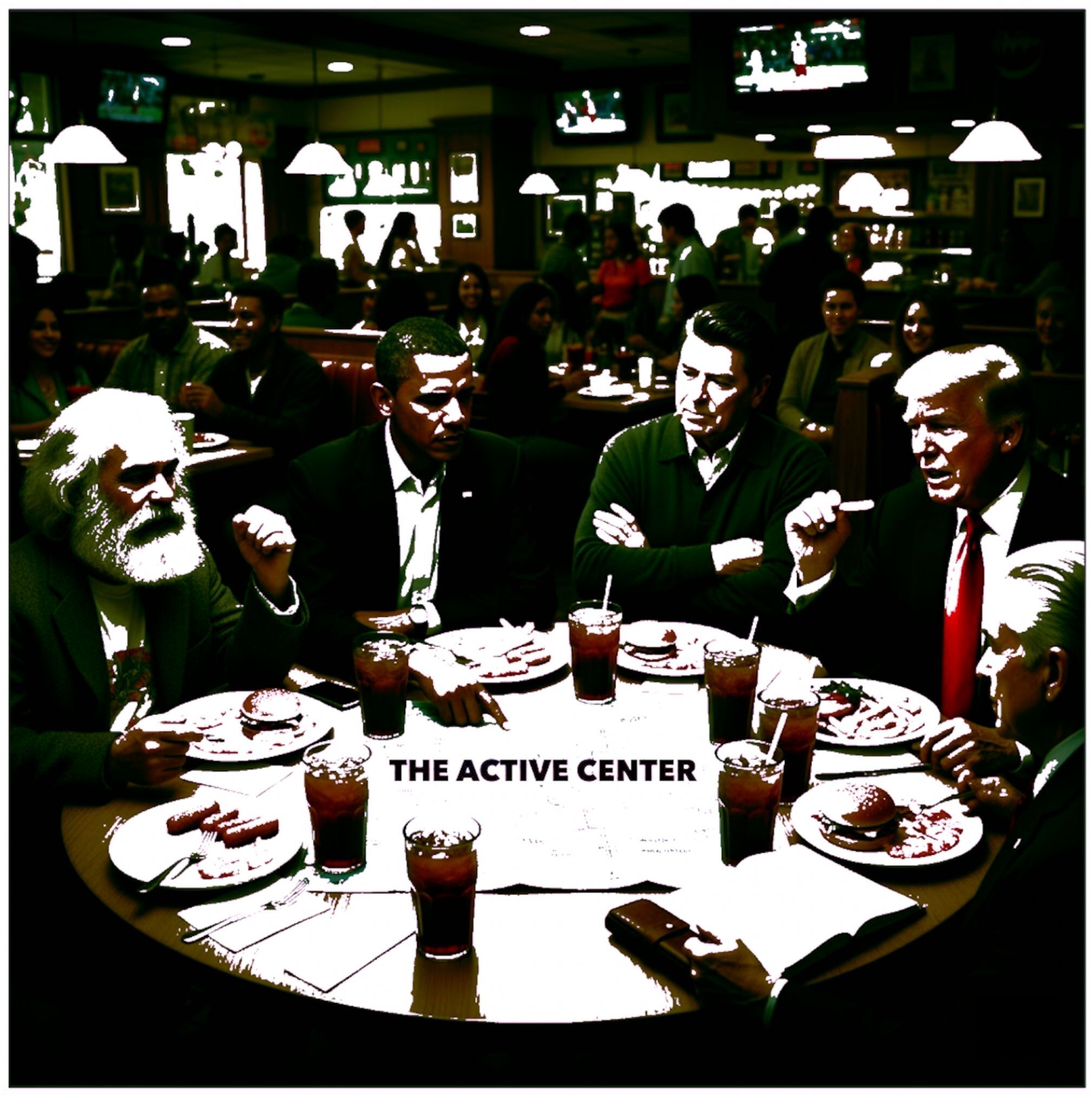
Moderator: Welcome to our debate on California's fiscal policy. The state boasts the highest income, sales, and gas taxes in the nation, yet faces an exodus of residents and businesses. We will address two questions: First, are these high taxes hindering economic expansion and deterring young families? Second, should Proposition 13, the bedrock of California property law, be repealed or reformed? Meet the Debaters: Economic Philosophy and Ideology To understand the arguments presented, it is essential to know the fundamental philosophies driving each participant's view on taxation, government spending, and capital: Karl Marx (Marxist/Socialist): Advocates for the abolition of private property and the capitalist system, viewing all tax debates as distractions from inherent worker exploitation. Adam Smith (Classical Economist): The father of free-market economics, who champions minimal state intervention, low and uniform taxes, and the efficient operation of the "Invisible Hand." Ronald Reagan (Supply-Side Conservative): A proponent of tax cuts, deregulation, and reduced government spending to stimulate economic growth by increasing production and investment. Donald Trump (Populist Conservative/Supply-Side): Focuses on business tax reduction and deregulation to boost national competitiveness, often framing high taxes as a penalty on success. Barack Obama (Progressive Centrist/Keynesian): Believes in a strong, progressive tax structure to fund necessary collective investments (infrastructure, education) and mitigate market failures and inequality. Gavin Newsom (Progressive Democrat/Keynesian): Argues that high, progressive state revenues are vital "investments" to address modern crises like climate change and housing, ensuring shared prosperity. Round 1: High Taxes and the California Exodus DONALD TRUMP (Business Magnate, Populist Conservative): Look, this is a very simple thing. California is a disaster, an absolute disgrace. The highest taxes—highest!—in the country. They’re driving out the job creators, the smart people, the people who actually pay for everything. Businesses are leaving for Texas and Florida, where the taxes are low and the regulation is minimal. When I was in charge, we cut taxes tremendously, and the economy boomed. Newsom and Obama, they want to take your money and spend it on things nobody needs. If you want young families to move to California, you don't tax them out of a home; you make it possible to hire people, build things, and keep your hard-earned money. It's common sense. It's a tremendous mistake. GAVIN NEWSOM (Current Governor of California, Progressive Democrat): Mr. Trump, with all respect, you mistake correlation for causation. People are leaving California primarily because of the cost of housing—a crisis fueled by decades of under-building—not because of the top-tier income tax bracket, which only affects the wealthiest 1% of earners who, by the way, are driving the world's 5th largest economy. Our high revenues are investments. They fund the world-class public education, the climate solutions, and the safety nets that make California the global center of innovation and optimism. What you call a "disaster," I call a commitment to shared prosperity. You want Texas wages for California services, and that math simply doesn't add up. RONALD REAGAN (40th U.S. President, Supply-Side Conservative): Governor Newsom, what you call "investment," I call “confiscation” and what I see is as the relentless expansion of the state apparatus. High marginal tax rates—which California specializes in—do not just affect the "wealthy." They affect the entrepreneur who decides not to take a risk, the doctor who decides not to work extra hours, and the engineer who relocates their intellectual capital to a state that respects their effort. Taxes are not merely a means of revenue for the government; they are a penalty on worker production. We saw in the 1970s that high taxes did not lead to prosperity; they led to stagnation and flight. The best social program, as I always said, is a job, and California's current tax regime is discouraging the very creation of those jobs. BARACK OBAMA (44th U.S. President, Progressive Centrist): I appreciate the historical context, President Reagan, but we have to recognize the world has changed. The structural issues in California—the lack of affordable housing, the infrastructure needs, the legacy of inequality—demand robust, collective investment. Our tax system, particularly the income tax, is progressive. It ensures that those who have benefited most from the innovative ecosystem that California has fostered contribute their fair share to maintaining it. The debate isn't whether taxes matter; it's what we get for those taxes. We cannot fix homelessness, climate change, or crumbling infrastructure on a budget designed for 1978. Young families want great schools, safe neighborhoods, and climate resilience, and those things are funded by revenue. ADAM SMITH (Classical Economist, Author of The Wealth of Nations): Gentlemen, we must look to first principles. The high taxes currently levied in California violate my second and third maxims: certainty and convenience. When taxes are so high that they actively induce the emigration of capital and labor, they become inefficient—they destroy the very source of the revenue they seek to draw upon. The state's appetite for revenue acts as a great discouragement to industry. Further, the complexity and high rates in the income and sales tax structure distort the natural direction of capital flow. A simple, low, and uniform tax, proportionate to the income a man enjoys under the protection of the State, is always preferable to this dizzying array of punitive levies. KARL MARX (Communist Philosopher, Author of Das Kapital): This entire conversation is a farce. High taxes, low taxes—it is all mere window dressing on the inherent exploitation of the capitalist system. Mr. Trump wishes to lower taxes so the bourgeois can retain a larger share of the surplus value extracted from the workers. Governor Newsom wishes to raise taxes to fund superficial reforms that pacify the masses but leave the fundamental structure of capital and wage-slavery intact. The worker's meager income is perpetually consumed by rent and commodity prices, regardless of the state's tax rate. The problem is not the rate of the tax; the problem is the system of private ownership that allows one class to extract the wealth created by another. Abolish capital, and this debate on tax percentages becomes immediately irrelevant. Round 2: The Future of Proposition 13 Moderator: Proposition 13 caps property tax at 1% of the purchase price and limits annual increases to 2% until the property is resold. Opponents argue it starves local government and disproportionately benefits long-term commercial owners. Proponents call it the indispensable shield for homeowners. Should Prop 13 be repealed or reformed? RONALD REAGAN: Proposition 13 is the great expression of the taxpayer revolt against an overreaching government. It is more than a tax policy; it is a declaration of economic freedom. It ensures that no Californian—especially the elderly and those on fixed incomes—will ever be taxed out of their homes by rising property values. To repeal it is to invite the financial chaos and government rapaciousness of the 1970s back into our lives. Any attempt to introduce a "split roll" to raise business taxes is a backdoor repeal that will simply result in higher costs passed directly on to consumers and struggling businesses. Protect Prop 13 at all costs. GAVIN NEWSOM: Prop 13 has become an engine of inequality that starves our communities. It has created a fundamental imbalance where a business that purchased its property in 1980 is paying a fraction of the property tax of a new, small business that purchased property last year. This is not fair, and it starves local governments and schools. I support a targeted, commercial-only reform—a "split roll"—that preserves the constitutional protections for homeowners and family farms, while requiring large corporations to pay their fair share based on current market value. We must reclaim the local control and funding needed to address our infrastructure and educational deficits. DONALD TRUMP: A "split roll" is a bad, bad idea. It's a socialist attack on business stability. These commercial properties are the engines of the California economy! You raise their taxes, they don't just "pass the cost" on—they fire people, they move headquarters, they stop investing. It’s a direct tax on jobs. Prop 13 protects the long-term stability needed for big investments. Newsom’s plan is just another way to get his hands on money so he can waste it. Keep Prop 13 intact; it’s a tremendous deal for America, and it keeps some stability in this crazy state. And believe me, if they eliminate Prop 13, you'll see even less housing. The huge tax hikes on land and new commercial development will kill the incentive to build the apartments and homes California desperately needs. BARACK OBAMA: The structural rigidity created by Prop 13 is undeniable. When you lock in property assessments for decades, you create a system that is profoundly unfair to newcomers, businesses, and, most importantly, the public education system. The revenue base for our schools, which should be local and robust, has been held hostage for fifty years. Reforming the commercial property component is a pragmatic, centrist solution. It respects the spirit of protecting the long-term homeowner while restoring the necessary financial capacity for local communities to invest in the next generation. It is about equity and restoring democracy to local finance. ADAM SMITH (Classical Economist, Author of The Wealth of Nations): From a purely economic perspective, Proposition 13 is an anomaly—a distortion that confuses the market. By decoupling the property tax assessment from the property's true market value, it has artificially constrained supply and rewarded incumbency over efficiency. It subsidizes long-term holders, whether they be homeowners or large corporations, by punishing new entrants and new investment. The ideal tax is neutral, treating all capital equally. Proposition 13 is the very definition of a non-neutral, market-distorting intervention. It must be reformed to align property assessments with market realities, restoring efficiency and fairness to the tax base. KARL MARX: The debate over Proposition 13 is the perfect illustration of how the ruling class maintains its control. This "revolt" was not about the worker; it was about the property-owning bourgeois protecting their accumulated capital from the state's minor attempt at redistribution. Whether the assessment is based on 1975 values or current values, the property itself remains a tool for the exploitation of the landless proletariat, who must pay exorbitant rent to the owners whom Prop 13 protects. The repeal or reform of Prop 13 merely shuffles the deck chairs on the sinking ship of capitalism. The true solution is the collective ownership of all land and property, eliminating both the rentier and the need for a property tax entirely. Moderator: A fascinating look into the fundamental ideological chasm on the role of government and capital in California's economy. Thank you, gentlemen. End of Debate Hello, and thanks for listening to my podcast For years, my mission has been to foster a community around engagement, unique takes on interesting stories, and conversation. If you value what I do, please consider supporting me. I've started a GoFundMe to cover my production and operational costs, including those pesky social media fees. If you can’t contribute to my GoFundMe, I get it, but you can help me by subscribing to my account or sharing this particular story with friends and family that you think would appreciate it. Your contribution, big or small, helps me keep going. Thank you. GO FUND ME
Embed this episode
What this episode covers
Moderator: Welcome to our debate on California’s fiscal policy. The state boasts the highest income, sales, and gas taxes in the nation, yet faces an exodus of residents and businesses. We will address two questions: First, are these high taxes hindering economic expansion and deterring young families? Second, should Proposition 13, the bedrock of California property law, be repealed or reformed? Meet the Debaters: Economic Philosophy and Ideology To understand the arguments presented, it is essential to know the fundamental philosophies driving each participant’s view on taxation, government spending, and capital: Karl Marx (Marxist/Socialist): Advocates for the abolition of private property and the capitalist system, viewing all tax debates as distractions from inherent worker exploitation. Adam Smith (Classical Economist): The father of free-market economics, who champions minimal state intervention, low and uniform taxes, and the efficient operation of the ”Invisible Hand.” Ronald Reagan (Supply-Side Conservative): A proponent of tax cuts, deregulation, and reduced government spending to stimulate economic growth by increasing production and investment. Donald Trump (Populist Conservative/Supply-Side): Focuses on business tax reduction and deregulation to boost national competitiveness, often framing high taxes as a penalty on success. Barack Obama (Progressive Centrist/Keynesian): Believes in a strong, progressive tax structure to fund necessary collective investments (infrastructure, education) and mitigate market failures and inequality. Gavin Newsom (Progressive Democrat/Keynesian): Argues that high, progressive state revenues are vital ”investments” to address modern crises like climate change and housing, ensuring shared prosperity. Round 1: High Taxes and the California Exodus DONALD TRUMP (Business Magnate, Populist Conservative): Look, this is a very simple thing. California is a disaster, an absolute disgrace. The highest taxes—highest!—in the country. They’re driving out the job creators, the smart people, the people who actually pay for everything. Businesses are leaving for Texas and Florida, where the taxes are low and the regulation is minimal. When I was in charge, we cut taxes tremendously, and the economy boomed. Newsom and Obama, they want to take your money and spend it on things nobody needs. If you want young families to move to California, you don’t tax them out of a home; you make it possible to hire people, build things, and keep your hard-earned money. It’s common sense. It’s a tremendous mistake.
NOW PLAYING
The Great California Tax Debate: Taxes and Proposition 13
No transcript for this episode yet
Similar Episodes
No similar episodes found.
Similar Podcasts
No similar podcasts found.