
EPISODE · Mar 24, 2026 · 7 MIN
The Abna Heist: How One Letter Disarmed a Persian Elite
from Samael's Podcast · host Samael
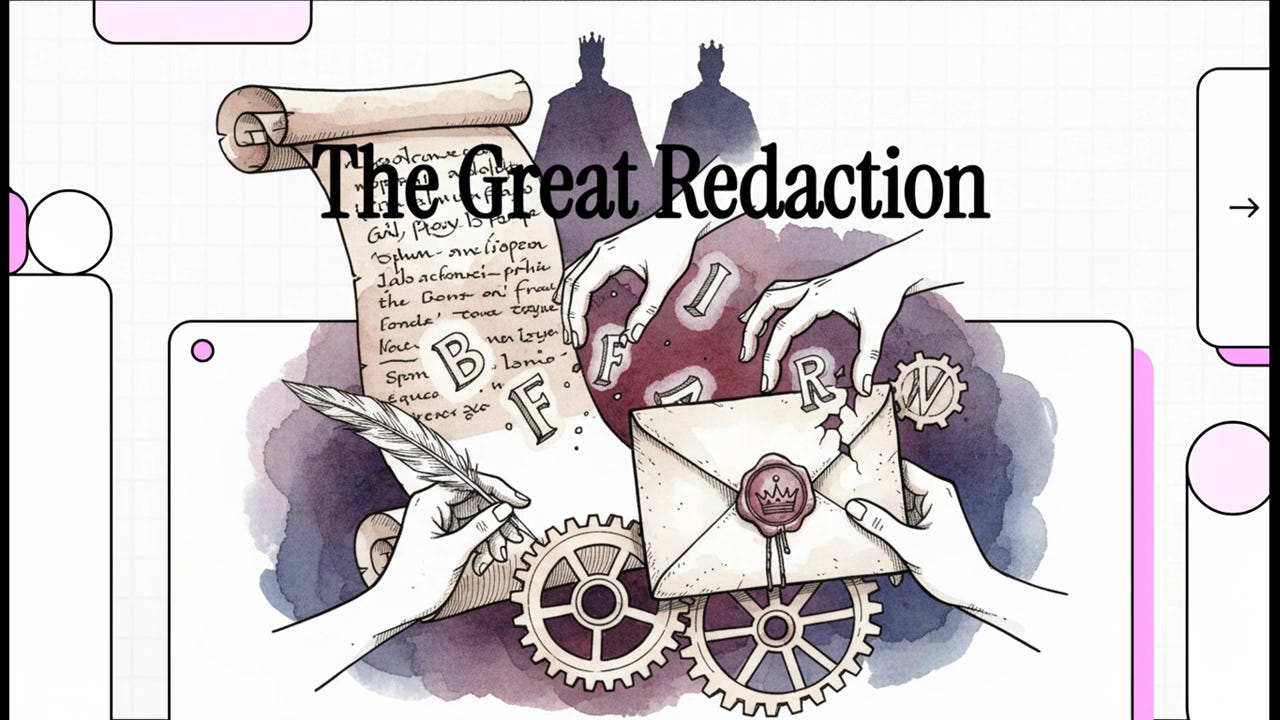
How did a single letter change in 8th-century Baghdad transform a powerful class of “Fathers” into dependent “Sons,” effectively disarming an elite administrative machine without firing a shot?By exploiting the ambiguity of early unvoweled Arabic script, scholars in Baghdad performed a “philological fix” on the title Abna, reinterpreting a possessive marker (the letter Y) as part of the root word for “son.” This linguistic sleight of hand erased the original meaning—”Those of the Father” (proprietors of the sovereign legacy)—and replaced it with “The Sons” (dependent clients), neutralizing the Abna‘s claim to inherited authority and recasting them as loyal, subordinate agents of the Caliphate.The investigation centers on the Abna, a powerful Persian-Yemeni administrative class that held key positions in the early Caliphate. Before the 8th century, inscriptions and records show they identified as “Those of the Father,” a formal title asserting their role as inheritors of the sovereign system, akin to the “fathers” of the state apparatus. However, historical accounts from the Baghdad era, such as those by Al-Tabari, describe them merely as “sons,” “orphans,” or “dependents,” implying a need for a new guardian (the state).The mechanism of this rewrite relied on the rasm (skeleton script) of early Arabic, which lacked vowels and diacritical dots. The word in question ended with a Y, which in the 6th-century context functioned as a possessive marker (like an apostrophe ‘s’). Baghdad scholars, however, reinterpreted this Y as part of the root BNY (son), shifting the etymology from Ab (Father) to Bunyan (Son). This subtle grammatical shift transformed a declaration of ownership into a statement of lineage and dependency.Evidence for this manipulation is found in palimpsests like the Sana’a Manuscript, where older, fainter texts reveal the original readings beneath the official 8th-century layers. The motive was clear: by redefining the Abna as “sons,” the Caliphate could strip them of their sovereign claims and integrate them into a new hierarchy where the Caliph was the sole “Father.” This was a hostile takeover executed with grammar rather than guns, turning a rival elite into a domesticated bureaucracy.The story underscores that words are not neutral descriptors but active creators of reality. By controlling the definition of a single letter, the Caliphate reshaped the political identity of an entire class, proving that the most permanent conquests are often those won by rewriting the source code of history itself.For deeper exploration, the source offers tailor-made reports and source documents at www.samael.ink, with episodes available on Spotify, Apple Podcasts, Audible, and other platforms. This is a public episode. If you'd like to discuss this with other subscribers or get access to bonus episodes, visit www.samael.ink/subscribe
Embed this episode
NOW PLAYING
The Abna Heist: How One Letter Disarmed a Persian Elite
No transcript for this episode yet
Similar Episodes
No similar episodes found.
Similar Podcasts
No similar podcasts found.