
EPISODE · May 14, 2026 · 24 MIN
The Hanseatic League in America (1500–1800)
from A Different America = A Different World
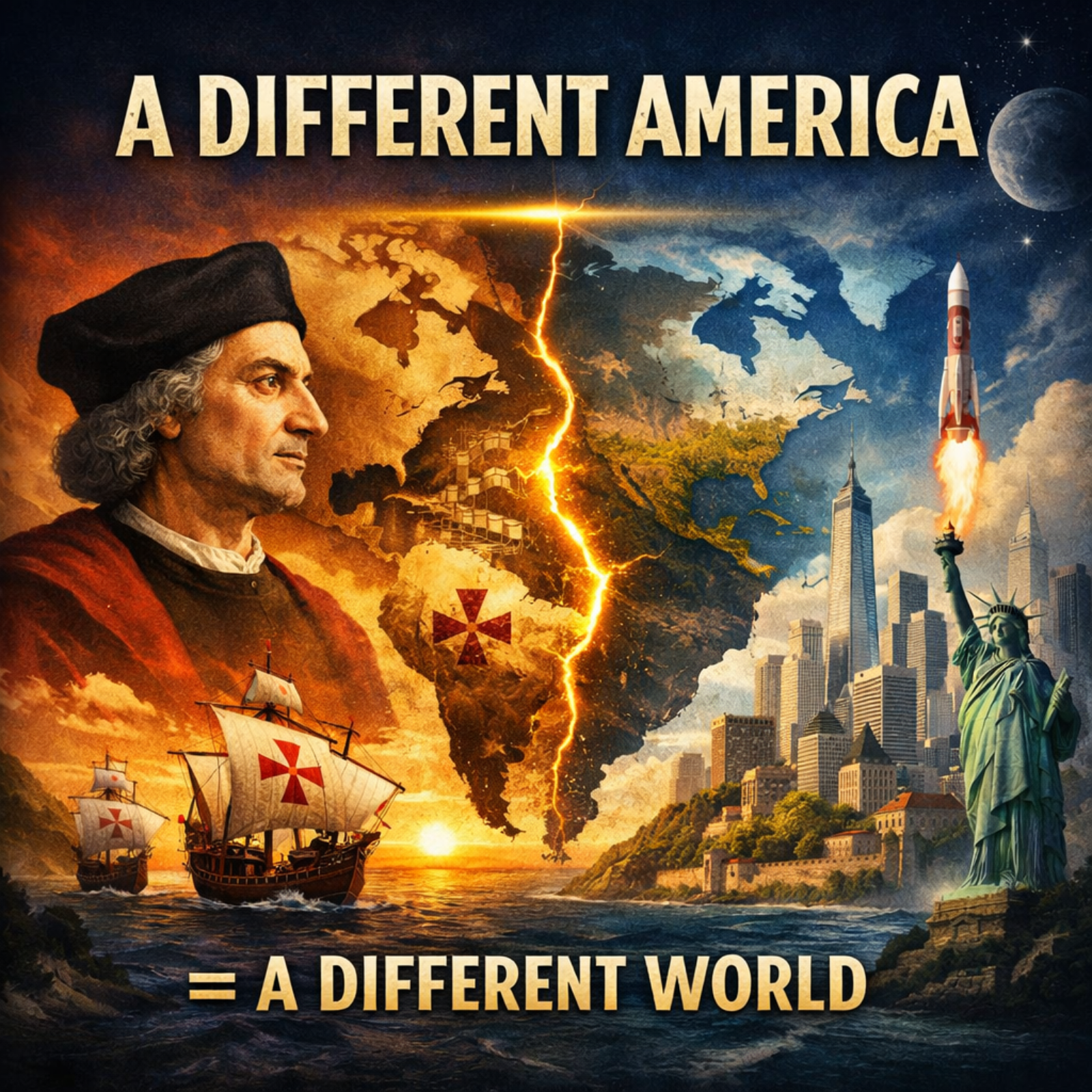
What if America had not been shaped by kings and conquistadors, but by northern merchants, city councils, ports, warehouses, and trade privileges? In this episode, we explore the development of Hanseatic America from 1500 to 1800 — a world where Columbus’s discovery becomes not the foundation of a Spanish empire, but the beginning of a vast commercial Atlantic system led by the Hanseatic League. Instead of viceroyalties and royal courts, the New World grows through trading stations, fortified ports, urban colonies, merchant councils, and commercial monopolies. The Caribbean becomes the first great hub of Hanseatic expansion, while coastal America develops as a network of cities and trade routes rather than a centralized territorial empire. But this is not a gentler history. Hanseatic America would still be marked by disease, violence, slavery, exploitation, and the destruction of indigenous worlds. The difference lies in structure: less feudal, more urban; less royal, more commercial; less an empire of crowns, more a network of ports. As the centuries pass, trading stations become cities, cities become colonial societies, and those societies begin to develop their own identity. The Reformation brings religious diversity. Rivalry with England, France, and Portugal turns the Atlantic into a battleground. By 1800, Hanseatic America is wealthy, complex, and politically explosive — no longer just an extension of northern Europe, but a new world preparing to demand its own future. This episode asks what kind of modern world might have emerged if America’s foundations had been laid not by monarchs, but by merchants.
Embed this episode
Ready to play
The Hanseatic League in America (1500–1800)
No transcript for this episode yet
Similar Episodes
No similar episodes found.
Similar Podcasts
No similar podcasts found.