
EPISODE · Jun 13, 2026 · 21 MIN
The hidden danger of always moving your stop to breakeven
from Breaking News To Trading Moves
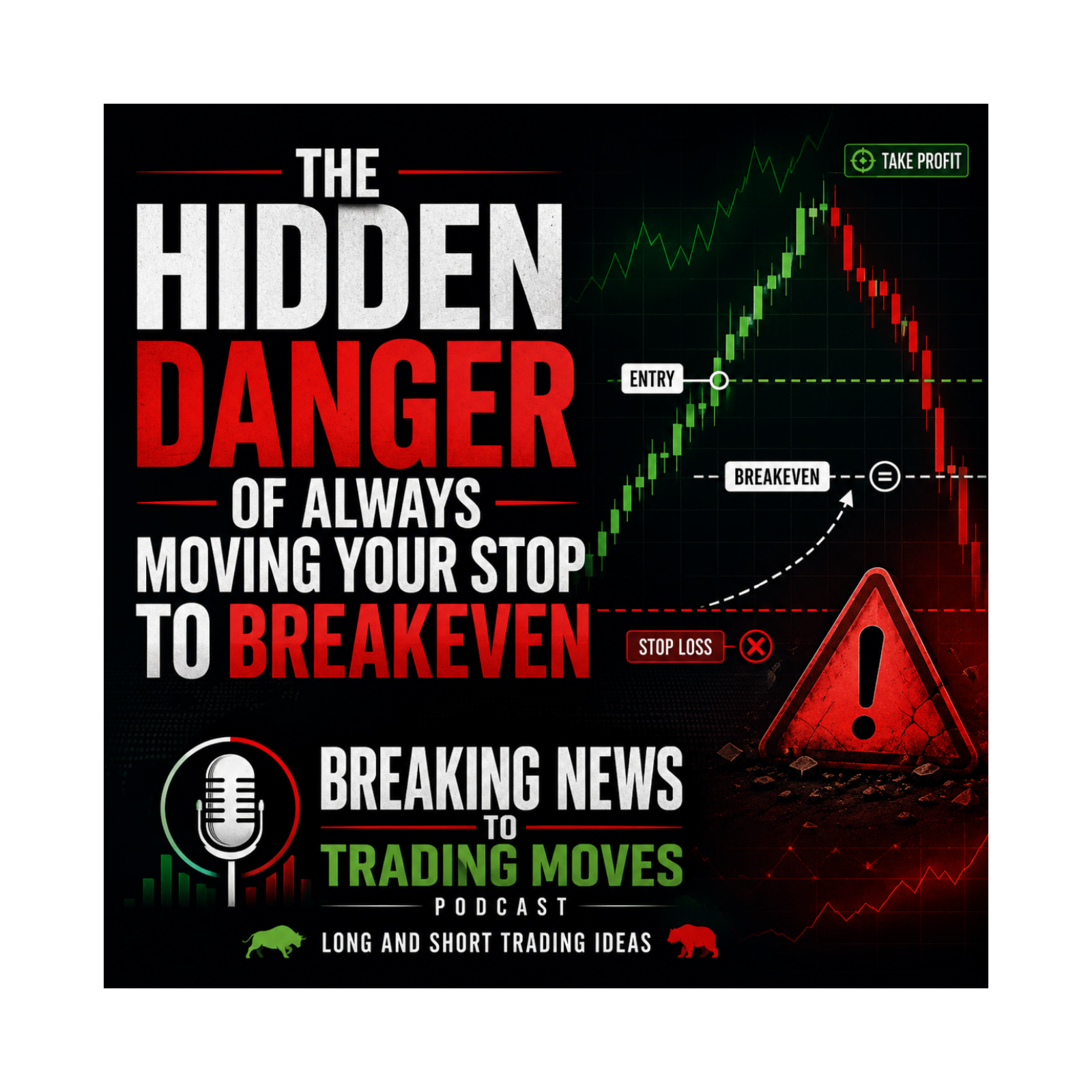
Moving a stop to breakeven feels responsible. Once a trade moves in your favour, protecting the original capital can seem like the obvious decision. You remove the risk and tell yourself the trade can no longer hurt you. But doing this automatically can quietly damage a profitable strategy.A breakeven stop is not always risk management. Sometimes it is fear disguised as discipline.Why breakeven feels so safeMost traders hate turning a winning trade into a losing one. The moment price moves into profit, the mind treats that unrealised gain as if it already belongs to the account. A normal pullback then feels like money is being taken away.Moving the stop to the entry price provides emotional relief. However, the market does not care where you entered. Your entry price matters to you, but it may have no technical importance.The hidden cost of protecting too earlyMany good trades do not move directly towards the target. They break out, pull back, retest a level or react to short-term volatility before continuing. A stop placed at breakeven can sit inside normal market noise.The pattern is familiar:• The trade moves into profit • The stop is moved to breakeven • Price pulls back and closes the position • The setup remains valid • Price then reaches the target without youRepeating this habit can reduce average profit, lower the realised win rate and weaken the reward-to-risk profile that made the strategy attractive.Breakeven is still an exitTraders often record breakeven trades as harmless because no money was lost. That ignores opportunity cost. You analysed the setup, waited for the entry and accepted initial risk, yet captured nothing from a move that later worked.Spreads, commissions and slippage can also turn a breakeven trade into a small loss. Repeated exits may encourage overtrading because the trader keeps being right about direction but fails to stay in the position.When moving the stop may make senseA breakeven adjustment may be reasonable when:• Price reaches a predefined reward-to-risk level • Major resistance or support has been cleared • New market structure protects the entry • Part of the position has been closed for profit • An event introduces fresh risk • A tested plan includes a clear breakeven ruleThe decision should be based on structure, volatility and tested rules, not discomfort caused by open profit fluctuating.Give the trade room to workA stop should sit where the trade idea is invalidated. If that level has not changed, moving it because price is slightly profitable may make little strategic sense.Alternatives include trailing behind confirmed swing points, reducing position size, taking partial profits or using volatility-based stops.Test the rule, not the feelingReview your trading journal. What happens when the original stop remains untouched? What happens when it moves to breakeven after 0.5R, 1R or a confirmed structural break? Track how often price returns to entry before reaching the target.The answer should come from data. A rule that improves one strategy may damage another. Different setups behave differently.The real lessonGood risk management is not about avoiding every loss. It is about accepting planned losses while giving profitable trades enough space to deliver their expected return.Moving every stop to breakeven can create the illusion of safety while slowly removing your edge. Sometimes discipline means protecting the position. At other times, it means allowing a normal pullback and following the original plan.#StockMarket #Trading #Investing #DayTrading #SwingTrading #RiskManagement #StopLoss #BreakevenStop #TradingPsychology #TraderMindset #PositionSizing #TradingDiscipline
Embed this episode
Ready to play
The hidden danger of always moving your stop to breakeven
No transcript for this episode yet
Similar Episodes
No similar episodes found.
Similar Podcasts
No similar podcasts found.