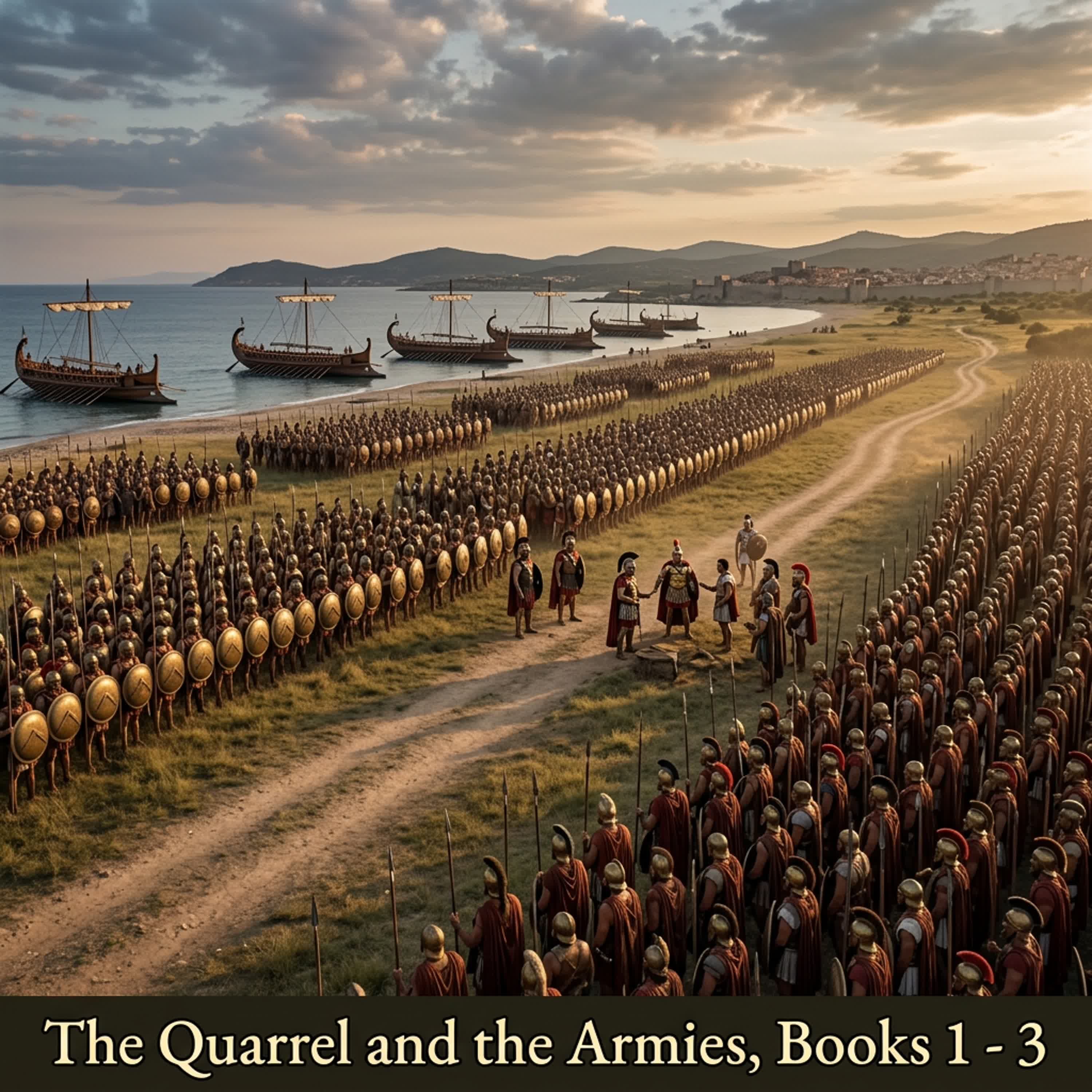
The Iliad - 1 - Chapters 1-3
from Wisdom for the Present: Western Wisdom Literature Hosted by Kanu Emeruwa
Though set on the dusty, bronze-armored plains of ancient Troy, Homer's Iliad is far from a dry history lesson; it is a timeless masterclass in human psychology and organizational crisis. Imagine a multi-billion dollar multinational venture where the CEO and the star performer are locked in a toxic, radioactive ego battle that actively lets the organization bleed money and head toward bankruptcy just to prove a point. By stripping away the epic armor, we expose the raw human psychology underneath. The most devastating wounds in these opening chapters aren't inflicted by bronze weapons, but by bruised pride, deep-seated insecurity, and a desperate, insatiable need for status validation. This ancient narrative holds up a vivid mirror to the modern ways we think, lead, make decisions, and manage conflict in our own daily lives. The tragedy begins with a classic executive failure when Agamemnon, the supreme commander of the Greek coalition, completely ignores diplomatic norms and insolently dismisses a vulnerable father begging for the return of his captive daughter. This arrogant assertion of authority triggers a devastating crisis—a literal plague in the camp—that Agamemnon refuses to address because admitting fault means relinquishing his prize. When the star producer Achilles steps up to fill the leadership vacuum, the confrontation escalates into a relationship-destroying, system-collapsing argument. To protect his public status, Agamemnon strips Achilles of his hard-earned captive, Briseis, triggering a feud grounded in a rigid honor-shame culture where physical trophies serve as a public resume and proxy for self-worth. Rather than resorting to physical violence after Minerva represses his fury, Achilles chooses a more insidious path of passive-aggressive sabotage. He retreats to his tent, withholding his talents and actively praying for his own team to fail on the battlefield just to maximize the leader’s future regret. This massive competence vacuum prompts Jupiter to set a psychological trap, sending Agamemnon a deceitful dream that acts as an ancient echo chamber—much like a modern algorithm feeding an insecure executive exactly the metrics they want to see to confirm their biases. Cloaked in overconfidence, Agamemnon miscalculates completely, attempting a bizarre reverse-psychology loyalty test that prompts an immediate, chaotic stampede of his exhausted workforce toward the exit. In the ensuing madness, Ulysses acts as a brutal crisis manager, using the golden scepter of absolute state authority to physically herd the panicked mob back into line. Yet, the fragile peace is immediately challenged by Thersites, an unpolished, abrasive commoner who voices the absolute, systemic truth about the commander's greed. Instead of addressing the valid critique, Ulysses violently beats him to restore order, revealing a deeply uncomfortable reality: we often shoot the messenger and dismiss critical, urgent feedback simply because we find their tone or low status unpalatable. This systemic blindness is further compounded by the "sunk cost fallacy" illustrated in the massive Catalog of Ships; having invested nine grueling years on the beach, the Greeks find themselves emotionally held hostage by their past sacrifices, unable to walk away from a toxic, decaying endeavor. The narrative climax brings us face-to-face with the architects of this war: the superficial, influencer-like Paris and the deeply agonizing, self-aware Helen. When forced into a high-stakes duel, Paris’s rock-star bravado vanishes, and he is only saved from certain death by the goddess Venus, who wraps him in a protective cloud of mist and retreats him to his comfortable, perfumed bedroom. This ancient "cloud of mist" is the ultimate metaphor for how we evade accountability today—whether through numbing distractions, victimizing excuses, or structural privilege. To survive the chaotic battlefields of our own lives, we must look past superficial external structures and cultivate internal integrity, choosing to face our failures in the arena rather than escaping into the mist. In This Episode * The Collateral Damage of Ego: A leader’s inability to admit a mistake or show basic human empathy invariably inflicts massive collateral damage on the vulnerable. * Passive-Aggressive Sabotage: Withdrawing our talents to let our team or project fail just to prove our indispensability is a profound moral and organizational failure. * The Echo Chamber Trap: Insecurity often breeds delusion, turning false promises into echo chambers that feed our biases and lead to disastrous, overconfident decisions. * Tone Policing vs. Systemic Truth: We often reject urgent, valid critiques simply because we find the messenger's tone, appearance, or status unpalatable. * The Sunk Cost Fallacy: Continuing a failing project or toxic relationship merely because of the years already invested is a form of psychological captivity. * Personal Branding vs. True Character: Like Paris in his panther skin, a beautiful aesthetic presentation cannot substitute for internal courage when a crisis hits. * Escaping into the Mist: We all have a "Venus" (distraction, habits, or privilege) that we deploy to escape the painful, choking consequences of our mistakes. Practical Reflection Am I letting my team or project suffer on the battlefield just to prove how incompetent the leadership is? Who is the "Thersites" in my life—the abrasive or annoying person whose uncomfortable, systemic truths I am actively ignoring? What is the "cloud of mist" (excuses, habits, or privilege) that I run to when I need to escape accountability and the discomfort of a mistake? Suggested Substack Excerpt Join us for a deep dive into the opening books of Homer's Iliad, where we strip away the bronze armor to expose a timeless blueprint of organizational dysfunction, toxic egos, and the psychological defense mechanisms we still use today. AI Disclosure This episode was created using Google NotebookLM Audio Overview, based on human-curated source material, structured guidance, and editorial review. AI is used as a tool for clarity and delivery, not as a replacement for thoughtful study or engagement with the original texts. Copyright © 2026 Wisdom for the Present / Kamashcu Production Studios. All rights reserved. This is a public episode. If you would like to discuss this with other subscribers or get access to bonus episodes, visit wisdomforthepresent.substack.com
Embed this episode
No transcript yet.