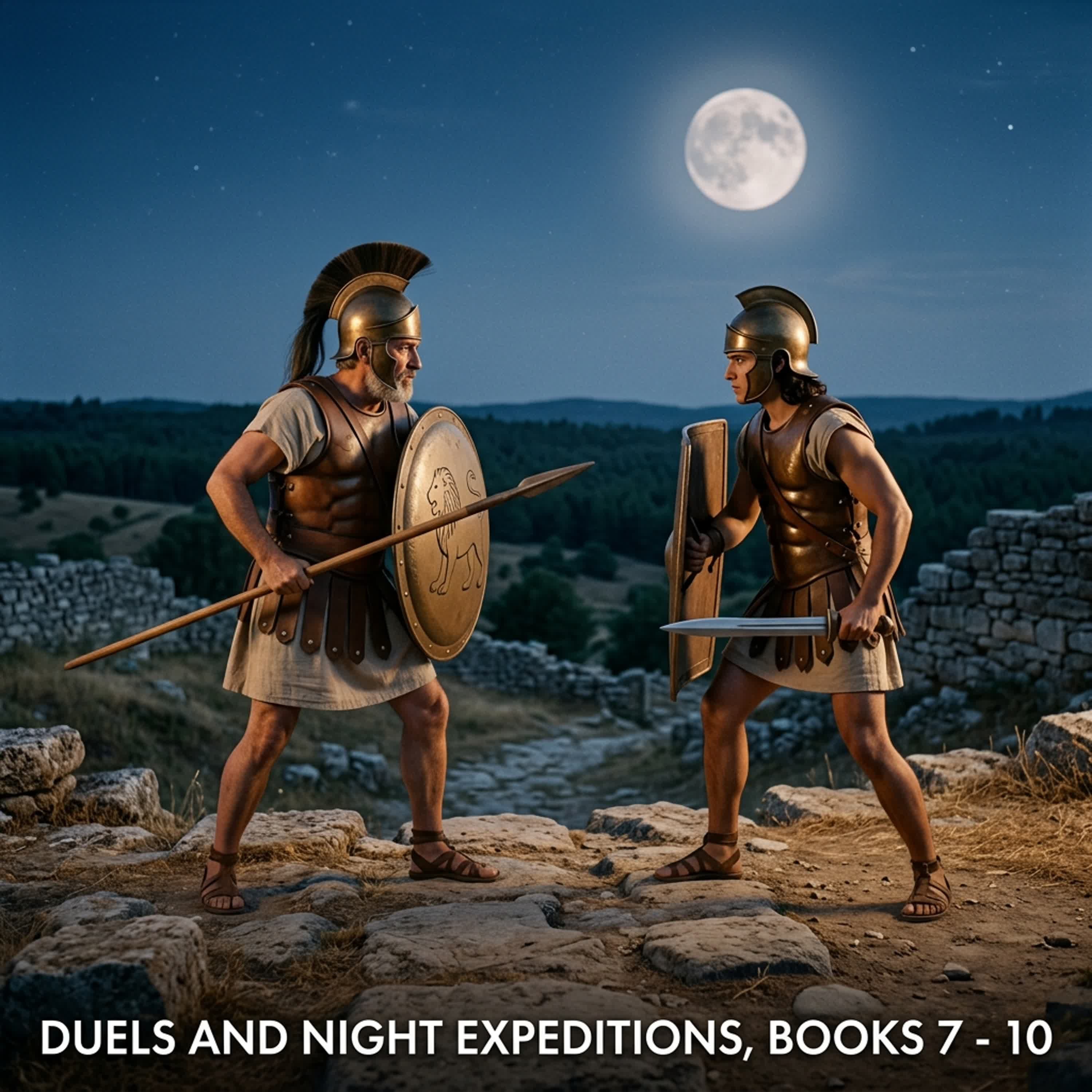
The Iliad - 3 - Chapters 7-10
from Wisdom for the Present: Western Wisdom Literature Hosted by Kanu Emeruwa
Imagine standing on a freezing, foreign beach in the dead of night, backed against a vast ocean with nowhere to run after ten relentless years of grinding conflict. Across the plain, the fires of a triumphant enemy burn in the dark like a city of flames, signaling your impending doom. While this nightmarish landscape forms the backdrop of Books 7 through 10 of Homer's The Iliad—an epic whose tragic scale and intense character dynamics rival any classic Shakespearean drama—its true battleground is deeply psychological. Underneath the clashing spears and bronze armor lies a sophisticated, timeless analysis of human leadership in crisis, the fragile mechanics of reputation, and the devastating cost of unchecked ego in high-stakes environments. This critical stretch of the epic begins as the tide of war officially turns against the Greeks. In a powerful visual of divine determinism, Zeus weighs their fates in his golden scales, and the Greek side sinks heavily toward the earth. Hector seizes this momentum, trapping the Greeks against their ships and lighting a thousand fires to wage psychological warfare. The response from the Greek supreme commander, Agamemnon, is not a rallying battle cry but a complete emotional collapse; he weeps "briny torrents" and pleads with his warlords to tuck tail and flee. It is a stark depiction of how structural authority, completely stripped of moral capital, instantly evaporates when the pressure cooker reaches its maximum heat. The rot in the hierarchy deepens as Agamemnon attempts to buy back the loyalty of his most vital asset, Achilles, whom he had previously humiliated and stripped of his prized possession. Implementing an ancient version of a hostile corporate buyout, Agamemnon sends an embassy offering a staggering catalog of gold, horses, and cities. But Achilles flatly and aggressively rejects this transactional manipulation, recognizing that a "spiritual murder" cannot be patched over with a mountain of treasure. By declaring that even wealth equal to the dust cannot buy his submission, Achilles exposes a fundamentally broken social contract where leaders rule like greedy pirates while demanding the absolute sacrifice of their people. To survive this brewing storm of cortisol and sleep deprivation, the elder statesman Nestor intervenes with a master stroke of nervous-system regulation: he shifts the physical environment by forcing the panicked commanders to sit down for a slow, ritualized feast. Once stabilized, the contrast in strategic execution becomes clear during the midnight scouting missions. Diomedes and Odysseus form a highly effective partnership, drafting for one another's blind spots and aligning under a shared, intrinsic goal of collective survival. Conversely, the Trojan spy Dolon is fueled purely by individual vanity and greed, demanding Achilles's horses as an extrinsic bribe. When intercepted in the dark, Dolon's fragile motivation immediately shatters, leading him to sell out his allies to save his own skin. At its core, this epic section forces us to confront the ultimate existential crossroad through Achilles's famous prophecy of the two fates. He must choose between a short, burning life of immortal glory and legacy, or a long, quiet, and completely forgotten existence of present-moment peace. In his paralyzing realization that life cannot be bought back once the vital spirit flees, Achilles echoes the modern executive or founder who sacrifices authentic human connection for a corner office, only to realize the titles are absolute dust. Finally, as the Greeks sweat and bleed to erect a massive defensive wall, we are left with the chilling reminder of its post-war erasure by Poseidon—a powerful metaphor urging us to examine the permanence of the temporary walls and legacies we frantically build out of fear. In This Episode * Title vs. Trust: True leadership cannot rely solely on structural authority; when crisis strikes, people do not bleed for a mere title. * Nervous System Regulation: In high-stakes panics, changing the physical environment and engaging in structured rituals can regulate cortisol and restore logical thinking. * Transactional Apologies Fail: Sacrificial restitution is crucial, but throwing compensation at a broken relationship without addressing the core violation of trust is manipulative and bound to fail. * Draft for Blind Spots: High-performing teams thrive when members deliberately partner with those of complementary temperaments and skills rather than identical ones. * Intrinsic vs. Extrinsic Motivation: Extrinsic rewards like wealth and status fail under existential pressure, while intrinsic commitment to a shared purpose sustains courage. * The Existential Crossroad: We must constantly evaluate what we are sacrificing our limited life force for—undying legacy (burnout) or quiet, present existence. * The Impermanence of Security: The protective walls we frantically construct out of fear will eventually be swept away by the tides of time. Practical Reflection When facing a high-stakes crisis in your professional or personal life, how do you actively regulate your environment to ensure decisions are made from composure rather than panic? Are you currently attempting to repair a fractured relationship or team dynamic through transactional "bribes" rather than doing the deep, uncomfortable work of restoring trust and mutual respect? Look at the modern "walls" you are building—reputations, achievements, or bank accounts. Are they constructed out of fear, and how permanent will they truly be against the passage of time? Suggested Substack Excerpt Explore the profound psychological depths of Homer's The Iliad Books 7-10, where ancient battles on a cold beach reveal timeless truths about toxic leadership, team building under fire, and the ultimate choice between frantic ambition and peaceful presence. AI Disclosure This episode was created using Google NotebookLM Audio Overview, based on human-curated source material, structured guidance, and editorial review. AI is used as a tool for clarity and delivery, not as a replacement for thoughtful study or engagement with the original texts. Copyright © 2026 Wisdom for the Present / Kamashcu Production Studios. All rights reserved. This is a public episode. If you would like to discuss this with other subscribers or get access to bonus episodes, visit wisdomforthepresent.substack.com
Embed this episode
No transcript yet.