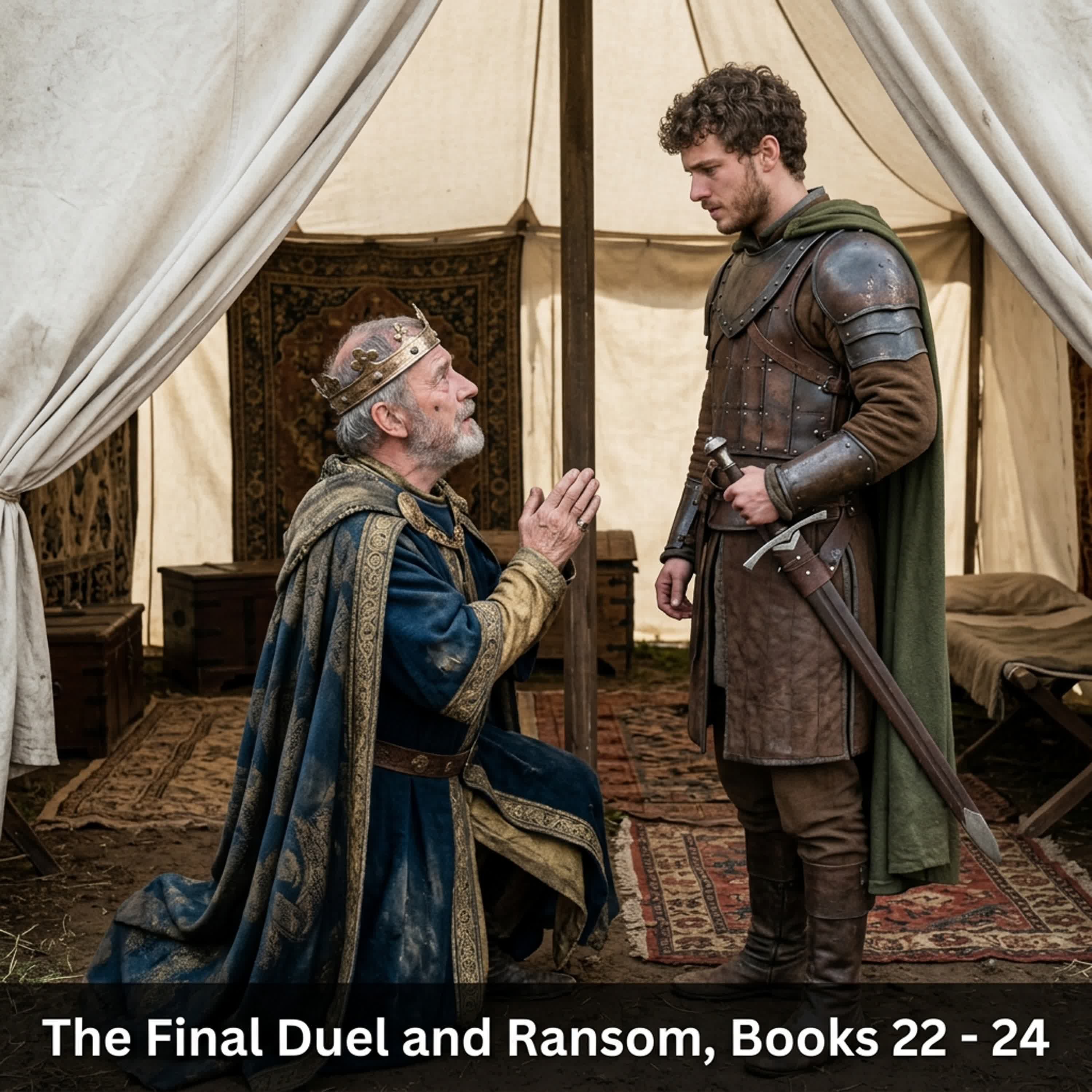
The Iliad - 7 - Chapters 22-24
from Wisdom for the Present: Western Wisdom Literature Hosted by Kanu Emeruwa
How do we navigate the absolute limits of our own brutality and the devastating traps of the human ego? Homer’s epic masterclass, The Iliad, serves as an incredibly sharp mirror for our 21st-century minds, revealing that our modern conflicts—from corporate power struggles to public cancel culture—are deeply rooted in ancient human psychology. When we face crises of status and survival, our civilized structures are often stripped away, leaving us to grapple with raw biology and the fragile narratives we construct to protect our pride. The tension peaks outside the Scaean gates as the Trojan defender, Hector, stands completely alone in front of a terrifying, relentless threat. Haunted by his previous decision to ignore wise counsel, Hector’s mind collapses under the weight of his own arrogant errors. He desperately contemplates unarmed negotiation, only to realize that his rival's rage makes diplomacy impossible—creating a high-stakes portrait of the modern "sunk cost fallacy," where the psychological cost of admitting a mistake feels more terrifying than facing physical destruction. As the threat closes in, we witness a stark amygdala hijack as raw biology overrides years of warrior discipline, causing the great hero to flee in pure, unadulterated fear. This desperate chase past the domestic washing cisterns of peace highlights the tragic collateral damage of conflict. Today, we replicate this destructive "dragging of bodies" through bitter divorces, corporate sabotage, and the toxic algorithms of social media cancellation, falsely believing that publicly humiliating others will bring us closure or heal our own hollow pain. When grief and fury remain unprocessed, they trigger an escalating breakdown of logic, as seen in Achilles' frantic, horrific sacrifices of prized animals and twelve human captives on the funeral pyre. Driven by a tragic, false mathematics, we often try to control our helpless environments by throwing endless resources or destructive acts at our pain. This confirmation bias—clinging to self-righteous anger as a false tribute to our wounds—only leaves us fundamentally broken, trapped in an endless loop of suffering. Yet, the path to reclaiming our agency and restoring community lies in structured boundaries and radical empathy. Through the organized play of the funeral games, we see that strategy, restraint, and the "art of leadership" consistently outperform brute force. The ultimate climax is reached not on the battlefield, but in a quiet tent where an old king and a grieving warrior drop their defenses, weep together over the mixed urns of human fate, and realize that gentle kindness is the only legacy that truly survives. In This Episode * The Sunk Cost Fallacy of Pride: How Hector's refusal to retreat behind the safety of the walls mirrors our modern struggle to reverse course on failing, high-stakes decisions. * The Amygdala Hijack: Understanding Hector's sudden flight as a biological survival response that completely bypasses social codes and logical planning. * Modern "Body Dragging": A deep look into how divorces, corporate sabotage, and social media cancellation mimic Achilles' public desecration of his fallen rival. * The False Mathematics of Sorrow: Analyzing Achilles' extreme pyre sacrifices as a desperate, irrational attempt to balance the ledger of internal pain with external excess. * "Art Over Force" in Strategy: Exploring Nestor’s timeless advice to his son that strategic execution and emotional regulation always beat raw horsepower. * The Antilochus Pivot: How de-escalating a high-stakes conflict by dropping our egos and yielding minor points can preserve vital community relationships. * Radical Empathy & The Two Urns: The breathtaking climax where bitter enemies weep together, recognizing that suffering is the universal equalizer that levels all human hierarchies. Practical Reflection Where in your life are you currently "dragging a body"—holding onto a grudge, resentment, or bitter conflict under the false, toxic belief that ruining someone else's happiness will heal your own pain? How can you apply the "Antilochus Pivot" to a current tension this week, actively yielding a minor point or giving a little ground to preserve a relationship and disarm defenses? When the battles of your life are over, what will be the collateral damage of your victories? Will you be remembered for your brute strength and flawless arguments, or for the gentleness and kindness you showed to the vulnerable? Suggested Substack Excerpt What if our greatest moments of strength aren't found in conquering our enemies, but in conquering our own hardened hearts? Discover how the psychological depths of Homer's Iliad translate to our 21st-century struggles with ego, grief, and conflict resolution. AI Disclosure This episode was created using Google NotebookLM Audio Overview, based on human-curated source material, structured guidance, and editorial review. AI is used as a tool for clarity and delivery, not as a replacement for thoughtful study or engagement with the original texts. Copyright © 2026 Wisdom for the Present / Kamashcu Production Studios. All rights reserved. This is a public episode. If you would like to discuss this with other subscribers or get access to bonus episodes, visit wisdomforthepresent.substack.com
Embed this episode
No transcript yet.