
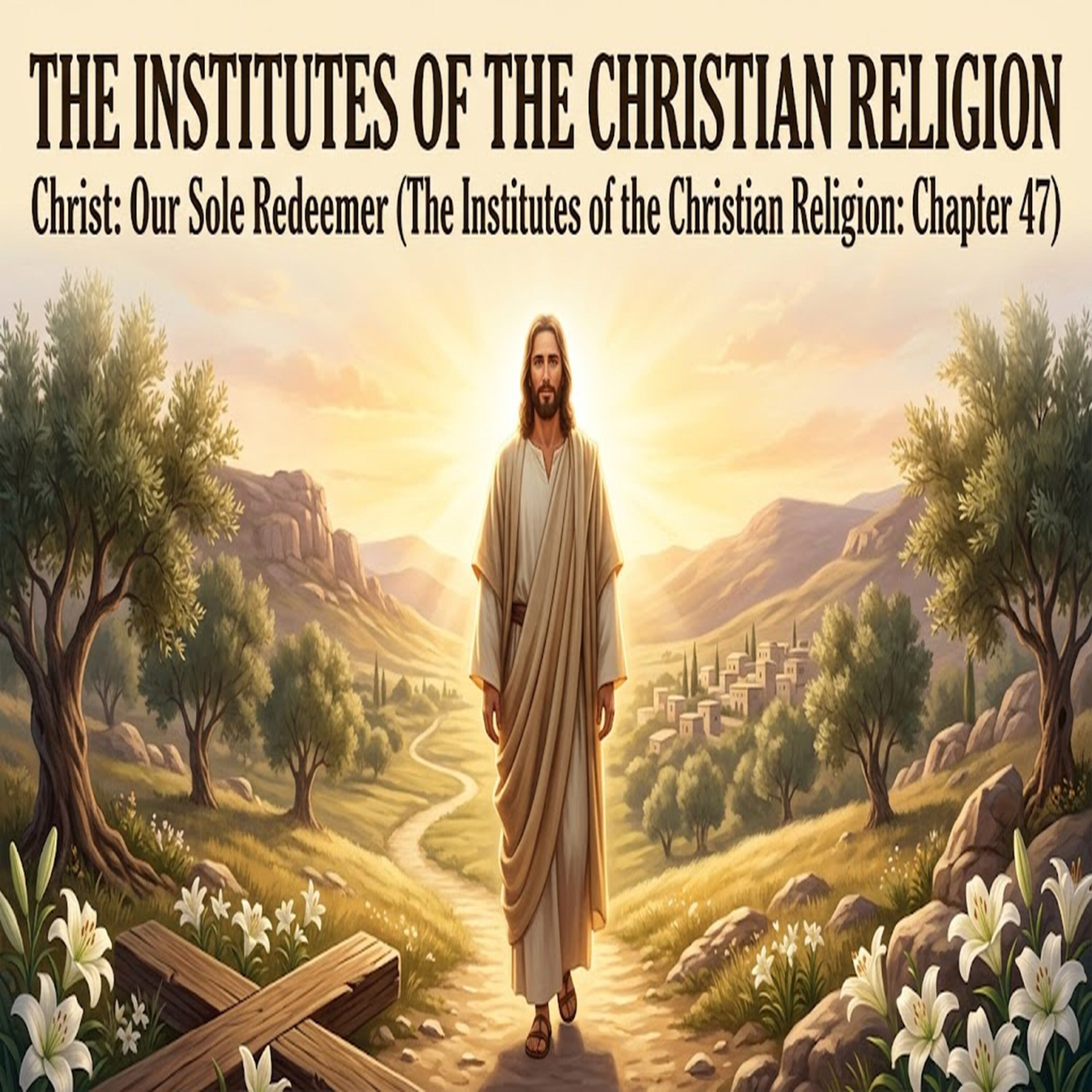
EPISODE · Jun 23, 2026 · 36 MIN
The Institutes of the Christian Religion - 03 - Sections 34-47
from Discipleship for the Present Podcast · host Kanu Emeruwa
Most of us view Christian theology as a dusty, abstract exercise in rule-following—a collection of ancient dogmas detached from the pressures of modern life. But when we open John Calvin’s Institutes of the Christian Religion, specifically Book 3, we aren't greeted by cold academic theory. We are confronted by a man who is violently kicking open the front door of a spiritual prison and tossing the “religious clutter” out onto the lawn.The episode opens by looking at the 16th-century spiritual economy. It was a system of forensic accounting, where confession was a terrifying audit and penance was the interest paid on a debt that could never be satisfied. Calvin looked at this suffocating machinery and realized it had buried the gospel. He argues that our spiritual state is not a ledger to be balanced, but a condition of total destitution that can only be resolved through a secret, supernatural union with Christ.At the center of this conversation is one of the episode’s key images: the refractory horse. Calvin uses this to describe the human tendency to kick against boundaries when life becomes too comfortable. Without the "cross"—the setbacks, trials, and frictions of daily life—we suffer from a delusion of self-sufficiency. We begin to think we are the masters of our own destiny, the kings of our own little kingdoms.The episode draws this into our modern, hustle-obsessed culture. We are told relentlessly to be our own boss, define our own truth, and maximize our own potential. Calvin offers a jarring, counter-cultural corrective: “We are not our own.” This is not a call to self-hatred, but to the freedom of yielding the throne of your life to the Creator. It is an invitation to stop the exhausting labor of manufacturing your own meaning and identity.From there, the discussion shifts to the "image of God as a shield." How do you love someone who is actively sabotaging you? Calvin argues that you bypass the instinct for retaliation by training your eyes to see the indelible stamp of the Creator on them. You love them not because they are lovely, but because you honor the Artist by respecting the image. Yet, we do not bypass the contradictions in the text. We analyze how Calvin, while preaching humility and love for enemies, failed to extend that same grace to his theological opponents—a warning to us to extract the truth without ingesting the toxicity of polemical harshness.Finally, we address the danger of the "spiritual escape hatch." Calvin’s intense focus on despising the present life risks turning the world into a "miserable, infected waiting room." We push back against this, arguing that God did not create the world as a place to be merely endured, but as a theater of divine mercy to be enjoyed with gratitude. Using the world without abusing it—that is the balance between reckless consumerism and joyless asceticism.In This EpisodeWhy Calvin’s theology is a radical dismantling of “transactional religion”The psychological burden of 16th-century auricular confession and the "forensic" soulFaith as a “secret operation of the Holy Spirit,” not just mental agreementThe necessity of mortification and vivification: the "internal violence" of dying to selfThe "refractory horse" analogy: why trials are the mechanism to break our self-sufficiencyThe radical command: “We are not our own” as an antidote to modern autonomyLoving the enemy: training the eyes to see the image of God as a shieldA critique of Calvin’s own polemical failures—how to filter truth from toxicityRejecting the "spiritual escape hatch" and reclaiming delight in divine provisionThe concept of a "calling" as a cure for career anxiety and the "little kingdom" in our breastsPractical ReflectionWhere are you currently building a "little kingdom" in your own breast, demanding that your reason, your will, and your comfort reign supreme over your day?When you encounter someone toxic, are you reacting to their mud, or are you actively training your eyes to see the image of God they bear, regardless of their behavior?In your daily work, are you striving from a place of restless status-seeking, or can you find peace in the reality that your current station is a divine assignment?Suggested Substack ExcerptBefore the "spiritual accounting" of his day, John Calvin sought the bedrock of gratuitous grace. In this episode, we unpack Book 3 of the Institutes, exploring why the Christian life is not about balancing a ledger, but about a fundamental, heart-level union with God that replaces self-rule with surrender. We look at the tensions, the breakthroughs, and the practical wisdom of dying to self in a culture that worships autonomy.AI DisclosureThis episode was created using Google NotebookLM Audio Overview, based on human-curated source material, structured guidance, and editorial review. AI is used as a tool for clarity and delivery, not as a replacement for thoughtful study or engagement with the original texts.Copyright© 2026 Discipleship for the Present / Kamashcu Production Studios. All rights reserved. This is a public episode. If you would like to discuss this with other subscribers or get access to bonus episodes, visit discipleshipforthepresent.substack.com
Embed this episode
Ready to play
The Institutes of the Christian Religion - 03 - Sections 34-47
No transcript for this episode yet
Similar Episodes
No similar episodes found.
Similar Podcasts
No similar podcasts found.