
EPISODE · Jun 23, 2026 · 38 MIN
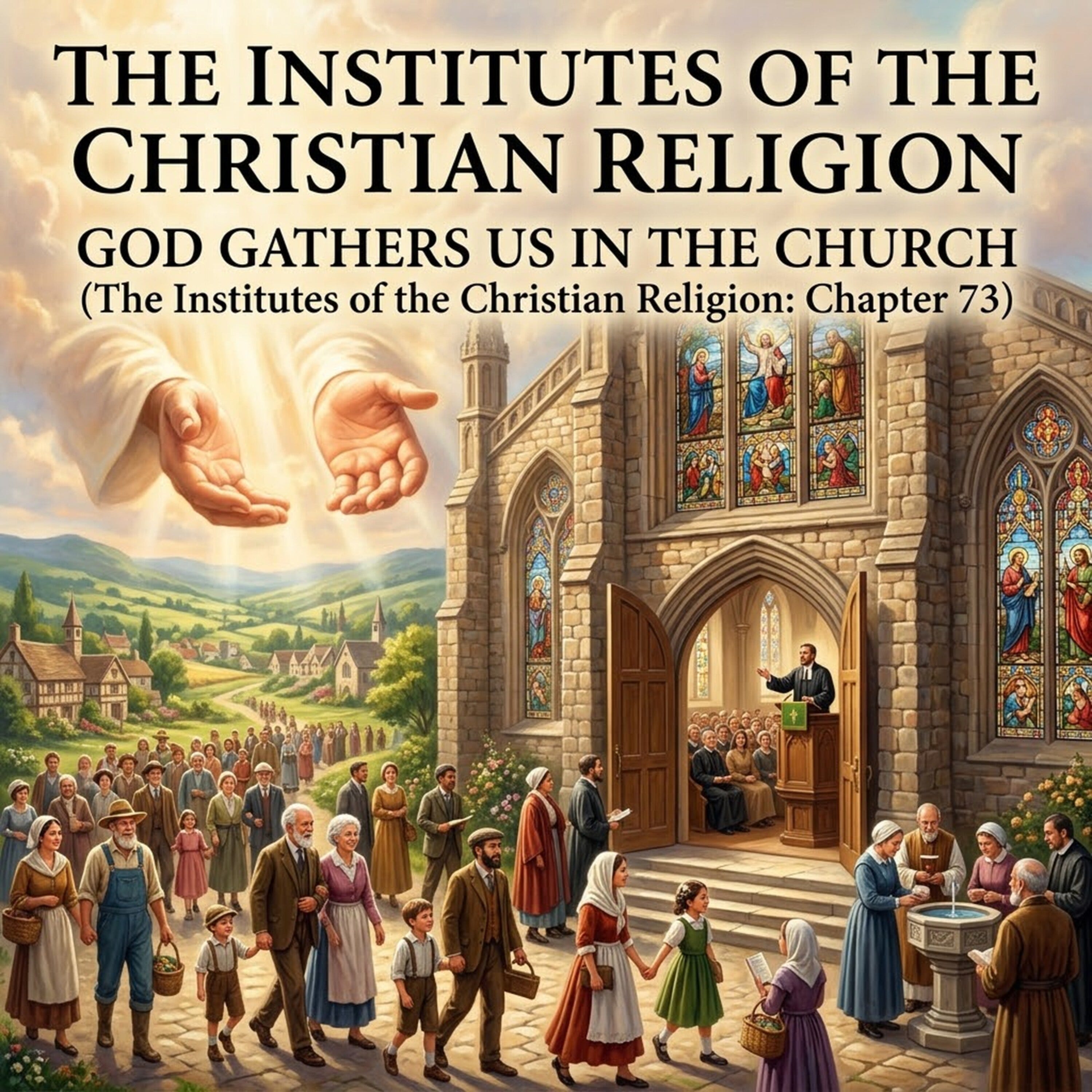
The Institutes of the Christian Religion - 05 - Sections 61-73
from Discipleship for the Present Podcast · host Kanu Emeruwa
Most of us view the institution of the Church through the lens of our own experience. When we look at a community and see hypocrisy, administrative decay, or political maneuvering, the impulse to "burn the whole thing to the ground"—to walk away and build something perfectly pure—is deeply, painfully relatable. In an era of curated, individualized faith, the idea of staying in a messy, human-run institution feels like a compromise.But in this deep dive into Book 4 of John Calvin’s Institutes of the Christian Religion, we explore a counter-intuitive truth: that the institution, for all its frailty, serves a vital psychological and spiritual function. Calvin, writing in the chaos of the 16th century, was fighting a two-front war. He was battling the entrenched corruption of the established Church, while simultaneously pushing back against radical purists who believed true faith required total isolation from flawed humanity.At the heart of his argument is a visceral, organic metaphor: to those to whom God is a Father, the Church must be a Mother. Calvin insists that God does not zap us with divine knowledge from the clouds; He intentionally hides the infinite treasure of the Gospel in "earthen vessels." He forces us to learn from flawed human teachers, frustrating committee members, and stuttering pastors. Why? Because the friction of dealing with other people—people we might deem less intelligent or holy than ourselves—is the precise mechanism that breaks our pride. We cannot learn true humility in isolation.The episode moves from the psychology of the community to the practical marks of its validity. How do we distinguish between a sick hospital and a dead one? Calvin argues for a stripped-down, objective standard: the Word sincerely preached and the sacraments duly administered. By anchoring validity to these external markers rather than the moral perfection of the members, Calvin offers a sobering, uncomfortable command: the discipline of endurance. He uses the parables of the wheat and the tares to remind us that the Church will be a mixed bag until the end of time. To demand a pure field today is to misunderstand the Master’s orders.We also examine the blistering critique Calvin levels against "lazy bellies"—leaders who consume the Church’s resources as if they were personal fiefdoms, ignoring the call to care for the poor. The episode contrasts the ostentatious, corporate-like structures of modern institutional faith with the quiet, gritty service of the early Church’s deacons. Finally, we tackle the tyranny of spiritual rules—where human leaders attempt to bind the conscience with extra-biblical traditions, creating a two-tiered system of spiritual perfection that Christ never authorized.The ultimate challenge posed by this study is not how to find the perfect Church, but how to love the imperfect one. It is a paradox of submission: how do we hold to the pure Word of God while remaining faithfully committed to a family that constantly executes that Word with failure and mud?In This EpisodeWhy the impulse to tear down religious institutions is historically and psychologically universalThe "Two-Front War": Battling institutional corruption while resisting the pride of radical separationWhy God chooses to work through "earthen vessels" rather than direct divine revelationThe "Church as Mother" metaphor and why we cannot have God as Father while despising His communityUsing the friction of flawed relationships as the primary training ground for humilityCalvin’s objective marks of a true Church: Word and Sacrament vs. the false idol of moral perfectionWhy the parable of the wheat and the tares demands that we endure the "bad fish" in our pews"Lazy Bellies": The devastating critique of leaders who consume resources without feeding the flockDistinguishing between necessary rules of order and the spiritual tyranny of binding the conscienceThe "Monastic Illusion" and why ordinary life and vocation are inherently holy spacesPractical ReflectionWhere in your spiritual life are you resisting the teaching or leadership of others out of pride, preferring the "echo chamber of one" to the friction of community?Are you judging your local church’s validity by the moral "fruit" of its members (a standard that often leads to division) or by the faithful administration of the Word and Sacraments?What extra rules, traditions, or cultural expectations have you added to your faith that Jesus never commanded, and are you using those rules to judge or distance yourself from others?Suggested Substack ExcerptIn an age of spiritual independence and curated digital faith, why does the ancient Church demand our presence in the messy, human-run hospital of the local community? In this episode, we dive into John Calvin’s Institutes to explore why "earthen vessels" are God’s chosen tools for discipleship, how the friction of flawed relationships is a gift to our pride, and how to discern the difference between a sick institution that needs our endurance and a dead one that requires us to flee.AI DisclosureThis episode was created using Google NotebookLM Audio Overview, based on human-curated source material, structured guidance, and editorial review. AI is used as a tool for clarity and delivery, not as a replacement for thoughtful study or engagement with the original texts.Copyright© 2026 Discipleship for the Present / Kamashcu Production Studios. All rights reserved. This is a public episode. If you would like to discuss this with other subscribers or get access to bonus episodes, visit discipleshipforthepresent.substack.com
Embed this episode
Ready to play
The Institutes of the Christian Religion - 05 - Sections 61-73
No transcript for this episode yet
Similar Episodes
No similar episodes found.
Similar Podcasts
No similar podcasts found.