
EPISODE · Jun 23, 2026 · 40 MIN
The Institutes of the Christian Religion - 06 - Section 74 to Book 4
from Discipleship for the Present Podcast · host Kanu Emeruwa
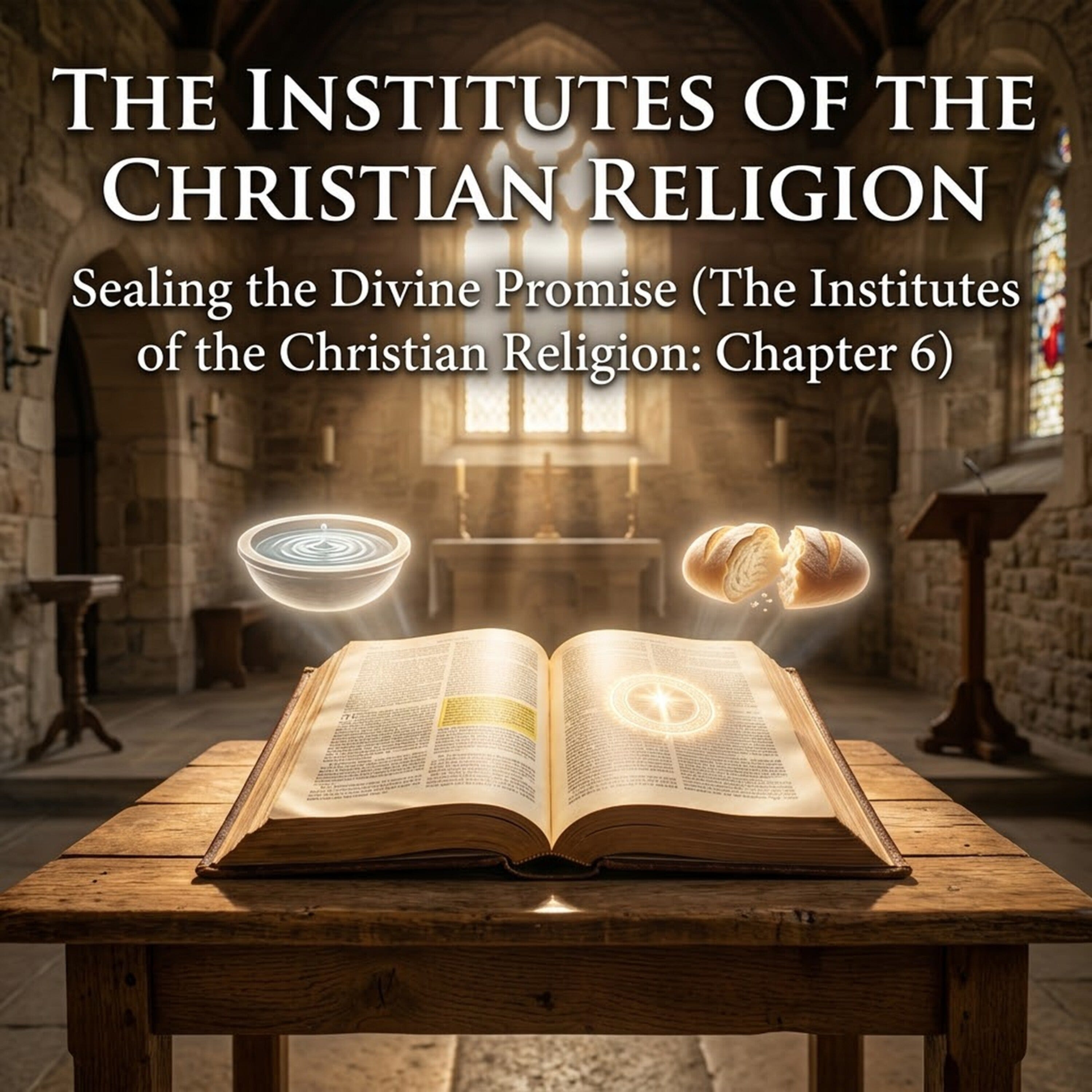
Most of us remember the history of the Reformation as a series of abstract theological debates. But Calvin’s critique of the sacraments in the Institutes of the Christian Religion was not merely a scholarly exercise—it was an act of pastoral rescue. He was looking at a world held captive by fear, where salvation felt less like a relationship with a living God and more like a high-stakes, magical transaction.The episode opens by identifying the "fatal vortex" Calvin describes: a system where the physical elements of the sacraments—the water, the bread, and the wine—were transformed into a spiritual vending machine. In the medieval system, grace was thought to be conferred ex opere operato—simply by the performance of the ritual. The state of the human heart was secondary. If the priest performed the action correctly, the "grace" was delivered. Calvin saw this as a catastrophe for discipleship because it completely bypassed the necessity of personal faith and repentance.To address this, Calvin positions himself between two dangerous extremes: the established Roman Catholic view that elevated rituals to magic, and the radical Anabaptist view that dismissed physical signs as empty symbols. Calvin argues that both sides miss the core purpose of the sacraments: they are divinely ordained "seals" meant to sustain the weakness of our faith. He uses the analogy of a royal wax seal; the seal alone has no power, but when attached to a sovereign decree, it authenticates the promise. For the believer, the Word of God is the decree, and the sacraments are the seals that guarantee the promise.Central to this is the role of the Holy Spirit. Calvin warns that administering the sacraments without the Spirit’s internal work is like the sun shining on the eyes of the blind. The grace is objectively present, but without the Spirit awakening our spiritual senses, we perceive nothing. This leads to a beautiful, and often overlooked, side of Calvin’s theology: his view of God as a "gentle nurse" who accommodates our "sluggish capacity" and "animal nature that creeps on the ground." God uses physical, tangible things because He knows we are fragile, sensory creatures who need visible anchors for our souls.The episode further explores the "Red Sea" analogy of baptism, where our old self is drowned, yet the wreckage of our past sins still washes up on the shore of our daily lives. We are free, but we are often forced to look at the corpses of our old habits. Calvin offers a posture of defiance against this: our struggle with ongoing sin is not a sign of our continued slavery to Pharaoh, but a skirmish against a defeated enemy.Finally, we turn to the "housecleaning" Calvin performs on the five extra sacraments added by tradition. By stripping away rituals like confirmation, penance, and extreme unction, Calvin is not attacking tradition itself, but the "spiritual tyranny" of binding the human conscience to human inventions. He invites us to reclaim the physical world as a space where God speaks, while fiercely guarding the boundary that only Christ is our Savior.In This EpisodeWhy the medieval doctrine of ex opere operato functioned like a spiritual vending machineCalvin’s "two-front war" against both mechanical magic and empty symbolismThe definition of a sacrament as an external sign sealing a divine promiseThe "gentle nurse": Why God uses physical elements to accommodate our sensory limitationsThe necessity of the Holy Spirit in awakening our blind spiritual sensesBaptism as the "Red Sea" moment: Defeating the master of sin while dealing with its wreckageThe covenantal argument for infant baptism as the New Testament replacement for circumcisionWhy Calvin rejects penance and extreme unction as man-made "greasy" ritualsThe danger of turning church traditions into wall-like barriers instead of windows to ChristHow to recover a theology where the physical world reflects divine gracePractical ReflectionWhere are you currently treating a ritual or a human expectation in your faith as a "vending machine" for God's favor, rather than a means of encountering His presence?When you encounter the "wreckage" of your old habits or past failures today, do you view them as evidence that you are still a slave to your old self, or as the remains of a defeated enemy?In what ways is God trying to communicate His grace to you through the "ordinary" physical realities of your day—the people you encounter, the food you eat, or the physical comforts you enjoy?Suggested Substack ExcerptIn this episode, we unpack John Calvin’s monumental defense of the sacraments, exploring how he sought to dismantle a system of fear and replace it with a life of grace. We look at why God uses physical signs to meet our human weakness, how the Holy Spirit illuminates our blind spots, and how we can distinguish between divinely ordained promises and human inventions in our modern church life.AI DisclosureThis episode was created using Google NotebookLM Audio Overview, based on human-curated source material, structured guidance, and editorial review. AI is used as a tool for clarity and delivery, not as a replacement for thoughtful study or engagement with the original texts.Copyright© 2026 Discipleship for the Present / Kamashcu Production Studios. All rights reserved. This is a public episode. If you would like to discuss this with other subscribers or get access to bonus episodes, visit discipleshipforthepresent.substack.com
Embed this episode
Ready to play
The Institutes of the Christian Religion - 06 - Section 74 to Book 4
No transcript for this episode yet
Similar Episodes
No similar episodes found.
Similar Podcasts
No similar podcasts found.