PodParley PodParley

The Invisible Woman

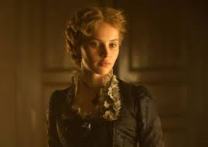
That the great English author Charles Dickens had a mistress during the last dozen years of his life was a well-kept secret only revealed some seventy years after his death. The name of the mistress was Ellen Ternan, and a 1990 biography by Claire Tomalin called “The Invisible Woman” examined her story in more detail than had ever been done before. This book has now been adapted in fictional form, under the same title, by the versatile screenwriter Abi Morgan. We’ve become accustomed to viewing films that take place in England’s Victorian era, or earlier, as “costume dramas,” a dismissive phrase implying that the subject has little relevance to our present day. Now, the film does have near perfect period detail, including costumes, but The Invisible Woman proves its relevance by showing how the constraints on women in Victorian times, not just sexual but social in the widest sense, have left their mark on us, while allowing us to see from what exactly we still need to break free. As the film opens, Ellen Ternan, nicknamed Nelly, and played by Felicity Jones, is married and in her 30s, and running a boys’ school with her husband George in Margate, near the seashore in southeast England. A rehearsal in a children’s production of a play that was co-authored by Dickens leads to conversations about the great man, whom Ellen knew when she was much younger. Later we can sense the stir of awakened feelings and memories as she later walks quickly across the windswept beach, and here the flashbacks begin that tell the substance of her story. The youngest of three sisters in a family of actresses, Nelly meets Dickens when she fills in for an older sister at a play which he is directing. He is 45; she is barely 18. Charles Dickens is played by Ralph Fiennes, who also directed the film. I count both among the peaks of his career. His performance as Dickens, brings the man’s seemingly endless energy, enthusiasm, humor, and social activity, coupled with a concealed melancholy and loneliness, to brilliant life. The famous author is captivated by Nelly, and he’s grown tired of his wife Catherine, with whom he has had ten children but who is beneath him in intellect. Nelly is fascinated, but for good reason also alarmed. Dickens can never get divorced and marry her—the force of public scandal would be too damaging to him, and her talent is not big enough to sustain a stage career for herself. In a society offering little respect to women outside of the role of wife, her affair with Dickens will isolate her from the world. She must remain hidden—“invisible” as the title says, and the tension between her genuine love for Dickens and her own frustrated ideals is a source of much grief. Fiennes keeps the focus squarely on Nelly, and Felicity Jones’s performance is subtle and many-faceted. Kristin Scott-Thomas, Fiennes’s former English Patient co-star, is fine as ever in the role of Nelly’s protective mother Frances. There are no heroes are villains in the film—the great Dickens, along with his many virtues has great flaws, including a degree of cruelty towards his long-suffering wife, played with admirable restraint by Joanna Scanlan. The director proves himself a master of finding the right rhythm in a scene, highlighting the telling detail, and trusting the audience to read between the lines. The Invisible Woman uses this true story to illuminate the dilemmas of women living in a man’s world that demands they hide and be silent. It is a film of great beauty and feeling.

An episode of the Flicks with The Film Snob podcast, hosted by Chris Dashiell, titled "The Invisible Woman" was published on March 26, 2014.

March 26, 2014 · Flicks with The Film Snob

0:00 / 0:00

That the great English author Charles Dickens had a mistress during the last dozen years of his life was a well-kept secret only revealed some seventy years after his death. The name of the mistress was Ellen Ternan, and a 1990 biography by Claire Tomalin called “The Invisible Woman” examined her story in more detail than had ever been done before. This book has now been adapted in fictional form, under the same title, by the versatile screenwriter Abi Morgan. We’ve become accustomed to viewing films that take place in England’s Victorian era, or earlier, as “costume dramas,” a dismissive phrase implying that the subject has little relevance to our present day. Now, the film does have near perfect period detail, including costumes, but The Invisible Woman proves its relevance by showing how the constraints on women in Victorian times, not just sexual but social in the widest sense, have left their mark on us, while allowing us to see from what exactly we still need to break free. As the film opens, Ellen Ternan, nicknamed Nelly, and played by Felicity Jones, is married and in her 30s, and running a boys’ school with her husband George in Margate, near the seashore in southeast England. A rehearsal in a children’s production of a play that was co-authored by Dickens leads to conversations about the great man, whom Ellen knew when she was much younger. Later we can sense the stir of awakened feelings and memories as she later walks quickly across the windswept beach, and here the flashbacks begin that tell the substance of her story. The youngest of three sisters in a family of actresses, Nelly meets Dickens when she fills in for an older sister at a play which he is directing. He is 45; she is barely 18. Charles Dickens is played by Ralph Fiennes, who also directed the film. I count both among the peaks of his career. His performance as Dickens, brings the man’s seemingly endless energy, enthusiasm, humor, and social activity, coupled with a concealed melancholy and loneliness, to brilliant life. The famous author is captivated by Nelly, and he’s grown tired of his wife Catherine, with whom he has had ten children but who is beneath him in intellect. Nelly is fascinated, but for good reason also alarmed. Dickens can never get divorced and marry her—the force of public scandal would be too damaging to him, and her talent is not big enough to sustain a stage career for herself. In a society offering little respect to women outside of the role of wife, her affair with Dickens will isolate her from the world. She must remain hidden—“invisible” as the title says, and the tension between her genuine love for Dickens and her own frustrated ideals is a source of much grief. Fiennes keeps the focus squarely on Nelly, and Felicity Jones’s performance is subtle and many-faceted. Kristin Scott-Thomas, Fiennes’s former English Patient co-star, is fine as ever in the role of Nelly’s protective mother Frances. There are no heroes are villains in the film—the great Dickens, along with his many virtues has great flaws, including a degree of cruelty towards his long-suffering wife, played with admirable restraint by Joanna Scanlan. The director proves himself a master of finding the right rhythm in a scene, highlighting the telling detail, and trusting the audience to read between the lines. The Invisible Woman uses this true story to illuminate the dilemmas of women living in a man’s world that demands they hide and be silent. It is a film of great beauty and feeling.

invisiblewoman    That the great English author Charles Dickens had a mistress during the last dozen years of his life was a well-kept secret only revealed some seventy years after his death. The name of the mistress was Ellen Ternan, and a 1990 biography by Claire Tomalin called “The Invisible Woman” examined her story in more detail than had ever been done before. This book has now been adapted in fictional form, under the same title, by the versatile screenwriter Abi Morgan. We’ve become accustomed to viewing films that take place in England’s Victorian era, or earlier, as “costume dramas,” a dismissive phrase implying that the subject has little relevance to our present day. Now, the film does have near perfect period detail, including costumes, but The Invisible Woman proves its relevance by showing how the constraints on women in Victorian times, not just sexual but social in the widest sense, have left their mark on us, while allowing us to see from what exactly we still need to break free.

As the film opens, Ellen Ternan, nicknamed Nelly, and played by Felicity Jones, is married and in her 30s, and running a boys’ school with her husband George in Margate, near the seashore in southeast England. A rehearsal in a children’s production of a play that was co-authored by Dickens leads to conversations about the great man, whom Ellen knew when she was much younger. Later we can sense the stir of awakened feelings and memories as she later walks quickly across the windswept beach, and here the flashbacks begin that tell the substance of her story.

The youngest of three sisters in a family of actresses, Nelly meets Dickens when she fills in for an older sister at a play which he is directing. He is 45; she is barely 18. Charles Dickens is played by Ralph Fiennes, who also directed the film. I count both among the peaks of his career. His performance as Dickens, brings the man’s seemingly endless energy, enthusiasm, humor, and social activity, coupled with a concealed melancholy and loneliness, to brilliant life. The famous author is captivated by Nelly, and he’s grown tired of his wife Catherine, with whom he has had ten children but who is beneath him in intellect. Nelly is fascinated, but for good reason also alarmed. Dickens can never get divorced and marry her—the force of public scandal would be too damaging to him, and her talent is not big enough to sustain a stage career for herself. In a society offering little respect to women outside of the role of wife, her affair with Dickens will isolate her from the world. She must remain hidden—“invisible” as the title says, and the tension between her genuine love for Dickens and her own frustrated ideals is a source of much grief.

Fiennes keeps the focus squarely on Nelly, and Felicity Jones’s performance is subtle and many-faceted. Kristin Scott-Thomas, Fiennes’s former English Patient co-star, is fine as ever in the role of Nelly’s protective mother Frances. There are no heroes are villains in the film—the great Dickens, along with his many virtues has great flaws, including a degree of cruelty towards his long-suffering wife, played with admirable restraint by Joanna Scanlan. The director proves himself a master of finding the right rhythm in a scene, highlighting the telling detail, and trusting the audience to read between the lines. The Invisible Woman uses this true story to illuminate the dilemmas of women living in a man’s world that demands they hide and be silent. It is a film of great beauty and feeling.

Future Flicks with Billiam The SomewhatNerdy Podcast Network Future Flicks is a podcast about flicks that come out, wait for it, in the future! In this podcast your host Billiam from SomewhatNerdy.com will go over all the movies coming out during the week, tell you his pick, and throw in his thoughts and occasionally trivia and news. He’ll also throw in a movie review every podcast or two for a suggestion on what to watch during a night in. So check out Future Flicks because why use Google to tell you what movies are coming out when you can have an opinionated Nerd do it for you. Box Office Premiere Podcasts Box Office is a weekly film show on Virgin Media Two, which takes a look at the pick of the flicks in cinemas, along with a host of fun film features. Flick Switch Flickswitch Flick Switch is far more than a rigging rental company. We have built our business on delivering high quality solutions with years of experience in a wide variety of markets, including film, television, live events, international touring and theatre.With our years of experience in audio, lighting, screens, sets, (and the list goes on) we can go further than just the support rigging. We are also able to rig the equipment too. Planning and installing the power and data distribution, fixtures, fly systems and other equipment, fine tuning, focusing and operating.When you engage Flick Switch yo Mark Fricks - The Road Less Traveled Mark Fricks Federal Employees - The Retirement Road Less Traveled with Financial Adviser and Federal Employee Advocate Mark Fricks. Mark Shares the mission behind the 2nd edition of The Book "The Road Less Traveled." This is a Financial Roadmap for Federal Employees seeking a secure retirement.
URL copied to clipboard!