Meet Clavio, your brand's new best friend. With all your data in one place, Clavio knows you and your customers. It's AI agents build campaigns from one prompt and answer questions 24-7. Always on brand, always with your okay. Go to klaviyo.com slash best friends.
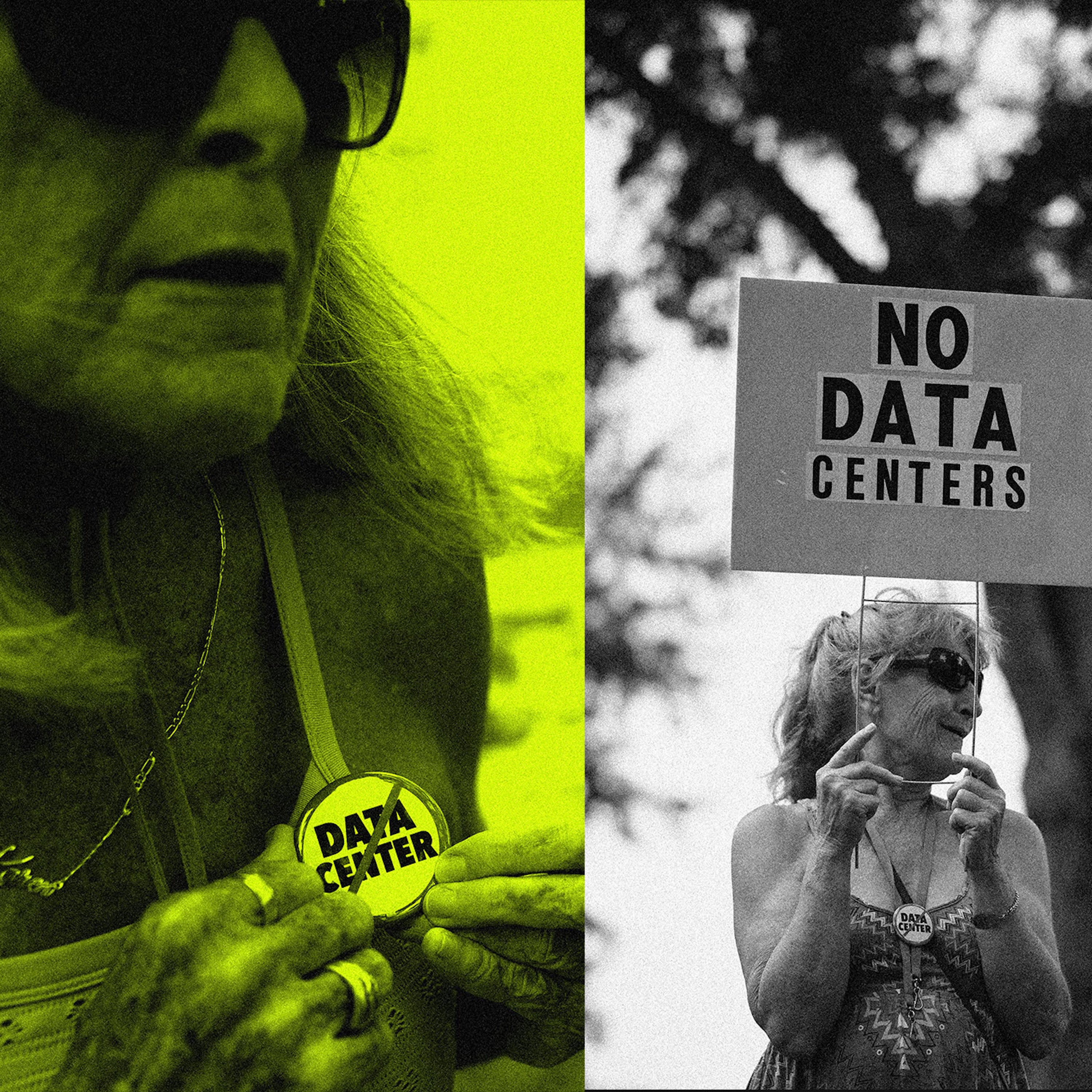
Hello and welcome to Decoder. I'm Eli Patel, Editor-in-Chief of The Verge, and Decoder is my show about big ideas and other problems. Today I'm talking with Gabi Devai, a polyester reporter here at The Verge, about the growing backlash against AI data centers. Gabi recently published a fantastic piece for us about Hernando County, Florida. Gabi attended a protest that organized by a group called Humans First, a conservative grassroots movement focused on combating AI data center build-outs.
You'll hear Gabi explain that the protest was part of a bigger, broader, and bipartisan opposition to data centers, not only the physical buildings, but also the infrastructure that powers an AI boom, taking local jobs and filling our feeds with slot. So data center construction has become a proxy for the public's feelings about AI, something physical that can aim their fear and frustration at, and even create enough pressure to stop through community organizing and protests. I want Gabi to talk me through what these protests look like on the ground, where voters use party affiliations to typically align them with big business. You'll hear Gabi say data centers are scrambling party lines, turning diehard Trump voters into protesters who care about traditionally less coded issues like groundwater contamination and forever chemicals. It's a time of great political realignment, and my prediction is that data centers and the politics of AI will play a major role in the midterm elections coming later this year.
So I suspect this won't be the last time we hear from Gabi on movements like humans first. Okay, Verge reporter Gabi Devai on the bipartisan data center backlash. Here we go. Gabi Devai, your policy reporter here at The Verge. Welcome back to the coder.
Thank you. Happy to be here. I'm excited to talk to you. You were on previously with our friend Alex Heath, but this is the first time I've gotten to talk to the coder, and I think the story you just wrote about data centers and conservative backlash in Florida is just a real preview of what tech policy going into the midterm elections is going to be like. You were just there. You talk to a bunch of
people who are protesting data centers. It is a real alignment scramble in terms of our politics. Tell us what you found. What I found was people are really, really, really mad. And the reasons why they're mad kind of are different depending on the community, but they're also all kind of the same.
They have like localized concerns. Like they were telling, you know, like Florida is really humid. It doesn't make sense to build a data center that needs to be kept very cool and dry in such a humid place. A lot of them are concerned about their groundwater. They were concerned about PFAS getting dumped into the water. But I've also talked to people in Arizona who have the opposite concern.
Arizona is not very humid. Arizona is very dry. And they're also like, it doesn't make sense to build a data center in the desert. So like whatever your community is, it doesn't make sense to build a data center here because of X reason. The thing that really strikes me in reading your piece and here at the other reporting you're doing for pieces to come is that data center buildouts and data center protests do not neatly map to the usual right-left culture war alignment that we have seen play out for so long. And I'm curious for your view on that. Why can't Elon must just
command his army of followers to be pro data centers? This is a little bit of backstory that's going to answer question. The woman who organized humans first, which was kind of bipartisan and now was focusing only on organizing conservatives, was an early, I don't know, a founder or like organizer, whether right word is with a tea party. And this kind of has a similar vibe to me. It's not like a left-right thing. It's kind of like a populist technocrat divide. And you're seeing that on the
right and the left. So like, for example, at the abundance conference last year, it was like center right to center left-ish. And everybody was like pro nuclear, pro AI. And it was like, these things are here to stay. We have to figure out how to do it smartly. Whereas like the populace left
and the populace right are both skeptical of tech development to put it lightly. That skepticism plays out across a number of dimensions. It can help be struck as I read your story by how many strains of conspiracy thinking there are about data centers. And I'm curious if they're just visible, right? They're so big and they require so much development and so much build out that you can just glue any concerns you have onto them. This big thing is happening and I don't
feel any control. And I'm also worried about 5G and I'm worried about Chinese government interference and I'm worried about XYZ. And I can just point it all at this very big thing by which there's a process to say no, right? I can go to my local town board meeting and literally say no. I mean, I think that's part of it. I think it's interesting because the, I think there's like
a spectrum of like conspiratorial thinking to, I guess like, misinformed thinking. Like on the water use question, we now know that they don't use as much water as we previously thought, etc. But like on the far end of the spectrum, like one of the people I talked to told me that cattle born near data centers are all still born. And I tried to track that down. I was like, where did this come from? And it was one farmer in Texas who claims he had one stillborn calf on
his cattle farm. So like that got spun out via the internet rumor social media mill. I think that's part of it. And I also think like there's this issue of like social collapse that I think like once you talk to people a little bit comes out. Like one of the women I talked to was like, you know, I have I had this friend who chat GPT told her she couldn't be friends with me anymore.
You have all of these stories of like people harming themselves or going off their medication or whatever, because like they've been talking to like a chatbot and it goes awry. And I think like this gives people a feeling of control. Like I can go to my community like board meeting or my council meeting or whatever. And like I can say like I don't want this big building that houses the scary thing that is like fracturing my community here. So it's not just like the actual building. I think it's like
a broader backlash to generative AI and to LLM specifically. One of my ideas that I've been pushing on lately is that the AI products are not winning over hearts and minds in the market. So if the data centers just said Netflix on them, maybe people would like them more, but instead that's where the swap is coming from. And that's where the jobs are going to go away into. And that's where Mark Zuckerberg is just going to get even wealthier. Is there a dynamic of that
that people just don't like the thing that the data centers make? They don't like a lot of the things that the data centers make. It's not just AI. I think AI is a big part of it. In Arizona, there's an intuson, there's like a data center project that's getting built out. And the people I talk to there were like, yeah, this might be like an Amazon Web Services
facility and Amazon works with ICE. So like this technology is fueling mass deportations like through, you know, not like directly, but like creating the kind of non-sexy infrastructure that like that surveillance is built on. Like there's two things to it. Like part of it is like a kind of like nimby. I don't want this thing in my backyard literally. I don't want my town to get polluted. I don't
want this. I don't want that. I don't want to see it. I don't want the noise pollution. And then the other thing is like, I do not like what this big building represents and why it has wrought on society. Does that cut across bipartisan lines or is that more culture work coded?
It cuts across culture war lines in that people like have different concerns about like what LMs do. So like the woman I spoke to was talking about like the fracturing of social bonds. On the construction front, she was like, we're like a kind of a rural-ish community. We don't want this like big blight on our like nice rolling hills. So that's like kind of a right coded thing.
There was a lot of like anti-development stuff that is kind of neither right nor left. Both sides, I think are concerned about the job losses because of AI. And both sides have kind of caught on to the fact that these facilities don't really like have a lot of long-term job prospects. Like, you know, there's like a big construction boom. There's like an HVAC situation. But like to actually
maintain these facilities, it doesn't require that many people. And I think just people have caught on to that. Like the promises of like the AI boom will lead to jobs related to data centers is like not actually true. Yeah, at most it's a few hundred jobs for each of these facilities, at least in the data centers we have now. Why do you think some of the protests make national news? Like the
Kevin O'Leary data center in Utah is a national story. Maybe it's just because he's a cartoon character. And then, you know, there's a project in Georgia where there might be a huge open-up facility that seems to go under the radar. There are all of the projects in Florida that you are reporting on, but don't seem to be explosive in the way that some of the other ones are. Yeah, I think that's a good question. There was one in Florida that was explosive, and it was just because it was near Mar-a-Lago.
I think like that one pretty obviously made the national news because it's like kind of related to the president. I honestly think like a cartoon character at the center of it is the deciding factor a lot of the time on whether it'll become a national story or not. And then also like the numbers, like the Utah one, I don't remember off the top of my head how big it's supposed to be, but it's supposed to be like huge. So then like that becomes kind of a proxy for all data center development. They're being planned everywhere. And I think what's so interesting is the backlash
exists kind of everywhere too. And I think local publications, like I relied a lot on like for example, the Tampa Times to like figure out the background for the story. They're on top of it. They're going to like these meetings and watching people get yelled at and ask, did you sign an NDA? Yes or no? We need to pause here for a quick break. We'll be right back.
Me, Clavio, your brand's new best friend. With all your data in one place, Clavio knows you and your customers. It's AI agents build campaigns from one prompt and answer questions 24-7. Always on brand, always with your okay. Go to klaviyo.com slash best friends.
Millions of people win with OLG over 200 million wins last year alone. Common side effects of winning with OLG. Shock, disbelief and laughter. It's what happened to Tristan from Hamilton when he won the $1 million Lotto 649 gold ball draw. Shock and all, all on his lunch break. Play at
OLG.ca and the next person sitting stunned in the break room. Could be you with OLG winning. Happens here. Winner, Daniel. We're back with Virgil Porter, Debbie Devai, who reported on the ground from Florida's Fernando County about why local residents really do not like data centers.
Do you think the local governments are being responsive? Right. You've now gone to some of these protests. You've talked to people on the ground in various counties across the country. The basic unit of democracy is supposed to be your local government because you know those people and you can yell at them in the grocery store and the time board meeting. We're seeing there's a wall going
up in some of these cases where the local governments are saying, no, we have to do this development. This is the only economic development available and the people are saying, no, we're going to throw you out. Do you think local governments on the whole are being responsive or not responsible? I think it really depends. In Fernando County, they did pass a moratorium. There's a lot of counties in
Florida where they pass a moratorium. But in Tucson, the city government is responsive to what the people want and the county government isn't and they're kind of at odds with each other. There are all these videos of people yelling at their representatives about like NDA's again and then being like, we cannot say what are we side of NDA? I think it really depends on a lot of things, how small the communities are for one, how vulnerable the people in office feel to getting voted out. I think it's another big one. In Florida, the Republican primary for governor, I think,
might be affected by this issue. The primary is in a few weeks and the front runner Byron has taken a lot of money from AI industry and data center development groups. People are mad. People are really mad. Like he was endorsed by Trump and everyone I spoke to, proud Trump voter was like, I don't understand why Trump wouldn't endorse him. I'm not going to vote for him.
One woman I talked to told me she was opposed to everything Democrat is nonetheless, like she said, she would vote for a Democrat or an independent if Donald's won the primary. And Donald has also kind of changed his, not his stance on data center development, but the way that he talks about it in response to a lot of this backlash. How's he changed the stance? How's he talking about it now? He previously said he got a lot of flak with us from at least the people I talk to that he wants Florida to be the financial capital of the world. And you know, like that to a lot of people would
sound great, but these people are really upset by this. I mean, there's a lot of other things at play here. Like housing costs in Florida have gone up exponentially, not only in big cities like Miami, but like in the suburbs of Tampa, for example, like housing prices have shot up to like levels that I have somebody who grew up there just like don't understand, like I literally can't wrap my head around it. So I think like a lot of the backlash to development and data centers is also like to people's cost of living going up and like to these like out like in their words, outside developers coming in and like changing the community that's already changing. So he has since said that, you know, like we need data center development, but we need to do it responsibly. He is championing a bill
that would prevent data centers from driving up utility costs now. And I mean, Ron DeSantis, the current governor of Florida is another really good example of this. He supported a bill that would require data centers to pay their utilities and also would let counties require them to use reclaimed water, which would address the water issue. But the Tampa Bay Times reported that he also supported legislation that gives massive tax breaks to data centers. And also that he pushed to like amend that law, which I think was signed in 2017 recently pushed to have it changed to only apply to hyperscale data centers, which are the ones that people have problems with. Like the people I talked to,
they know that they're currently data centers in Florida and they're smaller. There are no hyperscale data centers, but there's like around 100, you know, smaller ones for, you know, Netflix or whatever. And they're okay with that. One woman I talked to, she works in IT. She's like, I understand that like data centers is like a boogeyman, but like we need them for stuff. But I don't want this like
massive facility using all of our power emitting these frequencies, etc, etc. Wait, can you just explain what emitting these frequencies means? Just like the noise I talked to these guys at the border security Expo who work for a data center company and they all live in Virginia. And even they were like, yeah, it sucks. They were like, I hate walking around my neighborhood because I just hear it all the time and they work in data centers. Yeah. So like they don't want, I don't think she
meant like 5G is gonna whatever you it's a real element of this right next to China being a villain of whatever persuasion you need China to be a villain of. So I'm just very curious because again, there's just a piece of all this where it's a big thing that you can stop, right? But the power of nimbiism can stop this. And maybe we can't stop everything else. We can't stop Facebook from doing targeted advertising that feels like it's listening to you. No one knows how to stop this. It's bad.
We don't like it. But no one knows how to stop it. I can stop this building from being built seems like not only does it scramble our culture war lines, it's scrambling politics, right? Byron Donald saying he wants to be the financial capital world. One is very funny and that he has to contend with the existence of New York and London and Beijing and Amsterdam and go down the line. Like there's a
lot of places that would compete for that title where Miami might not be in the running. But doing it via building data centers is not the path to that result, right? It's just a bunch of economic development that might result in some short term gains. And it feels like people have clocked it and they've clocked that it's a thing you can stop. And I'm curious if there's anything else you've spent a lot of time covering the right. If there's anything else that scrambles the lines like that.
Because in all of a sudden, every other case, you know, let's build stuff. Let's tear down the white house and build a ballroom is fine, right? Like building things is better and it is coded in one side of the culture war. I mean, this is again, like so Florida specific, but it really surprised me how much of the politics around this were scrambled. Like one of the women was talking about this ballot initiative that's going to pass. It's going to like give more like tax exemptions to homeowners,
which like, you know, I feel like kind of a standard Republican thing, lower taxes for homeowners, people would like that. And she was like, this is terrible. It's going to deprive county governments of funds that they would otherwise get from homeowners, which will then even entice the counties even further to have data centers come into our communities. So she was like thinking of like the second and third order effects of this, even though like, that's a pretty like populist initiative or like a populist thing to do. But guys all so scrambled. How do you see the scramble, right inside of the
right and then carrying over to the populace left, the idea that a bunch of billionaires threw all of their weight behind Donald Trump in 2024. And that led to a bunch of podcast bros throwing their way behind Donald Trump in 2024. And there was a cultural wave of, I don't know, Peter Teal in Mark Andreessen and Elon Musk and all in podcasts, you know, driving a cultural wave about building and tech in the future. It feels like that has come to one kind event, right? I don't think that that that wave is driving the culture anymore because of the backlash to AI, right? We can all see the college students booing a graduation. If the backlash is there
against the data centers, against AI taking the jobs, against billionaires in general, what does that turn into on the right? Because that was the animating force of the right for so long. I think that is still an open question. I think the question is, why do this backlash is strong enough to like, shake people's on other partisan concerns? Like, if you've got, you know, a Democrat candidate who is anti-data center development, but also like not super gug-how about like, debutizing all Florida police officers to do ice arrests, like, where does that leave someone who supports Trump's immigration policies, but doesn't want to data center in their neighborhood? I don't know. I think
that's kind of like what the party is struggling with right now. I mean, I think Trump is like, this perfect avatar for people because he like somehow stands for like anti-elite sentiment, but also for like hard work and capitalism. Like, he's just like this perfect blend of, I don't even know how to describe it. Like, he contains multitudes, I guess. And nobody else can contain multitudes like him. Like, I don't know. They don't have the juice. Like, they just don't have it.
Can I make the argument? I think I can make the argument. And this is, you know, I grew up in Wisconsin, which has many similar dynamics to maybe Florida, in that people in Wisconsin remember a time when there were big factories in the town I grew up in and were seen, there used to be a case factory that made tractors and there was a Chrysler factory in Kenosha that made Jeep Wranglers. Like, this is a real thing that occurred. And all those things are gone. And so Trump would promise all of this huge
economic development that basically looked like manufacturing. And what his version of this with, even with Terrace was we'll bring manufacturing back to all of these places. And that manufacturing will require a lot of hard work, but there will be dignity in our work. At the end of it, you're going to get to point to a Modine air conditioner and be like, I made that thing. Like, my community made that thing. And I think that is very seductive. I think, I mean, Trump spent years promising that
we were bullet iPhones in America, right? Like this, I, and that's Wisconsin and Foxconn and all this stuff, right? And maybe none of those things are ever going to come true because that's not how anything gets made anymore. And that's not even the kind of work people actually want to do in America anymore. But you take all of that energy and you're like, actually, what we're going to make is data centers.
And no one can see at the end of that I made a Jeep Wrangler. They get to see that Elon Musk got richer, right? And they just lost their jobs and their children feel like they have no future and their feeds are full of slop. And if something gets disconnected in the multitudes, where you can tell everyone, yeah, the best I can do for you is make you the world's richest factory foreman. And people are like, that sounds awesome. That's better than whatever nonsense I'm
doing online. But you can't be like, I'm going to make Sam Altman richer because that doesn't mean anything to anyone. And all of this construction doesn't do anything for anyone. And I look at the backlash and I just look, all I see is a lot of people across the political spectrum have come to that realization. You can tear down our communities to build bridges and factories and you can pollute the skies with like, smoke stacks, as long as we all get jobs. But if you're going to
do all that and all I get is more like, AI generated movie posters on Amazon Prime, who's price keeps going up every month, like, screw you. And I'm wondering if that connection is, that's my guess. I'm wondering if you see any hints of that connection in your reporting to talk to all these people. I think so. I think the Florida version of making a Jeep Wrangler is like, there were orange groves and cattle branches. And now they're not like literally, like,
I used to drive past an orange grove and I was a kid that orange grove is gone. It's a public now. Like, there was an old cow field. Now that's a mall. And on the one hand, like, that's kind of what people want. Like, people want like consumption. But they also, at least in Florida, liked thinking
that they lived near an orange grove. Like, oh, maybe the guy's using tons of pesticides. Like, maybe actually the orange grove is worse for your health than the data center. I don't know. I don't have like the stats on this. But yeah, like, you could see the like tangible effects of like what
your economy was producing. And now it's just like, there's a building that none of us can go in. It makes a horrible noise. And I think it's drinking all my water. And yeah, and it's also like making your kids dumb and alienated and like losing or making everybody lose their jobs. And people
don't like that. And again, these aren't like luddites. Like the women I talked to were like, I found out about the humans first organizing via Facebook. And they were like, I know there's an irony in that. I know like there's an irony in like me working in IT and opposing the data center.
Like they're not dumb. They understand that like all of these things that we've built our lives around require something to power them. They just don't want that something to be within driving distance of their house. They want it somewhere else. And it's unclear where that somewhere else should be apart from space, which is a very different episode of Decoder. But that's one answer the
industry has is these people, their stupid concerns are too annoying. We'll just put the data centers in space and maybe that's not that problem. Who knows? The other answer is we'll just horsepower over the concerns. Like this is too important. We're going to do it anyway. And
maybe we'll just subsidize a bunch of education in some community. Maybe we'll just pay a bunch extra money. Maybe we'll pay for everyone's electricity. And I don't know if those have gotten any traction. Is there anything that the tech companies or the neo clouds could do in these communities to overcome the objections? Could they just pay for healthcare or is that just a non-starter?
I don't know about paying for healthcare, but I something that I didn't include in the piece because it was extremely dry and very technical was that the small protest ended with about an hour and a half long presentation from a land use expert on how to write local zoning ordinances to prevent hyperscale data centers from being built. Really specific stuff. You could have them on multiple small parcels of land. You could look at that. It was really dry specific stuff.
It was like you could require them to use this amount of reclaimed water. And I think honestly what people want more than the data centers not being there is a degree of community input on how they're built if they're going to be built. I think if they got that they would maybe not be pacified, but they would at least not feel like there's a big external force coming in like Steve Rowling, their community when they already feel like that in every other aspect of their life. We're gonna make a short break. We'll be back in just a minute.
All on his lunch break. Play at olg.ca and the next person sitting standing in the break room could be you with olg winning happens here. Winner. Yay-yoh. Welcome aboard the A-Rail. Please sit and enjoy. Please sit and sit.
Play. Post. Taste. View. And enjoy. V-A-Rail. Love the way.
That's two minutes for holding. But you're holding two times the chicken with bogo box meals from KFC. Order in and focus on the ice, not what's for dinner. Get gameday deals on Uber Eats all season long like bogo box meals from KFC. Hockey is for the hungry Uber Eats order now in terms of client product availability by Regency app for details. We're back with Richard Porter Gaby,
devi discussing the data center protest movement and how growing opposition to AI is scrambling all sorts of party lines. So much of our politics and our culture has been nationalized. Right. Everything happens at the national level and the fact that the mayor of New York is a national political figure is at once very silly and also just the funniest thing that's happened at one time. Data centers are very local. They're happening two people in their backyards and a data center being
built in Florida or Georgia or Tucson has nothing to do with me in New York. It's far away enough. And maybe what you're hearing from everybody is just somewhere else. And as we get to somewhere else, I don't care. But it is very local. And then it is very in person. People are going to the
meetings or encountering one another. There have been stories of bridges across party lines from people who would never like each other normally because they don't hate the data centers. Is there an element of a return to actual local politics and actual community building here that could be catalyzed by opposition to data centers? I really think so. Like I, again, I'm talking to organizers in multiple states who are going to like these like community or like town council or county council meetings and just like yelling at their representatives. And sometimes it's
like hundreds of people. This is like maybe a weird analog, but it reminds me of the right wing organizing and like local education policy, which is kind of like where a lot of the anti-trans backlash started at like the school board level. You know, like you go into the school board and you'd be like, I don't want this gender stuff being taught to my child. I don't want my kids to know that slavery was bad. I'm not comparing them in terms of like value judgment. I just think it's like at a level of
local engagement that is at the same time like a national issue where it's like these really, really, really localized policies that may end up driving, if not, national policy change and like national policy discussions or like even just like national political vibes, whoever wins the Democratic and Republican primaries and runs for president in 2020. What are they going to be saying about data centers? I don't know, but I know it's going to be informed by what happens this year next year. I'm actually very curious how Trump handles it. As you said, he contains multitudes.
He is very good at reading his own base. It feels like the Trump base is very much polarized around data centers. There's a lot of people who love Donald Trump and hate data centers. And then there's his money, which loves the AI build out and loves data centers. And that is a fracture as deep as anything. A lot of those folks will say AI just has a marketing problem, right? If we only convince
people of the benefits of this build out and the super intelligence to come, they would be on board. And the best marker they could have for that would be Donald Trump. But he doesn't seem to be willing to make those claims at the level that they might need. And certainly he is very attuned to his base, hating AI. How do you think he's going to play it? And how do you think the sort of maga coalition will
respond to it? Do you remember when Trump was talking about H1B visas or not even when he was talking about it, but just the whole swirl around like, what are we going to do about these? And he goes, I think we should stamp an H1B visa to every foreign students college graduation diploma. And I was like, what are you talking about? Like your administration is starting $100,000 for these visas.
And you're like, these kids are really smart. We need them in America building chips. Like, I think he's just going to do it like that. Like the thing about Trump is that he can say literally whatever. And he can do literally whatever. And the people who like him will continue to like him.
Sometimes I'll be like, Oh, I don't like this particular policy of his. I don't know why he endorses candidate, but they're still going to back the guy. But enough enough to split the difference on this issue. Every in every other issue he could polarize the electorate. And he would get there. But I'm going to put a data center backyard and it's going to make that noise.
Maybe not enough. But they don't see it as coming from Trump is the thing. They're like, these companies are coming into our community. And like, if you like connect the dots, it's like, who supports those companies, the president who is giving the president a lot of money, you know, all these different companies. But that's not how people see it. They see it as like these tech oligarchs who are just
disconnected from politics and disconnected from anything because of all their money. They don't see that as having like a connection to the president. They see that as like having a connection to the governor, to like the board of commissioners or whatever. But Trump is like floating above it all. I just I don't know why. Well, I'm curious. And maybe we should end it here. The Florida
group of primaries are coming up. If Donald's loses, even with that Trump endorsement over the data center issue, do you think that that will be a signal or a predictor of what will happen in the midterms? I think it would be a massive signal if only because Donald's pulling so much further ahead than everybody else. He's the clear front runner and the lieutenant governor who's kind of pulling second is also kind of pro data centers. If any of the anti data center candidates when the Republican primary like that is going to be huge and completely unexpected by everybody in the state, but it could happen. Crazier things have happened. We're doing a lot of coverage of this in the
months to come, especially head of the midterms, because this scrambling of party lines, the scrambling of the culture war seems very important. Like the politics we've had for so long, they don't seem like they can hold up to everyone hating the same thing. And maybe that's all American needs. It does seem like every American hating these big buildings and make loud noises might be the thing that unifies us, which is good or bad. You can make your own decisions. But I can't think of
anything else. Like there's nothing else that's cutting across party lines this way. Can you? Literally nothing at all. And it's cutting across party lines, I think, not just in that people hate it. But like I had these again, like deeply conservative women talking to me about like local
environmental and ecological issues. They were talking about like pesticides and like forever chemicals in their water, which you wouldn't expect looking at Republican politics like five, 10 years ago, like that this is where we would end it up. We're still doing climate change folks at the national level and on the ground, we're talking about pesticides or something there. Gabby, we're gonna have to have you back as a story develops and certainly as we go into all these elections. Thank you so much for being a decoder. Yeah, thanks for having me. I'd like to thank
Gabby for taking the time to join me on Decoder and thank you for listening. I hope you enjoyed it. So I'd like to let us know what you thought about this episode or really anything else at all. Drop us a line. You can email us at decoderattheverge.com. We really do read all the emails or hit me up
directly on threads or blue sky. We're also on YouTube. You can watch full episodes at Decoderplot. We also have a TikTok and Instagram, same handle at Decoderplot. So like to cover, please share it with your friends and subscribe wherever your podcasts. The Coder is production of Verge and part of the
Boxing and Podcasts Network shows free space by KcocksNix. This episode was edited by Urso Wright, our editorial director is Kevin McShane. The Coder music is right back, Master Sonder. We'll see you next time. Me, Clavio, your brand's new best friend. With all your data in one place, Clavio knows you and
your customers. It's AI agents build campaigns from one prompt and answer questions 24-7. Always on brand, always with your okay. Go to klaviyo.com slash best friends. Every year, Ontarians win billions playing with OLG. In fact, there were over 200 million wins with OLG last year, worth 2.7
billion dollars in prices. That's like 12 wins for every person in Ontario. An average of over 380 OLG wins every minute or about 190 wins by the time this commercial is over. With OLG winning happens here from Anncaster to Wick Lemecon, play at OLG.ca and winning could happen to you too. Winner, Ganyon. That's two minutes for holding. But you're holding two times the chicken with
Bogo Box meals from KFC. Order in and focus on the ice, not what's for dinner. Get gameday deals on Uber Eats all season long, like Bogo Box meals from KFC. Hockey is for the hungry. Uber Eats, order now.
In terms of product availability varies by region. See out for details.