
EPISODE · Jan 27, 2026 · 13 MIN
The Legacy of Johnny Poe: A Football Pioneer
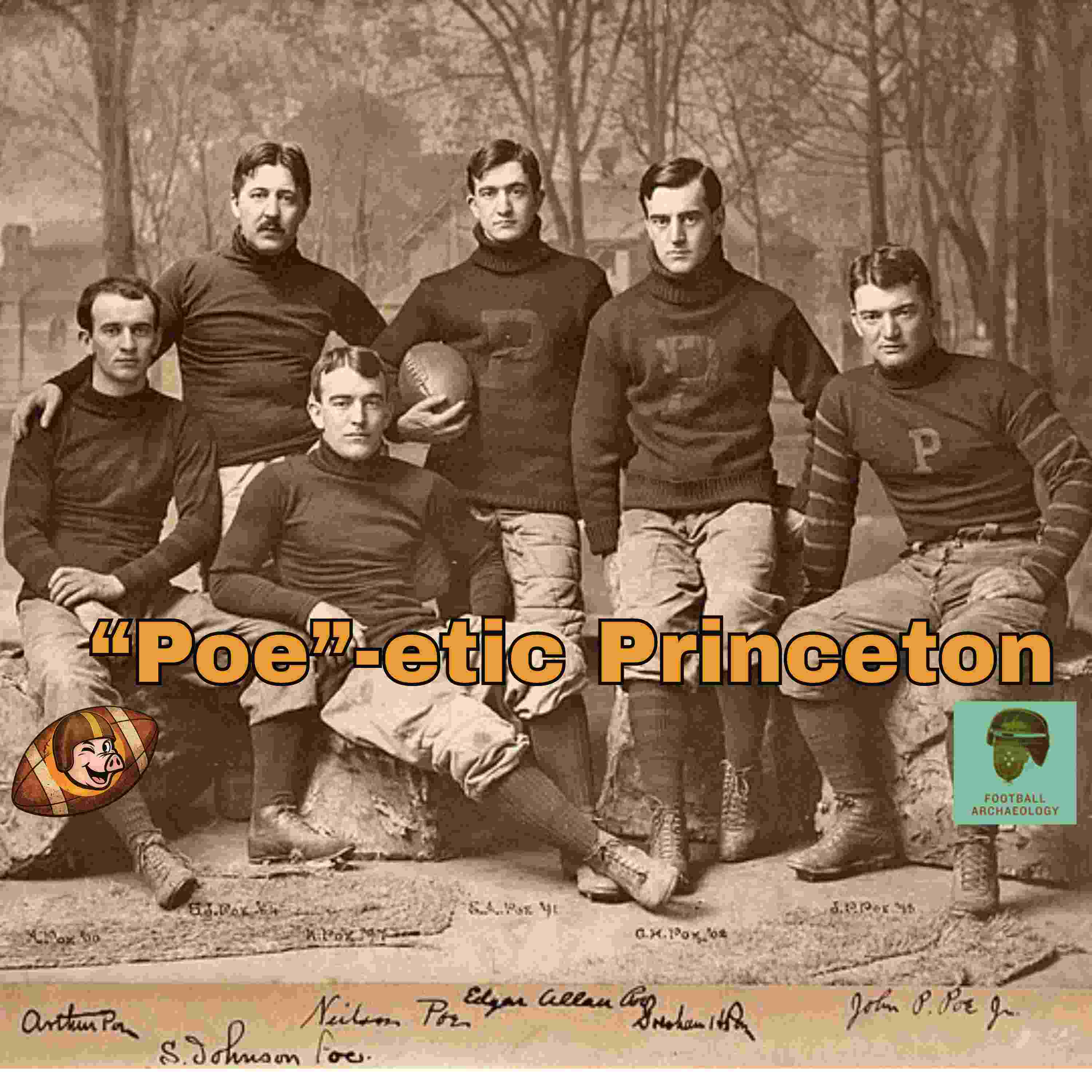
The Football Legend Who Traded the Ivy League for the Front Lines: The Story of Johnnie PoeIn the middle of a major winter storm, with classes canceled and the wind howling outside, it’s easy to find your mind wandering toward the macabre—perhaps to a certain Edgar Allan Poe story like The Cask of Amontillado. But while most of us associate the name Poe with gothic poetry and raven-themed football teams, there is a far more "rough and tumble" legacy attached to the family name.On a recent episode of the Pig Pen podcast, Darin Hayes sat down with Timothy Brown of Football Archaeology to discuss a man who was a second cousin twice removed from the famous poet: the legendary Johnny Poe.A Princeton DynastyJohnnie Poe was the third of six brothers who played for Princeton University between 1882 and 1901. In an era where the Ivy League was the epicenter of the sport, the Poes were football royalty. Johnny himself was a standout during the 1891 and 1892 seasons, consistently ranking as one of the team's top scorers.However, Johnnie Poe wasn't your typical Ivy League student. He wasn't destined for the quiet life of a district attorney or a businessman like his brothers. He was a man who marched to the beat of a much louder, more dangerous drum.The Wanderer and the WarriorAfter dropping out of Princeton following his sophomore year, Johnnie’s life read like an adventure novel. He spent time:Coaching: Leading the teams at the University of Virginia and Navy.Laboring: Mining for gold in the Yukon and working as a cowboy in New Mexico.Soldiering: Seeking action wherever he could find it.Johnnie’s thirst for combat was legendary. He joined the Maryland militia for the Spanish-American War (but saw no action), joined the Army to fight in the Philippines (still no action), and even joined the Marines during the Panamanian Revolution. He finally "found his calling" fighting in the Honduran Army, where he finally saw the direct combat he craved.A Hero’s End in the "Black Watch"When World War I broke out, Johnnie didn't wait for the United States to enter the fray. He traveled to Europe and joined the British Army. Unsatisfied with being an artilleryman behind the lines, he transferred to the Black Watch, the famous Scottish Highlander regiment.In 1915, during a fierce battle near Ypres in Flanders, Johnnie Poe was killed in action. He was shot in the stomach, and due to the chaotic nature of the conflict, his body was never recovered. He remains "out there" somewhere in the fields of France or Belgium—a fittingly mysterious end for a relative of Edgar Allan Poe.A Lasting LegacyJohnnie Poe’s impact on Princeton football didn’t end with his death. Even before the U.S. officially joined WWI, Princeton established the John Poe Award for the team's top player. Today, after being combined with another legend’s name, it is known as the Poe-Kazmaier Trophy.It’s a remarkable testament to a man who was respected by everyone from common soldiers to future presidents (he once spent an hour talking football on the practice field with then-Princeton President Woodrow Wilson).Whether you find him brave, reckless, or a bit of both, Johnny Poe remains one of the most fascinating figures in the intersection of sports and military history.For more deep dives into the forgotten stories of the gridiron, visit FootballArchaeology.com or find Timothy Brown’s books on Amazon.Join us at the Pigskin Dispatch website to see even more Positive football news!Don't forget to check out and subscribe to the Pigskin Dispatch YouTube channel for additional content and the regular Football History Minute Shorts.Miss our football by the day of the year podcasts, well don't, because they can still be found at the Pigskin Dispatch website.
Embed this episode
NOW PLAYING
The Legacy of Johnny Poe: A Football Pioneer
No transcript for this episode yet
Similar Episodes
No similar episodes found.
Similar Podcasts
No similar podcasts found.