
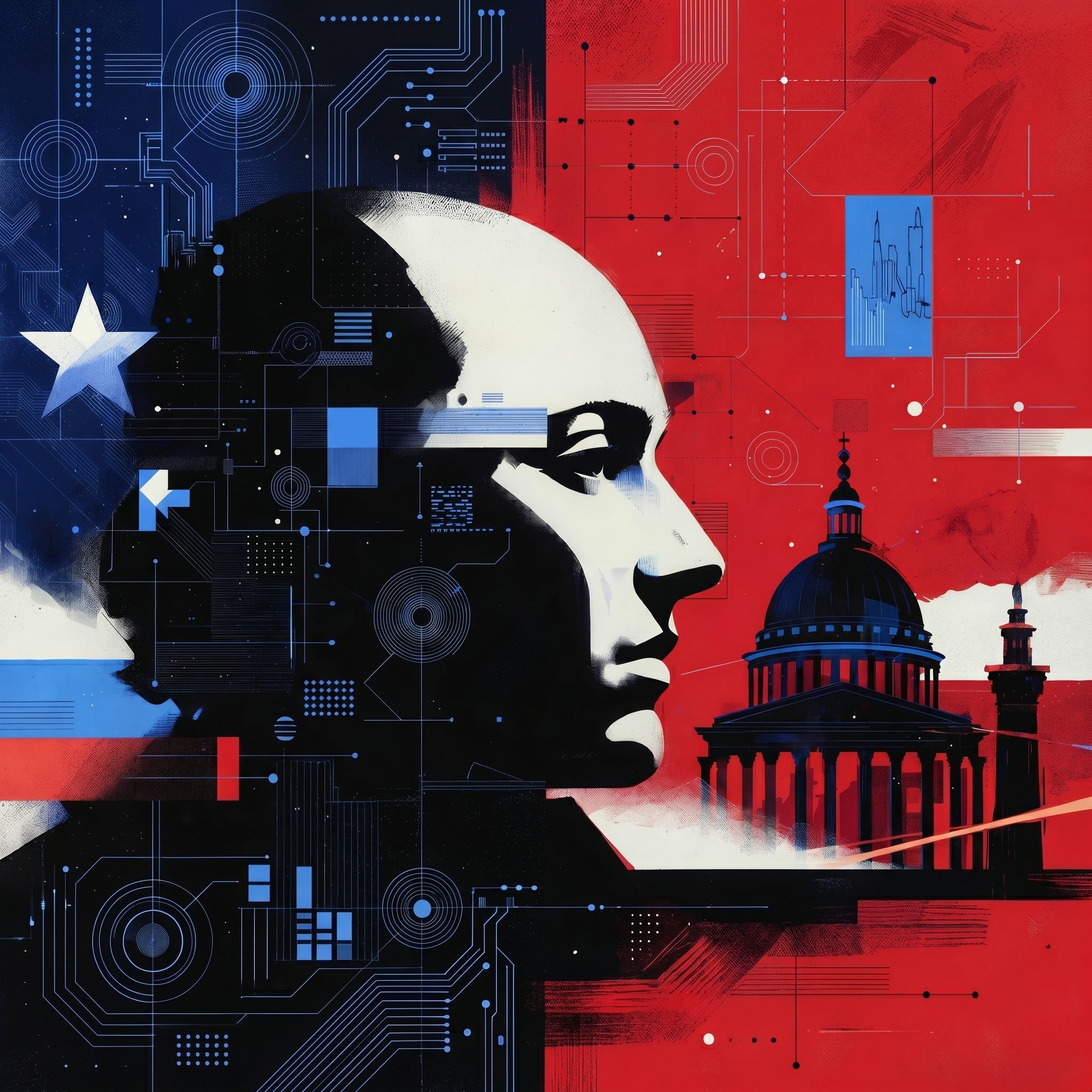
EPISODE · Aug 7, 2026 · 57 MIN
The Levellers
from Consequential Actions Podcast · host Jeff Kellick
The Constitution England Wrote in 1647 — and Never AdoptedIn April of 1638 a twenty-three-year-old named John Lilburne was tied to the back of an ox cart and whipped two miles through London, then locked in a pillory at Westminster. He had been convicted of no crime. His offense was refusing to swear an oath that would have bound him to answer whatever the King’s court chose to ask him, including questions designed to draw a confession out of his own mouth. He told them no man was bound to accuse himself. Nine years later, he and the men around him were arguing that every government in England — court, Parliament, and crown alike — held its authority on nothing more and nothing less than the consent of the people who had to live under it.Episode 9 traces the Levellers, the print-and-petition network of London radicals and army agitators who took Sir Edward Coke’s defense of English liberty and moved its foundation out from under it. Coke had argued that English rights were safe because they were ancient. The Levellers argued something far more dangerous: that they were true. We follow the collapse of censorship that made the movement possible; the three men at its intellectual center — Lilburne, Richard Overton, and William Walwyn — and the distinct edge each of them pressed; the Agreement of the People, which set down in one written instrument a government of granted and limited powers together with rights reserved above the ordinary legislature; and the argument at Putney between Colonel Thomas Rainsborough, who grounded a man’s right to a voice in the man himself, and Henry Ireton, who grounded it in a permanent fixed stake in the country.The episode is careful about what it claims. The Agreement was not the first written political covenant in the English-speaking world — Englishmen across the Atlantic had already been at this, at Plymouth in 1620 and in Connecticut in 1639. To call it the first written constitution, or to draw a clean line from its clauses to Philadelphia, would be to trade a defensible claim for an impressive one. What is defensible is impressive enough: ordinary Englishmen in the wreckage of a civil war reasoned their way to the form a free constitution would eventually take, and they wrote it down more than a century before that form became familiar.Nor does the episode flatter them. It takes up the real gap between the movement’s universal-sounding language and the bounded franchise it actually proposed, which excluded servants, alms-takers, and women — and it stays with the Leveller women who gathered signatures, carried a petition to the House of Commons, were told to go home and mind their housewifery, and came back in May with an answer. It meets three serious objections at full strength: that the Levellers lost completely and changed nothing, that the American line is thin and reconstructed after the fact, and that calling them democrats is anachronism.It ends where the movement ended. In the parish churchyard at Burford on the seventeenth of May, 1649, where three soldiers of the New Model Army were shot against a wall by the commanders they had followed to victory — and on the lead lining of the font inside, where a prisoner named Anthony Sedley scratched his name while he waited three days to learn whether he would be one of them. It is still there. You can go and read it.Episode 9 of 22 in Self-Evident: The Road to 1776, and the second episode of Arc III, English Liberty. Episode 8 established Coke and the argument from antiquity. Episode 9 is the turn toward nature, consent, and the equality of persons.The question we put to every episode: did this leave people more free, or more governed?⏱️ CHAPTERS00:00 The Whipping of John Lilburn and the Star Chamber 04:00 Introduction: Episode 9 — The Levelers 05:11 The New Model Army and the Collapse of Censorship 08:40 Who Were the Levelers? 10:14 John Lilburn: "Freeborn John" and the Right Against Self-Incrimination 13:23 Richard Overton: Self-Ownership and Natural Rights 17:11 William Walwyn: Religious Toleration and Equality Before the Law 19:49 Unionizing an Army: Agitators and the Solemn Engagement 22:42 An Agreement of the People: Reserving Rights Above the Legislature 28:06 The Putney Debates: Rainsborough vs. Ireton on Voting Rights 33:51 The Franchise Gap: Excluded Classes and Leveler Women 40:19 Three Objections: Defeat, American Influence, and Democracy 47:49 The Burford Mutiny: The End of the Levelers 50:40 The Liberty Test: Does a Written Constitution Constrain or Protect? 52:56 Conclusion: The Shift to Natural Rights 55:45 Preview of Episode 10: Sidney and Locke📚 Companion article: “The Levellers — The Lost Constitution,” Article 9 of Self-Evident. https://www.consequentialactions.com/post/the-levellers-the-lost-constitutionKey anchors: the Star Chamber sentence of 13 February 1638 and the whipping of 18 April; the Agreement of the People, October 1647; the Putney Debates, 28–29 October 1647; the Burford executions of 17 May 1649. Consequential Actions — Self-Evident: The Road to 1776, Episode 9: “The Levellers”#levellers #johnlilburne #putneydebates #agreementofthepeople #englishcivilwar #naturalrights #consentofthegoverned #selfownership #constitutionalhistory #selfevident This is a public episode. If you would like to discuss this with other subscribers or get access to bonus episodes, visit jeffkellick.substack.com
Embed this episode
Ready to play
The Levellers
No transcript for this episode yet
Similar Episodes
No similar episodes found.
Similar Podcasts
No similar podcasts found.