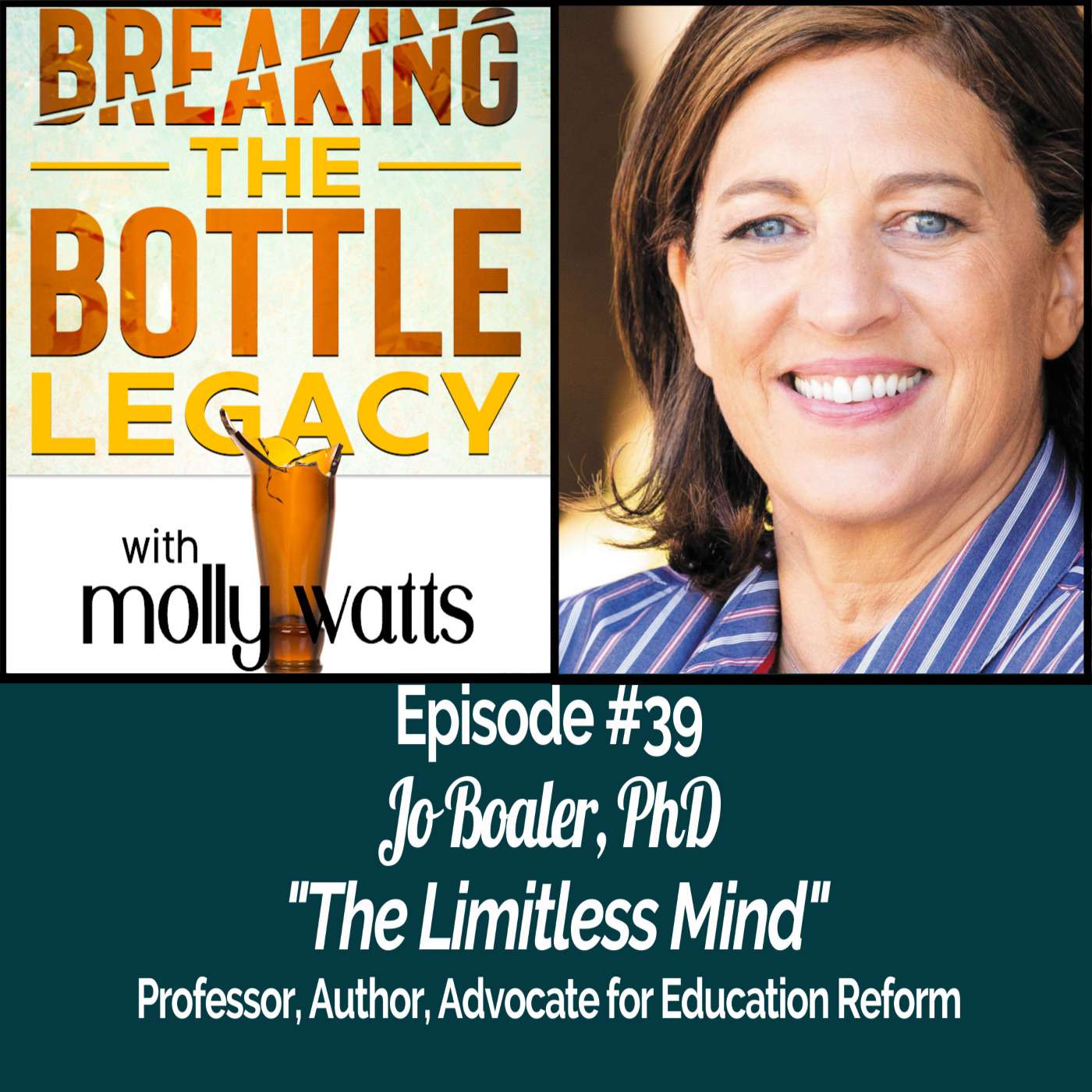
The Limitless Mind with Jo Boaler episode artwork

EPISODE · Sep 22, 2021 · 34 MIN

The Limitless Mind with Jo Boaler

from Alcohol Minimalist: Change Your Drinking Habits! · host Molly Watts & Jo Boaler

You can buy Breaking the Bottle Legacy: How to Change Your Drinking Habits and Create A Peaceful Relationship with Alcohol on Amazon.  US Kindle US Paperback UK Kindle UK Paperback Join my private FB group Alcohol Minimalists here: https://www.facebook.com/groups/changeyouralcoholhabit Has this podcast helped you?  How about leaving a review: Itunes Follow me on Instagram: @AlcoholMinimalist  You can grab two free chapters of my upcoming book here! Have you grabbed your free e-book, "Alcohol Truths: How Much is Safe?" Get it here.  Low risk drinking guidelines from the NIAAA: Healthy men under 65: No more than 4 drinks in one day and no more than 14 drinks per week. Healthy women (all ages) and healthy men 65 and older: No more than 3 drinks in one day and no more than 7 drinks per week. One drink is defined as 12 ounces of beer, 5 ounces of wine, or 1.5 ounces of 80-proof liquor. So remember that a mixed drink or full glass of wine are probably more than one drink. Abstinence from alcohol Abstinence from alcohol is the best choice for people who take medications that interact with alcohol, have health conditions that could be exacerbated by alcohol (e.g. liver disease), are pregnant or may become pregnant or have had a problem with alcohol or another substance in the past. Benefits of “low-risk” drinking Following these guidelines reduces the risk of health problems such as cancer, liver disease, reduced immunity, ulcers, sleep problems, complications of existing conditions, and more. It also reduces the risk of depression, social problems, and difficulties at school or work.   Today on the podcast, I'm thrilled to introduce author, speaker and professor Jo Boaler.  Dr. Jo Boaler is a professor of education and equity at Stanford University and the faculty director of youcubed—an education resource that has reached over 230 million students.She was named by the BBC as one of eight educators “changing the face of education.”  We discuss the six keys of learning presented in Boaler's most recent book, The Limitless Mind. The six keys are based in science and underscore the main idea of the book that the human brain is capable of learning anything if we are dedicated, if we believe in ourselves and if we work through struggle.  By understanding that we aren't born innately "gifted" and we can truly learn anything.  Key #1 is really all about neuroplasticity and I’ve talked about it before on the podcast. This podcast loves neuroscience and Iearning HOW the brain works and  understanding that neuroscience validates how our brains can actually be rewired is so powerful.  Key #1:  Every time we learn, our brains form, strengthen, or connect neural pathways. We need to replace the idea that learning ability is fixed, with the recognition that we are all on a growth journey.    For me, learning the neuroscience is what helped build the foundation in self-belief.  Believing that it’s possible to change a negative habit pattern like drinking is easier to believe if our brains are capable of changing.  Key #2 The times when we are struggling and making mistakes are the best time for brain growth.  With regard to mistakes I use the phrase compassion and curiosity a lot. It’s challenging for people to reframe mistakes in their life and I think that is largely because of something you talk about in the book of “the performance culture”  vs the a mistake culture where we celebrate mistakes as way of enhanced learning.  It’s important for us to be aware of how we may have been taught this way and how it shapes our mindset for life.  Key #3 When we change our beliefs, our bodies and brains physically change as well. Self-belief actually is critical to learning...tell me more about how our mindset about being believing we are capable of learning anything fuels our ability to do it.  Key #4 Neural pathways and learning are optimized when considering a multidimensional approach. Explain what this is and help me understand what it means in life situations….creativity and flexibility are the big takeaway here right?  Key #5 Speed of thinking is not a measure of aptitude. Learning is optimized when we approach ideas and life with creativity and flexibility.  I loved the example here of cramming for a test...I think everyone can remember doing that and also that they can’t remember anything that was on the test. They didn’t really learn it. Real learning comes from the new neural pathways and this is always a slow process. Key #6 Connecting with people and ideas enhances neural pathways and learning.  Part of the reason people give up on learning is because they find it difficult and think they are alone in their struggle.  Value differences, have an open mind...learning from other people.  To learn more about Jo Boaler visit www.youcubed.org   ★ Support this podcast ★

You can buy Breaking the Bottle Legacy: How to Change Your Drinking Habits and Create A Peaceful Relationship with Alcohol on Amazon.  US Kindle US Paperback UK Kindle UK Paperback Join my private FB group Alcohol Minimalists here: https://www.facebook.com/groups/changeyouralcoholhabit Has this podcast helped you?  How about leaving a review: Itunes Follow me on Instagram: @AlcoholMinimalist  You can grab two free chapters of my upcoming book here! Have you grabbed your free e-book, "Alcohol Truths: How Much is Safe?" Get it here.  Low risk drinking guidelines from the NIAAA: Healthy men under 65: No more than 4 drinks in one day and no more than 14 drinks per week. Healthy women (all ages) and healthy men 65 and older: No more than 3 drinks in one day and no more than 7 drinks per week. One drink is defined as 12 ounces of beer, 5 ounces of wine, or 1.5 ounces of 80-proof liquor. So remember that a mixed drink or full glass of wine are probably more than one drink. Abstinence from alcohol Abstinence from alcohol is the best choice for people who take medications that interact with alcohol, have health conditions that could be exacerbated by alcohol (e.g. liver disease), are pregnant or may become pregnant or have had a problem with alcohol or another substance in the past. Benefits of “low-risk” drinking Following these guidelines reduces the risk of health problems such as cancer, liver disease, reduced immunity, ulcers, sleep problems, complications of existing conditions, and more. It also reduces the risk of depression, social problems, and difficulties at school or work.   Today on the podcast, I'm thrilled to introduce author, speaker and professor Jo Boaler.  Dr. Jo Boaler is a professor of education and equity at Stanford University and the faculty director of youcubed—an education resource that has reached over 230 million students.She was named by the BBC as one of eight educators “changing the face of education.”  We discuss the six keys of learning presented in Boaler's most recent book, The Limitless Mind. The six keys are based in science and underscore the main idea of the book that the human brain is capable of learning anything if we are dedicated, if we believe in ourselves and if we work through struggle.  By understanding that we aren't born innately "gifted" and we can truly learn anything.  Key #1 is really all about neuroplasticity and I’ve talked about it before on the podcast. This podcast loves neuroscience and Iearning HOW the brain works and  understanding that neuroscience validates how our brains can actually be rewired is so powerful.  Key #1:  Every time we learn, our brains form, strengthen, or connect neural pathways. We need to replace the idea that learning ability is fixed, with the recognition that we are all on a growth journey.    For me, learning the neuroscience is what helped build the foundation in self-belief.  Believing that it’s possible to change a negative habit pattern like drinking is easier to believe if our brains are capable of changing.  Key #2 The times when we are struggling and making mistakes are the best time for brain growth.  With regard to mistakes I use the phrase compassion and curiosity a lot. It’s challenging for people to reframe mistakes in their life and I think that is largely because of something you talk about in the book of “the performance culture”  vs the a mistake culture where we celebrate mistakes as way of enhanced learning.  It’s important for us to be aware of how we may have been taught this way and how it shapes our mindset for life.  Key #3 When we change our beliefs, our bodies and brains physically change as well. Self-belief actually is critical to learning...tell me more about how our mindset about being believing we are capable of learning anything fuels our ability to do it.  Key #4 Neural pathways and learning are optimized when considering a multidimensional approach. Explain what this is and help me understand what it means in life situations….creativity and flexibility are the big takeaway here right?  Key #5 Speed of thinking is not a measure of aptitude. Learning is optimized when we approach ideas and life with creativity and flexibility.  I loved the example here of cramming for a test...I think everyone can remember doing that and also that they can’t remember anything that was on the test. They didn’t really learn it. Real learning comes from the new neural pathways and this is always a slow process. Key #6 Connecting with people and ideas enhances neural pathways and learning.  Part of the reason people give up on learning is because they find it difficult and think they are alone in their struggle.  Value differences, have an open mind...learning from other people.  To learn more about Jo Boaler visit www.youcubed.org

NOW PLAYING

The Limitless Mind with Jo Boaler

0:00 34:52

No transcript for this episode yet

We transcribe on demand. Request one and we'll notify you when it's ready — usually under 10 minutes.

Eat to Live Jenna Fuhrman, Dr. Fuhrman Our health is our most precious gift and smart nutrition can change your life. Each month, join Dr. Fuhrman and his daughter, Jenna Fuhrman as they discuss important topics in the world of nutrition. Eat to Live will change the way you eat and think about food. French Your Way Jessica: Native French teacher founder of French Your Way Boost your French listening skills and test your comprehension with this one of a kind series of podcasts. Get the chance to listen to a real conversation between native speakers talking at normal speed AND customise your learning experience through carefully designed sets of questions (2 levels of difficulty) available for download at www.frenchvoicespodcast.com. All interviews also come with the transcript. French teacher Jessica interviews native speakers of French from around the world who share a bit of their life and passion. Where else would you meet in one same place a French yoga teacher based in Melbourne, a soap manufacturer from Provence, or a couple cycling around the world? Destiny Architecture® Meditations Heather Larson Bring your mediation practice into the Valueverse. DIOSA. Carolina Sanper This podcast is a sacred space created by Carolina Sanper where you connect with your inner wisdom and embody your magnetic feminine power.It is the realization that the mystical realm is where you plant the seeds of your desired reality.It is a portal to your true essence: awareness, presence, and receiving with ease. Welcome home, DIOSA. 🖤

Frequently Asked Questions

How long is this episode of Alcohol Minimalist: Change Your Drinking Habits!?

This episode is 34 minutes long.

When was this Alcohol Minimalist: Change Your Drinking Habits! episode published?

This episode was published on September 22, 2021.

What is this episode about?

You can buy Breaking the Bottle Legacy: How to Change Your Drinking Habits and Create A Peaceful Relationship with Alcohol on Amazon.  US Kindle US Paperback UK Kindle UK Paperback Join my private FB group Alcohol Minimalists here:...

Is there a transcript available for this episode?

Yes, a full transcript is available for this episode. You can read the complete transcript on the episode page.

Can I download this Alcohol Minimalist: Change Your Drinking Habits! episode?

Yes, you can download this episode by clicking the download button on the episode player, or subscribe to the podcast in your preferred podcast app for automatic downloads.
URL copied to clipboard!