
This podcast is brought to you by Squarespace. I talk to entrepreneurs all the time who are looking for a way to upgrade their digital footprint. Well, whether you're just starting out or you're scaling your business, Squarespace is the easiest way to build a great website that stands out. It's an all-in-one website platform that gives you everything you need to claim your domain, showcase your products, and get paid.
Anyone can use Squarespace's cutting-edge design tools to build an online presence that truly reflects what makes your business special. There are templates, intuitive drag-and-drop editing, and even an AI-enhanced website builder. Then, Squarespace's built-in analytics tools help you make smarter business decisions, review website traffic, learn where to focus engagement, and track revenue all in one place. Looking to grow your business?
Squarespace even offers fast, easy business financing through Squarespace Capital. Go to squarespace.com.com.com for a free trial. And when you're ready to launch, use offer code BUILT to save 10% off your first purchase of a website or domain. Loans issued by Celtic Bank and Service by Stripe, all loan subject to credit approval.
This show is in partnership with Airbnb. This past summer, I took my family to Vienna, and it was incredible. We spent our days wandering the old streets, stopping for coffee and pastries, visiting museums, and just soaking up the history of one of the most beautiful cities in the world. And one of the things that made the trip so special was the home we booked on Airbnb.
It had tall windows, beautiful old details, and plenty of space for all of us. And being in that home on Airbnb, right in the middle of Vienna, walking distance from so much of the city made it feel less like a visit and more like we were actually living there. Plus, taking a trip is the perfect time to host your space on Airbnb. Your place, with all of its personal touches and its amazing location, could make someone else's vacation even better.
Your home might be worth more than you think. Find out how much at Airbnb.ca. Hey, really quick before we start the show. The How I Built This book is now a New York Times and Wall Street Journal bestseller.
So thank you to all of you who ordered it and for your support of this show. If you haven't picked it up and you want to learn the secrets of how to develop an entrepreneurial mindset, How I Built This, the book is for you. It's now available wherever books are sold and in most countries around the world. Or by visiting HowIBuiltThis.com or gyros.com.
And thanks. When people came to my house, it was literally a lab. I definitely didn't have an apartment. Everyone stoves.
I lost security deposits. People come over my house and want ice. And I have no ice because my freezers filled with lipstick molds. I'm like, oh, if you want ice, you're barking up the wrong tree.
I don't have ice. I have lipstick. From NPR, it's How I Built This. A show about innovators, entrepreneurs, idealists, and the stories behind the movements.
We go. I'm Guy Raz. And on the show today, how Melissa Butler launched a lipstick brand at her kitchen stove and got it into hundreds of Target stores all the while challenging an industry to change the way it thinks about color and beauty. There are some industries that are really hard to break into if you're looking to start a business.
For example, a car company. Just think how hard that would be. Aside from lots of experience and engineering know how, you'd need an insane amount of money just to get it off the ground. Which is why you don't see that many new car companies every year.
Now one day, it may very well be possible that someone will figure out how to make cars in a really cheap and cost efficient way that could allow lots more entrepreneurs to enter that category. Which is essentially what happened to the cosmetics industry in the past two decades. It used to be that getting into cosmetics required a lot of experience, a network of connections, and lots of money. But today, the barriers to entry are much lower.
There are dozens of white label manufacturers all over the world that will happily make your product for a relatively small price. And it's meant that there's been an explosion of new cosmetics brands over the past decade. Which makes sense because the global beauty industry is worth half a trillion dollars. Lipstick alone, it's a nine billion dollar global market.
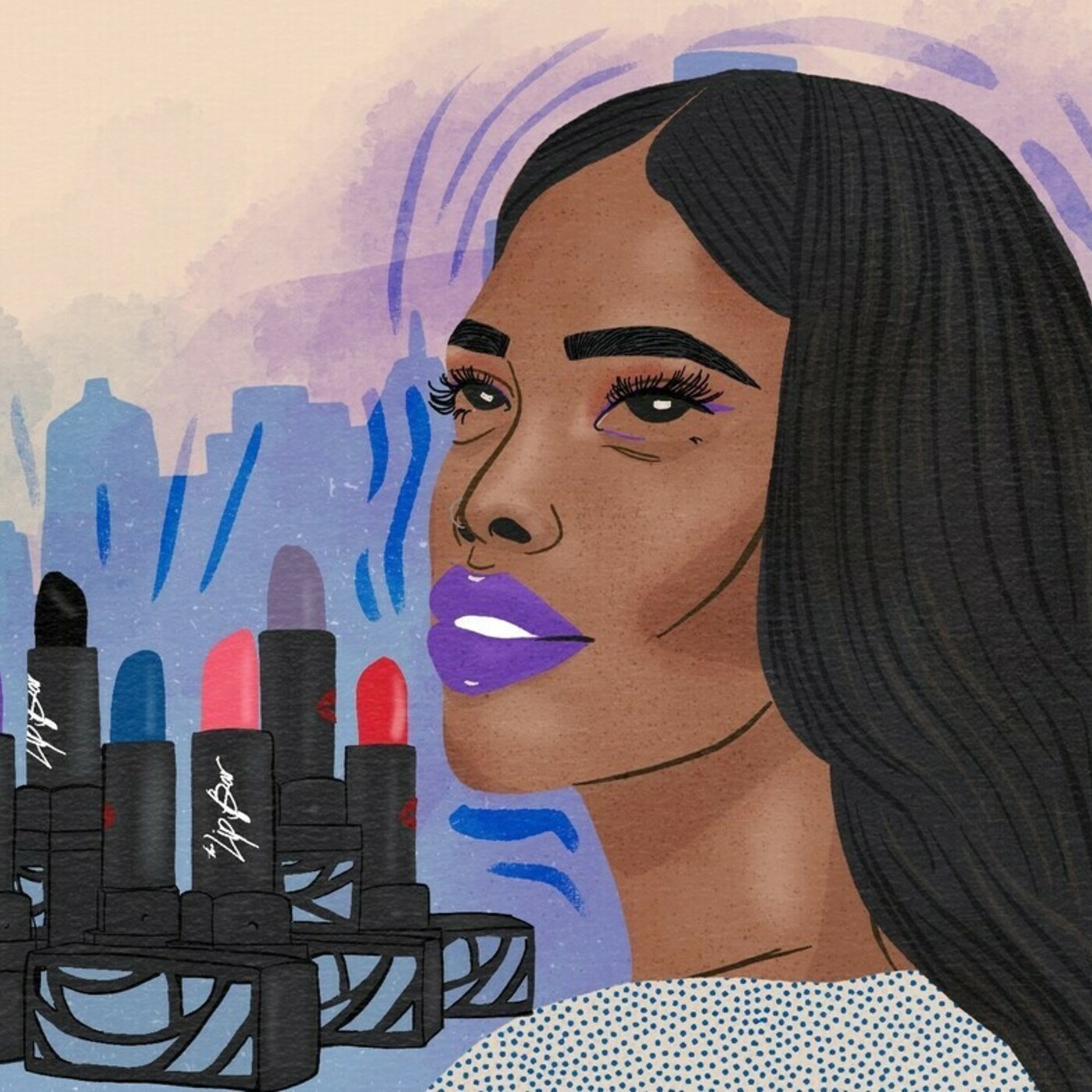
I mean, there is a lot of money in beauty. And so to stand out, brands really have to be about more than just the products. Which is exactly how Melissa Butler thought about her brand, the lip bar. When she started making her own lipstick in her apartment, she knew she wanted something that not only challenged the idea of what beauty is, but how we defined who it's meant to apply to.
Melissa wanted to make lipsticks that were bold and rash and vivid in colors that at the time weren't widely available. Blacks and golds and purples and bright neon pinks, shades and colors that were expressive and strong and confident, and most importantly, made for a whole category of women who weren't being served by the market. Which happened to be Melissa's cohort. Black and brown women who didn't feel like there was a makeup brand made with them in mind.
The story of how Melissa turned her kitchen stove project into a cosmetics brand that's now in hundreds of Target stores across the country, includes a cross-country promotional tour and a retrofitted airport shuttle bus, a disastrous appearance on Shark Tank, and a decision to move the business from New York to her hometown of Detroit, where she grew up with her sister and her mom in the 1990s. My mom was a crane operator, which is really crazy to say right now because I'm 34 and I've never ever met anyone else that was a crane operator, but basically she worked at a steel factory. You know, Detroit is automotive, so she was at a steel company that created steel and parts for the automotive industry. And so she would leave for work in the morning with a hard hat?
Steel boots. Yeah, definitely. Steel toe boots that I would sometimes put on and they were heavy as hell. I would put on and kind of wobble around the house with, and so she would go to work at 11 p.m.
and come home in the morning. And so I used to look at it as a disadvantage that I was raised in a one-parent household because everyone needs their dad and everyone needs both parents. You need that nature and that nurture. You need that protector and that provider.
You need your mom to be soft, or at least that's what I used to think. And as I've gotten older, I realize that it's probably one of my biggest advantages because watching my mom do something and work in an industry that is so mill-dominated, I think it was only her and her best friend. There were only two women in that entire steel factory. She saw that she had to live life for her and that no one was coming to save her.
So she taught us very early that we had to save ourselves. So it was like she directionally ingrained this pathway for both me and my sister. Was your mom, was she pretty strict? No.
My mom wasn't strict at all. My mom was working. She was working all the time. I could have been a very wild kid, but I wasn't.
I didn't sneak boys into the house. I remember growing up in those curious teenage years where you may be interested in drinking or maybe you want to smoke pot for the first time, or even like sex. I wasn't interested in any of it. And I've never been a person to study.
I would never say that I was a good student, but I always got good grades. I don't know Detroit Superwell. I've only been there briefly a couple times. Tell me about your neighborhood.
I mean your mom, I'm assuming was a union job and probably had a pretty solidly middle class income and health insurance and those kinds of things that came to the job. What was your neighborhood like? Guy, my neighborhood was horrible actually. And I'm from like one of the most dangerous neighborhoods in Detroit, but I never felt unsafe.
And even though we didn't have a lot, I never needed anything. So like in high school, for instance, I was one of the quote unquote cool girls who had like the designer clothes, but that was really my mom doing her best to provide for us what she felt like was satisfying us. And now, when I talked to her, I remember maybe a year ago, I was like, Mom, we were living way beyond our means. And she's like, yeah, but I did it for you.
And I'm like, that was irresponsible. And we kind of laugh about it now. But she was like, I just wanted you to be happy and I wanted to be able to provide for you the life that I felt like you deserved. Okay, so you did well at school.
You got good grades. And I guess you were able to test into a pretty competitive public high school in Detroit called Cast Tech, right? Yeah. It's right near downtown.
And it's essentially a college prep school. And it was probably 98% black students. Now it's a little bit more diverse because the city of Detroit is changing. So right now, there's a lot more investment in the city, whereas, you know, 15 years ago, no one was downtown Detroit.
So when I went to Cast Tech, it was surrounded by people who were either homeless or drug addicts. So it's like this amazing school that's in the midst of all the blight. So Detroit went through a really tough time and it hasn't been until maybe the last, you know, 10 years that it's experienced this renaissance. Do you remember as a, like as a high school kid thinking, I'm going to get out of this place.
Like I am going to leave this place and I'm going to make money and I'm going to do something really interesting in my life. Like do you remember having those thoughts? I don't. I don't think that I thought about, of course I thought about, you know, making money.
And girls are taught that we should build fairy tales in our minds. I remember as early as maybe eight years old thinking like, oh, when I'm 24, I'm going to get married. I'm going to have children and I'm going to be rich. That was probably the fairy tale that I told myself, not knowing what any of that meant.
So I never thought that I needed to leave Detroit, even with me living in a not so nice neighborhood. I didn't think that there was anything wrong with it. But I mean, soon after you graduated, you would wind up leaving Detroit. In fact, I mean, you left Michigan, right?
Yeah. And I was like, well, if I'm going to go to college, I'm going to go away. And most of my really good friends actually stayed in Michigan, but I knew that I wanted to go to HBCU. That was a given.
I knew that I wanted to be around black people. And so I didn't want to go to what we call a PWI, which is a predominantly white institution. I knew that I didn't want to go to Michigan State or Michigan because I wanted to have some pride and really have the black experience. Right.
So I guess you start off at Alabama State, which is in Montgomery, Alabama. But then you decided to transfer to Florida to Florida A&M in Tallahassee. Yeah. They were both two really great HBCUs and they both had really good business programs.
Like I knew that I wanted to get into business because in high school, I used to work at my cousin's clothing shop. So my cousin is my first exposure to entrepreneurship. He had a store in the mall. And he taught me everything about margin and pricing your product and hiring people.
And he also gave me a lot of independence. Now that I say that, I think that was the theme of my childhood. Having independence and being given this room to be a free thinker and come up with the answer for yourself because I'll never forget it was probably Christmas Eve. And he allowed me to count all of the money that we made that day.
And it was the most money I had ever seen. It was insane. And I think I counted maybe like $12,000. And I was just like, oh my God, he's rich.
I was like, whoa, I couldn't believe that number one, he let me count the money. And then number two, that we had made that much money that day. And my entire goal for going to college wasn't necessarily because I wanted to get a higher education. I didn't really care about it that much.
But I went to college because I was like, this is how I can make money. So what was your plan? Like, how are you going to do that? So literally, I switched my concentration and my focus to business finance.
And that's where I stayed. And I was like, okay, well, if I'm going to do this finance thing, I'm going to go and work on Wall Street because now I can be the Wolf of Wall Street, again, being influenced by pop culture. So I didn't know anything about it. Again, my mom was a crane operator and I had a cousin who was an entrepreneur.
But I didn't know that there were so many different paths to make money. So you wanted to get into finance. But before you graduated, you actually spent some time in China, like in Beijing, burning Mandarin. For six months.
And I had just been really fascinated with China. And this idea that China was about to be the next superpower. And I was like, that would make me valuable. If I wanted to learn about business, you know, if I'm this business girl, I should go to China and learn a little bit about their business.
But it was a complete culture shock. I think I was sharing that literally my entire life was black. Like, I came from Black Detroit. You know, I went to a black, all black high school in Detroit.
I went to a black college. And now here I am, the only black woman. And I'm in the middle of Beijing. It was so odd.
And I think they were also shocked, you know, people would come up to me and touch my skin. And everyone automatically assumed that I was, you know, from an African country because if you had black skin, then you were automatically from Africa. And if you were from America, then you were blonde hair, white eyes. Right.
I mean, how would you assess the whole experience? Was it? It was life changing. Yeah.
Oh, my God. It was life changing. Like, I understood, like, how big and small the world was. I understood how a woman from Detroit could have such synergy and connection with a woman from Iceland.
Like one of my really good friends who I met there, she was from Iceland. And like, she was my best friend when I was in the program sort of thing. And we would just talk about a lot of the same things, even though we had a completely different life. And I think for the first time in my life, I understood that we were all human and it wasn't just black, white, Asian.
It was just humans. Wow. So you come back to the U.S. and you decide to go work on Wall Street for Barclays Bank.
And when you got to New York, what was I like? Was it exhilarating? Would you just like, would you just kind of blown away by it? Or was it unnerving to be in this kind of corporate environment?
What was your memory of starting out at Barclays as an analyst? I thought, and I still think that New York is the most magical city on the planet. I was lost struck by all the big buildings. And I remember my first time being in the financial district, or our first office that I worked in was in Jersey City.
And just being a banker girl, I was like, whoa, this is crazy. And I started very quickly meeting other people who worked at JP Morgan Chase or worked at Goldman Sachs. And it was like a whole world. But I remember my first week being really excited and expressing that I wanted to learn.
And I wanted to learn as much as possible. And one of my managers was like, get over it, kid. They give shit bonuses. And I was like, wait, what?
I didn't know what that really meant. I didn't know what a good bonus was, what a bad bonus was. I just knew that he was unhappy. And a lot of my team members weren't unhappy.
So I think very quickly, like, I wasn't going to learn that much, but then also that if I stayed there, that I would be in this environment where no one likes their job. And like, from my perspective, I'm like, hell, I just got all these student loans. I had wrapped up like $50,000. So I didn't do all that.
I didn't go to college and get these student loans and go to China for six months to be in a career that I hate. And then from what you're telling me isn't necessarily even a career path that's desirable anymore. So I was disheartened, if I'm going to be honest. It was mostly white men.
And they asked me questions about my hair because I was a black woman. One of your superpowers is that you get to change your hair all the time and do whatever you want to do. And I was constantly asked about either of my hair or my clothes or if something happened in the media was a black person. And this is oftentimes the plight of a black person working in corporate America.
You're never able to be an individual. So every day I had to answer for the entire black race. And it was exhausting. Oh, working at Barclays was exhausting.
Fair enough. I mean, it sounds like the most boring job in the planet. Let's be honest. It is.
It sounds like boring. You make tons of money if you stick with it, but my God. Yeah, it's not fun. So you're doing this.
You're clearly. This is not like what you want to do about your life to, but you need the job. You need the money and you're kind of working and earning your paycheck, but I guess on the side you were kind of just looking for different creative outlets. And I read that one of them was making soap.
Yeah. So I had gotten really into this soap that was sold at Whole Foods. It was so expensive. My mom thought that I was crazy because I tried to call her mom.
I found this soap. It was so cool. And she's like, what is it? I'm like, well, first of all, it's expensive.
It's like $6 a bar. $6 soap. I grew up where my mom would buy like, you know, the six pack or eight pack of like dove or dial. And that whole thing was $6.
She's like, you're buying one bar of soap for $6. She's like, I don't want to know about it. So I'm buying these expensive soaps and as a hobby, because also I'm now listening to my mom. I'm like, wow, I am spending a lot of money on soap.
And I'm like, well, if this soap is so great because it's natural and it's handmade, then why can't I make it? So I first started making soap for my own personal use. And by the way, you're just like going online and looking up like how to make soap. Yeah, there were tons of like forums.
I took a soap making class. I'm buying all sorts of ingredients. I'm on YouTube learning how to make soap. I'm like reading books on soap making.
Like, I'm literally going in. It's insane. By the way, and what did you learn about how to make a bar soap? Like, I'm assuming it was like glycerin or vegetable oil or like, I don't know, what would you buy?
I don't melt it down on like your soap on your stove top, like in a pot or in a pot. Basically, in a pot with a pyrex, like a double boiler. You could make soap with glycerin, which was more moisturizing. But I didn't think that it cleansed you as well.
So the old fashioned way of making soap. And this is the way that I typically made them was with lye, which is dangerous. And it can burn you. And I definitely got burned up.
Yes, yes. And you had to handle it very carefully and then soap goes through a curing process. So it could take, you know, three months for your soap to cure or you can put it in the oven to cure that soap. And then I came up with this idea because I was really getting into like the creative component of making soap.
So I was thinking like, okay, well, what are all the different flavors that I can make? Like, I was making a strawberry bar and I put like dried strawberry in it. And I was like, I don't think that's really clean or sanitary. Because also, I'm not a chemist.
And I don't really know what I'm doing. And so when I'm coming up with these outlandish ideas, I don't have anyone to say like, hey, that's actually not good for pH balance. Or this is going to like, cause bacteria and mold to be able to. I'm trying all these different soap recipes and I'm trying to make it look all cool.
And, you know, have a gradient with the soap bar, like creating ombre soap bars. Like I spent so much time making soap and obviously so much money. By the way, I have to confess that sometimes when I'm at Whole Foods and I buy that soap area, you know, where they've got like those beautiful translucent bars of soap, like with things like flowers or whatever suspended in the soap. I kind of want to, it looks delicious.
Like part of me wants to just take a big bite out of it sometimes. They're beautiful. And oftentimes they are all natural. I mean, it's not going to taste good, but it won't kill you.
I mean, because like we did Lush on the show, we did the whole episode on Lush. And that stuff is beautiful too. Like, you know, the sliced, you know, loaf of soap. So here's the thing, I was obsessed with Lush.
And Lush is really like, I actually don't think I've had this full circle moment. But in my soap making, I was like, I want to be Lush. And I think that's what made me say like, I want to start a soap business actually. Because I was obsessed.
And clearly you start thinking, I mean, it sounds like the gears in your head were turning and you're like, wait a minute. There's Lush. There's all these, like maybe this is the business. Maybe I should do this as a business.
Like you start to think about this. Yeah. I'm like, maybe I should start a soap business. Like this is it.
This is my way out. I'm going to create a company. It's going to be called the soap bar. I love it.
Very creative soap bar. Right. I'm surprised that that name didn't exist, that it wasn't taken. No, it didn't exist.
And the concept was that all of the soaps would be named after drinks. Right. So I would have a margarita bar that was like, lemon in line, basically with sea salt on top. So I had all these really fun ideas and all these grand plans and ultimately one day I was calling a supplier.
And I was looking for, you know, more pigments for my soaps because I was trying to get really funky and fancy with my colors. Yeah. Well, ombre colors are, yeah. That's very challenging.
Yeah. Yeah. It takes a little work. It takes some time.
In braid design. And he's like, wait, slow down. Slow down. Do you want lip gloss pigments or do you want soap pigment?
Huh. And I was like, uh, lipstick. I knew nothing about lipstick, but I couldn't believe that I could buy lipstick pigments. And that was it for me.
Wait, you just call the supplier to ask for more pigments and they're like, lipstick or soap. And you're like, wait, lipstick. Yeah. And it was a split second.
It was so crazy because I paused. Yeah. Knowing good and well, I was like looking for soap pigments. It was almost something that felt like, like I shouldn't have been doing, like I shouldn't have access to it.
So when he said lipstick, I'm like, I can make lipstick. Oh, I'm done with this soap business. When we come back in just a moment, how Melissa spends down all of her savings to launch a lipstick business. And why after she's flat broke, she goes one step further and quits her day job.
Stay with us. I'm Guy Ros and you're listening to How I Built This from NPR. Hey, welcome back to How I Built This from NPR. I'm Guy Ros.
So it's right around 2010 and Melissa had just had one of those life changing phone calls with a supplier who asked, just kind of randomly, if she was looking to buy products to make soap or lipstick. And in that moment, she decided lipstick. For one thing, lipstick was actually one of the few kinds of makeup she wore. At the time, I think that I was into reds, oranges and purples.
Oh, yeah. And part of it, like part of the reason why when we launched the Lip Bar, we had such crazy colors is because I remember it being so difficult to find purple lipstick. Like, I want it purple so bad, but it's like only a couple of brands sold purple at the time. It was hard to find.
It wasn't in stock. And I'm like, why is it so difficult for me to have this bit of self-expression? And then I'm trying to think about like, well, what's the next step? Like, then you're going to get a box of just powder pigment powder for lipstick.
But how do you make lipstick? What do I go to learn about how to make a lipstick? Did you go online and type in lipstick recipes? Yeah, pretty much.
I probably google how to make lipstick. And there wasn't that much out there at the time, but instead I found a lot of lip balm. And lip balm is the cousin to lipstick. I'm like, okay, well, maybe I should start here.
Maybe I should start making lip balm and maybe I should start making lip gloss. And so I started looking for other suppliers to see if they have other things or recipes or other formula bases that I could use to start making my own product. And I just started experimenting and I probably made, I don't know, a thousand batches of lipstick, none of them worked before I found one that was like it. First of all, what do you melt together to just get the, you know, the base for lipstick?
Well, this is the way I've explained it. Like, all lipstick is basically the same. It has its same like core ingredients. All of it has wax, all of it has oil and all of it has a pigment.
Now, depending on the waxes, depending on the oils and the other additions, that's going to impact the amount of color, that's going to impact the texture. If it's soft, it's creamy, if it's moisturizing, if it's long lasting, now all of those other things are optional. And then depending on the proportions, like that's going to affect the texture. Like when you apply it to your lips, how that is sort of spread onto the surface of your skin, right?
Like a thinner coat or a thicker coat, things like that. Yeah, so if you have too much oil, it's going to be softened. It's going to feel luxurious on your lips, but that lipstick probably is going to break. If you have too much wax, then it's not going to spread on her lips in a nice, silky and creamy way.
If you don't have enough pigment, then you can have this beautiful color, like the actual lipstick, could be a bright pink, but when you actually put it on your lip, no color shows up. So it has to be a really delicate balance of pigment, oil and wax. It's like a really luxurious and expensive crayon. That's exactly what it is.
And when you have the ingredients and you start to melt stuff together, what did you pour it in? Are there like, can you just go online and get lipstick molds? Yes and no. So most companies, like the huge companies, the L'Oreal's of the world, they pretty much had a monopoly on the molds market.
So from my understanding, and this is in 2012, there were only a couple of suppliers in the US who made molds. And the biggest one was Kabbalah. And I was able to buy maybe four used molds and trust me, they were not cheap. I think I've spent like a whole paycheck on them.
Like thousands of dollars? Yeah, the molds were maybe $1,500 apiece. What are they made out of? Like metal?
Steel. So they were also very heavy. They bought maybe six or $8,000 in molds and how I bought them and how I had access to them is I found a lab that was going out of business. And I think they were in Louisiana.
And this guy was selling them and I found them on Craigslist, I think. I'm trying to imagine you and your apartment, like after working on the weekends, melting down all this stuff and experimenting with different colors and pouring it carefully into the mold and probably getting lipstick material all over your kitchen. Just stressing out. Yeah.
Everyone's brout. Like, there have been so many times where I would drop the pigment and it's impossible to clean it up because it's literal dye. It's literal dye that is in the makeup and in the lipstick. So, you know, everyone stoves.
I've lost security deposits. When people came to my house, like, it was literally a lab. Like, I definitely didn't have an apartment. Yeah.
I had a lab. And so, you know, the whole table would be spread out with all of my different ingredients that I kept in these airtight jars. And after I made, like, let's say I melted down this perfect lipstick and I poured it into the mold, I really wanted it to the lipstick to cure. So I would put it in the freezer.
So people would come over my house and want ice and I have no ice because my freezer's filled with lipstick molds. I'm like, oh, if you want ice, you're barking up the wrong tree. I don't have ice. And you were personally working, like, 60 hour weeks at Barclays.
Oh, yeah, absolutely. And I was so committed. I started looking for suppliers in China for packaging. I started, like, I would come home.
I would maybe get home at, you know, 7, 8 p.m. And then I would stay up until 3.30. Wow. You know, working on the recipe.
I have no idea how I functioned. And then I would get back up at 7 and go to work. And did you tell anybody about it? Were you, like, talking to friends?
Like, I'm making lipstick. I'm just really excited about this thing. Oh, absolutely. They were all my first customers.
Like, every single time I made a product. Like, I never wanted to drink my own Kool-Aid. So I would invite people over to try on the product. Like, what do you think about this?
What do you think about this? Who are you inviting over friends that you met in New York or people that you've known from college or? Both. People had known from college who were also in New York.
People I met at work. Anyone who would try it, honestly. I remember taking lipstick to work to actually like, Hey, I made this. Can you try it out?
And people were like, no, is it going to break me out? You made it. No, I don't. Does it, how do you know it works?
And I'm like, I don't. That's why I want you to try it out. We don't test on animals. Just on Barclays and Woods.
Just on humans. Yeah. And you're kind of experimenting and teaching yourself again and again. And at what point did you land on a recipe that you thought?
Yeah, because you said there's oil, there's wax, and there's color, right? And so there's the basic ingredients. But you want to get a certain type of wax and a certain type of oil and a certain type of color, right? That speaks to you.
So when did you know that you found that right formula? Yeah. I mean, my parameters for me were, they were just crystal clear. I was like, it needs to be vegan.
I don't want any animal products or any animal byproducts. And I want it to be as natural as possible without compromising the color. So I knew that I wanted to create wild and crazy colors. Things that you really didn't see on the market at that time.
And I want it to feel good. So what's something that feels really good and creamy? And I was like, shay butter. I'm going to put shay butter on lipstick.
And that was it. Like I just started then looking for ways to sort a shay butter or coconut oil. And I think I tried a ton of different natural ingredients to add to, you know, that baseline formulation. But really, you know, I found out that it was working when people started saying like, Hey, can I get a little bit more of that?
And that was it. And did any of your colleagues or colleagues or friends, were they assuming that this was something that you might like sell at a farmer's market on a weekend? Or like, was that what they assumed? Would they even ask you what you were going to do with this?
I think I made it very clear that it was going to be a website. And I don't think anyone took me serious until I got a shipment of our packaging. And here I am with 30 boxes, 30 boxes. Like they're on the couch.
They're on the floor. They're everywhere. And here I am just kind of waiting. Like you remember that company I said I was going to start?
Yeah. It's in my living room. And one side is all boxes. And one side is all of my lab materials.
And I think that's when they took me seriously. So you were personally making the sticks in your kitchen. And then you were putting them into the... Into the lipstick tubes.
Yep. Into the lipstick tubes. I think that packaging. I did.
And the inspiration behind the packaging because our packaging really stands out. It's really cool. It's intricately designed. And the inspiration was a bird cage.
Like I love like the old school Victorian bird cages that are just like super intricate. I don't like the idea of birds in cages. No. But I love the beautiful craftsmanship.
And so I was like, I want it to kind of look like that. I want something that doesn't look like a traditional too because I'm building a non-traditional company. And I had been asking a lot of friends like, you know, what do you think about makeup? And oftentimes, especially for black women, what I found was they felt like beauty wasn't for them.
Made for not for their skin or their complexion. Yeah, absolutely. That it wasn't for their complexion. That they never saw themselves within the industry that marketing didn't cater to them.
Unless they were, you know, putting something in a brown bottle. And then they're like, hey, this is for black people. So here I am friends with a lot of people who are now, for the first time in their lives, they have disposable income, you know, because we were all fresh out of college basically. And making a pretty solid salary.
And I was just like, there's a huge gap in terms of like what my generation wants and what's readily available in the market. You look at your website today and clearly your products in your brand, they're designed for every kind of person, every skin tone, every racial, ethnic background and group. When you were initially coming up with the idea, were you saying, you know, to your friends who you were kind of asking for feedback? Were you sort of saying, look, no one is serving us.
You know, we are consumers and we spend a lot of money on fashion and beauty and we don't feel like products are being made for us. And so I want to make products for us. Was that how you thought about it initially? Yeah, I think the goal was to create a brand where black women could be the default.
So we create products like you said for every single skin tone. Like it literally doesn't matter what complexion you are. We have something for you. But when we first launched in 2012, I was just like, I don't want black and brown women to feel like they have to fit in to the lip bar.
I want them to know that they are the lip bar and they're not the default anywhere else and my brand is going to be where that starts. Okay, so you come up with a really cool packaging design that looks kind of like a bird cage. And you've got this factory in China that can make the boxes. Do you remember how many packages, like lipstick dispensers you had to order?
Yeah, I think the minimum order quantity was 12,000 units. Wow, it was 12,000 units, like it stacked the boxes in your kitchen. Yeah. And you had to pack each one by hand.
You had to take the actual lipstick and pack it in. Every single one. So I hand poured it into the mold and my mold held, I want to say, one held 48 units and one held 72 units. So this is, yeah, this is, this is serious, but I think I launched with 12 shades.
And the goal was to have 500 of each main. So the good thing about being your own manufacturer is you control it. So I didn't have to use all 12,000. That certainly wasn't the goal.
I was like, okay, I'm going to invest in this 12,000. Maybe the goal would be to sell all of this in a year. Yeah. Now, the soap idea was going to be called the soap bar.
And so this was going to be called the lip bar. Was that name as a business available? The business name was available, the lip bar. I really wanted it to just be lip bar, but lip bar wasn't available.
Right. I didn't think too much about the name, if I'm going to be honest. I just took the whole concept of the soap bar and I was like, this is a really cool concept that I like. Now I'm going to apply it to this different product and boom, I have a business.
Yeah. And, and, but the soap bar, you were going to name each soap, like the margarita or the lime ricky or the gin and tonic. Were you going to do that with the lipsticks too? I did.
And so we have Cosmo, you know, that was one of our, our colors and gin and tonic. It is still one of our colors, actually. But we had things like Buzzy navel and all these like crazy names. It's our apple martini.
It was literally a green lipstick. Buzzy navel, I think, was like a light orange, like coral lipstick. And because it had that bar tie in, my concept was that whenever you bought a lipstick, you actually also got a recipe card for that drink. By the way, do you remember, I mean, you must have, I'm assuming you got 12,000, these tubes, right, the packaging for the lipstick.
You had to spend a lot of your money on this. Was any part of you nervous about doing that? I spent not even just like a lot of money. I think I spent all of my money guy.
I spent my entire savings because the thing that I didn't take into consideration was you buy it, but then you also have to get it here. So I learned a whole new skill set about like ocean freight and like dudiffs and tariffs and taxes and all that jazz. So I think buying the units and then actually getting them to my Brooklyn apartment may have cost me $13,000. I mean, and then on top of that, I have to buy all the ingredients.
I'm planning a launch party. I have to have pictures taken. So the startup cost for the business was probably around $30,000. Wow.
And so as you were getting ready to launch, this is still pretty much you doing everything. I mean, were you turning to friends for help at all? Yeah. My friends ended up being my founding team because I didn't know anything.
I didn't know any better. So Roscoe, who's our creative director, she moved to New York, like she moved to New York three weeks before we launched. And, you know, some of my other friends and finance, I'm like, can you do our sales? Can you do our branding?
Can you do? Like I had a team of six people. None of us were making any money. So Roscoe, somebody you knew from my school, she was a friend from my school?
Yeah. Roscoe had been one of my really good friends from high school. We both went to cast together. And you basically said, hey, Roscoe, I think her last name is Spears, right?
Mm-hmm. So she wanted to start a career in fashion. So New York was attractive to her anyway. And all of my friends, they just kind of were like, what's the liver?
I told them. And then they were like, okay, cool. And so now here we are, we have a business. And so I remember at our launch party, the very first person who showed up, we weren't even finished setting up yet.
She came like 30 minutes early. It was a beauty editor from Teen Vogue. And I think we were all stunned, like, wait, people care. People are listening.
And so it was a really fun event. And we got a lot of people to come, which was really interesting because we didn't really have a big budget and we didn't really know anyone in New York City. And we had gotten the attention of some beauty editors, so that was super cool. And we were so proud.
At a certain point, you were going to have to make the decision of whether to quit your job. Now, I shouldn't make the caveat here that you were one of the biggest advantages I think you had was that you were young. Yeah. That if it didn't work out, you know, you could maybe go back to finance or something like that.
But it sounds like you kind of just got to a point where you're like, yep, I'm ready. I'm going to quit my job and do this. And I think it happened in 2013. Would you nervous at all about quitting this job in finance?
No, I wasn't nervous. I think you're absolutely right. I think one of the, like, magical things about being a first-time founder, especially in an industry that you don't know anything about, you're completely naive. And you think that everything is going to work.
Like, I didn't have a plan, but I knew that it was going to work somehow. And our first year in business, we launched in 2012, I think we made $26,000, right? And that was mostly from friends and family who would... Yes, absolutely.
And you and your small group of friends were packing all the stuff. You were, like, making the lipstick and packaging them yourselves. No, that was actually all me. That's all you, okay.
Yeah, I was still making and packing all of the products. And my friends were, like, you know, maybe doing social media or helping with PR or, you know, Roscoe was planning a photo shoot. Roscoe's Lane has always been like, she's the visual person. Yeah.
But that $26,000, even though it's not a ton of money, I was so proud to make that $26,000. Yeah. I couldn't believe it. I was like, wait, what?
I think my job at Barclays, you know, I think I had been making, like, $70,000 or something at that time. And so, like, to make, you know, essentially a quarter of my salary, I was like, this is a thing. Yeah. All right.
So you quit, Barclays. Yeah. And does anybody, I mean, your mom, like, you know, she had to work really hard to, you know, to make a living, to support you. And then you go to the college and I'm sure so many people are so proud of you.
And you had relatives in Detroit who were like, oh, my gosh, she's behind your mom. I'm like, my daughter's at Barclays. And Wall Street, you know, I'm so proud and then you call me and you say, mom, I'm quitting. I'm starting a lipstick company.
What did, what did people in your family say? Oh, they thought I was crazy. My mom, she was like, what? And then I remember her literally explicitly saying, who's going to pay your bills?
And I was like, well, I'm going to pay my bills. I think I saved up. I tried to save up what I thought would be a year's worth of my expenses. I ran out in like six months, but my family thought I was crazy when I quit.
My feeling was just like, look, I am more comfortable with the idea of failure than I am with regret. And that's what made me say, I can do it. And now you are the CEO of Philipp R. I'm assuming you have no money, right?
There's no money. How are you financing? How are you financing this business? Oh, my goodness.
We're literally dead, bro. Me and Roscoe ended up like Airbnb, her bedroom, and she moved into my room so that we could like cover our expenses. You know, if the first year we made 26,000, then I think the next year we may have made 56,000, which is great. Yeah, that's growth.
Yeah, we're growing. But ultimately we're not really making money. We're not really profitable. And Roscoe was doing freelance work on the side.
Yeah, she's doing freelance work sometimes and I'm full-time and I say full-time with air quotes because it's not like I had any benefits or a salary, but I'm giving this my full attention. So I was still making the product in my kitchen, so I was focusing on innovation. I'm making new colors and I'm thinking of new marketing ideas because Roscoe was handling the creative in terms of our photo shoots, but basically I'm handling every single thing because my first team of friends, that first team had all fizzled out probably within the first, I don't know, nine months. Right.
So, yeah, I'm on social media. I'm documenting the process of me making lipstick and people are really intrigued by that. People can't believe that I'm actually making lipstick in my kitchen. So you are grinding away.
Roscoe's grinding away. You're trying to get this off the ground. You're doing this in New York and I guess around 2013, maybe 2014, you decide to move it to Detroit, like to go back to where you grew up. Why?
I mean, New York is the global center of fashion, one of the global centers of fashion. Yeah. Certainly the center of the fashion industry in the US, the big makeup brands, I think are headquartered there. So, why did you decide to leave New York?
Well, number one, I was running out of money. Right. We weren't making much money. I had been thinking about it like, should I stay in New York?
We had already made a lot of connections with beauty editors. We had been getting press, so I felt like we made a mark and we could still grow without being there. And then on top of that, I saw the narrative of Detroit changing. Around 2013.
Yeah. Yeah. So, you know, in 2012, when I first started the company, it was all about Detroit and Detroit's ruins. Yeah.
And in 2014, the narrative was changing. Shinola had just come to Detroit and people were investing in Detroit and downtown was becoming cool again. And I was like, I was like, yeah, I was like, maybe it's time for me to go home to build this business. And number one, I can be a part of this renaissance.
I can make sure that people who look like me are a part of this renaissance because, you know, I had been experiencing firsthand what gentrification looks like because I was living in Brooklyn. Yeah. And so I'm like, I knew that New York didn't meet me and that I could do a lot more in my hometown. You know, I never thought that Detroit really deserved the bad reputation that it had gotten.
And I wanted it to be a part of like this new thing and to meet the movers and shakers that were making it happen. So I was excited for the city. I just wanted to make sure that black people were a part of the resurgence. When we come back in just a moment, Hamilis and Roscoe spread the word about the lip bar first on a nationwide tour in a retrofitted airport shuttle bus.
And then with an appearance on Shark Tank, which does not go particularly well. Stay with us. I'm Guy Raz and you're listening to How I Built This from NDR. And one more thing.
The New York Times best-selling book How I Built This is now available. It's a great read and a great gift for anyone looking for ideas, inspiration, wisdom, and encouragement to have the courage to put out an idea into the world. It's filled with tons of stories you haven't heard about how some of the greatest entrepreneurs you know and respect started out at the very bottom. Check out How I Built This, the book available wherever you buy your books.
Hey, welcome back to How I Built This from NPR. I'm Guy Raz. So it's around 2014 and Melissa Butler has left New York and moved the business to her hometown of Detroit. And she knows that if women could just try her lipstick, could just see the colors, they love it.
So I knew that I wanted to be in retail, but I knew that we also weren't ready. So I decided that in order to get our products in front of customers, that we would instead of trying to figure out what counter can we get behind, how do we bring the counter to our customers? So we built the Lit Bar Truck, which was what we deemed the most glamorous beauty experience on wheels. And we went on a tour.
You built a truck that was decorated with your logo full of like an ice cream truck? So my ex-boyfriend built party buses from his bare hands. Wow. And I had the idea, I was like, I want you to build me basically a beauty store on wheels where people could come in, sit down, try on their product, we have music, and we really make it into an experience so that I can get my product in front of more people.
It's basically like a shuttle bus. So he took out the old funky seats and built a countertop, wrapped around the entire bus, built a cash register in the back, because the goal was always we're going to build this truck and then we're going to go on this tour. And we're going to go across the country spreading our message about these vegan and cruelty-free and inclusive lip colors. And you would just park on a street in a city?
So the plan, the initial plan was that I was just going to go to different cities and park on the street. But then when I learned that you're supposed to have a permit. And this was like the major plot twist because I didn't have time. I planned this so that I could go on tour once it was done.
And we had already been talking about it, I think on our social media. But the responsible part of me said, okay, why don't we find stores that we can park in front of and partner with? Because if you park in front of the store and it's kind of like an event in conjunction with that space because technically the brick-and-mortar store, they kind of own their sidewalk. So if we parked in front of a store that we had a relationship with, then we could do it without the permit.
So I started finding partners in all these different cities that I wanted to go to. And our most impressive partnership is that we got Urban Outfitters to agree. And this is the Urban Outfitters in DC to agree to partner with us. And they brought in water and drinks and they allowed us to park in front and they kind of rolled a red carpet so that it was clearly like a part of Urban Outfitters.
The one in Georgetown. Yeah. Yeah. So we were able to open up the side doors and we put a TV right there so that if people are just walking by, they can kind of see our messages flashing in display.
So people would naturally stop because they're like, this truck looks cool. So many people thought that it was like drinks naturally. So there would come up guys would come up and say, what do you got in there? You got beer?
No, we have lipstick. Come on up. Bring your wife. And then like often times the woman would come up because she was so intrigued.
She's like, you have lipstick on there? And she would come up and the whole truck was mirrors. Wow. And she would come on and she would try on the product and you know, she would more often than not love the product and make a purchase.