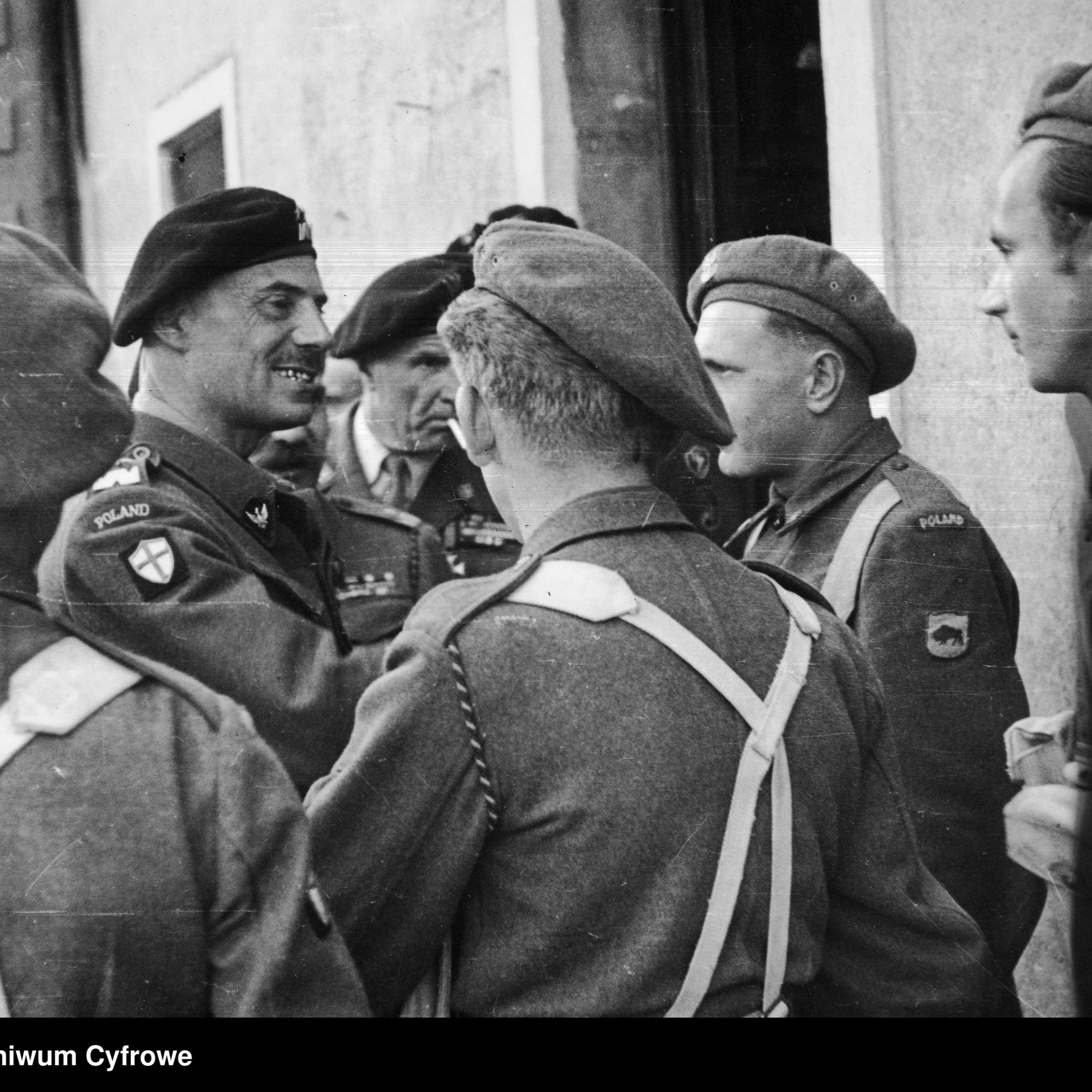
The long, dangerous WWII Polish Army diaspora to Italy, Gothic Line- Part 1 episode artwork

EPISODE · Aug 17, 2025 · 44 MIN

The long, dangerous WWII Polish Army diaspora to Italy, Gothic Line- Part 1

from WW II Gothic Line ghosts haunt modern day Italy, Europe · host joe kirwin

``The further backwards you can look, the further forward you can see,'' Winston Churchill on the need to know history By Joe Kirwin The story of war and the refugees it provokes is a story as old as homo sapiens. But few are as complicated, confusing and enduring as the story of how more than 100,000 Polish soldiers ended up fighting as part of the British Eighth Army in Italy in 1944-45 , including on the Gothic Line. The saga began when Hitler invaded Poland on Sept. 1, 1939 which triggered the start of WWII. The Soviet Union followed up with a Polish invasion two weeks later after the infamous Molotov-Ribbentrop Pact between Germany and the Soviet Union went into force. The dual invasions scattered hundreds of thousands of Polish refugees throughout Europe, Asia, Africa and other parts of the world. The heroic sacrifice to get to Italy and then again onto the battlefield climaxed in April 1945 when the second Polish Army Corp liberated Bologna in the final days of the Gothic Line Offensive and WWII in Italy. However there were no spoils of victory for the Polish Army in Italy thanks to the February 1945 Yalta Conference when British Prime Minister Winston Churchill and U.S. President Franklin Roosevelt ceded Eastern Europe control to the Soviet Union and its murderous dictator Josef Stalin.Michel Zarychta, an historian with the Polish Institute for National Remembrance in Warsaw provides the details of the complex Polish soldier diaspora triggered by WW II and how they ended up in Italy in this 2-part series about Poland and their contribution in Italy and the Gothic Line. The second episode of this two-part series focuses on the story of the Jewish father of prominent Italian journalist Enrico Singer. Leone Singer escaped to Italy in 1938 from central Europe and the Nazis and then again from the Italian Fascists and joined the Polish Second Army Corp in Ancona on the Adriatic Coast of Italy as they were launching their part of the Gothic Line Offensive. Photo of Polish General Wladyslaw Anders courtesy of Polish Institute for National Remembrance photographic archives.

``The further backwards you can look, the further forward you can see,'' Winston Churchill on the need to know history By Joe Kirwin The story of war and the refugees it provokes is a story as old as homo sapiens. But few are as complicated, confusing and enduring as the story of how more than 100,000 Polish soldiers ended up fighting as part of the British Eighth Army in Italy in 1944-45 , including on the Gothic Line. The saga began when Hitler invaded Poland on Sept. 1, 1939 which triggered the start of WWII. The Soviet Union followed up with a Polish invasion two weeks later after the infamous Molotov-Ribbentrop Pact between Germany and the Soviet Union went into force. The dual invasions scattered hundreds of thousands of Polish refugees throughout Europe, Asia, Africa and other parts of the world. The heroic sacrifice to get to Italy and then again onto the battlefield climaxed in April 1945 when the second Polish Army Corp liberated Bologna in the final days of the Gothic Line Offensive and WWII in Italy. However there were no spoils of victory for the Polish Army in Italy thanks to the February 1945 Yalta Conference when British Prime Minister Winston Churchill and U.S. President Franklin Roosevelt ceded Eastern Europe control to the Soviet Union and its murderous dictator Josef Stalin.Michel Zarychta, an historian with the Polish Institute for National Remembrance in Warsaw provides the details of the complex Polish soldier diaspora triggered by WW II and how they ended up in Italy in this 2-part series about Poland and their contribution in Italy and the Gothic Line. The second episode of this two-part series focuses on the story of the Jewish father of prominent Italian journalist Enrico Singer. Leone Singer escaped to Italy in 1938 from central Europe and the Nazis and then again from the Italian Fascists and joined the Polish Second Army Corp in Ancona on the Adriatic Coast of Italy as they were launching their part of the Gothic Line Offensive. Photo of Polish General Wladyslaw Anders courtesy of Polish Institute for National Remembrance photographic archives.

NOW PLAYING

The long, dangerous WWII Polish Army diaspora to Italy, Gothic Line- Part 1

0:00 44:51

No transcript for this episode yet

We transcribe on demand. Request one and we'll notify you when it's ready — usually under 10 minutes.

Frequently Asked Questions

How long is this episode of WW II Gothic Line ghosts haunt modern day Italy, Europe?

This episode is 44 minutes long.

When was this WW II Gothic Line ghosts haunt modern day Italy, Europe episode published?

This episode was published on August 17, 2025.

What is this episode about?

``The further backwards you can look, the further forward you can see,'' Winston Churchill on the need to know history By Joe Kirwin The story of war and the refugees it provokes is a story as old as homo sapiens. But few are as complicated,...

Can I download this WW II Gothic Line ghosts haunt modern day Italy, Europe episode?

Yes, you can download this episode by clicking the download button on the episode player, or subscribe to the podcast in your preferred podcast app for automatic downloads.
URL copied to clipboard!