The Long War on Iran
from Ralph Nader Radio Hour Hosted by Ralph Nader
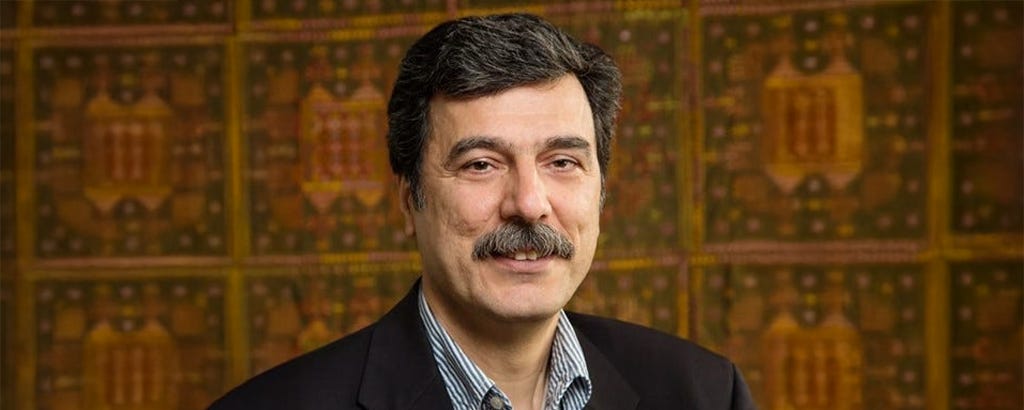
Ralph welcomes sociologist and historian Behrooz Ghamari-Tabrizi to discuss the United States' war of aggression on Iran. Behrooz Ghamari-Tabrizi is an Iranian-born American historian and sociologist. He is a Research Fellow at the Center for Place, Culture, and Politics at the CUNY Graduate Center. He was the Chair of the Department of Near Eastern Studies and Director of the Sharmin and Bijan Mossavar-Rahmani Center for Iran and Persian Gulf Studies at Princeton University. He is the author of four books on different aspects and historical context of the Iranian revolution of 1979 and its aftermath. The only countries that I see that are in constant violation of international law is the United States and Israel. And frankly, I am speechless, although I’m speaking, but I am speechless—in what universe can this war be justified as self-defense? You listened to Secretary Rubio’s speech in Munich where he laments 400 years of colonial rule being lost to this international law and laws of fighting wars because they want to go back to the way things were in the 18th and 19th century. This is a naked expansionist, extortionist administration here, and that’s the only reason they have launched this war, and there is absolutely no justification for it. Behrooz Ghamari-Tabrizi For years and years, the Israelis have been assassinating Iranian scientists. They were sabotaging Iranian industries. And actually, the Iranian government showed tremendous restraint in responding to these Israeli provocations because they didn’t want to create the situation in which we find ourselves today. But then at the end of the day, calling Iran the aggressor here I think is a total ignorance of history and the context in which this war has started. Behrooz Ghamari-Tabrizi All these things are not to suggest that the Iranian government in any form or shape is a democratic and just state. But the question here is about the sovereignty of the Iranian state. And the only inheritance of the revolution that has been kept throughout these forty-odd years was the question of sovereignty. Because that was one of the demands of the revolution. The question of social justice was thrown out of the window after the revolution. The question of civil liberties was thrown out of the window after the revolution. The only thing that is left is Iranian sovereignty. And according to every single intelligence study, what Iranians do outside their borders is a defensive posture. Iran does not have an expansionist agenda. Behrooz Ghamari-Tabrizi News 3/6/26 * Last week, Bill and Hillary Clinton testified before the House Oversight Committee on their respective relationships with financier and sexual predator, Jeffrey Epstein. Hillary Clinton, in a deposition described as contentious, maintained that she had virtually zero connections with Epstein, stating at one point “I am so tired of answering that question,” per PBS. Former President Bill Clinton meanwhile, tried to downplay his relationship with Epstein, describing it as “cordial,” and claiming that he had come to an arrangement with Epstein where the financier provided his private jet for humanitarian trips in exchange for Clinton discussing politics and economics with him. The committee pressed Clinton on this point, noting that Epstein visited the White House numerous times during Clinton’s presidency and that there are photos of the two men shaking hands. Clinton told lawmakers he “did not recall those interactions.” These answers leave much to be desired. * Meanwhile, another Epstein associate occupies the Oval Office today – Donald Trump – and on February 26th the Wall Street Journal reported that the Department of Justice, under the stewardship of Attorney General Pam Bondi, has been withholding interviews with a woman who accused President Donald Trump of sexual assault back in the 1980s. As the Journal writes, the suppression of this interview “raises new questions about the Justice Department’s handling of the Epstein files release and the pages that have been kept private.” The Journal adds that “Trump officials initially opposed the release of the files and then fumbled their response, including inconsistent redactions that exposed dozens of Epstein victims and initially kept some prominent men’s names hidden.” However, on March 5th, POLITICO reported that the FBI has now published a trio of FBI interviews with the woman who accused the president of sexually assaulting her in collusion with Jeffrey Epstein. Trump and his allies categorically deny any wrongdoing on the part of the president, with White House press secretary Karoline Leavitt calling the allegations “completely baseless…backed by zero credible evidence, from a sadly disturbed woman who has an extensive criminal history.” This story also highlights what is sure to be the next flashpoint in this saga: on Wednesday, a House committee voted to subpoena Attorney General Pam Bondi to testify about her handling of the Epstein files. * Turning to media news, last week we covered how Paramount-Skydance, led by the Ellison family and backed by the Trump administration, outmaneuvered Netflix to close a deal acquiring Warner Bros. Discovery – including CNN. Throughout this process, many have raised the alarm that if the Ellisons were to get their hands on CNN, they would turn it over to their ideological attack dog, Bari Weiss, as they did with CBS News. Variety is now echoing those concerns, reporting that “It’s expected that Weiss will have a big role in steering CNN.” Just what exactly this role will be remains to be seen, but given her tenure as editor-in-chief of CBS News, there is much cause for concern. * In related news, Variety reports Warner Bros. Discovery CEO David Zaslav has filed to sell 4,004,149 shares – over $114 million worth of stock – in the company following the announcement of the sale to Paramount, including Paramount’s eye-popping offer of $31 per share. Zaslav retains additional stock and options which he could cash out as the deal moves forward. Curiously, even as the Trump administration backed the Paramount buyout over the Netflix deal, the president himself continues to bank on the fiscal stability of the streaming giant, with the Hollywood Reporter documenting that Trump bought between $600,000 and $1.25 million worth of Netflix debt in January, adding to the $500,000 to $1 million in Netflix bonds that he purchased in December. This story notes that while the Netflix-Warner deal fell through, Netflix walked away with a $2.8 billion “break-up fee,” and an investment grade credit rating, unlike both WBD and Paramount. * Looking at domestic politics, this week primaries were held in Texas and North Carolina which yielded the nomination of James Talarico in Texas, beating out Congresswoman Jasmine Crockett for the Democratic nod, and the razor thin victory of incumbent Valerie Foushee over her progressive challenger Nida Allam in the Durham-Chapel Hill region. But many more primary battles lay ahead, perhaps the most interesting of which is unfolding in Maine, where the Bernie Sanders-backed veteran-turned-oysterman Graham Platner is duking it out with Chuck Schumer’s preferred candidate, outgoing Governor Janet Mills. Platner, despite damaging stories, has continued to draw massive crowds and enjoys a huge polling advantage. Last week, Platner’s allies, led by United Autoworkers President Shawn Fain, staged a sort of intervention with Schumer, with Fain lambasting the “shortcomings” in Democratic leaders’ approach to the 2026 midterms, “particularly their failure to adequately listen to working-class voters.” Michael Monahan, a high-level official in the International Brotherhood of Electrical Workers, also sent a letter to the Democratic Senate Campaign Committee strongly urging the DSCC to “refrain from intervening further in [the Maine] primary.” A mid-February independent poll found Platner with a 38-point lead over Mills among likely Democratic primary voters, yet the … Get full access to Ralph Nader Radio Hour at www.ralphnaderradiohour.com/subscribe
Embed this episode
No transcript yet.