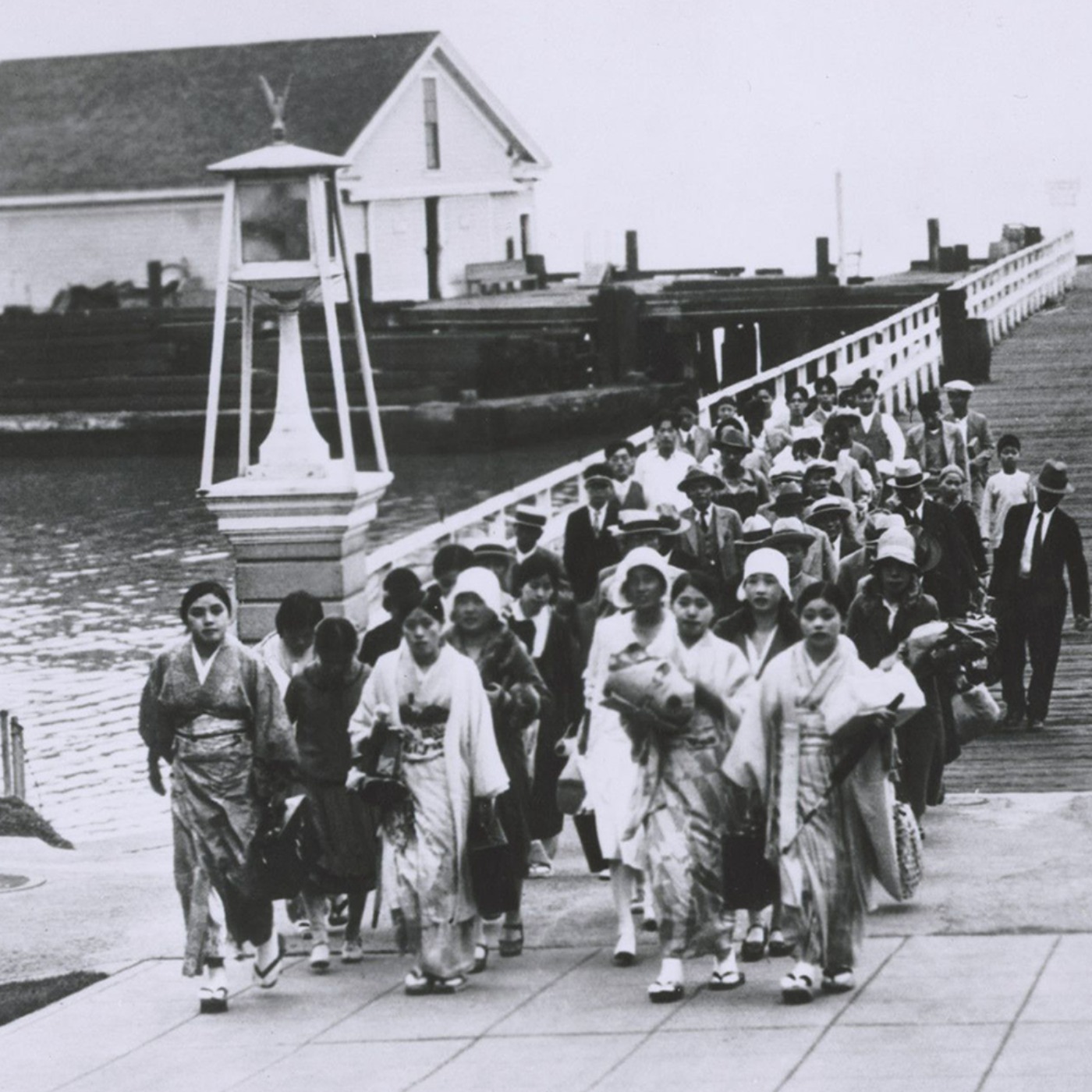
The making of racialized US immigration control episode artwork

EPISODE · Dec 12, 2025 · 1H 27M

The making of racialized US immigration control

from Berkeley Talks

Before there was the Chinese Exclusion Act, there was the Page Act. Passed in 1875 amid growing anti-Chinese sentiment in the 19th century, the Page Act was one of the first national immigration laws in the United States. It targeted several categories of people, including contract laborers from Asia, women brought in for sex work and certain convicted criminals. In practice, however, it functioned mainly to restrict Chinese and other Asian women from entering the country.“It had enormous implications for the issues of race, gender and labor in U.S. immigration history and Asian American history,” says UC Berkeley history professor Hidetaka Hirota, who moderated a campus discussion in April to mark the Page Act’s 150th anniversary.In this Berkeley Talks episode, a panel of Berkeley scholars unpack how the Page Act helped institutionalize racially targeted exclusion and gendered surveillance at the border, and how it laid the groundwork for the 1882 Chinese Exclusion Act and later immigration laws. They also challenge the enduring myth of the “white bootstrapping ethnic,” supposedly living “the right way” without state support, showing instead how immigration and welfare regimes were structured to advantage European newcomers while systematically excluding Asians and other people of color.Panelists include Catherine Ceniza Choy, professor of ethnic studies; Cybelle Fox, professor of sociology; Leti Volpp, professor of law; and Hidetaka Hirota, associate professor of history, who moderated the conversation. The event, which took place on April 23, was hosted by Berkeley’s Social Science Matrix and was co-sponsored by the Berkeley Interdisciplinary Migration Initiative, the Department of Sociology, the Department of History, the Department of Ethnic Studies, the Asian American Research Center and the Center for Race and Gender.Watch a video of the discussion.Listen to the episode and read the transcript on UC Berkeley News (news.berkeley.edu/podcasts/berkeley-talks).Music by HoliznaCC0.Photo from the National Archives. Hosted on Acast. See acast.com/privacy for more information.

Before there was the Chinese Exclusion Act, there was the Page Act. Passed in 1875 amid growing anti-Chinese sentiment in the 19th century, the Page Act was one of the first national immigration laws in the United States. It targeted several categories of people, including contract laborers from Asia, women brought in for sex work and certain convicted criminals. In practice, however, it functioned mainly to restrict Chinese and other Asian women from entering the country.“It had enormous implications for the issues of race, gender and labor in U.S. immigration history and Asian American history,” says UC Berkeley history professor Hidetaka Hirota, who moderated a campus discussion in April to mark the Page Act’s 150th anniversary.In this Berkeley Talks episode, a panel of Berkeley scholars unpack how the Page Act helped institutionalize racially targeted exclusion and gendered surveillance at the border, and how it laid the groundwork for the 1882 Chinese Exclusion Act and later immigration laws. They also challenge the enduring myth of the “white bootstrapping ethnic,” supposedly living “the right way” without state support, showing instead how immigration and welfare regimes were structured to advantage European newcomers while systematically excluding Asians and other people of color.Panelists include Catherine Ceniza Choy, professor of ethnic studies; Cybelle Fox, professor of sociology; Leti Volpp, professor of law; and Hidetaka Hirota, associate professor of history, who moderated the conversation. The event, which took place on April 23, was hosted by Berkeley’s Social Science Matrix and was co-sponsored by the Berkeley Interdisciplinary Migration Initiative, the Department of Sociology, the Department of History, the Department of Ethnic Studies, the Asian American Research Center and the Center for Race and Gender.Watch a video of the discussion.Listen to the episode and read the transcript on UC Berkeley News (news.berkeley.edu/podcasts/berkeley-talks).Music by HoliznaCC0.Photo from the National Archives. Hosted on Acast. See acast.com/privacy for more information.

NOW PLAYING

The making of racialized US immigration control

0:00 1:27:28

No transcript for this episode yet

We transcribe on demand. Request one and we'll notify you when it's ready — usually under 10 minutes.

Carnivores Don't Get Sunburn - Carnivore Diet Talks Carnivores Don't Get Sunburn - Carnivore Diet Talks Welcome to “Carnivores Don’t Get Sunburn,” where we have fun and explore the carnivore diet and its transformative power. Join us as we uncover real stories from individuals who have thrived on this diet, defying convention and embracing optimal health. Plus, stay tuned for our upcoming documentary featuring diverse carnivores overcoming health challenges. Learn more at www.carnivoredietdocumentary.com.Excitingly, we’re working on an upcoming documentary where we’ll feature carnivores from various walks of life, conquering diverse health challenges. Join us on this journey and learn more at www.carnivoredietdocumentary.com.Join us in uncovering the power of the carnivore diet. Prepare to be inspired, informed, and empowered to embrace optimal health and well-being.Welcome to “Carnivores Don’t Get Sunburn: Unveiling Real Stories of the Carnivore Diet.” Stay tuned for our upcoming documentary. Discover how this lifestyle can transform lives. Learn more at www.carnivoredietdocumentary.com IT IS WHAT IT IS with SHALLZ - SHALLY ZOMORODI Shally Zomorodi What?  "It is what it is" with ShallZ – Shally ZomorodiWhen? WeeklyHow long? 35 minutesEvery week, Mother of 4, wife, morning TV news anchor and ultimate hostess, Shally Zomorodi talks about life - its up's and downs and how to stay on track in her weekly podcast, ‘It is what it is.’  Known for her high energy, infectious smile and ability to see the cup as half full Shally talks about all things in life and how to work through its challenges. From parenting, marriage, friendships, current events to how to smile when it just seems impossible ‘It is what it is’ is the perfect podcast to help inspire you to dance through the rain. Tracking Nuclear Weapons Programs Center for Strategic and International Studies The CSIS Proliferation Prevention Program talks to experts about transparency and nuclear weapons. Cover Stories with Chess Life US Chess Chess Life Editor John Hartmann talks to the authors of each month's Chess Life cover story.

Frequently Asked Questions

How long is this episode of Berkeley Talks?

This episode is 1 hour and 27 minutes long.

When was this Berkeley Talks episode published?

This episode was published on December 12, 2025.

What is this episode about?

Before there was the Chinese Exclusion Act, there was the Page Act. Passed in 1875 amid growing anti-Chinese sentiment in the 19th century, the Page Act was one of the first national immigration laws in the United States. It targeted several...

Can I download this Berkeley Talks episode?

Yes, you can download this episode by clicking the download button on the episode player, or subscribe to the podcast in your preferred podcast app for automatic downloads.
URL copied to clipboard!