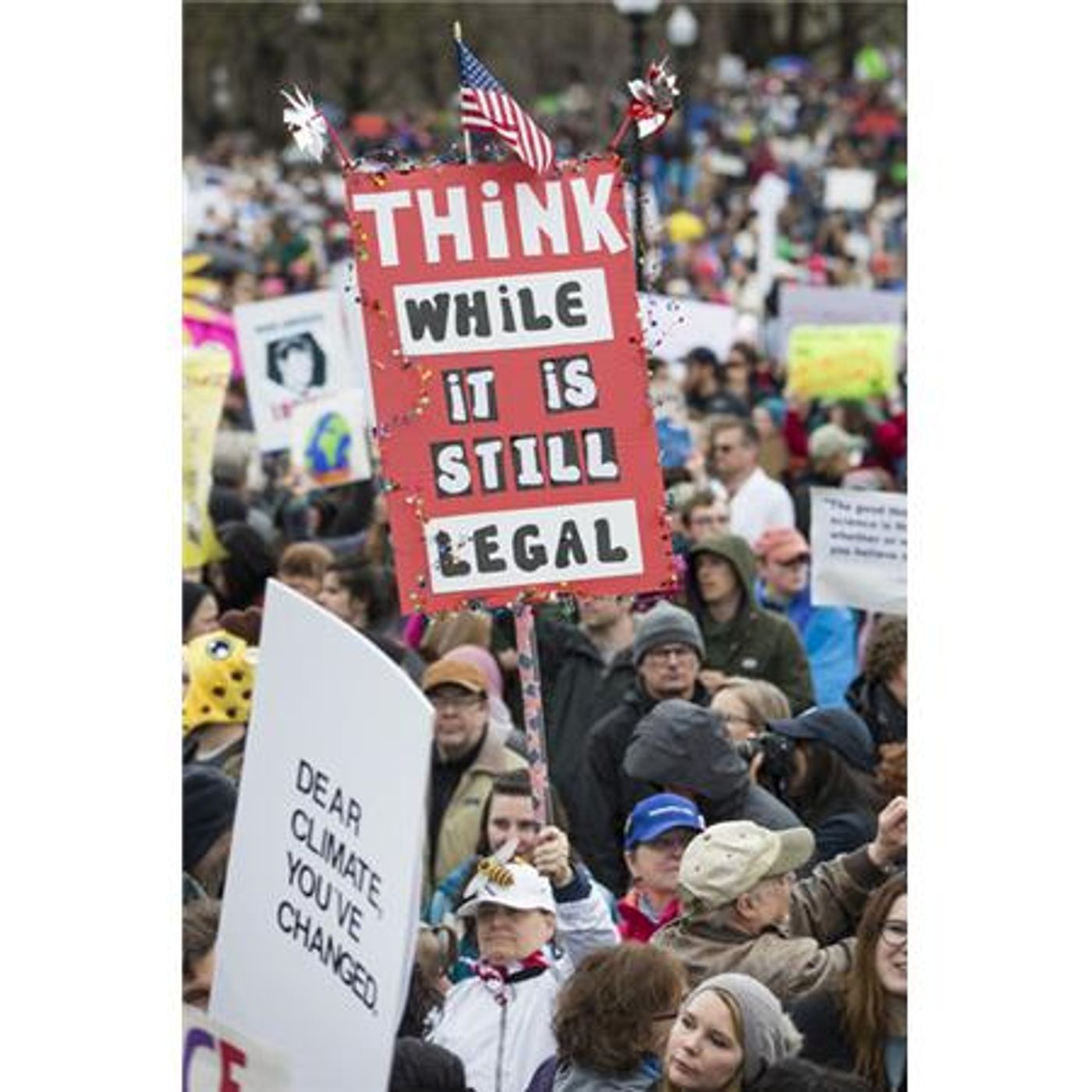
The March for Science episode artwork

EPISODE · Apr 23, 2017 · 39 MIN

The March for Science

from Bostonred · host bostonred

They marched for science, and at first, they did so quietly. On Saturday, as thousands of people started streaming eastward from the Washington Monument, in a river of ponchos and umbrellas, the usual raucous chats that accompany such protests were rarely heard and even more rarely continued. “Knowledge is power; it’s our final hour,” said six enthusiastic people—to little response. “What do we want? Science! When do we want it? After peer review!” shouted another pocket of marchers—for about five rounds.Scientists are not a group to whom activism comes easily or familiarly. Most have traditionally stayed out of the political sphere, preferring to stick to their research. But for many, this historical detachment ended with the election of Donald TrumpErich Jarvis called for both political parties to continue their support for scientific research. “Science has always received bipartisan Congessional support, and I’m an example where that support made a difference,” he said. As an African-American, raised in a poor neighborhood of New York City, he benefited from government-funded programs designed to support diversity. “That gave me the opportunity to be a scientist and contribute to this society. If 4 more years go by without this funding, we’ll miss a critical period to train the scientists of tomorrow. We’ll not get a second chance.”.the Atlantic

Episode metadata supplied by the publisher feed · Published Apr 23, 2017

They marched for science, and at first, they did so quietly. On Saturday, as thousands of people started streaming eastward from the Washington Monument, in a river of ponchos and umbrellas, the usual raucous chats that accompany such protests were rarely heard and even more rarely continued. “Knowledge is power; it’s our final hour,” said six enthusiastic people—to little response. “What do we want? Science! When do we want it? After peer review!” shouted another pocket of marchers—for about five rounds.Scientists are not a group to whom activism comes easily or familiarly. Most have traditionally stayed out of the political sphere, preferring to stick to their research. But for many, this historical detachment ended with the election of Donald TrumpErich Jarvis called for both political parties to continue their support for scientific research. “Science has always received bipartisan Congessional support, and I’m an example where that support made a difference,” he said. As an African-American, raised in a poor neighborhood of New York City, he benefited from government-funded programs designed to support diversity. “That gave me the opportunity to be a scientist and contribute to this society. If 4 more years go by without this funding, we’ll miss a critical period to train the scientists of tomorrow. We’ll not get a second chance.”.the Atlantic

PodParley-generated summary based on available episode metadata and transcript content.

NOW PLAYING

The March for Science

0:00 39:55

No transcript for this episode yet

We transcribe on demand. Request one and we'll notify you when it's ready — usually under 10 minutes.

No similar episodes found.

No similar podcasts found.

Frequently Asked Questions

How long is this episode of Bostonred?

This episode is 39 minutes long.

When was this Bostonred episode published?

This episode was published on April 23, 2017.

What is this episode about?

They marched for science, and at first, they did so quietly. On Saturday, as thousands of people started streaming eastward from the Washington Monument, in a river of ponchos and umbrellas, the usual raucous chats that accompany such protests were...

Can I download this Bostonred episode?

Yes, you can download this episode by clicking the download button on the episode player, or subscribe to the podcast in your preferred podcast app for automatic downloads.
URL copied to clipboard!