Searchlight Pictures presents Wild Horse Nine, only in theaters Friday. Earning rave reviews at the Toronto Film Festival? Don't miss this wildly entertaining movie that critics are calling easily one of the best films of the year. Starring John Malkovich, Sam Rockwell, Steve Buscemi, Parker Posey, and Tom Waits. And written and directed by Academy Award winner Martin McDonough. See Wild Horse Nine only in theaters Friday. Get tickets now. I went and I read this past week. I read The Meditations. Oh, really? What'd you think? I was really knocked out by it. Yeah. And I'm knocked out by it on a couple of different levels. Do you want to get into those? Do you want to get into those levels? I have questions I want to ask you, but I want to hear this more. Well, so...
you know number one you you go i had the same feeling reading marcus aurelius that i did like when i first read when i first read samuel peeps which is like oh my god he's a dude i mean yeah a glimpse into the humanity yeah and so and so he lived a long long time ago but his concerns are not very different from our concerns yes okay so that so that's so that's one thing there is that there's a time travel a time travel element too you see yourself in there in a way that you don't see yourself let's say in the new testament or certainly or even in aristotle right you're just like this is smart and i guess But you seem like a person wearing a toga that I don't understand. And he's talking to you. I mean, he's talking to himself. The book is, I think, probably addressed himself. But he's talking to you. And he's talking to you and he's making sense. And so here's the other thing that I went towards. He's talking about death and he's talking about how to live as a human in the face of death in the years where Christianity is being developed and coming up with a very, very different answer. Aurelius is basically saying, okay, so death is simply a fact of life. And to accept that changes.
changes everything. It's natural. It's part of the natural world. It's less natural than birth. And it's part of you. Whereas you have Christianity on the other side saying, to me, what is the greatest philosophical mistake in the history of humanity, which is the wages of sin or death? I think that is a mistake. And I think it's actually a deadly mistake. And upon that deadly mistake is premised, to me, mankind's worst invention, its worst idea, which is hell.
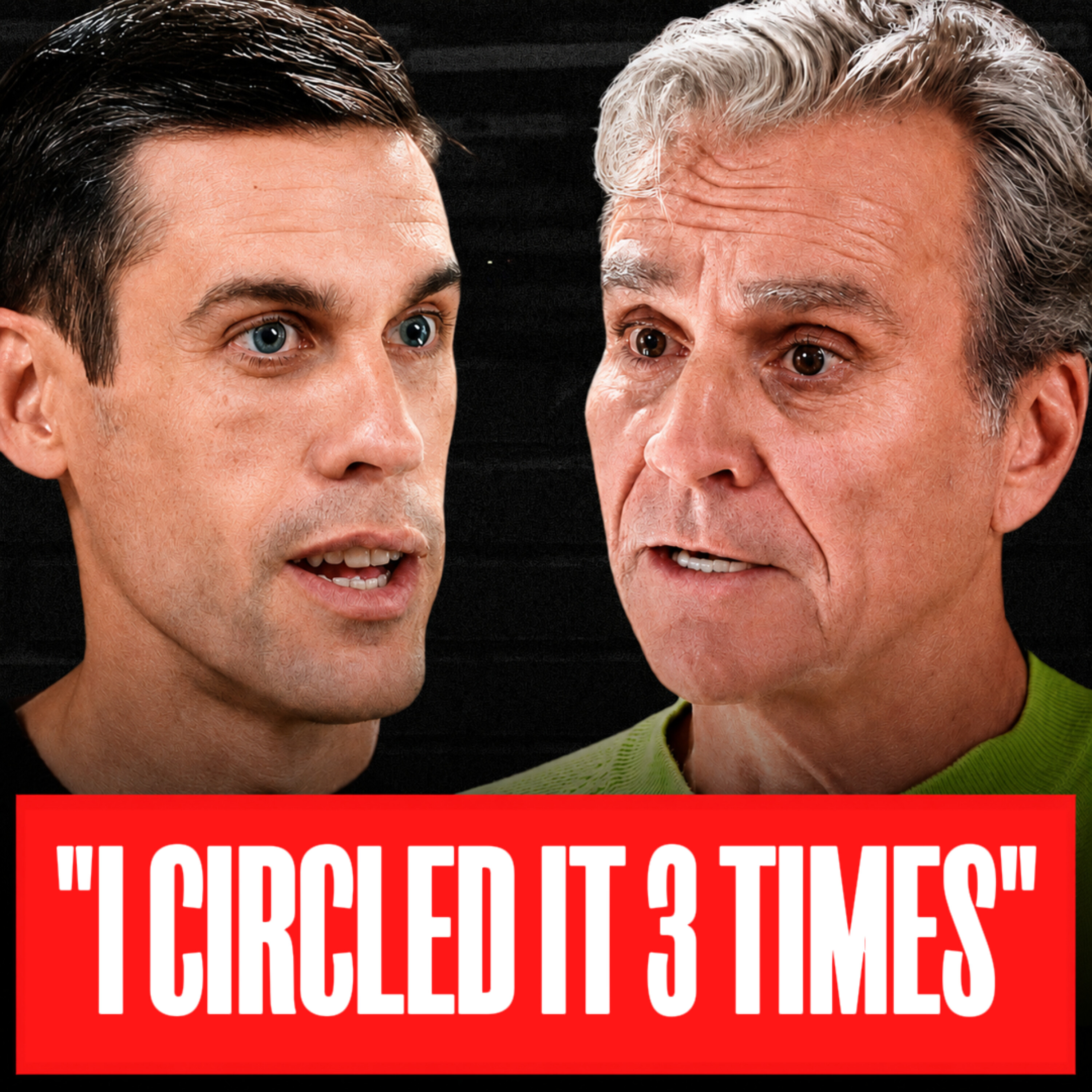
Well, so I've said this before, like, cause yeah, Marx really is in Christianity at the same time. Jesus, Seneca born the same year, both in provinces of the same empire, both die at the hands of the state. I've said like the, the Christian argument is like, don't sin or you will go to hell. And I think the stoic argument is don't sin or you will live in hell. Like it's a, it's a somewhat logical argument against excess and cruel. Like when he says the best revenge is to not be like that. Okay. So that sentence of all the sentences in the book, that is what I've circled it three times. I have stars. I have the page dog ear to it. I mean, that is the sentence. Yeah.
Look, it's been a while since I've had to fill out an expense report. That's one of the perks of not having a job. But I don't remember enjoying the experience. And certainly, I don't want my employees to waste a bunch of their time doing it. You know, you got to find the receipt. You got to guess what category it goes in. Then finance is asking you, well, what about this? Or are you sure this was proper? Or, you know, what if you didn't have to do any of that? It's bad use of your time. That's bad use of company time. Expense reports are tedious. It's not what I want my employees doing. Well, Ramp makes collecting and submitting expenses super simple. With Ramp, expenses submit themselves. You just text or email your receipt and Ramp categorizes codes and submits it. And when you book business travel with Ramp, they find the best flights and hotels you're actually allowed to book. You don't find out later that your company is only partially going to cover it. Ramp is the only finance platform that employees and finance teams both rave about.
And companies have saved over $12 billion with Ramp. I think every business owner, every employee is trying to find tools that reduce the amount of admin process that they have to go through. And Ramp helps you do that. Ramp helps your team save time with one of those most tedious admin tasks. Time is money. Save both with Ramp. New customers get $250 off at ramp.com slash daily stoic. Go to ramp.com slash daily stoic.
Searchlight Pictures presents Wild Horse 9, only in theaters Friday. Earning rave reviews at the Toronto Film Festival? Don't miss this wildly entertaining movie that critics are calling easily one of the best films of the year. Starring John Malkovich, Sam Rockwell, Steve Buscemi, Parker Posey, and Tom Waits. And written and directed by Academy Award winner Martin McDonough. See Wild Horse 9 only in theaters Friday. Get tickets now.
in the book that has stood out to me. I keep like a chapbook and stuff and that goes there. And so I think that the book really gave me some hope. I don't read philosophy that much. I read poetry a lot more than I read philosophy, but both poetry and philosophy give me difficulty in that they don't tell a story usually. I mean, some poetry does, obviously, like epic poetry and stuff, but philosophy...
doesn't tell a story. And so I have trouble with it. But Aurelius spoke to me in a way that was really powerful. And now I want to learn more about Seneca, for sure. I think Aristotle said both the philosopher and the poet are concerned with wonder. And I think you don't get that when you read, ironically, Aristotle or most of the other philosophers. But when you read Marcus Aurelius, it doesn't feel like he's doing philosophy, but he is, right? By talking about himself. It's similar to Montaigne, where he's like, who am I? Why am I here? What's going on? What does this mean? How could I do it differently? That is philosophy. It definitely does not feel like he's doing philosophy. It feels like he's talking to you. And he feels in certain ways like a modern...
day advice writer, you know, so-called self-help writer. Well, there's a French philosopher named Pierre Hadot who wrote this book about Mark Sturros and Meditations, and his argument is that that is doing philosophy. Writing notes to yourself about your temper, about your fear of death, about your anxiety, about obnoxious people, reminding yourself of what you believe, oftentimes right after you've just acted in contrary to that belief. That's philosophy, not... philosophical discourses where you attempt to explain or to get at something right or wrong. Yes. Yes. Meditations is philosophy for Marcus Aurelius and it's accidental byproduct is that you and I can read it 2000 years later. Right. And so I was really happy to read it because I'm trying to figure out like what's my next book to write. And that it's, that's, I mean, I'm not saying that I'm going to like do my own meditations. I'm not saying that, but I'm saying that it basically broadened possibilities for me. And that was a really great gift. So I appreciate that to you. As a great writer, I would be curious what you thought of it.
as a text? Like, put the philosophical contents aside. How did you take it stylistically? I thought it was really well done and astoundingly modern. Yeah. Especially given that it wasn't for an audience. Right. Astoundingly. And I think perhaps it's because it wasn't for an audience that it still stands up all these years. He's not on a stage. Yeah. And you feel that a lot of times when you read the ancients, like they are on a stage. The fact that he's...
sitting either in his bedroom or in a camp tent or whatever doing this is I think what lends it its immediacy. And so that's the thing that I liked about it stylistically was that there's a certain immediacy to it. You get that advice about like, you know, just be really raw and vulnerable and specific and that creates the general and you don't really believe it. And then this guy writes something for nobody and it somehow reaches millions of people for 20 centuries. It's kind of like that.
proof. Did you read the Joan Didion book that came out, the notes to John? I have not read the whole thing. I read the excerpts that came out. I have the book, but I haven't read the whole thing. This was her table. Didn't I tell you this? No. Yeah, this is the table. She could have written some of those notes like at this table. But the chairs too. Dang. When I read that, I was like, oh, she can't write a bad sentence. Like she was writing for her husband. Like she was writing notes from therapy for her husband. And if that text had gotten discovered.
200 years from now and someone wrongly interpreted it as an epistolary novel, they would have been like, this is great. You know what I mean? Like it somehow, it's like, she's so good at what she does that even when she's jotting notes down from a therapy session to her husband, it's good. And I felt like here's Mark's realist writing reminders to himself. His to-do list is an enduring work of philosophy. So notes to John is interesting because from the excerpt that I read, and I remember when, you know, like basically the whole discussion of whether it was right to publish it, whether it was morally right to publish it. And the thing that made me go out and
vote yes by buying the book and reading and reading i guess it was in the new yorker the excerpts was that i thought that the excerpts from her notes to her psychiatrist or psychologist or therapist was actually better than one of the books that she came out with toward the end of her life, which is Blue Nights, which I did not like Blue Nights. Oh, really? Yeah. I thought Blue Nights was... I liked Blue Nights. I liked, obviously, your magical thing. But it was clear that she was not capable, given the profound grief and pain of your daughter drinking herself to death. Yes. She could not be fully honest about... And that's what I thought. That's what I thought. Of all of the work that she's done, it was the only thing I read that did not seem...
quite honest. And by honesty, we're not judging. We're just saying like she couldn't say the full weight of what she felt. She could not. It was crushing. But clearly in therapy and writing the notes to her husband, she was able to look it in the eye in a way that she couldn't in Blue Nose. I completely agree. Yeah. But the thing about the thing that I didn't like about Blue Nights is that she couldn't say what she needed to say. So she said other things that seemed distracting would be the nice word to talk about it. It just seemed not just not quite able to be honest. It seemed in some parts.
almost dishonest. And that was the part that I didn't like about the book. Yeah, it's the definition of cognitive dissonance. And I think you probably could relate to that in your book, where it's like you're having to face things that you've spent your whole life not facing, and not only not facing, but telling yourself a contrary story. Right. Or just, in my case, more knowing but not saying, knowing but not speaking. Right.
Right, right, right. You could read those two books and just think that her daughter got a mysterious infection and died. That's right. And probably part of that was private. I think she probably started that on A Year of Magical Thinking because her daughter was still alive, I believe, when she was writing it. There's a privacy issue. There's all these other things. But yeah, at the end of the day, you're like, oh, there was a lot more to the story that the notes illustrate. In Blue Nights, to me, she falls back upon some of her...
her stylistic tics, like brand names, which in that book seems just, they seem so out of place and so strange. I was curious. So speaking of things that you know that you don't say, reading this book and then going back, I read the Mr. Rogers story. Sure. How much do you think he sensed that you weren't saying about your father? Because obviously you guys were talking about your relationship with your father and he's sort of kind of helping you heal and deal with that. But like, you didn't fully know all the stuff then that you knew here. And I'm sure you didn't tell him.
that much did he have a do you think he had a sense or what do you think he understood about your father well so i think that fred was a genius yeah so i think he definitely had a sense yeah i think he had a sense about everything including you know how i felt about my dad and what he was at pains to assure me about was how my dad felt about me yeah i mean he wrote me emails really until he died. And I have emails from him that I kept and held on to until he died. And he wrote me often about my dad and about how much I know how much he loves you. And so he didn't really deal with it in a way that is in that story, but he dealt with it in a way that was even more...
specific and straightforward. Yeah. There's something about those people that have just the ability to kind of see past all your defenses and pretensions. And, and I wondered if he could just read you like a book. He was that guy, you know, and I think that it wasn't just me. He had that ability with every person that he met. He had the ability to go and like, what does this person need? And how can I supply it to him? And how can I minister to him? And that's what he, that's what he did with me. But the thing that's really interesting now that you've mentioned it with Fred Rogers. So I wrote that story in 1998.
my profile of Fred Rogers. In 1996, just two years earlier, I did the profile of my dad for GQ under the title of my father's fashion tips. And I mean, there's something that happened with that story that I've only just written about, which is that my father told me a lot of his secrets. He told me about what happened, you know, back when I was a kid and he had his affair with Valerie Shockett. He told me about his bravado affair with both Gabor sisters. And he told me, of course, at the end of this, he told me that he, of all his conquests, there was one woman.
who was the one. And that all was told to me two years before I got to Fred. So you had the truth, but you didn't have all the facts. I had the truth, but not the ability to tell the truth. Yeah, sure. Also that, yes. Which was more of it. I mean, I had a lot of the facts, but I did not feel free to write about them or even talk about them. Yeah. And I suspect you didn't need to tell Fred Rogers.
He just knew. He just knew. There's another author, another writer that he had a relationship with. I'm forgetting his name. He wrote for Tim Madigan. Yes. There was something about, I read that book too. And there's this remarkable thing where he just, he just starts signing his, his letters to Tim. Like I'm proud of you. And he just sensed that he hadn't heard that enough. And he knew that he needed, it was, it was like, I don't believe in miracles, but it struck me as like a very heavenly, miraculous kind of like little bit of heaven on earth kind of thing. It was part of his like miraculous abilities, but also he, it was also a part of like how he spoke. Like, like, so I spoke to Fred Rogers.
I guess, two months before he died. And it was like a really, it was sort of another sort of dad-driven occasion. My father was still alive, but one night my cousin, you know, got a load on, you know, had drank too much and called. me up it was christmas eve to basically to because my father had been living with his mom for a while and basically he called me to tell me you know what a what a piece of shit my dad was he's a monster yeah that he was a monster and and not just a monster but a gunf which is the word which is the word he used but he what does that mean gunf is a is a yiddish word for a thief And he called up and he talked first to my wife, Janet, and sort of laid it on her as well. And she got really, really upset and couldn't go to sleep that night. She couldn't fall asleep on Christmas Eve. And the thing that enabled her to finally fall asleep was to think, what would Fred Rogers do? And so she told me that in the morning. And so Christmas morning, 2002, I called Fred to tell him exactly that. And his response to me was, Tom, how like you to tell me that?
Wow. Which is what he did. So I'm so proud of you. How like you. All those things. I get to chill just thinking about it. And he's saying how like you that someone had thought something nice about someone and you took the time to tell them that you were thinking of them and that someone had thought and that you were telling someone their positive influence on another person basically. Yeah. Yeah. And he had that ability to like, what is Tom, to isolate, like what is Tom doing here? That's good. Yes. And to tell you.
what's good and to reinforce in his way that you had done the right thing. Yeah. Yeah. Which is so basic and yet so incredibly rare. It's so incredibly rare. The contract, like the idea of your father and your relationship with him being sort of part of that piece, then reading this book, it's like, oh, this is like an angel devil on the shoulder situation.
Martin Luther King talked about how we have like a North and South in our soul. And it's like, that was to me, the embodiment of that. Yeah. So Fred is very rarely mentioned in the book, like hardly at all. And yet he is, you know, he stands tall in the book as sort of an alternate father figure that I happened upon, you know, fairly late in my life. Did you find throughout your life, given your father's example on you, that you were attracted to figures like that or you repulsed by figures like that and you went towards the Fred Rogers types? I would say both. Yeah. Yeah. Actually both. But my father took up so much space and, you know, he was such...
He was the giant of any room that he stepped in. It was hard to think, I'm going to find another guy like this. be influenced by or to follow. And so the thing that I did was I wrote about guys like that. Yes. You know, Tony Curtis. I mean, it was definitely, that is a profile. I wrote that profile in like 1995 for GQ. And what it really was, was a profile of my dad by proxy. Do you think you went to Fred Rogers suspecting that he would have secrets like your father? Yes. Yeah. Yeah, yeah, definitely. I thought that there'd be something, you know, behind that particular facade. Yeah. And I think that that's basically, if you have to take a look at my career, sort of pre-Fred and post-Fred, I would say that pre-Fred, it was definitely driven by the desire to find out people.
people's secrets. Post-fred, it was a desire to understand people's secrets. And I think that that was the difference. Yeah. I remember a couple of years ago, I read Walter Eisenstein's biography of Da Vinci. And it's not a huge theme in the book, but for whatever reason, it struck me probably because I was looking to write about something similar. But he's talking about how Da Vinci's relationship to his father, he's an illegitimate son.
His father can only kind of partially support him. And then his father has another family and all those kids get a different relationship. And so one of Isaacson's theories is that basically Da Vinci spends his whole life looking for the perfect patron. Like the perfect, unconditional, loving king who says, Leo, you're amazing. Just do what you do. Don't feel any pressure. And he finds himself in the orbit of this Pope and then that Medici, whatever. And then inevitably there was a falling out and then he would leave the work unfinished and go on to the next one. And you're just like, this great artist is still...
stuck in this cycle, this pattern. And I think we all have some version of that. I just wondered if it's like, are those the kind of editors you went to? Are those kind of people you profiled? Are those the bosses you had? Like you can't have that influence in your life and not be sort of normalized to it and even attracted to it. Well, I've had definitely like my relationships with my editors have.
put me here. I've had great, great editors. I can name them all from Jay Lovinger early on to David Granger and now Eric Neal is my editor. We have really, really deep relationships and I feel like I've grown through each of those. The growth happens through the power of the relationship. I take responsibility for the things that I write, but I think that...
part of the power of the things that I write are from the shared power of friendship, of mentorship, whatever it is. I think that living with my dad and worshiping at the altar of my dad constituted a sort of moral injury. And I think that my book, I mean, there's a lot of things that are never mentioned in my book. There's a lot of words that are never said. Trauma being one of them, sex addiction being another. Even abuse comes as a surprise to me. It's not part of the palette of words that I'm using. And moral injury is another. And yet...
I think that the book is very much about moral injury. Yeah. I mean, for that generation, we sent them out to do this thing, feed them into this machine. Some of them came home, some of them didn't. Unlike other wars, there was at least some moral clarity about why they were there, but that doesn't change what you're seeing around you. You came home to this country that wasn't like the one you left. It was now an industrial behemoth and imperial power and also experiencing wealth and prosperity, unprecedented in human history. Are you going to sit down and process your moral injury or are you going to go party and...
Not when, not when Bill Levitt likes your face, not when Elizabeth Taylor can't keep her eyes off you, according, you know, according to my dad. Yeah. That was all there for them. Like I think about my grandfather, he also in Normandy. And then like my, I remember him, he bought this condo in Hawaii and I go like, I imagine explaining a condo in Hawaii decades later to a person who's on the beach in Normandy. Like those would have been like, did I die? What is like, like the, how could you comprehend? And so, so the, the America that he comes back to and the temptations and the prosperity and the.
The busyness of it, I mean, I imagine it would have been like heroin or something. Well, but especially for my dad, because I mean, my dad was seriously wounded, you know, in the in the hedgerows of Normandy. He suffered first. He was hit by a force of a grenade, if not the shrapnel. And then when he was in the field hospital, the field hospital got hit by artillery. And so he almost died. I mean, the rumor that I've heard, not from him, but from, you know, my cousins and my aunts was that he was given was he was given last rise. And so then after that, he's about to go back to the front. And what happens? There's a lieutenant who hears him sing and takes away his gun.
transforms him from an infantryman to a band singer. It's Gatsby-esque. It is. It's Gatsby-esque. It's Don Draper-esque. And the name of the act, the show, is called For Men Only. And so that my father goes back to the United States. He goes back to Brooklyn and tries to sing and can't and doesn't. He chokes, as he told me, when he went to do a tryout for Arthur Godfrey. So he chokes. So what does he do? He becomes...
I think I call him at the end of the book, a bedroom gangster. But he's also a bedroom celebrity. And that's his legitimate celebrity is betting and wooing probably hundreds of women. That's the one place where he feels like who he almost could have been has been realized. And then you have a son, me, who is watching this and believes in his father's celebrity, but follows that celebrity to the place where it really exists, which is in regard to sex. And that is...
forbidden. That is secret. That is never to be spoken of. And so it's, hence, that's why I wanted to talk to you about moral injury. Yeah. And in a way we have the kind of language and understanding to deal with more obvious and straightforward forms of abuse. Yes. But in a way, like, yeah, dad gets angry and hits me is disorienting, but at least it's.
straightforward sure like what you went through would have been profoundly disorienting and destabilizing because not only would you not fully understood what was happening because it's cloak and dagger but like it's not clear that there's anything wrong with that necessarily as like that that your father's probably thinking i'm just living my life this has nothing to do with you the understanding isn't there what's happening you don't understand what's happening and that is the moral injury of what you're sure and the i mean the only measure of my father's wrongdoing was my mom's tears yeah yeah and she doesn't fully understand what's happening or articulate it either. She can see it and she knows it, but she doesn't articulate it. But I mean, if your mother had...
left when you were five and said, he's a piece of shit, that would have given you some clarity. So you're, you're, you're looking around and going, I don't think this is right. This is wrong. Is my dad a monster? And then you're like, but mom's more or less okay with it day to day. That's another element of, of destabilizing too. Well, you know, well, once again, I mean, my, you know, my mom, you know, she would, she would go into the, her bedroom, you know, in the afternoon and just, I think that she was taking pills. She used to have, you know, migraines and I don't know whether to put my, you know, quote marks around those migraines or not, but she would take the pills and then just go out, you know, go to the bedroom and pass out for three hours. Right. What am I to make of that? Sure. I mean, even, yeah, that whole era, like our
of what an alcoholic is or isn't is still kind of being formed. And yeah, it would have been, I mean, how a kid... How a teenager makes heads or tails of this would have been impossible. Yeah, especially when I know, as a teenager, that the room where my mom repairs just to get away from it is where my father keeps his stuff. It's in that room. And to anybody who doesn't know the book, there's a point in the book where I open my father's briefcase and find hard evidence of his secret life. And that briefcase is sitting at the bottom of the closet in the same room where my mom has passed out on the bed.
The pressure of that, like it's this combustible situation because you know all the ingredients and you know that they could be combined at any moment and you don't know how that's going to go. That's right. And you don't know what you're supposed to do either. Do you tell her? Yeah. She's suffering and she's suffering because of this unseen thing. Right. Do you make her see it? Right. What's the right thing to do? What's the right thing to do there? Yeah. I mean, I've thought of that a lot and especially as in writing this book because, I mean, when you write a book like this, you ask yourself whether you're doing the right thing. Yeah. Yeah. And there is something inherently...
Exploitative is not the right word, but Janet Malcolm's right when she says there's something fundamentally sort of cruel about writing. Do you know what I mean? There's an act of betrayal in it. I mean, I saw that you have the Janet Malcolm book given prime position back at the store. And if you ever want to get into the Janet Malcolm thing, I will. I just think that she's wrong. Tell me. Well, because I think that she...
draws everything with way too broad a brush. And so I think that the act of human witness is an essential, essential act of what we do. And it's not just what we do, it's what we do write. So I have a shed back in Shelter Island where I write. And a few years ago, I had to get bookshelves for it, finally, you know, to just to fit all the stuff. And then getting the bookshelves, I had to figure out like, how am I going to like arrange these books? And I arranged them ultimately chronologically.
It begins with Finnegan's Wake and then the Bible and it ends with it. So there's two copies of Finnegan's Wake. There's always a Finnegan's Wake at the beginning and there's Finnegan's Wake at the end. So James Joyce would have been really, really happy and proud of that. But looking at the history of humanity through a chronology of its books makes you realize that we get most everything that we do wrong except this one thing, which is bear witness to the things that we've done.
But I think what she is saying, or what I take it to mean, is that when a writer is sitting down and looking at a story or a person's story, that ultimately their obligation is to that act of bearing witness and the truth of it and the human wisdom or education or lesson or whatever, not always to the flesh and blood person across from them. But I wish that she would say that. She doesn't say that. She doesn't give any allowance to the necessity and the moral rightness of it. Yeah, she makes it seem like it's something sordid. And I think what she's doing is expressing the sordidness from the perspective of the subject. And I think Joan Didion has a great passage about this too, actually, where she's talking about how...
I think it's in Slouching Towards Bethlehem where she's talking about how people assume she's nice as a reporter because she's small and she's actually a killer. And she's great on that subject. And I think that she draws distinctions there that are finer than the distinctions that Janet Malcolm draws. And you experience this or it's like you really start to like this person and they're telling you things. Same with your father where it's like the difference between how you perceive yourself and how this is going to be perceived by the wider world who has no vested interest in buying into your mythology or cognitive dissonance. That is the sensitive nature of the...
Yeah. There's a thing that people have been mentioning to me about Joan Didion that sort of pertains to this in one of the stories in Slouching Towards Bethlehem, where she finds a couple on acid taking care of the babies. And she's asked later on, like, what did you think when that happened? And she answered, I thought that this is gold. Yeah.
I don't, I've never thought like that. Right. I really haven't. And I mean, I've thought like, oh, this is like, this is so sad and I'm going to write about it, but I never have given myself that allowance to say, oh, this is gold. And maybe, so maybe I'm fooling myself more completely than Joan did, but I don't. You can't see a factor piece of information both ways. You can't go like, oh, I see where this fits in and I also see this as a human being. Oh, I always, you know, I try to, I try to always see the people as a human being. And in, in this.
I mean, I try to see my dad as a human being. I try not to do a tell-all. I try not to come in, you know, with a grudge. And I don't know how you look at it. But to me, the book is about loving a guy who might be and probably is a bad man. Given the title and what's happening in the world, I do think it would be worth talking about, like, the idea of masculinity. Obviously, your dad's version of it, in some ways, like, we need more of it. And in other ways, we have to eradicate it from the face of the earth. And you can see how generations of those flawed ideas haunt people.
create this cycle and are right now sort of making a comeback yeah yeah so how do you think about that there's that miller light commercial where they have a there's a kid young man he's at a bar and he's looking at his phone and there's a girl sort of flirting with him and then christopher walken is at the bar and says hey go talk to him you know go talk to her she's you know don't look at your phone talk to her yeah and so there's this lesson about manhood that's being promulgated right now on our tv screens and i have to say that i sort of agree with it i see my dad in that position he's sort of the christopher walken in that position saying hey hey, go out and experience life. You might take your lumps, but if you have confidence in yourself or at least exude confidence, you'll do okay. I sort of agree with that. But I think that at the same time, I see a lot of people sort of out there and they're using masculinity essentially as a shield to accomplish one thing, which is being able to lie your face off with no consequences. And I think that that is like the thing that I would love to address, you know.
even just now, because I don't address it in the book. The book is, it's my story. I don't, I don't get political in the book at all. But I think that the idea that, that masculinity manhood gives you a get out of jail for free card, I think is like, yeah, is intensely damaging. Yeah. It's like, they want this sort of old fashioned ideas of masculinity where it's like,
action and strength and whatever, but they don't want any of the other ideas that were inseparable from it, at least as an ideal in the past, you know, honor, dignity, you know. Those are the big words. I mean, you just said the biggest word, which is honor. And you don't see masculinity being championed as a means of honor. And I look at it and I think that somehow my dad actually taught me, not by example, but at least in his words.
that honor was a worthwhile goal. The problem is we look back and we will focus on examples where they either lived up to it or didn't live up to it. And what we really should be talking about is that these are all encompassing ideas, not things that you can compartmentalize. Like I'll give you two examples I thought about from the book. So on one hand, there's a scene where you as a kid, because people hurt people, you're bullying this kid in the neighborhood. Your dad sort of finds out and he puts a stop to it and he's like, this is not what we do basically. Pick on someone your own size is what he says. There's some kind of honor and there's a valuable lesson there. Same time, there's no honor in repeatedly humiliating your wife, lying, cheating, stealing, all the things.
I don't think your dad probably saw that as a contradiction in terms because he probably had some sense of who you owe honor to and who you don't. I think that's a really interesting question. Is manhood the thing that gets you to the point where you are allowed to have this other second life? Or should it be the thing that basically tells you not to have that life, to put on the brakes? I think that's a really interesting and confusing question. I mean, did my dad's actions invalidate his words?
Did his actions basically prove that the words were empty? Or is it how I look at it is like the words were good if only his actions had been better. Well, and this is what we do historically, right? We look at the founders and go, yeah, sure, they said all this stuff. But then, you know, here's George Washington putting out a letter demanding the recovery of his slave who he intends to be. Or here's Thomas Jefferson's, you know, sort of slave concubine. And we go, oh, they didn't mean a word of it. And it's like.
No, I think they did mean it all. And they were just shamefully, woefully inadequate at living with them. And then also they lived in a society that allowed them to get away with that obvious contradiction because they were all sort of in on it. And part of what witnessing and storytelling is really about is about bringing those contradictions to the surface. To the fore. Absolutely. I was just reading Ron Chernow's book on Mark Twain. Mark Twain has this fascinating thing where he's like, my mother was like the sweetest, kindest, nicest, most charitable person you ever met. And yet she didn't.
he's a little patron. She didn't understand the contradiction. I think it's that people allowed her to live in the polite fiction in which these two things were not diametrically opposed to her. And part of what activism and storytelling and media and culture does is surface these secrets and contradictions and force us to wrestle with them or toss out whatever the veneer of politeness and civilization, which is kind of what we're doing now. Yeah. The baby with the bathwater. So my book begins with the sentence, everybody knew. Yeah. And I think that what you're talking about right now, that there was an entire society set up.
to basically allow the founding fathers to do whatever they really felt like doing while, you know, producing the poetry and the, you know, the genius vision that, you know, gave birth to this country. But my founding father was my dad. And he had a whole system in place of... enablers mostly men who basically allowed him to do you know whatever he wanted men who also had you know really really deep relationships with my mom or at least what i consider deep relationships with my mom i mean you know my uncle johnny my god you know my godfather um frankie klein who called you know every every saturday morning to see like who my dad was betting and to see who i liked you know all these guys they were really good friends with my mom. Your grandmother was an enabler? Also a victim, but an enabler. Yeah, 100%. So my dad had this whole sort of world that enabled him to do what he wanted to do. And not only enabled him, the thing is, they...
were thrilled by it. It was celebrated. It's different than enabling, which is kind of the secret, tacit acceptance. It was like, this is part of who you are. This is great. This is impressive. They were doing it for him. My dad somehow convinced people that the things that he was doing was just like proof that life held sort of untold and unseen marvels. That's the kind of darkness of it. The contradiction where they're not thinking about what this would be like for the children in the house, what it's like for mom, what it's like for the women who are being sort of chewed up.
There's that moment in the book where, I mean, I am just about to turn 50. It's the day before I turned 50. And I go to see Frankie Klein, who is my father's wingman in Florida. And I'm bringing him, he loved my father so much that I'm bringing him some of my father's ashes in a shot glass so that he can spread them in the lake behind his house. So I give him the, there's a transaction that's going on. I give him the shot glass and he says, anything else? And I say, yeah, who was this woman of my father's in Florida? And then everything changes. But what he says is,
so you know yeah because i wouldn't have told you if you didn't know right and and that's what enables me to get in and to find out what her name was and You know, that's the route that I take throughout the rest of the book, because what I am trying to find out something, not just write about my dad. The world that my father left behind is a world that I try to investigate and infiltrate and do. Yeah, it's like in recovery, they say you're only as sick as your secrets. And so like the secrets, people think they're helping by preserving the fiction or not challenging you on the fiction. And this is true in individual relationships, individuals, but then I think it's also true as a society. Like there's the things we don't want to know.
we vaguely know what happens in a slaughterhouse or in a sweatshop, but we're like, I know that I probably have to buy more expensive shirts, you know? And so, so society understanding that you don't really want to know doesn't tell you. And so do you have, and all of us are guilty of it and all, some of us are better at it than others, but I think we're all guilty of just like, I know, but I don't want to really know because if I really know. It's like, how does the other half live? What do you do about it? Well, in this book, you know, finding out the secrets does require me to act. And the way that I do act is I try to find out, you know, the people that my father sort of left behind. And, you know, that to me ultimately becomes for me, whenever I sort of ask myself about like, did I do the right thing with this book? To me, the proof that I did the right thing, you know.
It exists and she, you know, more to the point, she exists. I have a, you know, I have a sister that I find at the end of the book. And I mean, I wrote to her this morning and she wrote to me. I mean, we have a, now a sibling relationship and it's like a great gift of my life, in my life. And I never saw it coming. The Wright Thompson profile of Tiger Woods, he quotes someone, I think about this all the time. He says, mirror, mirror on the wall, we become like daddy after all. How have you wrestled with that? Just try to, you know, be honorable. I do, I do. You know, because I think that in my life, I,
made two vows, one to myself articulated and one to myself just in my, you know, in my bones and in my cells. And the one that I articulated to myself is I am never going to be like him. And the one that I couldn't articulate to myself is like, I want nothing more than to be like him. And so, you know, I've had to, I've had to balance those things. It's the North and South. It's the North and South. And so, you know, and this is where I think where Stoicism really comes in here. When you're dealing with that kind of split, it's hard to find a language.
for it. I don't mean on the page. You can find all the language that you want on the page, but I'm talking about to yourself, in your self-talk. And I got to say that reading Marcus Aurelius over the last week has given me sort of like a new kind of self-talk. It's given me a language in which to address these things. I'm not bullshitting on that. In Marcus's life, he loses his father very young, and then he comes under the sway of a monster, Hadrian, who's like, although a very capable emperor, a killer, not exactly a sadist, but a person who you would expect would be attracted to absolute power. And so he kind of has this
Well, I don't want to be like him. And if you notice, he almost never appears in meditations. He's not in the list of acknowledgements. That start the book, right? Yeah. But the dominant.
entity in the acknowledgements is not his mother, who he clearly loved. It's the stepfather Antoninus, who you might've predicted they'd be at odds with each other because they're not related and they're jockeying for power and they're in this forced, arranged kind of marriage. But he lit, I mean, in the days of my youth, I was told what it means to be a man that could come from that passage of Mark's really talking about Antoninus. And you just see like, oh, if you get lucky enough to come in the orbit of an incredible person and you decide to listen, it can really heal a lot of wounds and get your compass dialed in. It's a pretty remarkable relationship they have. And I think that Fred Rogers was definitely that for me.
Interesting that you say the title because a lot of people know that it comes from the first line of the first song of the first Led Zeppelin album. However, the people who don't know that tend to think it's from antiquity. They think, oh my God, is that Homer? It seems like it could be. The idea that we can sort of learn from our parents what to do and then also what not to do. But it's very hard to know in the moment which one. It is. Are you unconsciously acting like them or are you unconsciously acting like them? It's hard to know. Sure. Before my mother went into surgery,
in back in 1999 when she was 83 years old she was set up and she was she was going into open heart surgery and you know and she waited until that moment to tell me what to think of my dad right yeah so she it's the night before i'm on the balcony of their condo in florida and she comes out and she says i know you idolize him yeah but he's a mean nasty little man and no one to idolize No, that's like, so that's a moment, right? That's heavy. That's heavy. And I think it sort of messes me up at the time, but I have definitely, when I have...
gone to make decisions in my life, you know, it's not only Fred Rogers that I fall back on. It's definitely my mom as well. Well, it's like she should have given you that kind of moral clarity when you were 13. Either she couldn't get there herself or she thought somehow it was wrong to badmouth your father. But like you were trapped in one perspective on him until in some ways that moment. So there's a, to me, one of the most powerful scenes in the book is when I am listening to the song Sunshine when I'm in eighth grade. It's that song by Jonathan Edwards. And I...
hear it as a song about my dad. And I hear it not only as a song about my dad, but as a protest song about my dad. And she hears it the same way. And we have a moment where we sit down next to each other and she says, I know you like that song. And I said, I do. And she goes, I do too. And then we both begin crying sitting there next to each other. And that was definitely a moment when I understood that she was fighting the same thing that I was fighting. And I think that she understood that I was fighting the same thing she was fighting, but didn't know what to do about it. Right. The problem is so much of the stuff we pick up on
it's not conscious, right? And so it's not until someone else goes, hey, that is like just the worst way to handle that. Or that's not what everyone else is doing. I mean, part of one of the good things about- getting married, ideally, is you get a second set of parents. And you're like, oh, other families are not like this? I remember going for the first time to my wife Janet's family dinner. And there was a little bit like the scene in Annie Hall when the dinner table splits in and you see the Annie Hall family and the Woody Allen family. And it was very much like that. I mean, it couldn't have been more different. There's no king holding court. There was no king. And there was no fear either. And there was fear in my family. And I don't think I've...
I really got that until just this moment, which is the whole reason I love doing these kind of talks is that I'm continually on the road to understanding the thing that I've written. And yeah, so there was fear. Yeah, and therapy is like that where you're surprised by the words coming out of your mouth because you hadn't been forced to articulate or explain some deep-seated assumption or reality that you took for granted and it's coming out of your mouth. And you're like, oh, this is insane. What am I saying? This isn't how it is. It doesn't need to be this way. But what do you do with fear? And that's why I think we're...
You know, I've thought of a lot of different ways to deal with it. One of them is writing, but now on the other side of writing, you know, there's stoicism. There's, you know, which is a pretty, seems like a fairly good way to go forward. You want to check out some books in the bookstore? I would love to check out some books in the bookstore. Searchlight Pictures presents Wild Horse Nine, only in theaters Friday. Earning rave reviews at the Toronto Film Festival? Don't miss this wildly entertaining movie that critics are calling easily one of the best films of the year. Starring John Malkovich, Sam Rockwell, Steve Buscemi, Parker Posey, and Tom Waits. And written and directed by Academy Award winner Martin McDonough. See Wild Horse Nine only in theaters Friday. Get tickets now.