
EPISODE · Jul 15, 2026 · 18 MIN
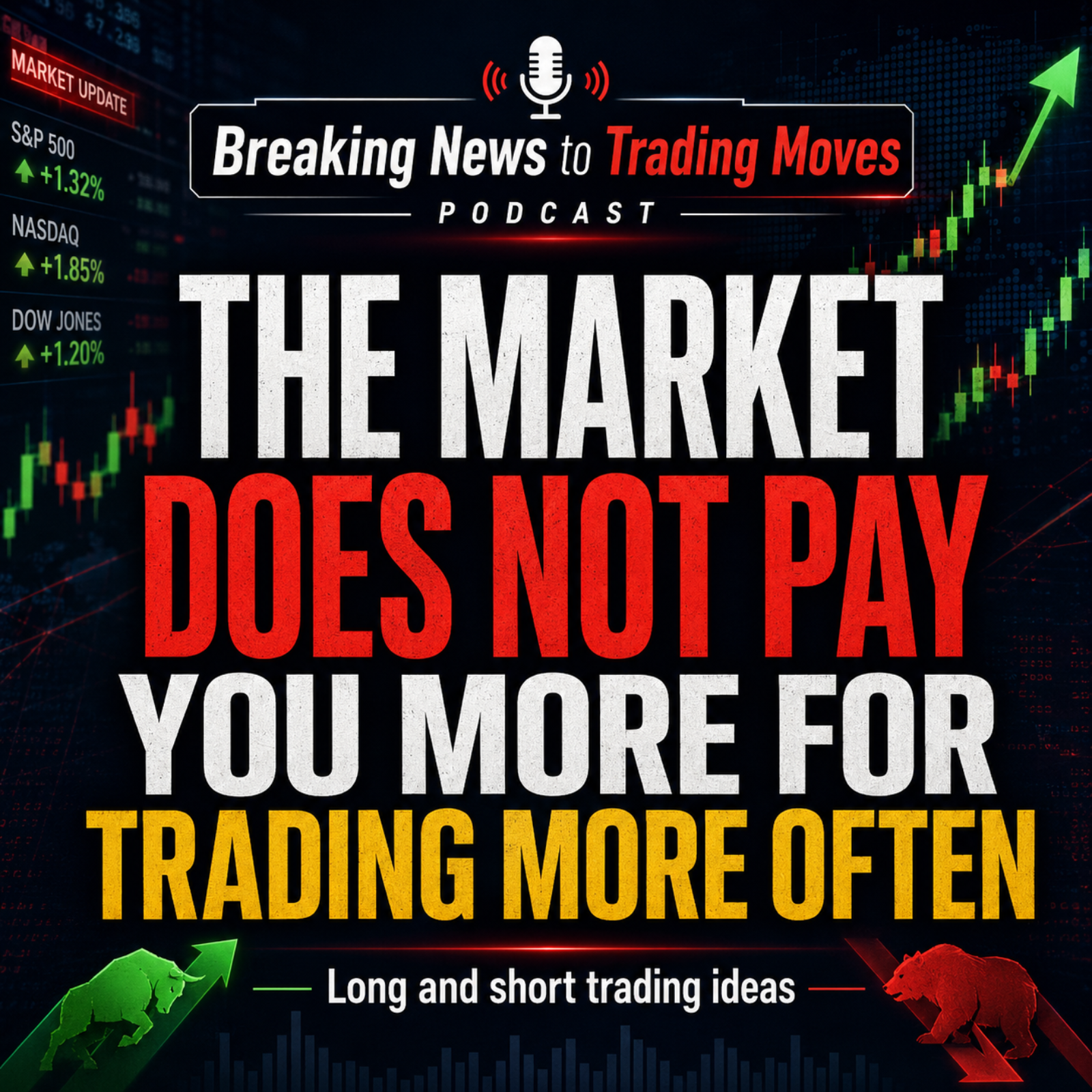
The market does not pay you more for trading more often
from Breaking News To Trading Moves
Many traders assume that more screen time, more setups and more trades must eventually produce more profit. It feels logical. If one good trade can make money, then ten trades should create more opportunity. But markets do not reward activity. They reward decision quality, patience, risk control and the ability to act only when the odds are genuinely favourable.This episode explores why overtrading is one of the fastest ways to damage an otherwise sensible strategy. The problem is rarely a lack of effort. In many cases, it is too much effort applied at the wrong time.More trades do not mean more opportunityThe market does not pay you for activity. Some sessions offer several clean opportunities. Other sessions offer nothing worth taking.A trader who accepts this can stay selective. A trader who does not may begin forcing entries simply to feel productive.That often leads to:• Taking weaker setups outside the plan • Entering late because of fear of missing out • Increasing size after a loss • Trading during unclear conditions • Turning boredom into unnecessary risk • Paying more through spreads and slippageThe more frequently you trade, the more chances you create to make emotional, technical and risk-management mistakes.Overtrading starts before the extra tradeThe visible problem is the unnecessary entry. The real problem often begins earlier.You may be tired, frustrated, bored or under pressure to make money. You may have missed the first move and feel desperate to catch the next one. You may have taken a loss and feel that the market owes you a recovery.These emotions quietly lower your standards. A setup you would normally reject suddenly looks acceptable because you want action.Discipline is not only about managing an open position. It is also about protecting the quality of the decision that comes before the trade.A good trader is paid for selectivityProfessional thinking means accepting that not every market condition deserves participation.You may need to sit out when:• Price is moving without clear structure • Volatility is too low or too unpredictable • The risk-to-reward ratio is unattractive • Your setup is incomplete • You are trading from emotion rather than evidence • You have reached your daily loss limitSitting out is not laziness. Cash is also a position. Preserving focus and trading capital can be more valuable than forcing another attempt.Quality should come before frequencyA strong process is built around repeatable conditions. You should know what must happen before you enter, where the trade is invalidated and how much you are prepared to lose.Reducing the number of trades can help you:• Focus on higher-quality setups • Lower transaction costs • Improve emotional control • Avoid revenge trading • Protect yourself in poor conditions • Review decisions more clearlyFewer trades do not guarantee better results, but unnecessary trades almost always create unnecessary risk.#StockMarket #Trading #Investing #DayTrading #SwingTrading #TradingPsychology #RiskManagement #Overtrading #TraderMindset #TradingDiscipline #PriceAction #TechnicalAnalysis #MarketPsychology #CapitalProtection #TradingStrategy
Embed this episode
Ready to play
The market does not pay you more for trading more often
No transcript for this episode yet
Similar Episodes
No similar episodes found.
Similar Podcasts
No similar podcasts found.